South Korea
In short
- Seoul, the capital, is the gateway, with palaces, markets and districts that each make a different base.
- Busan, on the south-east coast, is the port city with city beaches, reached from Seoul by KTX high-speed train.
- Jeju Island, off the south coast, is a volcanic island reached by a short domestic flight.
- Each hotel guide here lists hotels chosen from public, checkable data, with a price check link for every one.
This guide covers 3 places in South Korea, and the K-ETA travel authorisation, for visitors who need one, costs KRW 10,000. Seoul, Busan and Jeju Island make a natural first route.
Start in the capital, take the high-speed train to the south-east coast, then fly to the island. Each place is a different kind of stay: a large city of districts, a port city with beaches, and a volcanic island best seen with a car or a driver.
Where to go in South Korea
Where to go in South Korea depends on how long you have and whether you want city, coast or island. The table sets out the 3 places covered here.
| Place | Region | Best for | Getting there |
|---|---|---|---|
| Seoul | north-west, capital region | palaces, food, shopping, nightlife | Incheon or Gimpo airport |
| Busan | south-east coast | city beaches, seafood, coastal walks | KTX train from Seoul, or Gimhae airport |
| Jeju Island | off the south coast | volcanic scenery, Hallasan, coastal trails | domestic flight to Jeju airport |
Seoul: palaces and neighbourhoods
Seoul is best understood as a set of neighbourhoods, each with a different feel. Gyeongbokgung, the largest of the Joseon-era palaces, sits in the historic centre near Bukchon, an area of traditional hanok houses, and Insadong, known for tea houses and craft shops.
Myeongdong is the shopping and street-food district, Hongdae the student and nightlife area, and Gangnam, south of the Han River, the business and shopping district. Where to stay in Seoul depends on which of these you will use most, since the metro links them all.
Busan and Jeju Island: coast and volcano
Busan and Jeju Island add the sea to a Korea trip. Busan, the country’s second city and main port, has city beaches at Haeundae and Gwangalli, the hillside houses of Gamcheon Culture Village and the Jagalchi fish market by the harbour.
Where to stay in Busan depends on the plan: Haeundae for the beach and seafront hotels, Seomyeon for shopping and metro connections, and Nampo, near the old harbour, for markets and the ferry terminal. Busan Station, the KTX terminus, is close to Nampo.
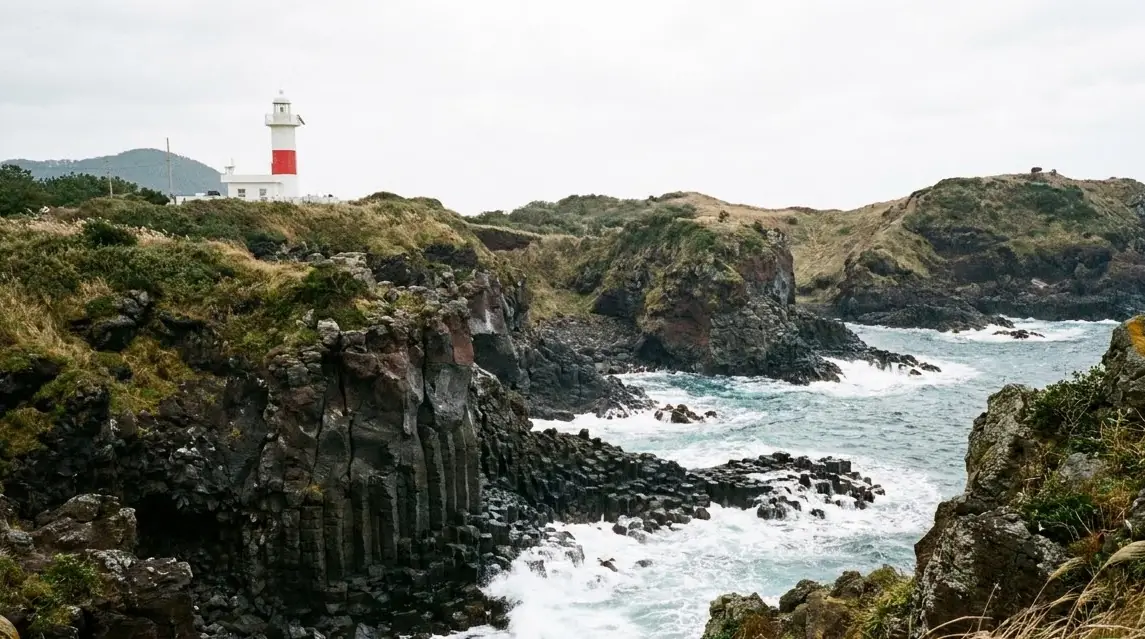
Jeju Island, off the south coast, is a volcanic island centred on Hallasan, the highest mountain in South Korea. Its volcanic landscape and lava tubes are a UNESCO World Heritage Site, and Seongsan Ilchulbong, a crater on the east coast, is a popular sunrise walk.
Jeju City, near the airport, and Seogwipo, on the south coast, are the two main bases; distances are long enough that many visitors hire a car or book day tours.
Getting into and around South Korea
Getting into and around South Korea is simple by rail and domestic air.
- K-ETA: travellers who can enter without a visa apply for a K-ETA online, for a fee of KRW 10,000; the official site says review generally takes up to 72 hours, so apply well before the flight.
- Temporary exemption: the Ministry of Justice has extended a K-ETA exemption for many countries until 31 December 2026 (KST), unless it is extended again. Those exempt may still apply, and pay the fee, to skip the arrival card.
- Apply only on the official K-ETA site or app; the site warns about agencies that charge high fees.
- Incheon International Airport is the main gateway to Seoul; Gimpo serves domestic flights, including Jeju.
- KTX high-speed trains link Seoul with Busan; Busan’s Gimhae airport also has international flights.
How the hotel guides are made
How the hotel guides are made matters, because we have not stayed at these hotels. Each list is chosen from public, checkable data: the hotel’s own website, its location, the facilities it lists and its guest score on booking sites, with the date checked.
We show a star category only where an official register lets us check it; otherwise the facilities and the guest score do that job. Every hotel has its own price check link, and no hotel pays to be listed. Read the editorial policy for the full method and the disclosure for how the site earns money.
When South Korea is not the right trip
South Korea is not the right trip for every plan. Travellers after a long, lazy beach holiday will find Busan’s beaches are city beaches, and Jeju is more about walks and scenery than lounging by the sea.
A very short trip is better spent in Seoul alone than split three ways. For a tropical island trip, the Indonesia guide covers Bali; for Europe, start with Spain or Portugal. Read more about the site.
Hotel guides for South Korea
Each list compares hotels by area, price level and guest score, and explains how they were chosen.
Common questions
Do I need a K-ETA for South Korea?
Visitors who can enter South Korea without a visa normally need a K-ETA, costing KRW 10,000. The Ministry of Justice has extended a temporary exemption for many countries until 31 December 2026 (KST), unless it is extended again. The application shows whether your passport is exempt; apply only on the official site or app.
How long does a K-ETA take?
The official K-ETA site says the assessment generally takes up to 72 hours. Apply well before your flight rather than at the last minute, and use only the official website or the K-ETA app. The site warns about agencies that charge high fees for the same application.
How do you get from Seoul to Busan?
The quickest way from Seoul to Busan is the KTX high-speed train, which runs from Seoul Station to Busan Station in the city centre. Domestic flights from Gimpo to Gimhae also link the two cities, but the train avoids airport transfers at each end.
Is Jeju Island worth adding to a Korea trip?
Jeju Island is worth adding if you want volcanic scenery, coastal walks and Hallasan, the highest mountain in South Korea. It is a short domestic flight from Seoul or Busan. Allow at least two or three nights, as the main sights are spread around the island.