Cambodia
In short
- Phnom Penh, the capital, sits where the Mekong meets the Tonle Sap and Bassac rivers.
- The riverside, the Royal Palace and the city’s museums make it more than a stopover on the way to Angkor.
- Every traveller submits the free Cambodia e-Arrival online; travellers who need a visa can buy an e-visa.
- Each hotel guide here lists hotels chosen from public, checkable data, with a price check link for every one.
This guide covers Phnom Penh, and the official tourist e-visa costs USD 30 for a single entry and a stay of 1 month. The capital is where most trips to Cambodia start or end.
It sits on the riverfront where the Mekong, Tonle Sap and Bassac rivers meet, with royal buildings, markets and two memorial sites to the Khmer Rouge years. Siem Reap, for the temples of Angkor, and the south coast are the usual next stops.
Where to go in Phnom Penh
Where to go in Phnom Penh depends on what you want from the city: history, markets, river views or a quiet base. The table sets out the main areas to stay and the places most visitors go next.
| Place | Region | Best for | Getting there |
|---|---|---|---|
| Riverside (Sisowath Quay) | central Phnom Penh | river views, the Royal Palace, walking | by road from Techo International Airport |
| BKK1 | south of the centre | cafés, restaurants, quieter streets | by road from the airport |
| Tuol Tom Poung | south-west of the centre | the Russian Market, local cafés | by road from the airport |
| Siem Reap (onward) | north-west Cambodia | the temples of Angkor | by road or flight from Phnom Penh |
The riverside and the Royal Palace
The riverside and the Royal Palace are the heart of a first visit. Sisowath Quay runs along the Tonle Sap, with hotels, cafés and a promenade busy in the evening, and the Royal Palace and its Silver Pagoda stand just behind it.
The National Museum, next to the palace, holds a large collection of Khmer sculpture, and Wat Phnom, on a small hill to the north, is the temple the city takes its name from. The Central Market, an art deco dome, is a short walk inland.
History, markets and neighbourhoods
History, markets and neighbourhoods fill the rest of a stay. The Tuol Sleng Genocide Museum, a former school used as a prison, and the Choeung Ek memorial, outside the city, record the Khmer Rouge period; many visitors see them on the same day and leave time to reflect afterwards.
The Russian Market, in Tuol Tom Poung, sells crafts, textiles and street food, and the area around it has many independent cafés. BKK1, south of the centre, is a residential district of restaurants and smaller hotels, a calmer base than the riverside.
Where to stay in Phnom Penh comes down to these areas: the riverside for sights within walking distance, BKK1 or Tuol Tom Poung for quieter streets. The Phnom Penh hotel guide compares hotels across them.
Getting into and around Cambodia
Getting into and around Cambodia starts with two online forms, then road or air links between cities.
- Visa: for many nationalities who need one, the official e-Visa site sells the tourist Visa T for USD 30: single entry, valid 3 months, for a stay of 1 month, processed in 3 business days.
- e-Visa entry is accepted at Techo International Airport for Phnom Penh, at Siem Reap and Sihanoukville airports and at some land borders; the site lists Cham Yeam and Poipet as temporarily closed to e-Visa entry.
- e-Arrival: all travellers, including visa holders, submit the free Cambodia e-Arrival within 7 days before arrival. It covers immigration, health and customs details.
- Arriving visitors receive a v-Pass by email, which replaces the ink stamp in the passport.
How the hotel guides are made
How the hotel guides are made matters, because we have not stayed at these hotels. Each list is chosen from public, checkable data: the hotel’s own website, its location, the facilities it lists and its guest score on booking sites, with the date checked.
We show a star category only where an official register lets us check it; otherwise the facilities and the guest score do that job. Every hotel has its own price check link, and no hotel pays to be listed. Read the editorial policy for the full method and the disclosure for how the site earns money.
When Cambodia is not the right trip
Cambodia is not the right trip for every plan. Phnom Penh is a working capital, with heavy traffic and few green spaces, and the memorial sites are hard going; travellers who want a beach-and-pool holiday will find the city a short stop at best.
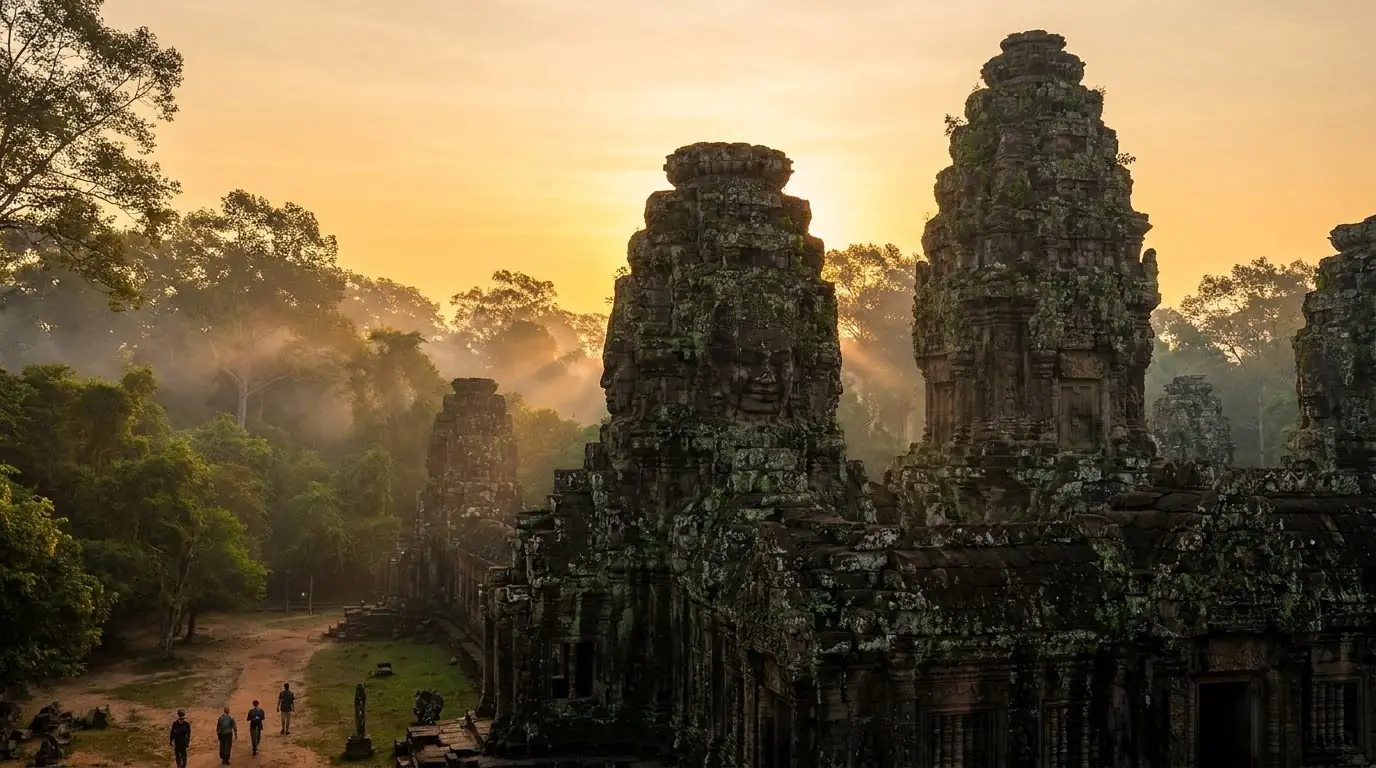
If the temples are the main goal, plan around Siem Reap and keep Phnom Penh to a night or two. For an island trip, the Indonesia guide covers Bali; for Europe, start with Spain or Portugal. Read more about the site.
Common questions
Do I need a visa for Cambodia?
Visa rules for Cambodia depend on nationality. For travellers who need one, the official e-Visa site, run by the Ministry of Foreign Affairs, sells the tourist Visa T for USD 30: single entry, valid for 3 months, for a stay of 1 month, processed in 3 business days. Check the official site before booking.
What is the Cambodia e-Arrival?
The Cambodia e-Arrival is the free online arrival form. All travellers, including visa holders, can submit it within 7 days before arrival, and it covers immigration, health and customs details in one form. Arriving visitors then receive a v-Pass by email instead of an ink passport stamp.
Where should I stay in Phnom Penh?
Stay on the riverside, along Sisowath Quay, to walk to the Royal Palace, the National Museum and the river promenade. Choose BKK1 or Tuol Tom Poung, near the Russian Market, for quieter streets, cafés and restaurants, with the sights a short ride away by tuk-tuk or taxi.
How do you get from Phnom Penh to Siem Reap?
Phnom Penh and Siem Reap are linked by road, with buses, minivans and private cars, and by domestic flights to Siem Reap Angkor International Airport. The road trip is long, so many travellers fly when time is short, or travel by day to see the countryside. Check current timetables with the operator before booking.