Quick answer
Granada needs two days: one for the Alhambra, booked weeks ahead, and one for the Albaicín, the cathedral and the Sacromonte, with free tapas in the evenings.
Key facts
- The best view of the Alhambra is free, from the Mirador de San Nicolás in the Albaicín at sunset.
Granada needs 2 days: 1 for the Alhambra and 1 for the Albaicín, the cathedral and the Sacromonte, with a third for the Alpujarra villages or the Sierra Nevada. Book the Alhambra’s timed slot weeks ahead, then plan the rest around it. The city is compact and walkable, but steep in the old Moorish quarter, so plan the climbs for the cooler hours and the evenings for tapas.
This guide covers the best things to do in Granada and how to fit them into one trip.
The Alhambra: the reason to come
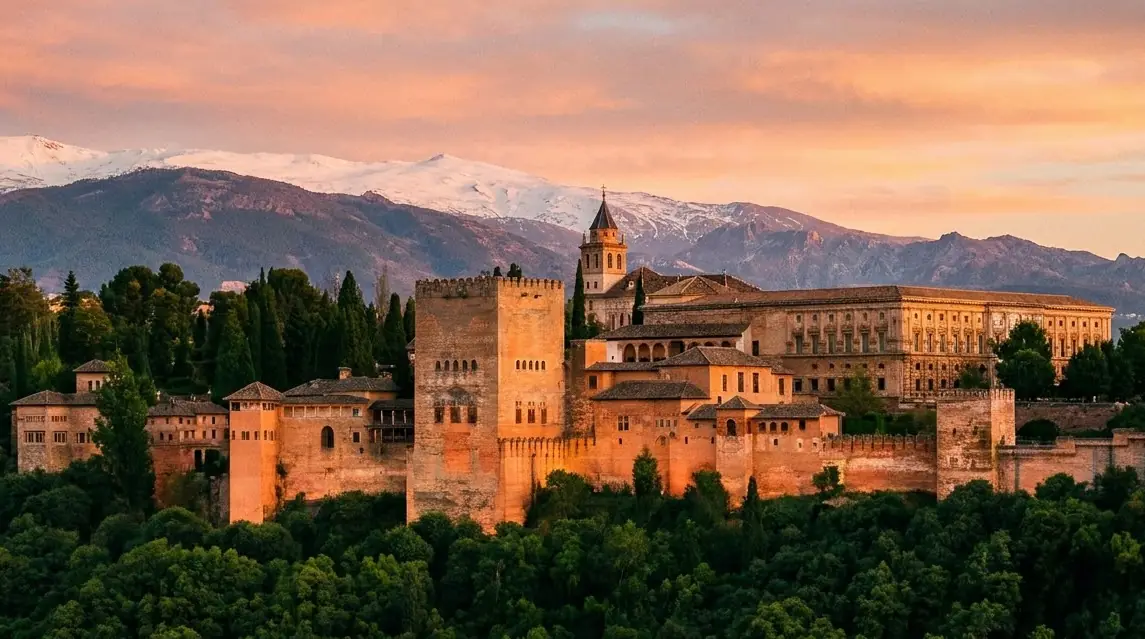
A Moorish palace city on a hill above the town, with the Generalife gardens beside it, the Alhambra is part of a UNESCO World Heritage site with the Albaicín.
- The Nasrid Palaces: carved stucco, tiled halls and courtyards, including the Court of the Lions; entered only at the time printed on your ticket.
- The Alcazaba: the fortress at the western tip, with towers and the best views over the city.
- The Generalife: the summer palace and gardens, with long water channels and fountains.
- The Palace of Charles V: a Renaissance palace built inside the walls, with a circular courtyard.
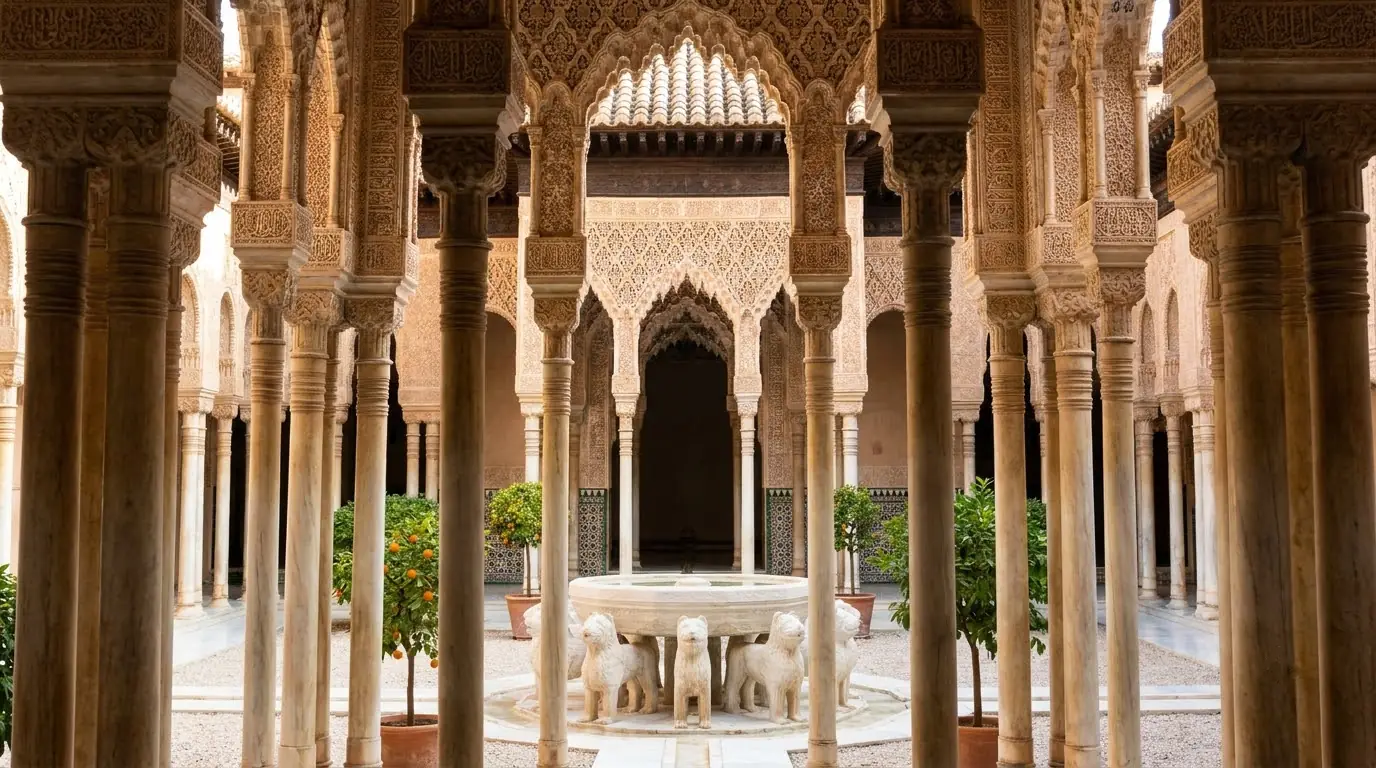
Book on the official Alhambra site as soon as your dates are fixed. Allow most of a day, wear shoes for gravel and hills, and walk up through the woods from Plaza Nueva or take the small bus.
Planning the Alhambra visit
The ticket gives a fixed entry time for the Nasrid Palaces; the rest of the complex can be seen before or after, within the opening hours of the day. A morning slot is the easier choice: the Alcazaba first, then the palaces, the Generalife and a late lunch in the town. An afternoon slot leaves the morning for the Albaicín.
Bring your passport or ID, as tickets are personal and checked at the palace entrance, and leave time to walk from the main gate, which is a good distance from the palaces.
The Alhambra at night
Night visits to the Nasrid Palaces or the Generalife run on selected evenings, with the courtyards lit and far fewer people. They are sold separately on the official site and make a memorable second visit, or an alternative when the day slots are gone.
If the tickets are sold out
If the palace tickets are sold out, check the official site again in the days before your visit, as returns appear. Some guided tours hold group tickets. And the gardens and fortress are sometimes sold without the palaces, which is a lesser visit but still a beautiful one.
The Alhambra with limited mobility
The Alhambra with limited mobility needs some planning, because the complex is large and the paths are gravel and slopes. Take the small bus up the hill rather than walking through the woods from Plaza Nueva.
Allow extra time between the main gate and the Nasrid Palaces, since the walk is a good distance and the palace entry time on the ticket is strict. Choose a cooler morning slot outside summer if you can.
The Albaicín: the old Moorish quarter
Opposite the Alhambra, the Albaicín climbs the hill in a maze of whitewashed lanes, small squares and walled gardens called carmenes.
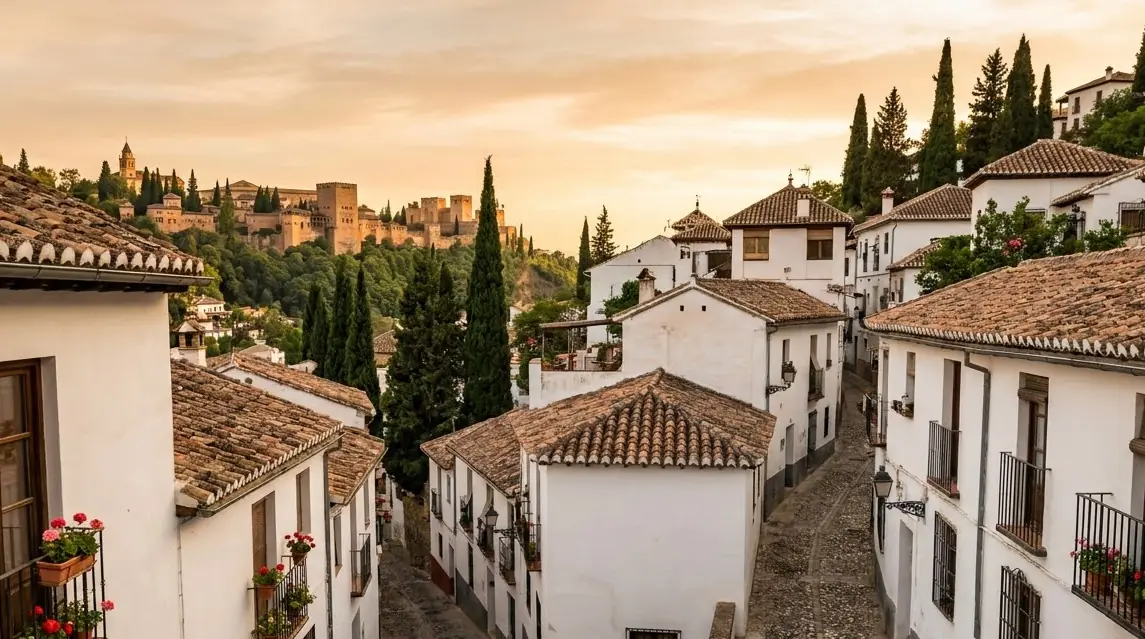
- The Mirador de San Nicolás is the classic viewpoint, facing the Alhambra with the Sierra Nevada behind; sunset is the busiest and best time.
- The Mirador de San Cristóbal and the lanes below San Nicolás are quieter alternatives.
- The Carrera del Darro and the Paseo de los Tristes, along the river at the foot of the hill, are among the prettiest streets in Spain.
- El Bañuelo, an eleventh-century Arab bathhouse on the Carrera del Darro, is one of the best preserved in Spain.
A walk up the Albaicín
- Start at Plaza Nueva and follow the Carrera del Darro along the river.
- Stop at El Bañuelo, then climb the Cuesta del Chapiz or the lanes behind the Paseo de los Tristes.
- Wander up to the Plaza Larga, the quarter’s market square.
- End at the Mirador de San Nicolás for sunset, then walk down through the lanes for dinner.
Carmenes and gardens
The carmenes are the Albaicín’s walled houses with terraced gardens, many hidden behind plain white walls. A few are open to visitors or run as restaurants, and their terraces give the most romantic views of the Alhambra in the city.
Walk up in the late afternoon and down after sunset, but keep to the busier lanes at night. The small buses that climb the quarter save the steepest stretch.
The Sacromonte: caves and flamenco
On the hillside beyond the Albaicín, Granada’s cave houses are dug into the slope, and the city’s own style of flamenco, the zambra, is performed in small caves.
- The cave houses are whitewashed facades set into the hillside, some still lived in.
- A small museum of cave life shows how the caves were used.
- Flamenco shows in the caves are intimate and loud; book ahead for the evening.
- The Abbey of Sacromonte, at the top, has views back over the valley.
Flamenco in Granada
Granada’s flamenco is rawer and more intimate than the big shows of Seville: a few chairs along the walls of a whitewashed cave, guitar, singing and dancing a few feet away. Book a show for the second evening, after the Alhambra day, and take a taxi up if you do not want the walk back down in the dark.
Getting up to the Sacromonte
Getting up to the Sacromonte is a walk of a different kind from the Albaicín. From the Paseo de los Tristes, follow the river and then the Cuesta del Chapiz up into the cave quarter, or take one of the small minibuses that climb the hill.
After an evening flamenco show, take a taxi back down rather than walking the dark lanes.
The cathedral, the Royal Chapel and the centre
At the foot of the hills lies the Christian city built after 1492.
- The Royal Chapel holds the tombs of Ferdinand and Isabella, the Catholic Monarchs who took Granada in 1492.
- The cathedral, beside it, is one of the great Renaissance churches of Spain.
- The Alcaicería, the old silk market, is now a tangle of souvenir stalls in narrow lanes.
- The Monastery of San Jerónimo, a short walk away, has one of the finest church interiors in the city.
The centre around the cathedral and Plaza Nueva is flat and the easiest base for buses and taxis.
The Corral del Carbón
The Corral del Carbón, a few steps from the cathedral, is a fourteenth-century Nasrid inn for merchants, the oldest Moorish monument in the lower town, with a horseshoe arch entrance and a quiet courtyard. It takes ten minutes and is easy to miss.
The Realejo
The Realejo, the old Jewish quarter on the slope below the Alhambra, is less visited than the Albaicín and full of local bars, street art and small squares. It is the neighbourhood to wander on a second evening, and its tapas bars are among the best in the city.
Granada with children
Granada with children works best when the minibuses do the climbing. The small red buses up the Albaicín, the Sacromonte and the Alhambra hill save the steepest stretches for small legs.
The Alcazaba’s towers, the Generalife’s water channels and the cave houses of the Sacromonte tend to hold children’s attention longer than the palace interiors. The flat centre around the cathedral and Plaza Nueva is the easiest area for a pushchair.
Tapas in Granada
Many bars still serve a free tapa with each drink, so an evening of two or three bars becomes dinner.
- Each round brings a different tapa, often chosen by the bar rather than by you.
- The streets around Calle Navas and Calle Elvira, and the bars of the Realejo, are the classic routes.
- Order a caña, a small beer, or a glass of wine, and move on after a round or two.
- Tortilla del Sacromonte and habas con jamón, broad beans with ham, are local dishes.
Tea shops and the Moorish legacy
On Calle Calderería Nueva, a steep lane between the centre and the Albaicín, teterías serve mint tea and sweet pastries in rooms that echo the city’s Moorish past. They make a good break on the climb up the hill.
Two days in Granada
With the Alhambra on its own day, the essentials fit at a comfortable pace.
- Day 1 morning: the Alhambra, with the Alcazaba, the Nasrid Palaces at your time slot and the Generalife.
- Day 1 afternoon: lunch in the centre, then the Royal Chapel and the cathedral.
- Day 1 evening: tapas in the bars around Calle Navas.
- Day 2 morning: the Carrera del Darro, El Bañuelo and the climb into the Albaicín.
- Day 2 afternoon: the Sacromonte caves and the abbey.
- Day 2 evening: sunset at San Nicolás, then flamenco in a cave or tapas in the Realejo.
Three days in Granada
Three days adds a day out of the city: the Alpujarra villages by car or tour, the Sierra Nevada for snow in winter or walks in summer, or Guadix and its cave houses. It also leaves time for a second, slower evening in the Albaicín and the Realejo, which is when Granada is at its best.
Swap the days if your Alhambra slot is in the afternoon. With a third day, add the Alpujarra or the Sierra Nevada.
Granada month by month
Granada month by month swings further than the coast, because the city sits inland below the Sierra Nevada. AEMET’s 1981-2010 normals for Granada Aeropuerto give a July high of 34.8°C, with only 2 mm of rain, so summer days belong to the morning and the evening.
Winter is bright but cold at night: January averages a 13.0°C high and a 0.0°C low, and December is the wettest month at 56 mm. April, at a 20.6°C high, and October, at 23.2°C, are the months when two full days of walking are most comfortable.
Day trips: the Alpujarra and the Sierra Nevada
The mountains are the obvious escape: the white villages of the Alpujarra and the peaks of the Sierra Nevada.
- The Alpujarra: flat-roofed white villages such as Pampaneira, Bubión and Capileira on steep slopes south of the Sierra Nevada, with walking paths between them; best with a car or a tour.
- The Sierra Nevada: mainland Spain’s highest mountains, with a ski resort in winter and hiking in summer.
- Córdoba: about 1 hour 30 minutes by train, for the Mezquita.
- Málaga and the coast: about 1 hour 25 minutes on the few direct trains, or by bus.
- Guadix: a town east of Granada where thousands of people still live in cave houses dug into the hills.
Trains link Granada with Madrid in about 3 hours 30 minutes and with Córdoba and Málaga; check times on Renfe, as direct services are few. For the wider route, see the southern Spain itinerary.
Getting around and when to go
Granada’s centre is walkable, and small red minibuses climb the Albaicín, the Sacromonte and the Alhambra hill, saving the steepest walks. Taxis are the easiest way up at night. Spring and autumn are the best seasons; summer afternoons are hot, and winter nights are cold, with snow on the Sierra Nevada behind the Alhambra.
Choosing between the Alpujarra and the Sierra Nevada
Choosing between the Alpujarra and the Sierra Nevada depends on the season and on whether you have a car. The Alpujarra villages work in most months, for walking between Pampaneira, Bubión and Capileira; a car or a tour makes them easy.
The Sierra Nevada is a winter trip for snow and a summer one for walks, when the mountains are the escape from a city that averages a 34.8°C high in July.
What to skip, or do differently
The Alhambra and the hills account for the common mistakes:
- Arriving without an Alhambra ticket: the Nasrid Palaces cannot be visited without a timed slot.
- Granada as a day trip from Seville or Málaga: it is a long day, and the evenings are the best part.
- Driving into the Albaicín: the lanes are narrow and restricted; walk or take the small buses.
- Eating at the restaurants on the Mirador de San Nicolás at sunset without checking prices.
- Seeing the Alhambra and the Albaicín on the same afternoon in summer heat.
For Granada as a trip from the coast, see day trips from Málaga.
Where to stay in Granada
In Granada, Centro and Plaza Nueva is the base for a first visit, and Albaicín for views of the Alhambra. The map shows the same property across Booking.com and Agoda, with prices live from them.
Common questions
What should you not miss in Granada?
Do not miss the Alhambra, with the Nasrid Palaces, the Alcazaba and the Generalife gardens; the Albaicín and the sunset from the Mirador de San Nicolás; the Royal Chapel, where Ferdinand and Isabella are buried; and an evening of free tapas in the bars of the centre.
How far in advance should you book the Alhambra?
Book the Alhambra as soon as your dates are fixed: in spring and autumn, Nasrid Palace slots often sell out weeks ahead. Buy on the official Alhambra site, choose a time, and build the rest of the Granada day around it. The palace entry time on the ticket is strict.
Is 2 days enough for Granada?
Two days is enough for Granada: one for the Alhambra and the Generalife, and one for the Albaicín, the Sacromonte, the cathedral and the Royal Chapel, with the evenings for tapas. Add a third day for the Alpujarra villages or the Sierra Nevada.
Are tapas free in Granada?
Many bars in Granada still serve a free tapa with each drink, a tradition that is rarer in the rest of Spain. Each round usually brings a different tapa chosen by the bar. Two or three bars with a drink and a tapa each make an easy, cheap dinner.
Is Granada worth visiting?
Granada is worth visiting for at least two days, for the Alhambra, the Albaicín and its tapas culture, with the Sierra Nevada as a backdrop. It suits least those who cannot manage steep lanes or who arrive without an Alhambra ticket in the busy seasons.
Where should you stay in Granada?
Stay near the cathedral or Plaza Nueva for flat streets, buses and taxis, or in the Albaicín for views of the Alhambra and quiet evenings, accepting steep lanes. The Realejo is a good middle ground, close to the Alhambra hill with local bars. All three are within walking distance of each other.
Keep planning Granada
Written and checked by
Travel Guide Kit Editorial
An editorial desk, not an invented persona. Every opening time, ticket price and transport connection here is checked against the operator’s own website and carries the date it was read. Where a page cannot draw on direct experience, it says so.