Quick answer
May, June and late September are the best months to visit Valencia, with highs of 23 to 28°C; summer is hot and humid, autumn brings storms, and winter is mild.
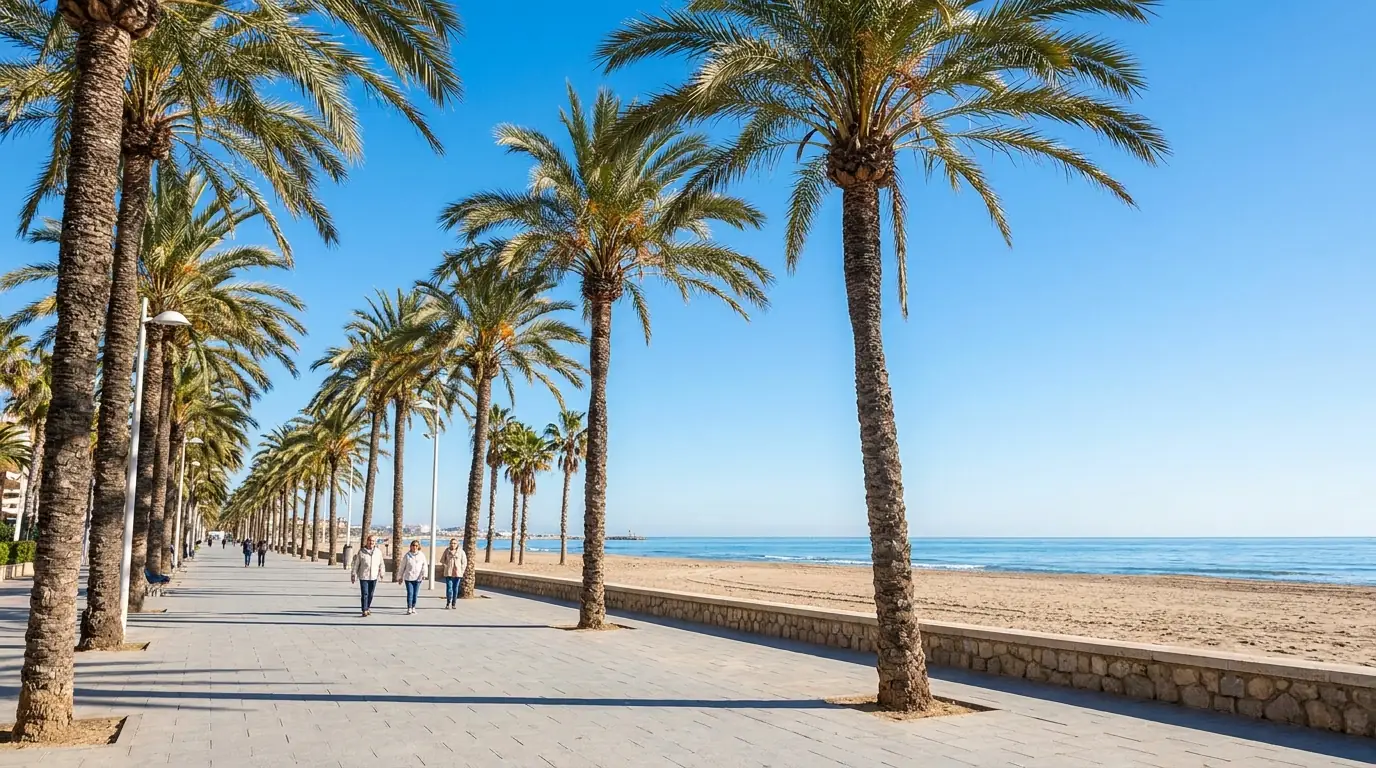
The best time to visit Valencia is May, June or late September, when highs run from 23.4°C to 27.9°C and the sea is warm enough to swim. July and August are hot and humid, September and October bring the year’s heaviest rain, and winter is mild at 16.4°C in January. Mid-March means the Fallas festival, when the whole city turns into a street party.
May, June and late September
Warm, mostly dry and outside the August peak, May, June and late September are the months to aim for.
| When | Mean high | Rain | Verdict |
|---|---|---|---|
| May / June | 23.4°C / 27.1°C | 39 / 22 mm | Best: warm, dry, beach season begins |
| July / August | 29.7°C / 30.2°C | 8 / 20 mm | Hot and humid; beach weather |
| September / October | 27.9°C / 24.3°C | 70 / 77 mm | Warm sea, but the wettest months |
| March / April | 19.3°C / 20.8°C | 33 / 38 mm | Pleasant; the Fallas in mid-March |
| November to February | 16.4°C to 19.8°C | 36 to 48 mm | Mild winter city break |
For a city break of museums, markets and cycling, April, May and October are the most comfortable. For the beach, June and September combine warm water with fewer crowds than July and August.
Valencia month by month, with the numbers
These are the 1981-2010 climate normals for the València station, published by AEMET, the Spanish state meteorological agency. Rainy days count days with at least 1 mm.
Twelve months at a glance — bars are rain, numbers are mean highs
| Month | Mean high | Mean low | Rain | Rainy days | Sunshine |
|---|---|---|---|---|---|
| January | 16.4°C | 7.1°C | 37 mm | 4.4 | 171 h |
| February | 17.1°C | 7.8°C | 36 mm | 3.9 | 171 h |
| March | 19.3°C | 9.6°C | 33 mm | 3.6 | 215 h |
| April | 20.8°C | 11.5°C | 38 mm | 4.8 | 234 h |
| May | 23.4°C | 14.6°C | 39 mm | 4.3 | 258 h |
| June | 27.1°C | 18.6°C | 22 mm | 2.6 | 276 h |
| July | 29.7°C | 21.5°C | 8 mm | 1.1 | 314 h |
| August | 30.2°C | 21.9°C | 20 mm | 2.4 | 288 h |
| September | 27.9°C | 19.1°C | 70 mm | 5.0 | 234 h |
| October | 24.3°C | 15.2°C | 77 mm | 5.0 | 202 h |
| November | 19.8°C | 10.8°C | 47 mm | 4.3 | 167 h |
| December | 17.0°C | 8.1°C | 48 mm | 4.8 | 155 h |
Valencia averages 2,696 hours of sunshine and 475 mm of rain a year, falling on only about 46 days. Read the rain column for September and October: the totals come from a few intense storms rather than many grey days.
Summer in Valencia: heat, humidity and the beach
The city empties a little as residents leave for the coast.
- July and August average highs of 29.7°C and 30.2°C, with nights around 21 to 22°C.
- July is the driest month, with 8 mm of rain on about one day.
- The beaches of Malvarrosa and Las Arenas fill at weekends; weekday mornings are calmer.
- Many residents take holidays in August, and some small restaurants close for part of the month.
Plan the old town and the markets for the morning, the beach or a long lunch for the afternoon, and the Turia Gardens and the City of Arts and Sciences for the evening. Book a room with air conditioning.
Autumn storms and the wet months
September and October are still warm, but short, heavy storms make them the wet months of the year.
- September averages 70 mm and October 77 mm, the two highest totals of the year.
- The rain often comes in short, heavy storms, sometimes with local flooding, rather than days of drizzle.
- Between storms, the days are warm and the sea is at its warmest of the year.
- Check the AEMET warnings before a beach day or a trip to the Albufera in these months.
Winter and spring: mild days and the Fallas
Both seasons are mild, and mid-March brings the city’s great festival, the Fallas.
- January averages a 16.4°C high and a 7.1°C low, with 171 hours of sunshine.
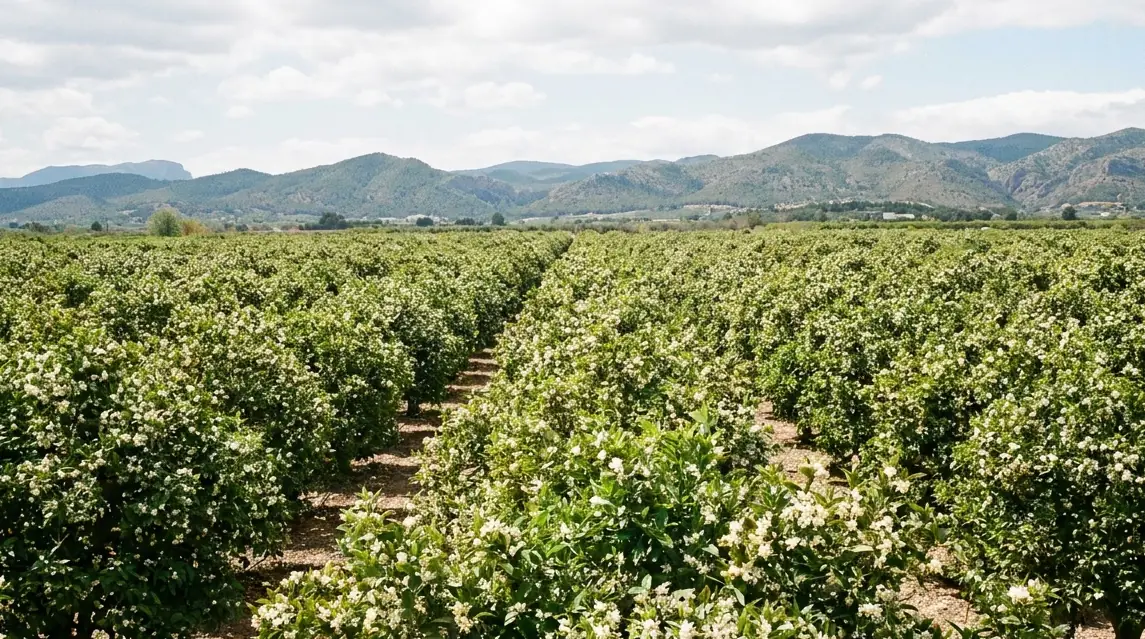
- Orange groves around the city blossom in spring, and the smell reaches the old town on some days.
- The Fallas run from 15 to 19 March: giant satirical figures, fireworks and street parties, ending with the burning of the figures; the festival is on UNESCO’s list of intangible heritage.
- Holy Week and Easter follow, with processions in the Marina district.

A winter city break
December to February is the quiet season, and it suits Valencia better than most Spanish cities: mild afternoons for walking the old town and the Turia, short queues at the City of Arts and Sciences, and lunches outside on sunny days. Evenings are cool, so bring a jacket.
Best time for each kind of Valencia trip
These windows follow the AEMET normals.
For where to base yourself, see where to stay in Valencia, and for the sights, things to do in Valencia.
When not to book
These choices disappoint most often:
- The Fallas week for a quiet stay: fireworks and crowds run day and night.
- August for a trip built around walking and museums: humid heat and some closures.
- Late September and October for a beach-only trip: the storms can take whole days.
- A cheap last-minute room for the Fallas: prices and demand peak months ahead.
Outside those weeks, Valencia is an easy city to visit at short notice, and its mild climate makes almost any month workable with the right plan.
Where to stay in Valencia
In the busy months the best-placed rooms go first, so choose the area as soon as the dates are set. The map shows the same property across Booking.com and Agoda, with prices live from them.
Common questions
What is the best month to visit Valencia?
May, June and late September are the best months to visit Valencia: highs of 23.4°C to 27.9°C, little rain in May and June, and a warm sea in September, according to AEMET’s 1981-2010 normals. April and October suit a city break without the beach.
Is Valencia too hot in summer?
Valencia is hot and humid in summer: July and August average highs of 29.7°C and 30.2°C, with nights around 21 to 22°C. The sea breeze helps by the beach. Sightsee in the morning and evening, and book a room with air conditioning.
What is the rainy season in Valencia?
The rainy season in Valencia is autumn: September averages 70 mm and October 77 mm, the highest of the year, often in short, heavy storms. The rest of the year is dry, with only about 46 rainy days annually and 2,696 hours of sunshine.
When are the Fallas in Valencia?
The Fallas are held from 15 to 19 March every year, with giant satirical figures, fireworks and street parties across the city, ending with the burning of the figures on the night of the 19th. Book rooms months ahead, or avoid those days for a quiet stay.
Is Valencia worth visiting in winter?
Valencia is worth visiting in winter for a mild, sunny city break: January averages a 16.4°C high and 171 hours of sunshine, according to AEMET. The beach is for walks rather than swimming, but the old town, the markets and the City of Arts and Sciences are quieter than at any other time.
Keep planning Valencia
Written and checked by
Travel Guide Kit Editorial
An editorial desk, not an invented persona. Every opening time, ticket price and transport connection here is checked against the operator’s own website and carries the date it was read. Where a page cannot draw on direct experience, it says so.