Quick answer
May, June and September are the best months to visit the Algarve, with highs of 23 to 27°C and fewer crowds; July and August are hottest, and winter is mild but wetter.
The best time to visit the Algarve is May, June or September, when Faro averages highs of 23.5°C to 26.8°C with little rain and fewer crowds than in July and August. High summer is hot and almost rainless, and winter is mild, with a 16.3°C January high, but wetter and very quiet on the coast. The west coast is cooler and windier than the east all year.
May, June and September
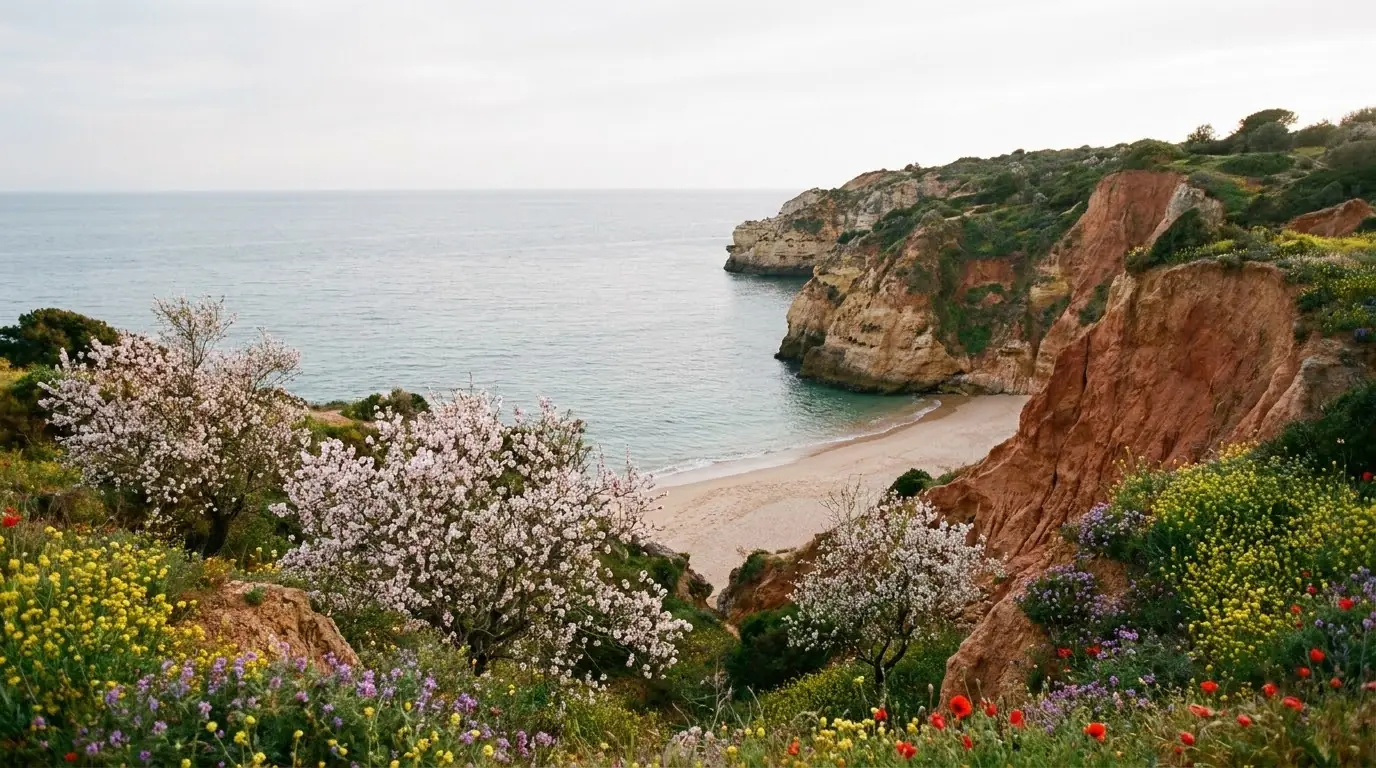
May, June and September bring warm beach weather, long days and room to breathe on the cliffs and coves.
| When | Mean high in Faro | Rain | Verdict |
|---|---|---|---|
| May / June | 23.5°C / 26.8°C | 26.2 / 5.1 mm | Best balance: warm, sunny, before the crowds |
| July / August | 29.4°C / 29.2°C | 0.9 / 3.0 mm | Hottest and driest; busiest and most expensive |
| September | 26.4°C | 21.5 mm | Summer weather with fewer people |
| March / April / October | 18.9°C to 23.3°C | 26 to 56 mm | Good for walking; cooler sea |
| November to February | 16.3°C to 19.6°C | 41.9 to 90.0 mm | Mild and quiet; wettest season |
The Algarve is one of the sunniest corners of Europe, and the rain falls mostly between October and March. What changes through the summer is not the sunshine but the heat and the crowds, and that is what should decide when you go.
The Algarve month by month, with the numbers
These are the 1991-2020 climate normals for Faro, on the south coast, published by IPMA, the Portuguese meteorological institute. Rainy days count days with at least 1 mm.
Twelve months at a glance — bars are rain, numbers are mean highs
| Month | Mean high | Mean low | Rain | Rainy days | Days over 25°C |
|---|---|---|---|---|---|
| January | 16.3°C | 8.3°C | 49.3 mm | 6.0 | 0.0 |
| February | 17.0°C | 8.8°C | 41.9 mm | 5.4 | 0.0 |
| March | 18.9°C | 10.8°C | 46.8 mm | 5.6 | 0.5 |
| April | 20.7°C | 12.4°C | 39.0 mm | 5.3 | 2.1 |
| May | 23.5°C | 15.0°C | 26.2 mm | 3.8 | 9.5 |
| June | 26.8°C | 17.8°C | 5.1 mm | 0.8 | 19.4 |
| July | 29.4°C | 19.6°C | 0.9 mm | 0.2 | 27.8 |
| August | 29.2°C | 19.9°C | 3.0 mm | 0.2 | 28.8 |
| September | 26.4°C | 18.3°C | 21.5 mm | 1.9 | 19.6 |
| October | 23.3°C | 15.8°C | 56.0 mm | 6.0 | 7.2 |
| November | 19.6°C | 11.9°C | 75.5 mm | 6.6 | 0.3 |
| December | 17.1°C | 9.7°C | 90.0 mm | 7.0 | 0.0 |
Faro receives 455.1 mm of rain a year, falling on about 49 days, and averages about 115 days a year over 25°C. Almost all of that warmth comes between May and October.
Summer in the Algarve: hot, dry and busy
From late June to August comes the classic beach season, and the most expensive.
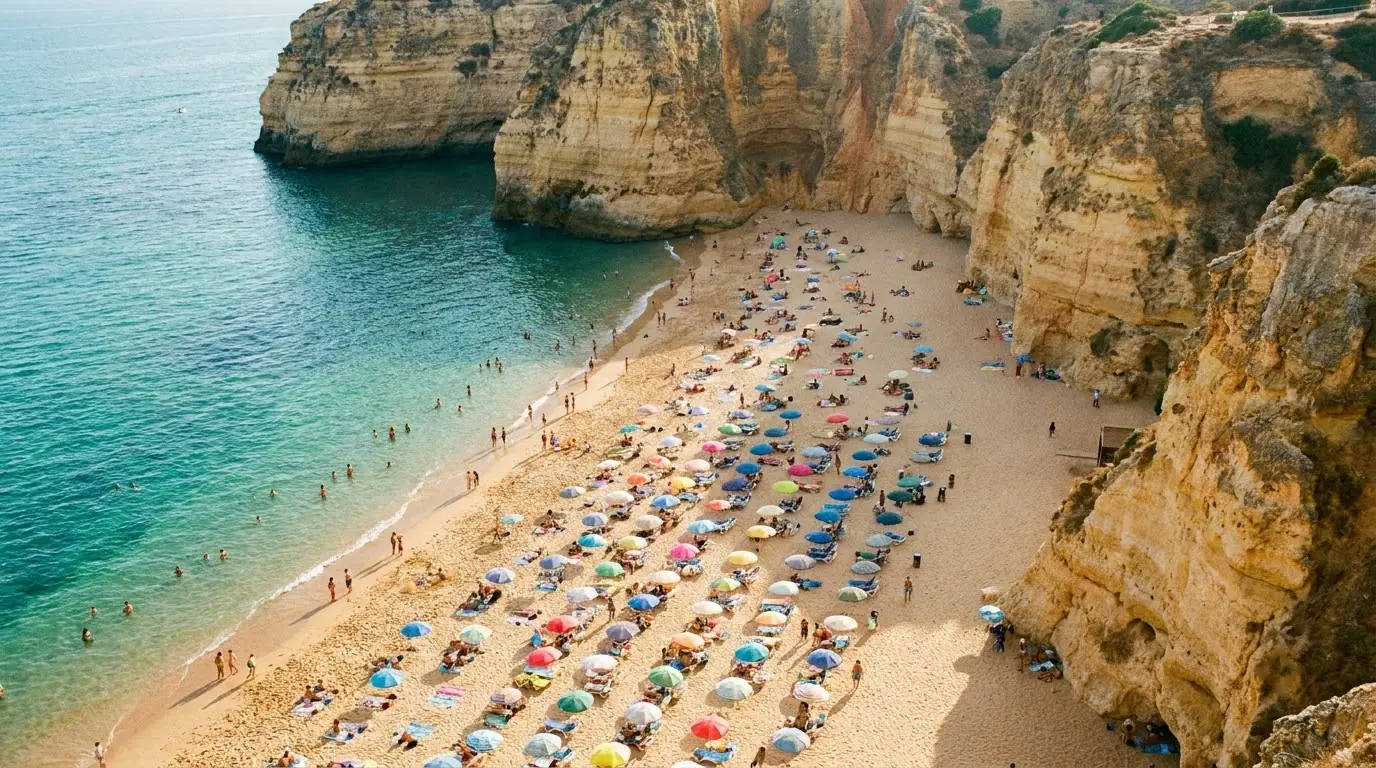
- July and August average highs of 29.4°C and 29.2°C in Faro, with almost no rain.
- Nearly every day in July and August reaches 25°C, about 28 days a month.
- Inland, around Silves and the hills, afternoons are hotter than on the coast.
- Beaches, boat trips to the Benagil cave and car parks are at their busiest; book rooms and cars well ahead.
The heat on the coast is usually tempered by a sea breeze, but the cliff walks have little shade. Walk in the morning, spend the middle of the day in the water or the shade, and keep the grottoes for the early boats.
June: the sweet spot
June is often the best single month: a 26.8°C average high, only about 1 rainy day, long evenings and the summer crowds still to come. The sea is a little cooler than in August, but the beaches and boat trips are noticeably calmer, especially before the school holidays.
Spring and autumn: the shoulder seasons
For walking, sightseeing and value, these are the best months to visit the Algarve.
- April and May average highs of 20.7°C and 23.5°C, with wild flowers on the cliffs and few crowds.
- September keeps summer weather, a 26.4°C high and only about 2 rainy days, with the sea at its warmest.
- October averages 23.3°C, but rain returns, at 56.0 mm over about 6 days.
- The Seven Hanging Valleys trail and the Fishermen’s Trail are at their best in these months.
Spring evenings can be cool, and the sea takes time to warm after winter, so spring suits walkers more than swimmers. Autumn is the opposite: the water is warm after the summer, but the days are shorter.
Easter and school holidays
Easter and the school holidays change the picture more than the weather does. Easter week brings Portuguese and Spanish families to the coast, and prices rise for a few days. Late July and August are the peak of the year, while late June and early September often give the same weather with more space.
Swimming and the sea
The Atlantic here is cooler than the Mediterranean, even in summer. The sea warms slowly through June and is at its warmest from August into September, which makes September the best month for swimming. The calm, shallow water of the eastern islands warms first.
Winter in the Algarve: mild and quiet
From November to February, sunny days alternate with spells of rain.
- January averages a 16.3°C high and an 8.3°C low in Faro.
- December is the wettest month, at 90.0 mm over about 7 days.
- Almond trees blossom in the hills from late January.
- Golf, walking and town sightseeing are popular; the sea is cold for swimming.
Many beach restaurants and some resort hotels close in winter, while Lagos, Faro and Tavira stay open all year. Houses are built for the heat, so look for a place with heating, as nights can feel cold indoors.
Festivals through the year
- February or March: the carnival in Loulé, with parades through the town.
- Late January and February: almond blossom in the hills.
- Summer: sardine festivals and fish grills, especially in Portimão.
- August: a medieval fair below the castle in Silves.
Check dates each year with the local town halls, as festivals move with the calendar.
East or west: the weather is not the same
The west is cooler, windier and wetter than the east.
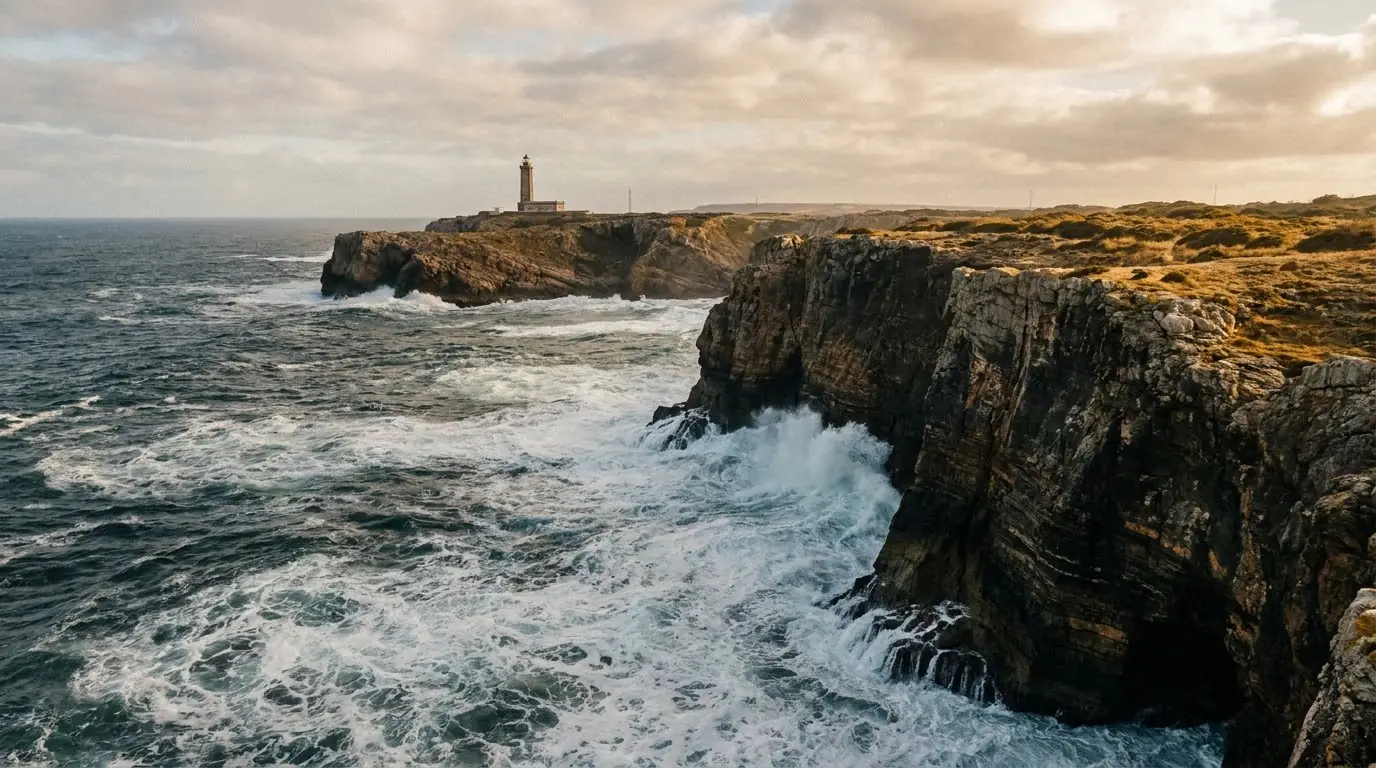
- Sagres averages a 25.9°C high in August, against 29.2°C in Faro, according to the IPMA normals for Sagres.
- Sagres has only about 57 days a year over 25°C, half as many as Faro.
- It also has more rainy days, about 57 a year, against 49 in Faro.
- The west coast faces the open Atlantic, with bigger waves and stronger wind.
For a beach holiday in the heat, the central and eastern coast is warmer and calmer. For surf, walking or escaping the summer heat, the west is the better choice.
Best time for each kind of trip
- Beach and swimming: late June to mid-September.
- Walking and cliff trails: March to May, and October.
- Families on school holidays: June or early September, before or after the August peak.
- Surf: autumn to spring on the west coast, when the swell is biggest.
- Quiet and value: November to March, outside Christmas and Easter.
For what to see, read things to do in the Algarve, and for bases, where to stay in the Algarve.
When not to book
These choices are the ones to avoid:
- August for a quiet trip: it is the busiest month on the coast.
- Long cliff walks in July or August afternoons: the heat and the lack of shade.
- December or January for a beach holiday: mild air, but a cold sea and many places closed.
- Late booking for July and August: rooms and hire cars run out.
Where to stay in Algarve
In the busy months the best-placed rooms go first, so choose the area as soon as the dates are set. The map shows the same property across Booking.com and Agoda, with prices live from them.
Common questions
What is the best month to visit the Algarve?
June is the best month to visit the Algarve: a 26.8°C average high in Faro, only about one rainy day and fewer crowds than in July and August, according to IPMA’s 1991-2020 normals. May and September are close behind, and September has the warmest sea.
What is the hottest month in the Algarve?
July is the hottest month in the Algarve, with a 29.4°C average high in Faro, just ahead of August at 29.2°C. Both months are almost rainless, and nearly every day reaches 25°C. Inland, the afternoons are hotter, while the west coast around Sagres is several degrees cooler.
When is the rainy season in the Algarve?
The rainy season in the Algarve runs from October to March, peaking in December at 90.0 mm in Faro. Even then, rain falls on only about 6 or 7 days a month. The whole year brings about 455 mm of rain, very little of it between June and August.
Is the Algarve warm in winter?
The Algarve is mild in winter rather than warm: Faro averages a 16.3°C high and an 8.3°C low in January, according to IPMA. Sunny days are common between spells of rain, which suits walking, golf and sightseeing, but the sea is cold for swimming.
Is October a good time to visit the Algarve?
October is a good time to visit the Algarve for warm, quieter days: Faro averages a 23.3°C high, and the sea is still warm after the summer. Rain returns, at about 56 mm over six days, and the days are shorter, so keep plans flexible.
Keep planning Algarve
Written and checked by
Travel Guide Kit Editorial
An editorial desk, not an invented persona. Every opening time, ticket price and transport connection here is checked against the operator’s own website and carries the date it was read. Where a page cannot draw on direct experience, it says so.