Quick answer
Three days is right for Porto; a fourth belongs to the Douro valley, which is where the wine actually comes from.
In short
- The port cellars are not in Porto — they are in Vila Nova de Gaia, across the river, which is a different city.
- Cross the Dom Luís I bridge on the upper deck, not the lower one: the upper deck carries the metro and pedestrians, and it has the view.
- Porto is steep. The riverside and the cathedral are a hundred metres apart on the map and a serious climb apart in practice.
Porto needs 3 days, and a 4th belongs to the Douro valley upriver, where the wine actually comes from. Two things are worth knowing before you arrive: the port cellars are across the river in Vila Nova de Gaia rather than in Porto itself, and the city is genuinely steep. Come between June and September, because every month from October to March averages more than 95 mm of rain.
Two banks, one river, and a bridge to cross twice
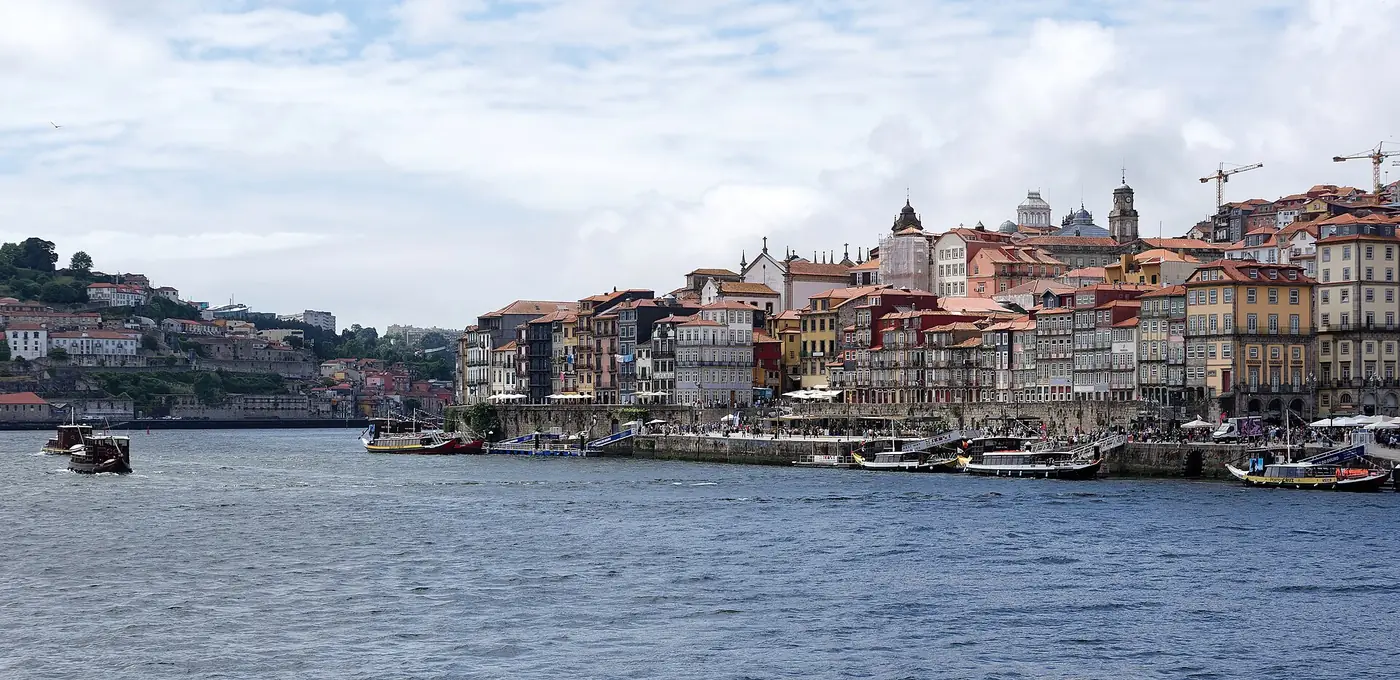
Porto’s two banks face each other across one river, and crossing between them shapes a day here. The port lodges sit on the south bank, in a separate municipality called Vila Nova de Gaia. Almost every guide lists both without making the geography clear, and it is the thing that shapes a day here.
- Ribeira — the old waterfront on the Porto side, all narrow houses and terraces facing the water.
- Vila Nova de Gaia — the opposite bank, where every port house has its cellars and its tasting room.
- Dom Luís I bridge — two decks. The upper carries the metro and pedestrians at the height of the cathedral; the lower carries cars at water level.
- Jardim do Morro — the park at the Gaia end of the upper deck, and the place people watch the sun set over the city.
The practical version: cross on the upper deck going over, spend the afternoon in Gaia, and come back along the lower deck at water level. You get two entirely different views of the same river for the price of walking.
A cable car runs from the Jardim do Morro down to the Gaia waterfront, which saves the steepest part of the walk. On the Porto side, the Guindais funicular climbs from the Ribeira, beside the bridge, up to Batalha, and the metro on the upper deck links Gaia with São Bento and the Aliados in a few minutes.
Port is a visit to Gaia, not a drink in Porto
Port is a visit to Gaia rather than a drink in Porto: the wine is made up the Douro valley and aged in the lodges across the river, which have been running tours in English for a century. It is the most organised thing in the city and the easiest to book badly.
- The big names — Sandeman, Graham’s, Taylor’s, Cálem — run scheduled tours with tastings, and the popular slots go in advance in season.
- Smaller houses take walk-ins more readily and give you more time with someone who knows the wine.
- A tour is roughly an hour: cellar, explanation, two or three glasses. Two lodges in a day is plenty; three is a waste of the third.
- If you only want to drink it rather than learn about it, the terrace bars along the Gaia waterfront pour the same wines with the view thrown in.
The old city is vertical
The old city is vertical, built on a slope that falls straight into the river, and the distance between two points on the map tells you very little about the effort between them.
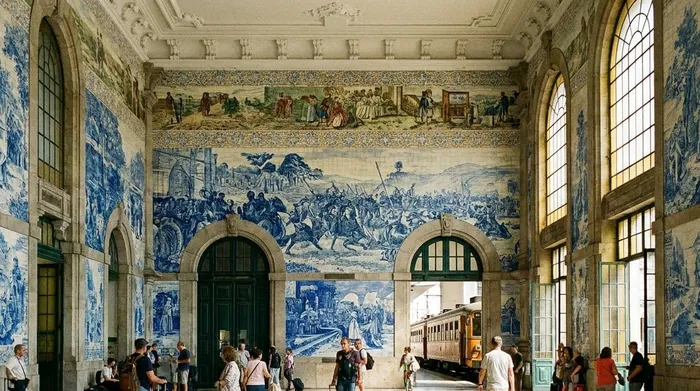
- São Bento station — the entrance hall is lined with twenty thousand azulejos, and it is free to walk into because it is a working station.
- Sé do Porto — the fortress-like cathedral at the top of the hill, with a terrace looking back over the roofs.
- Clérigos Tower — the tallest thing in the old city, and a narrow climb to the top.
- Livraria Lello — the bookshop everyone photographs. It charges admission, the queue is often long, and inside it is very full of people photographing a staircase.
Livraria Lello is the one to be honest about: it is a beautiful room, it is also a ticketed queue for a shop the size of a large living room. If the line is round the corner, the tiled facades of Capela das Almas and Igreja do Carmo are free, outdoors, and take five minutes.
Between the station and the river, Rua das Flores is the street to walk: pedestrianised, lined with restored merchant houses, cafés and small shops, and downhill all the way to the Ribeira. Rua de Santa Catarina, north of the Bolhão market, is the main shopping street and has the Majestic, the city’s best-known old café.
Plan the climbs: start each day at the top, near the Sé, São Bento or the Clérigos, and let the slope carry you down to the water. Coming back up, use the funicular, the metro or a taxi rather than the stairways.
The river and the sea: Foz, Matosinhos and a cruise
The river and the sea are a half day most first visits skip. Porto ends where the Douro meets the Atlantic at Foz, and the ride there along the water is part of the point.
- The historic Tram 1 runs along the riverbank from Infante, near the Ribeira, to Passeio Alegre in Foz; a single ride costs €5.
- Foz do Douro has a long seafront promenade, rocky beaches and the Felgueiras lighthouse on its breakwater.
- Matosinhos, just north, has a wide sandy beach and a street of grill restaurants known for fresh fish; Metro line A runs there from the centre.
- A short river cruise from the Ribeira or Gaia passes under the city’s bridges; it is the easiest way to see the skyline on both banks in an hour.
Modern Porto: Serralves and Casa da Música
Modern Porto is a second layer most itineraries leave out, and it is worth an afternoon on a longer stay or a wet day. Both places are west of the old city, a short metro or bus ride away.
- Serralves: the contemporary art museum designed by Álvaro Siza, set in a large park with an Art Deco villa and gardens that are worth the ticket on their own.
- Casa da Música: the angular white concert hall by Rem Koolhaas at Boavista; take a guided tour of the building or book a concert.
Both sit near the Avenida da Boavista, so they pair easily on the same day, and they make the best case that Porto is more than its old centre.
Eating in Porto: francesinha, markets and port
Eating in Porto is generous, cheap by western European standards and built around a few local dishes. Lunch is the main meal for many residents, and set lunch menus on weekdays are the best value in the city.
- Francesinha: the city’s famous sandwich of meats, melted cheese and a beer-and-tomato sauce; one is enough for a day.
- Mercado do Bolhão: the central market, restored and reopened in 2022, with fresh produce, fish and small food counters.
- Tripas à moda do Porto: tripe and bean stew, the dish that gave the people of Porto their nickname.
- Grilled fish in Matosinhos, and a glass of white or tawny port on a terrace in Gaia at the end of the day.
What to skip, or do differently
What to skip in Porto is mostly about queues and climbing. These are the common mistakes on a short trip:
- Livraria Lello when the line is round the corner: the tiled churches of Capela das Almas and Igreja do Carmo are free.
- Three port lodge tours in one day: two is plenty, and a terrace tasting can replace the second.
- The lower streets of the Ribeira as your daily route uphill: take the Guindais funicular or the metro instead.
- The Douro valley squeezed into half a day: it needs a full day, by train or on a tour.
For the days around this list, use Porto in 3 days or the Porto itinerary, and check where to stay in Porto.
The Douro valley is the fourth day
The Douro valley upriver, with its terraced vineyards, is where port actually comes from, and it is the reason to give Porto a fourth day rather than a third.
| Where | One way | What it needs |
|---|---|---|
| Douro valley (Peso da Régua) | 2 hours by train | A full day. The train hugs the river for the last hour |
| Pinhão | 2.5 hours by train | A full day. Smaller, deeper into the terraces |
| Guimarães | 1 hour by train | A half day. The castle where Portugal began |
| Braga | 1 hour by train | A half day. Churches, and the stairway at Bom Jesus |
The train along the Douro is the point, not the transport. Sit on the right leaving Porto — the line runs beside the water for the last stretch and the view is on that side.
For the Douro and the other trips from the city, from Braga to Aveiro and Coimbra, see day trips from Porto.
Where to stay in Porto
Which part of town you sleep in decides more of the trip than the day count does. The map shows the same property across Booking.com and Agoda, with prices live from them.
Common questions
Are 3 days in Porto enough?
Three days is enough for Porto itself: one day for the old centre and São Bento station, one for Gaia and the port lodges, and one loose day for Foz, Serralves or a river cruise. Add a fourth day for the Douro valley, which needs a full day and is where the wine is made.
What should you not miss in Porto?
Do not miss the upper deck of the Dom Luís I bridge, the azulejo hall inside São Bento station, one port lodge tour in Vila Nova de Gaia, and the view back over the city from the Jardim do Morro at sunset. If time allows, ride Tram 1 along the river to Foz.
Which is nicer, Porto or Lisbon?
Porto is smaller, denser and easier to cover in three days, and the river gives it a single dramatic centre. Lisbon is larger, spread across more hills and has more to do over a week. For a first short trip, Porto is easier; for a week, Lisbon with a day trip to Sintra offers more.
Is Livraria Lello worth it?
Livraria Lello is a beautiful room and also a ticketed queue for a very small shop. It is worth it if you arrive early and the line is short, and not worth an hour of a three-day trip. The tiled churches nearby, Capela das Almas and Igreja do Carmo, are free and take five minutes.
What is Porto most famous for?
Porto is most famous for port wine, which is made in the Douro valley and aged across the river in Vila Nova de Gaia rather than in Porto itself. It is also known for the blue azulejo tiles on its churches and railway station, the double-deck Dom Luís I bridge and the francesinha sandwich.
Opens a price map of Porto. We may earn a commission if you book, at no extra cost to you.
Also on Porto
- Porto in 3 Days
- Porto Itinerary
- Best Time to Visit Porto
- Is Porto Worth Visiting?
- How Many Days in Porto?
- Where to Stay in Porto
Where to next
Where to Stay in Porto
Which area suits you, and which streets to refuse.
The rest of Portugal
More places, sorted by region.
Keep planning Porto
Written and checked by
Travel Guide Kit Editorial
An editorial desk, not an invented persona. Every opening time, ticket price and transport connection here is checked against the operator’s own website and carries the date it was read. Where a page cannot draw on direct experience, it says so.