Quick answer
Three days covers Lisbon itself; a fourth day is for Sintra, which needs a whole day rather than an afternoon.
In short
- Lisbon is built on hills, so plan each day around one or two of them — the order you visit things matters more here than in most cities.
- June and September are the best months; July and August are hot and the queues are at their worst, and October and November are the wettest months of the year.
- Tram 28 is a working tram, not a tourist ride: long queues and the highest concentration of pickpocketing in the city.
Lisbon needs 3 days, plus a 4th for Sintra, which takes a whole day rather than an afternoon. Give each day one or two hills rather than crossing the city twice: Alfama and the castle on one, Baixa and Chiado on another, Belém on a third. Go in June or September. July and August bring the heat and the longest queues, and October and November the rain.
The hills decide the order you see things
Lisbon is spread across seven hills and the walk between two of them is often steeper than the map suggests. The single most useful planning decision is to group each day around one hill and come down only once.
- Alfama and Castelo — the oldest quarter, on the hill east of the centre. One morning, downhill towards the river at the end.
- Baixa and Chiado — the flat grid rebuilt after the 1755 earthquake, with Chiado rising to the west of it.
- Bairro Alto and Príncipe Real — above Chiado; the lifts and funiculars exist precisely because the climb is unpleasant.
- Belém — flat, but 6 km west of the centre. It is a separate half day, not an add-on.
The funiculars and the Santa Justa lift are not sightseeing — they are how the city moves people up hills, and using them as transport rather than as an attraction is what saves the legs.
The castle and Alfama, before the crowds
The castle and Alfama are best done together and early. The Castelo de São Jorge sits on the top of the eastern hill; it has a ticketed entry, and the walls give the widest view over the river. From there, walk down through Alfama rather than up it.
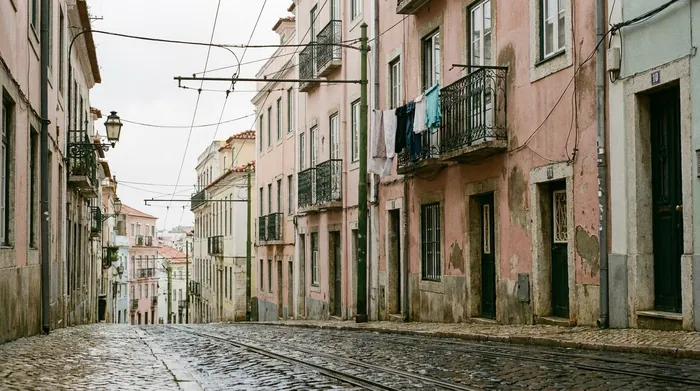
Alfama is the medieval quarter that survived the 1755 earthquake largely intact: stairways, washing lines, tiny squares and the Sé cathedral at its western edge. Mornings are quiet; by midday the lanes below the castle are full. Evenings belong to the fado houses, small restaurants where the singing is the reason to book.
- Start at the castle when it opens, then walk downhill past the Portas do Sol and Santa Luzia viewpoints.
- Leave the Sé and the lanes around Rua de São Miguel for the walk down.
- Book a fado dinner for the same evening if you want one; the best small houses fill up.
Belém is a half day, and the queue is optional
Belém holds the two UNESCO monuments and the most famous custard tart in Portugal, all within about a kilometre of each other along the river.
- Jerónimos Monastery — the cloister is the part worth the ticket; the church next door is free and often has no queue at all.
- Torre de Belém — small inside, and the queue is frequently longer than the visit. Worth seeing from the outside even if you skip going up.
- Padrão dos Descobrimentos — the monument on the waterfront, with a lift to the top for a view back over the monastery.
- Pastéis de Belém — the original bakery, making the tart to the same recipe since 1837.
The queue outside Pastéis de Belém is the takeaway queue. The sit-down rooms inside run deep into the building and are usually far emptier — walk in past the line, ask for a table, and you will often be served faster than the people standing outside.
The miradouros are free, and they are the best part
A miradouro is a public terrace built where a hill drops away. Lisbon has dozens, they cost nothing, and collectively they are the thing visitors remember.
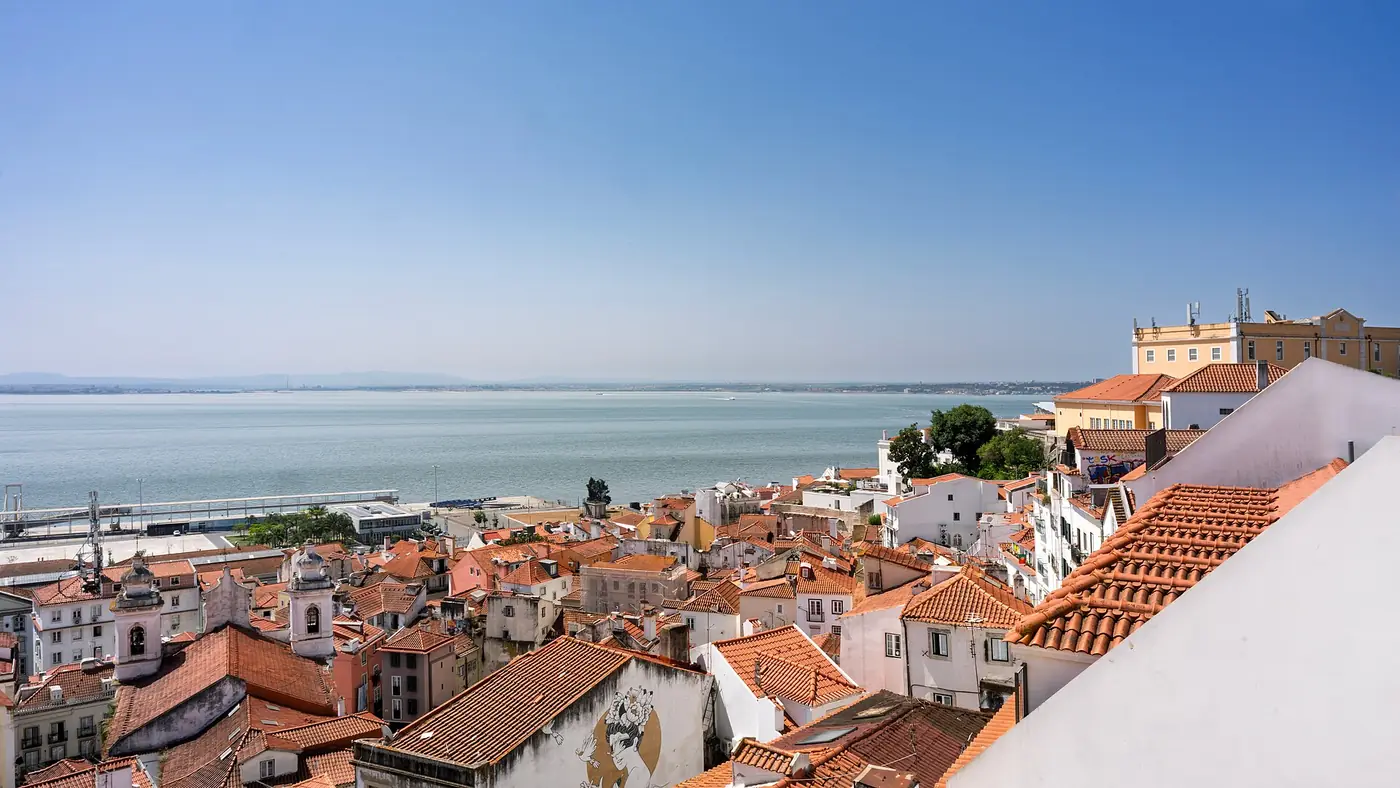
- Portas do Sol — over the rooftops of Alfama towards the river; the classic view of the city.
- Santa Luzia — a minute away, with tiled panels and a small garden, usually calmer.
- Senhora do Monte — the highest of them, and the one to aim for at sunset.
- São Pedro de Alcântara — above Bairro Alto, looking back across Baixa to the castle.
Museums worth the ticket
The museums worth the ticket in Lisbon are fewer than the list of sights suggests, and the best of them are away from the centre. They are also the obvious plan for a wet day between October and March.
- Calouste Gulbenkian Museum: a private collection from Egyptian antiquities to Lalique jewellery, in a modernist building set in a garden; the best single museum in the city.
- National Tile Museum: five centuries of azulejos in the former Madre de Deus convent, including a long panorama of Lisbon before the earthquake.
- MAAT: the riverside art, architecture and technology museum in Belém, with a walkable roof over the Tagus.
- Oceanário: the large aquarium in Parque das Nações, the most reliable choice with children.
The Lisboa Card can pay for itself on a museum-heavy day that also uses the metro and trams; on a day of walking and viewpoints it rarely does.
Eating in Lisbon: tascas, markets and custard tarts
Eating in Lisbon is cheaper and simpler than in most western European capitals, and the best meals are in small neighbourhood tascas rather than restaurants with picture menus. Lunch runs from about 12:30 to 15:00; dinner starts later than in northern Europe, from around 20:00.
- Time Out Market, in the Mercado da Ribeira at Cais do Sodré: many kitchens under one roof; convenient, busy and pricier than the tascas.
- Bacalhau (salt cod) in its many forms, and grilled sardines in June, when the Santos Populares fill Alfama with grills.
- A bifana, the pork sandwich, for a quick lunch; a pastel de nata at any good bakery, not only in Belém.
- A glass of ginjinha, the cherry liqueur, at one of the tiny bars around Rossio.
What to skip, or do differently
What to skip in Lisbon is mostly about queues and timing. These are the common mistakes on a first visit:
- Queuing for Tram 28 at Martim Moniz in summer: board at Campo de Ourique, or walk the same streets downhill.
- Waiting in line to climb the Torre de Belém: the outside is the view; the queue is often longer than the visit.
- The restaurants on Rua Augusta: priced for passing visitors; eat a few streets away in Baixa or Chiado.
- Sintra squeezed into half a day: it needs a whole day or none at all.
For the days around this list, use the Lisbon itinerary or Lisbon in 3 days, check where to stay in Lisbon and the best time to visit Lisbon.
Tram 28 is a working tram, not a ride
Every guide to Lisbon recommends Tram 28, and almost none of them mention what riding it is actually like in season: a queue of forty minutes at Martim Moniz, then a full carriage, standing, with your bag in front of you.
- It is a scheduled service used by residents — it runs from Martim Moniz through Graça, Alfama, Baixa and Chiado to Campo de Ourique.
- The pickpocketing on it is well documented and concentrated at the crowded stops in the centre.
- Board at Campo de Ourique, the far end, if you want a seat — the queue there is a fraction of the one at Martim Moniz.
- Tram 12 covers a shorter loop through the same old streets and is usually near-empty.
If the point is the view rather than the tram, walking down through Alfama gives you the same streets at your own pace, and you can stop.
Sintra needs a whole day, not an afternoon
Sintra is about forty minutes by train from Rossio station, and almost every itinerary underestimates it. The palaces are spread across a wooded hillside, the shuttle bus between them is slow, and the main sites use timed entry.
| Where | One way | What it needs |
|---|---|---|
| Sintra | 40 min by train from Rossio | A full day, and timed tickets booked ahead |
| Cascais | 40 min by train from Cais do Sodré | A half day; a beach town, walkable from the station |
| Setúbal | 1 hour | A half day, for the market and the ferry across the estuary |
| Évora | 1.5 hours | A full day; Roman temple and a walled centre |
If you only have three days in total, Sintra is the thing to cut. Half a day there is worse than not going: you will spend it queueing and travelling rather than seeing anything properly.
For Sintra and the other trips from the city, from Cascais to Évora and Óbidos, see day trips from Lisbon.
Where to stay in Lisbon
Which part of town you sleep in decides more of the trip than the day count does. The map shows the same property across Booking.com and Agoda, with prices live from them.
Common questions
How many days do you need in Lisbon?
Three days covers Lisbon without rushing: one for Alfama and the castle, one for Baixa, Chiado and Bairro Alto, and one for Belém. Add a fourth day for Sintra, which needs a full day of its own because its palaces are spread across a wooded hillside and use timed entry.
Is Tram 28 worth it?
Tram 28 is worth it only if you board at Campo de Ourique, the far end, where there is usually no queue and you can get a seat. From Martim Moniz in summer it means a forty-minute queue for a crowded standing ride through streets you could walk, with pickpockets at the busy central stops.
What is the best time of year to visit Lisbon?
June and September are the best months to visit Lisbon. Both average highs of about 26°C with little rain, and the queues at Belém and Sintra are shorter than in July and August. October and November are the wettest months of the Lisbon year, according to IPMA’s 1991-2020 climate normals.
Is the Lisboa Card worth buying?
The Lisboa Card pays off on a day that combines Jerónimos, the Torre de Belém and heavy use of the metro and trams. For a slower trip built around the free miradouros and walking between neighbourhoods, which is how most of Lisbon is best seen, it usually costs more than the tickets it replaces.
Do you need to book Sintra in advance?
Yes, book the Sintra palaces in advance: they use timed entry and sell out in summer and at weekends. The town itself, its gardens and the hillside walks need nothing booked. Take an early train from Rossio, about 40 minutes, and give Sintra a whole day rather than an afternoon.
Opens a price map of Lisbon. We may earn a commission if you book, at no extra cost to you.
Also on Lisbon
- Is Lisbon Worth Visiting?
- Lisbon in 3 Days
- Lisbon Itinerary
- How Many Days in Lisbon?
- Best Time to Visit Lisbon
- Where to Stay in Lisbon
Where to next
Where to Stay in Lisbon
Which area suits you, and which streets to refuse.
The rest of Portugal
More places, sorted by region.
Keep planning Lisbon
Written and checked by
Travel Guide Kit Editorial
An editorial desk, not an invented persona. Every opening time, ticket price and transport connection here is checked against the operator’s own website and carries the date it was read. Where a page cannot draw on direct experience, it says so.