Quick answer
Ibiza needs four to five days: Dalt Vila's walled old town, the coves of the north, Ses Salines, the sunset at Es Vedrà and a day trip to Formentera.
Ibiza needs 4 to 5 days, and a hire car for at least 2 of them: Dalt Vila’s walled old town, the coves of the north coast, the salt flats and beaches of Ses Salines, and the sunset behind Es Vedrà. The clubs are only half the story; the rest of the island is pine woods, white churches and quiet bays, and Formentera is a short ferry ride away.
This guide covers the best things to do in Ibiza and how to fit them into one trip.
Dalt Vila and Ibiza town
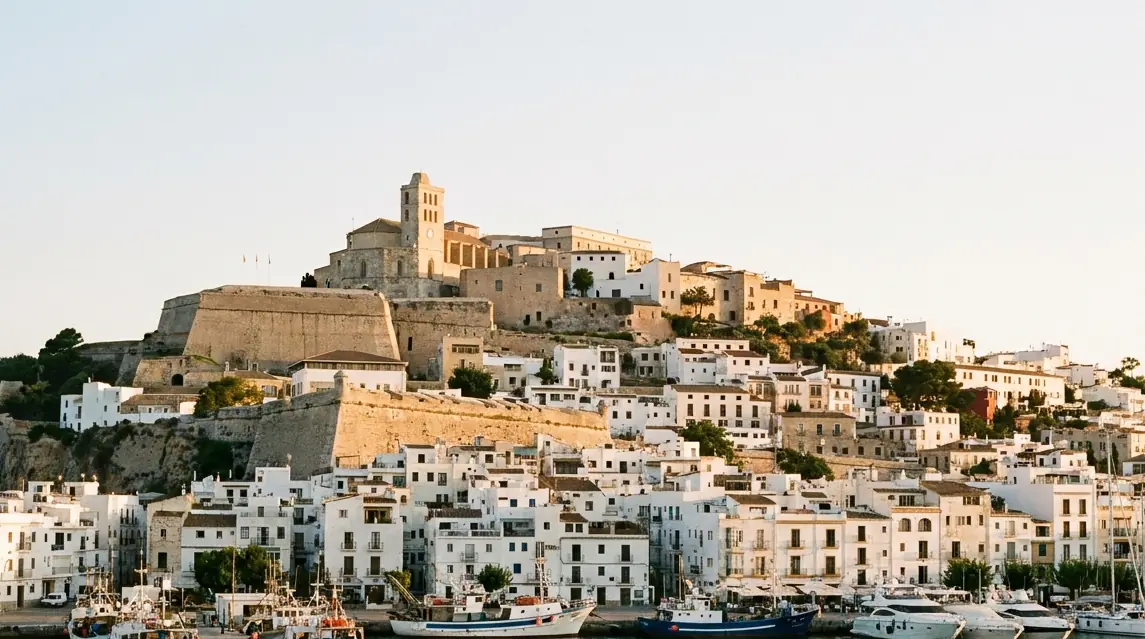
Dalt Vila, the walled upper town of Ibiza town, is the island’s great historic sight, part of a UNESCO World Heritage site since 1999.
- The Renaissance walls, with their bastions, wrap the hill above the harbour.
- The cathedral at the top looks out over the rooftops, the port and the sea.
- Lanes of white houses climb between the gates, with small squares and viewpoints.
- The Puig des Molins necropolis, below the walls, holds thousands of Phoenician and Punic tombs, with a museum.
Walk up through the main gate from the harbour in the late afternoon, when the heat eases and the light warms the walls. Below Dalt Vila, the old fishermen’s quarter of La Marina and the harbour fill with bars, shops and restaurants in the evening.
Beaches near Ibiza town
The beaches near Ibiza town are handy for a swim between sights. Talamanca, across the bay, is a calm sandy beach with views back to Dalt Vila, and Ses Figueretes is a town beach with a promenade. Platja d’en Bossa, the island’s longest beach, is lined with hotels and beach clubs.
Markets
The island’s hippy markets date back to the 1970s. The best known are Las Dalias, near Sant Carles, on Saturdays, and Punta Arabí, at Es Canar, on Wednesdays in season, with crafts, clothes and live music. Check days before going, as they change with the season.
Which part of Ibiza town to stay in
Which part of Ibiza town suits you depends on noise and stairs. La Marina is the liveliest and loudest in summer. Dalt Vila is quiet but steep, with a few small hotels in old houses. The new town around Vara de Rey is practical, and Marina Botafoch is calmer, near Talamanca beach.
Beaches and coves
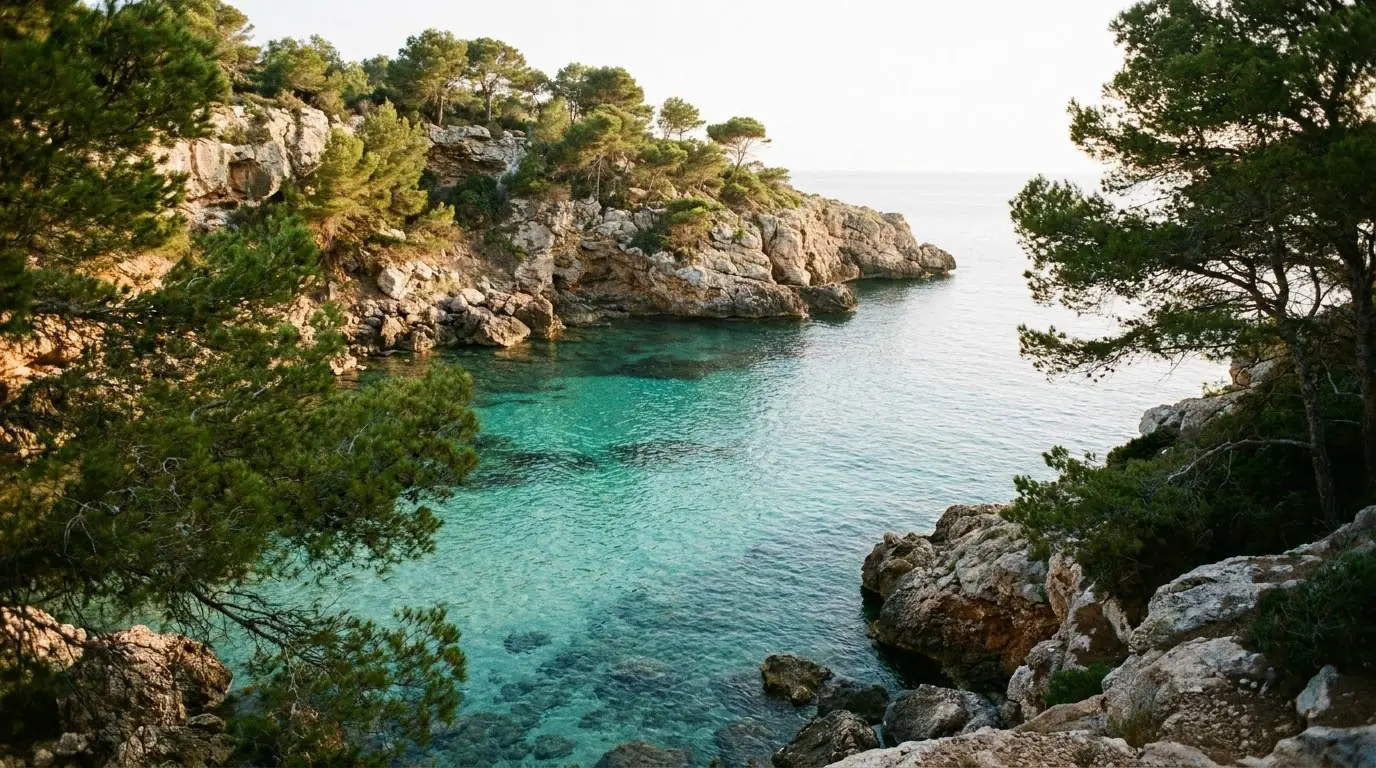
Ibiza has dozens of beaches and coves, from long sandy bays to tiny inlets below pine-covered cliffs.
- Ses Salines, in the south, is a long beach in a natural park of salt pans, dunes and pine woods.
- Cala Comte, in the west, has shallow turquoise water and is famous for sunsets.
- Cala Salada, north of Sant Antoni, is a pine-ringed cove with clear water.
- Cala Xarraca and Benirràs, in the north, are quieter coves in green bays.
- Aigües Blanques, on the east coast, has long sands below clay cliffs.
The small coves fill quickly in July and August, and their car parks are small, so arrive early. Several coves are reached on narrow roads or dirt tracks, and some have only a beach bar, so bring water and shade.
Ses Salines Natural Park
Ses Salines Natural Park, shared with Formentera, protects the salt pans, dunes and sea between the two islands. Flamingos and other birds feed in the salt pans in some seasons, and the seagrass meadows offshore keep the water so clear. Walk along the beach to the old watchtower at the southern tip.
Sunsets and Es Vedrà
Watching the sun set behind Es Vedrà, the rock island off the south-west coast, is the island’s most famous evening ritual.
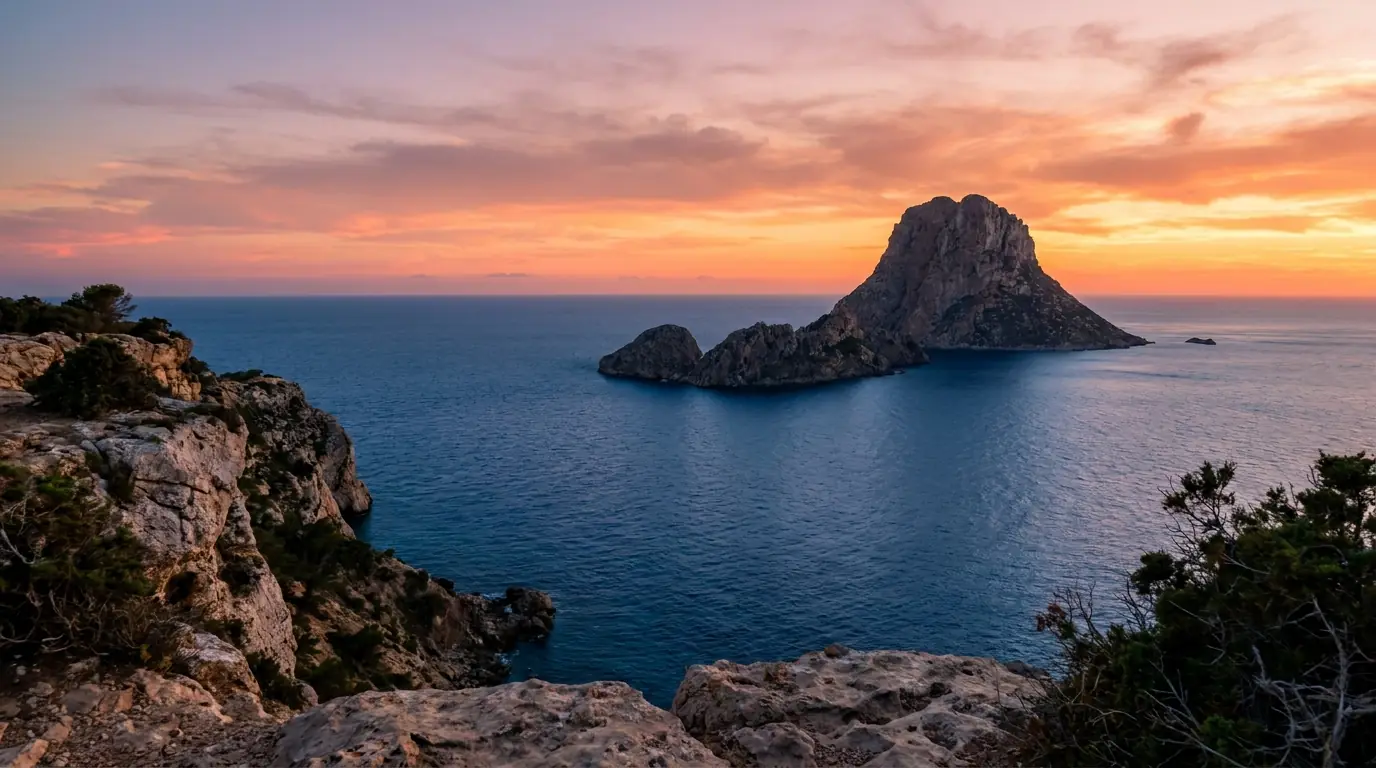
- Cala d’Hort and the cliffs above it face Es Vedrà directly, the classic sunset view.
- The Sant Antoni sunset strip has bars facing the sea, with music as the sun goes down.
- Cala Comte is the beach for sunset, with the sea and small islands in front.
- Benirràs, in the north, is known for drummers at sunset on summer Sundays.
Arrive early for a place in summer, and bring a torch for walks back along the clifftops. The paths above Cala d’Hort are rough and unlit.
The south-west coves by day
The south-west coves are worth the drive by day as well as at sunset. Cala Vadella, Cala Tarida and Cala d’Hort are small cove resorts with villas and hotels, while Es Cubells and Cala Jondal, further east, are a quieter area of villas on the cliffs. All of them are best reached with a car.
The north and the countryside
Inland and in the north, Ibiza is quiet: pine-covered hills, almond and olive groves, whitewashed churches and villages that change little in summer.
- Santa Gertrudis is a small village of cafés and shops in the centre of the island.
- Sant Joan de Labritja and Sant Miquel de Balansat have white hilltop churches and quiet squares.
- Portinatx and the bays of the north coast are calmer than the south.
- Sant Carles, in the north-east, is the gateway to Las Dalias and the coves of the east coast.
Driving between villages is part of the pleasure: the roads are short, and no part of the island is much more than an hour away. Many old farmhouses are now rural hotels and restaurants.
Santa Eulària and the east coast
Santa Eulària des Riu, on the east coast, is the island’s calm, family-friendly town, with a promenade, a marina and a fortified church on the Puig de Missa hill above it. The coves around it, such as Cala Llonga and S’Argamassa, suit families looking for quieter water and fewer parties.
Walking and the sea
Walking and the sea are the best ways to explore the coast. Coastal paths link several coves, and boat trips, kayaks and paddleboards reach caves and beaches that roads do not. Snorkelling is good over the seagrass meadows in clear, calm water.
Agroturismos and Santa Gertrudis
Agroturismos, rural hotels in restored farmhouses, are the most peaceful places to stay in the countryside, many among almond and olive groves. Santa Gertrudis, in the centre of the island, makes a clever base: no beach on the doorstep, but every part of the coast within about 20 to 30 minutes by car.
Clubs and nightlife
The superclubs made Ibiza famous.
- The big clubs are around Platja d’en Bossa, Ibiza town and Sant Antoni.
- The club season runs roughly from late spring to early autumn, marked by opening and closing parties.
- Tickets for the biggest nights sell out; book ahead, and expect prices far above the mainland.
- Outside the season, most of the big clubs close.
If you come for the clubs, stay near them, and plan quieter days on the beaches of the north between nights out. If you come for peace, stay away from Sant Antoni’s West End and Platja d’en Bossa in summer.
Beach clubs
Beach clubs, with loungers, music and restaurants on the sand, are the daytime side of Ibiza’s party scene, especially at Platja d’en Bossa and Cala Jondal. They are a world away from the simple chiringuitos, beach bars, found at the quieter coves of the north.
Getting back after a night out
Getting back after a night out needs a plan in summer, when taxis are in high demand. Book a transfer ahead, or use the night buses that run in season, and never drive after drinking. Staying in Ibiza town or Platja d’en Bossa keeps the ride to most big clubs short.
Formentera, and how many days
The small island to the south is the classic day trip from Ibiza, and it changes how many days you need.
- Fast ferries from Ibiza town reach Formentera in about half an hour.
- Ses Illetes beach, on a narrow sandy spit, has some of the clearest water in the Mediterranean.
- Hire a bike, scooter or car on arrival to reach the beaches and the lighthouse at La Mola.
How many days you need depends on the trip: 3 days for Dalt Vila, a few beaches and a sunset; 4 to 5 days to add the north and Formentera; a week for a slow beach holiday. For another Balearic island, compare things to do in Mallorca.
Ibiza with children
Ibiza with children works well outside the party areas. Santa Eulària, Es Canar and the calm coves of the east and north have shallow water, boat trips are short, and the walls of Dalt Vila feel like a castle. Avoid Sant Antoni’s West End and Platja d’en Bossa, which are loud late into the night.
Ibiza out of season
Ibiza out of season, from November to April, is a quiet island of almond blossom, walking trails and local life. Many hotels, beach restaurants and all the big clubs close, but Ibiza town and Santa Eulària stay open, and the mild winter suits walkers and cyclists.
Formentera by season
Formentera by season follows Ibiza: ferries run all year, but far more often in summer. In July and August the beaches of Ses Illetes are crowded and the boats fill up, so go early or choose June and September. In autumn and winter, rough seas can cancel crossings, so keep the day flexible.
Getting there, eating and when to go
Getting there is easy by air from much of Europe in summer, and by ferry from the mainland and Mallorca.
- Ibiza airport is about 15 to 20 minutes from Ibiza town.
- Ferries sail from Barcelona, Valencia and Dénia on the mainland, and from Palma.
- Buses link the main towns and beaches in summer; a car is better for the north and the coves.
- Taxis are in high demand on summer nights; book or plan ahead.
Eating in Ibiza ranges from beach restaurants to farmhouse kitchens. Look for bullit de peix, a fish stew served with rice, and flaó, a cheese and mint tart. For the city of Barcelona, a ferry away, see things to do in Barcelona.
- Sofrit pagès, a hearty country stew of meats and potatoes.
- Grilled fish and seafood at the harbours and coves.
- Hierbas ibicencas, a local herb liqueur served after meals.
- Island wines and olive oil from the farms of the interior.
For the weather, these are the 1981-2010 normals for Ibiza airport from AEMET: August averages a 30.3°C high and July 29.7°C, with very little rain, while January averages 15.7°C.
Ibiza month by month, in brief
Ibiza month by month is dry and sunny for most of the year, with about 45 rainy days and 413 mm of rain at the airport. June averages a 26.8°C high and September 27.7°C, with a warmer sea. July is the sunniest month, with 334 hours of sunshine (AEMET, 1981-2010).
October averages 24.0°C but is the wettest month, at 58 mm, often in short, heavy storms. From late January into February, almond trees blossom in the countryside, the best reason for a winter visit.
What to skip, or do differently
Crowds, cost and timing cause most of the mistakes:
- Only the south and the clubs: the north shows a different island.
- August without bookings: rooms, cars and club tickets sell out.
- Arriving at a small cove at midday in summer: go early, or go in June or September.
- Driving after a night out: use taxis, buses or a booked transfer.
Expect the Balearic tourist tax to be added to accommodation bills, and higher prices than on the mainland in high summer. Spreading the trip between a quiet base and a few planned nights out gives the best of both islands: the party one and the peaceful one.
- Winter for the clubs: the big venues are closed until late spring.
- A tight Formentera day in October: autumn storms can cancel the boats.
- A remote villa in the north without a car: buses are infrequent and the coves are on narrow roads.
Where to stay in Ibiza
In Ibiza, Ibiza town and Dalt Vila is the base for a first trip, culture, food, and Talamanca for a calm bay near town. The map shows the same property across Booking.com and Agoda, with prices live from them.
Common questions
What is Ibiza best known for?
Ibiza is best known for its clubs and nightlife, and for its beaches, coves and sunsets, especially facing the rock island of Es Vedrà. It is also known for Dalt Vila, its walled old town and a UNESCO World Heritage site, its hippy markets and its quiet countryside.
How many days do you need in Ibiza?
You need 4 to 5 days in Ibiza to see Dalt Vila, a few beaches and coves, the sunset at Es Vedrà and the quieter north, with a day trip to Formentera. Three days covers the highlights in a rush; a week suits a slow beach holiday.
Is Ibiza worth visiting if you do not go clubbing?
Yes, Ibiza is worth visiting without clubbing: the island has a UNESCO-listed old town, dozens of clear-water coves, the salt flats of Ses Salines, sunsets over Es Vedrà and a quiet countryside of villages. Stay in the north or Ibiza town and visit in June or September.
Do you need a car in Ibiza?
A car is very useful in Ibiza for the coves, the villages of the north and the sunset viewpoints, which buses reach less often. Without one, stay in Ibiza town or Sant Antoni and use buses, boats and taxis. Never drive after drinking; taxis and night buses run in summer.
When is the best time to visit Ibiza?
The best time to visit Ibiza is June or September: hot beach weather with fewer crowds than July and August, when the August high averages 30.3°C at the airport. May and October are quieter and cooler, and most big clubs close from mid-October to late spring.
Keep planning Ibiza
Written and checked by
Travel Guide Kit Editorial
An editorial desk, not an invented persona. Every opening time, ticket price and transport connection here is checked against the operator’s own website and carries the date it was read. Where a page cannot draw on direct experience, it says so.