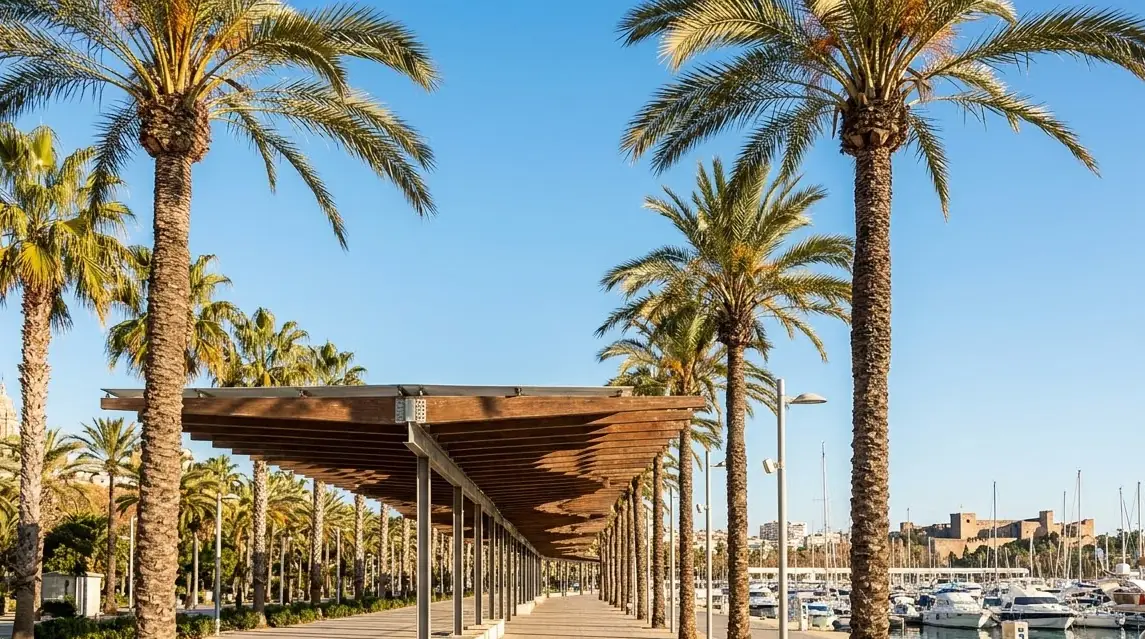
Quick answer
May, June and September are the best months to visit Málaga, with highs of 24 to 28°C and almost no rain; January still averages 16.8°C, making Málaga a strong winter city break.
The best time to visit Málaga is May, June or September, when highs run from 24.3°C to 28.2°C and rain is rare; for a winter city break, January still averages 16.8°C and 180 hours of sun. July and August are hot and busy, and November and December are the wettest months. The figures are AEMET’s normals for Málaga airport, where rain falls on about 42 days a year.
May, June and September
May, June and September are warm enough for the beach, dry, and outside the August peak.
| When | Mean high | Rain | Verdict |
|---|---|---|---|
| May / June | 24.3°C / 28.1°C | 20 / 6 mm | Best: warm, dry, sea warming up |
| September | 28.2°C | 20 mm | Best for swimming; quieter than August |
| July / August | 30.5°C / 30.8°C | 0 / 6 mm | Hot and busy; beach weather |
| October / April | 24.1°C / 21.4°C | 57 / 44 mm | Good for sightseeing; some rain |
| November / December | 20.1°C / 17.5°C | 100 / 100 mm | Wettest; mild between showers |
| January to March | 16.8°C to 19.6°C | 52 to 69 mm | Winter sun; quiet and good value |
For walking the old town and climbing to the Gibralfaro castle, April, May and October are the most comfortable. For swimming, the sea is warmest in late summer, so September is the month that combines both.
Málaga month by month, with the numbers
Every figure below is the 1981-2010 climate normal for Málaga airport, published by AEMET, the Spanish state meteorological agency. Rainy days count days with at least 1 mm.
Twelve months at a glance — bars are rain, numbers are mean highs
| Month | Mean high | Mean low | Rain | Rainy days | Sunshine |
|---|---|---|---|---|---|
| January | 16.8°C | 7.4°C | 69 mm | 5.8 | 180 h |
| February | 17.7°C | 8.2°C | 60 mm | 4.8 | 180 h |
| March | 19.6°C | 9.8°C | 52 mm | 4.0 | 222 h |
| April | 21.4°C | 11.1°C | 44 mm | 4.5 | 244 h |
| May | 24.3°C | 14.2°C | 20 mm | 3.1 | 292 h |
| June | 28.1°C | 18.0°C | 6 mm | 0.8 | 329 h |
| July | 30.5°C | 20.5°C | 0 mm | 0.1 | 347 h |
| August | 30.8°C | 21.1°C | 6 mm | 0.5 | 316 h |
| September | 28.2°C | 18.8°C | 20 mm | 2.1 | 255 h |
| October | 24.1°C | 15.0°C | 57 mm | 4.4 | 215 h |
| November | 20.1°C | 11.3°C | 100 mm | 5.6 | 172 h |
| December | 17.5°C | 8.9°C | 100 mm | 6.6 | 160 h |
Read the sunshine column first. Málaga averages 2,905 hours of sunshine a year, and even its darkest month, December, has 160 hours. Rain falls on only 42 days or so a year, most of them between October and April.
Winter in Málaga: the mild season
This is when the city stands out most from the rest of Europe.
- January averages a 16.8°C high and a 7.4°C low, with 180 hours of sunshine.
- February is similar, at 17.7°C and 180 hours, with fewer rainy days than January.
- The museums, the Alcazaba and the cathedral have their shortest queues of the year.
- Hotel prices are at their lowest outside Christmas, New Year and the start of Holy Week.
Winter is not beach weather: the sea is cool, and evenings need a jacket. But for a city break of museums, walks and long lunches outside, few cities in Europe match it between December and February.
Summer in Málaga: heat, beaches and the August fair
This is the busiest time of the year.
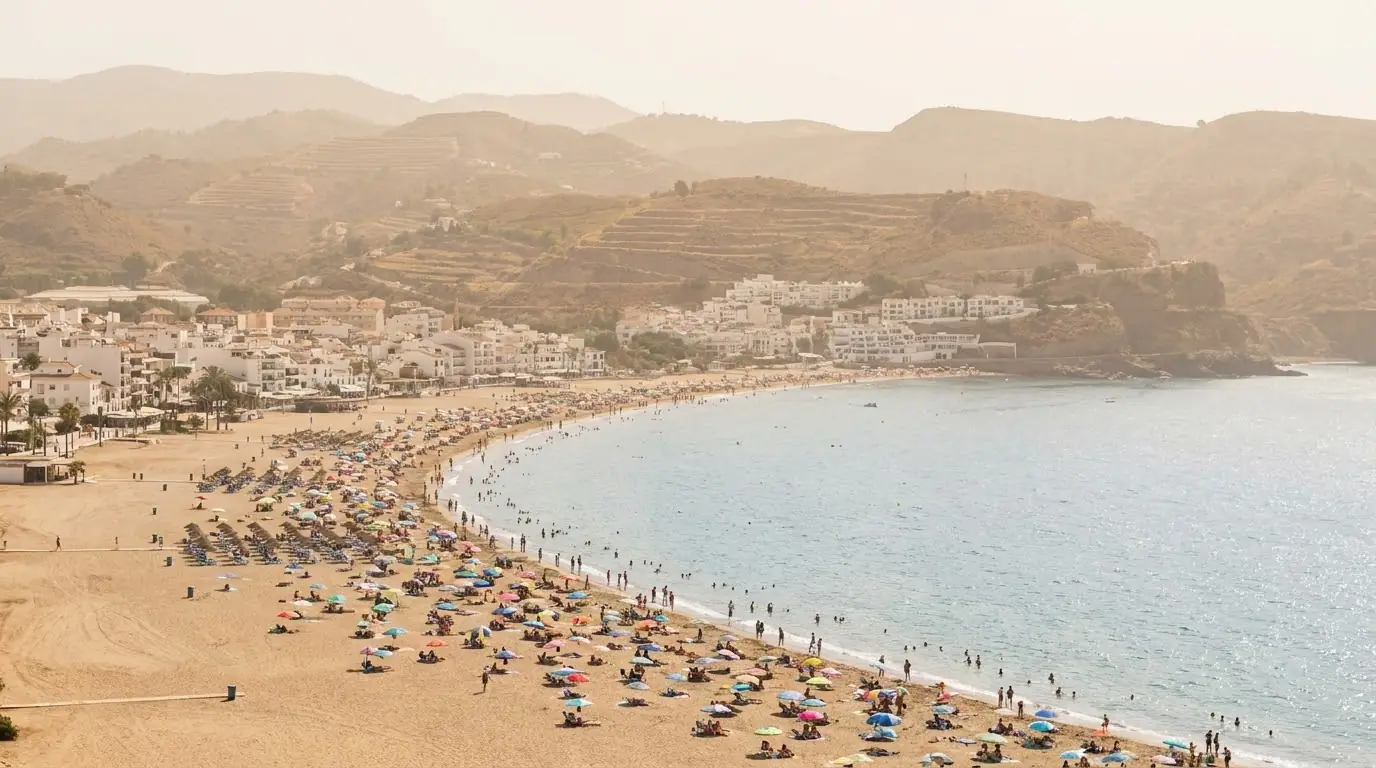
- July and August average highs of 30.5°C and 30.8°C, with nights at about 20 to 21°C.
- July is the driest month of the year, with no measurable rain in an average year.
- The city beaches, from La Malagueta to Pedregalejo, are full at weekends.
- The Feria de Málaga in mid-August fills Calle Larios with music and dancing by day.
Plan sightseeing for the morning and the evening, and keep the early afternoon for the beach or a long lunch indoors. Book a room with air conditioning; the warm nights are the hardest part of a Málaga summer.
Spring and autumn: the shoulder months
These months suit sightseeing more than the height of summer.
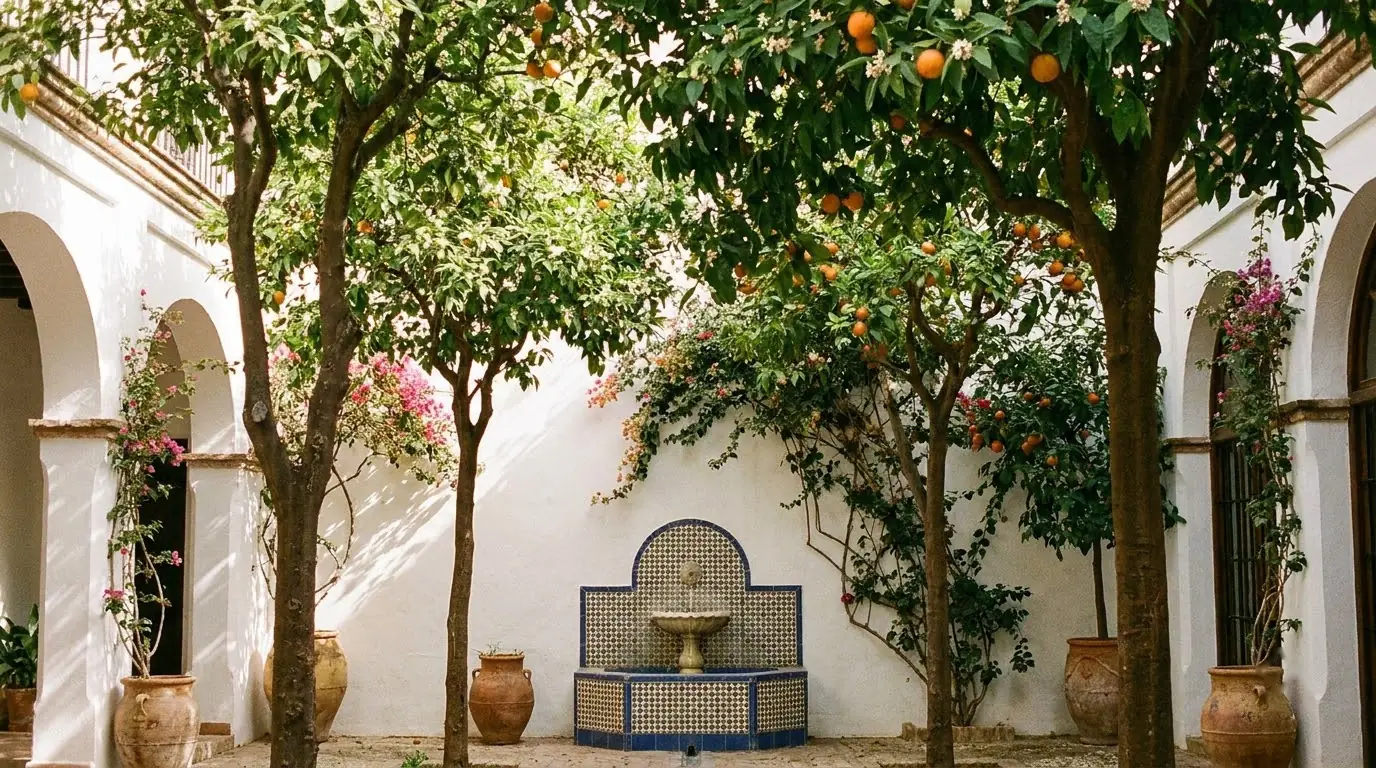
- March and April bring highs of 19.6°C and 21.4°C and the orange blossom in the city’s squares.
- Holy Week, in March or April, is the city’s biggest event, with processions through the centre all week.
- October averages 24.1°C, warm enough for the beach on many days, but rain returns, at 57 mm.
- November and December are the wettest months, at about 100 mm each, often in short heavy spells.
Best time for each kind of Málaga trip
These windows follow the AEMET normals.
Festival dates move each year; check them on the city’s official tourism site, Visita Málaga, before you book.
For where to base yourself in each season, see where to stay in Málaga, and for what to do once you are there, things to do in Málaga.
When not to book
These choices disappoint most often:
- A beach-led trip in November or December: the sea is cool and these are the wettest months.
- The August fair week without a room booked: the city fills and prices peak.
- Holy Week for a quiet stay in the old town: the processions close streets for hours.
- Inland day trips in July and August afternoons: Granada, Ronda and Córdoba are far hotter than the coast.
To see whether the city suits you at all, read whether Málaga is worth visiting.
Where to stay in Malaga
In the busy months the best-placed rooms go first, so choose the area as soon as the dates are set. The map shows the same property across Booking.com and Agoda, with prices live from them.
Common questions
What is the best month to visit Malaga?
May, June and September are the best months to visit Málaga: highs of 24.3°C to 28.2°C, almost no rain and fewer crowds than August, according to AEMET’s 1981-2010 normals. September has the warmest sea, and May the best weather for walking and day trips inland.
Is Malaga warm in winter?
Málaga is mild in winter rather than warm: January averages a 16.8°C high and a 7.4°C low, with about 180 hours of sunshine. That makes it one of the best winter city breaks in Europe, but not a beach destination; the sea is cool and evenings need a jacket.
What is the rainy season in Malaga?
The rainy season in Málaga runs from October to April, peaking in November and December at about 100 mm each. Rain usually comes in short heavy spells rather than days of drizzle, and the city still averages 160 or more hours of sunshine even in its darkest month.
Is Malaga too hot in August?
Málaga is hot in August but milder than inland Andalusia: the average high is 30.8°C, with warm nights around 21°C. Sightseeing works in the morning and evening, with the beach or a long lunch in between. Seville and Córdoba are far hotter the same month.
Keep planning Malaga
Written and checked by
Travel Guide Kit Editorial
An editorial desk, not an invented persona. Every opening time, ticket price and transport connection here is checked against the operator’s own website and carries the date it was read. Where a page cannot draw on direct experience, it says so.