Two days covers Málaga as a city; three adds one day trip, such as Granada, Ronda or the Caminito del Rey.
Málaga is a city first and a beach second: the Alcazaba, the cathedral and the Picasso Museum are in a compact old centre, with the city beach a short walk away.
Málaga is one of the sunniest cities in Spain, with 2,905 hours of sunshine a year and a 16.8°C January high, which makes it a strong winter city break.
The Alhambra in Granada and the Caminito del Rey both use timed tickets, so book them before fixing the day-trip day.
Give Málaga three days: two for the city — the Alcazaba, the cathedral, the Picasso Museum and the port — and one for a day trip to Granada, Ronda or the Caminito del Rey. It is a city first and a beach second, and one of the sunniest in Spain, with a 16.8°C January high.
A city first, a beach second
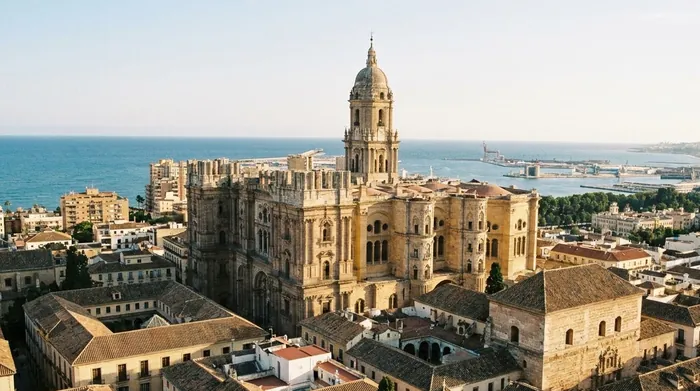
Illustration of Málaga's old town rooftops, cathedral and seaAI-generated · GLabs nano_banana_pro · Generated
Málaga is usually sold as the airport for the Costa del Sol. The city itself is a different place from the resort towns along the coast: an old centre with a Moorish fortress, a cathedral and one of Spain’s best small art scenes.
The old centre is compact and mostly pedestrian.
The city beach, La Malagueta, is a short walk east of the centre and the port.
The resort strip — Torremolinos, Benalmádena and beyond — is to the west, and is a different holiday.
Two days covers the city; the third is for the day trips inland.
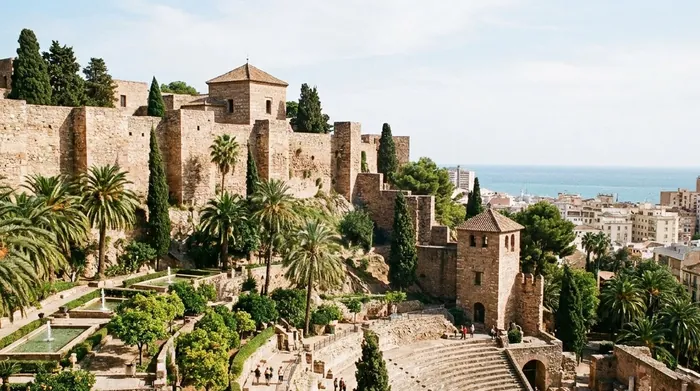
The Alcazaba, Gibralfaro and the Roman Theatre
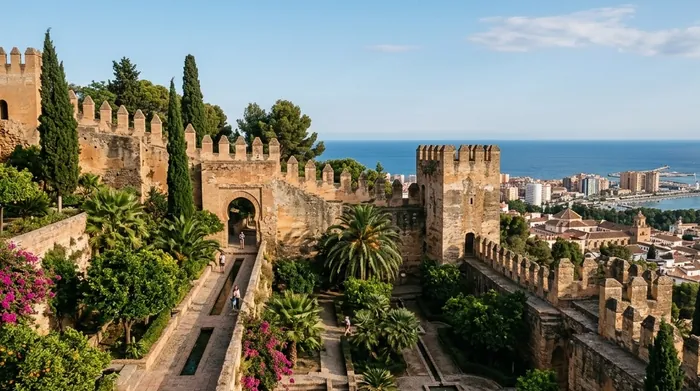
Illustration of a Moorish fortress's walls and gardens in MálagaAI-generated · GLabs nano_banana_pro · Generated
Three layers of Málaga’s history sit on one hillside at the edge of the old centre.
The Roman Theatre at the foot of the hill, visible from the street.
The Alcazaba above it — a Moorish fortress-palace of courtyards, gardens and walls.
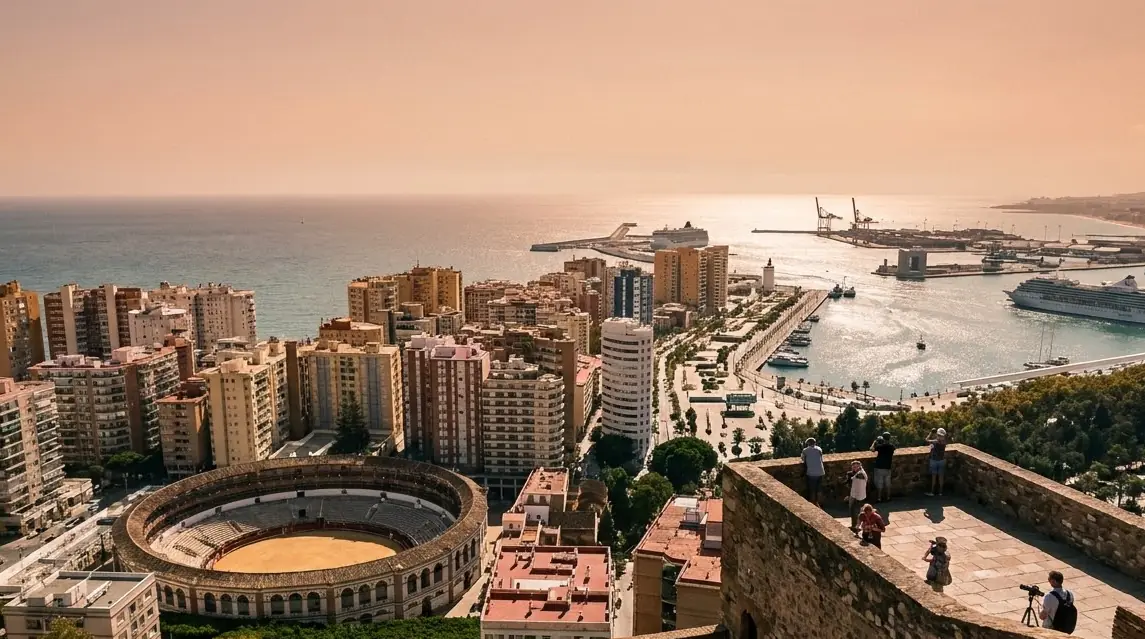
The Gibralfaro castle at the top, linked to the Alcazaba by walls, with the best view over the port and the bullring.
The climb to Gibralfaro is steep and exposed; in summer, go early or take the bus up and walk down.
Picasso’s city, and more
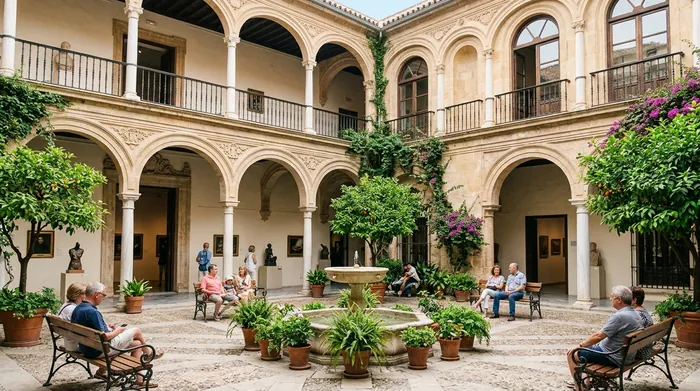
Illustration of a palace courtyard museum in Málaga's old townAI-generated · GLabs nano_banana_pro · Generated
Picasso was born in Málaga, and the city has built an art scene around him that is out of proportion to its size.
The Museo Picasso Málaga, in a palace in the old town.
His birthplace, the Casa Natal, on Plaza de la Merced.
The Centre Pompidou Málaga, under a coloured glass cube on the port.
Soho, the district between the centre and the river, known for its large street murals.
The old town, the cathedral and the market
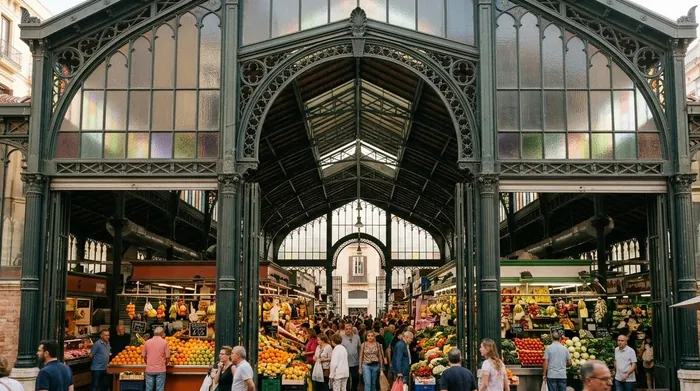
Illustration of the entrance of a busy food market in MálagaAI-generated · GLabs nano_banana_pro · Generated
The cathedral is nicknamed La Manquita, "the one-armed lady", because its second tower was never finished.
Calle Larios is the main shopping street, paved in marble and lined with the most expensive terraces in town.
The Mercado de Atarazanas, behind an old Moorish shipyard gate, is the central food market.
Eat a few streets away from Calle Larios; the terraces on it are priced for passing visitors.
The port and the beach
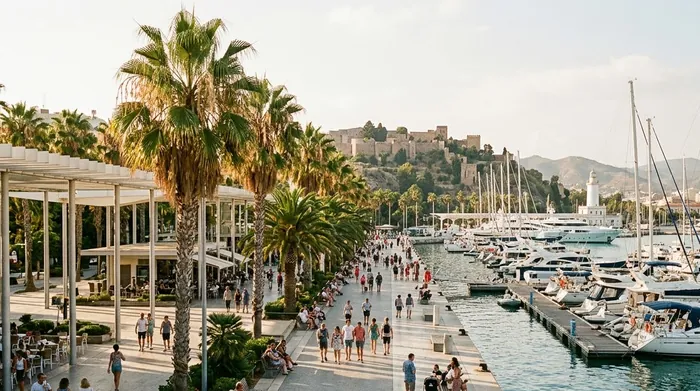
Illustration of a palm-lined port promenade in MálagaAI-generated · GLabs nano_banana_pro · Generated
Muelle Uno is the rebuilt port promenade, running from the centre towards the beach.
La Malagueta is the city beach, closest to the centre.
Pedregalejo and El Palo, further east, are former fishing districts known for sardines grilled on skewers on the beach.
The sea is the reason to come in summer: July averages a 30.5°C high and almost no rain (AEMET 1981-2010).
Day trips from Málaga
Day trips from Málaga
Where
What it is
Book ahead
Granada
The Alhambra and the Albaicín
Yes — Alhambra timed tickets
Caminito del Rey
A walkway along a gorge wall
Yes — timed tickets
Ronda
A town split by a gorge and a high bridge
No
Córdoba
The Mezquita; about 1 hour by high-speed train
Recommended in spring
Nerja
Coastal town with caves and a clifftop viewpoint
No
Granada is the one to choose if you only do one, but only with an Alhambra ticket: the palaces are the reason to go, and entry is by timed slot.
Illustration of a Moorish fortress above a Roman theatre in MálagaAI-generated · GLabs nano_banana_pro · Generated
Common questions
What should I not miss in Malaga?
The Alcazaba and the view from Gibralfaro, the Roman Theatre, the cathedral, the Picasso Museum, and a day trip to the Alhambra in Granada with a timed ticket.
How to spend 3 days in Malaga?
Day one: the Alcazaba, Gibralfaro and the Roman Theatre. Day two: the Picasso Museum, the cathedral, the market and the port and beach. Day three: a day trip to Granada, Ronda or the Caminito del Rey.
What is Malaga, Spain best known for?
As Picasso’s birthplace, as the gateway to the Costa del Sol, and for its sun: 2,905 hours a year at the airport station (AEMET 1981-2010).
Is Malaga good in winter?
Yes, as a city break. January averages a 16.8°C high and 180 hours of sunshine, though November and December are the wettest months, at about 100 mm each.