Quick answer
Yes, Madeira is worth five days, or a week for the hikes, especially for walkers, with levadas, mountain ridges and a 20.0°C January high in Funchal; it suits least those who want sandy beaches.
In short
- Funchal averages a 20.0°C high in January and 26.8°C in August, so the island works in every season.
- Madeira suits least those who want long sandy beaches; the sand is on Porto Santo, a ferry ride away.
- Without a hire car, Madeira shrinks to Funchal and organised tours.
Yes, Madeira is worth five days, or a week for the hikes, and it rewards walkers above all: levada paths through laurel forest, ridges above 1,800 m and a mild climate, with Funchal at 20.0°C in January. It suits least those who want sandy beaches or who will not drive. For mountains, gardens and walking, few islands in Europe match it, in any season of the year. So, is Madeira worth visiting? The sections below weigh the highlights against the downsides.
Who Madeira suits, and who it does not
Madeira is one of the best islands in Europe for some trips and the wrong choice for others.
The dividing line is walking: a trip built around levadas, peaks and mild winter days suits the island, and a trip built around a beach does not.
What Madeira does better than almost anywhere
Mountains, forest and sea share one small island here, under a mild climate, and few places in Europe combine all three.
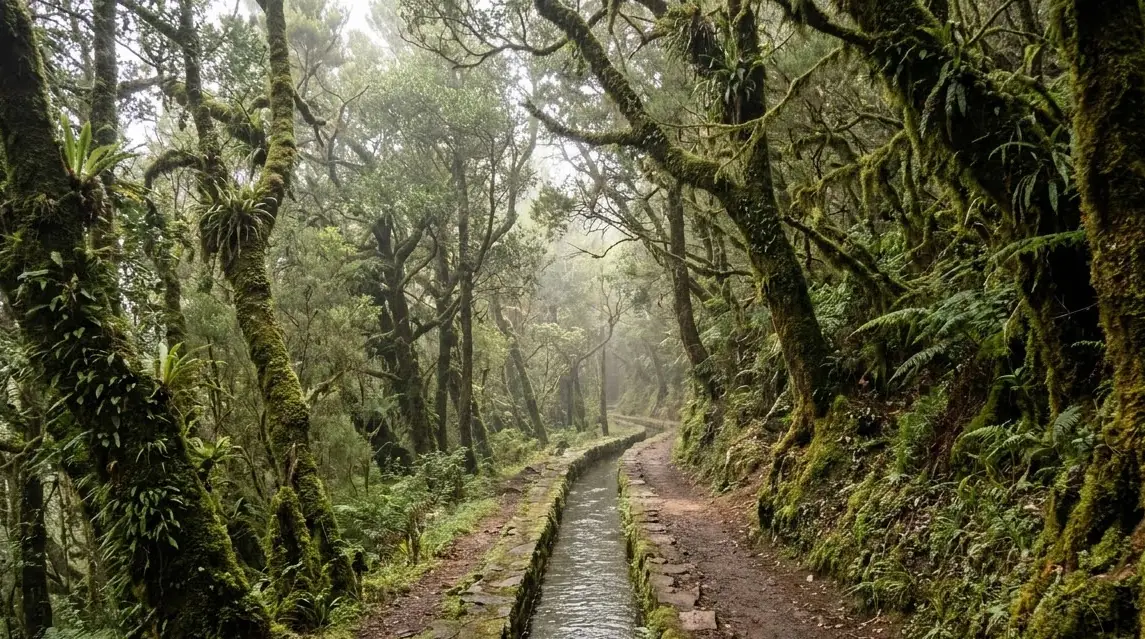
- The levadas: irrigation channels cut along the mountainsides, with narrow paths beside them, many nearly level.
- The Laurisilva, the laurel forest the levadas pass through, a UNESCO World Heritage site.
- The central peaks: the ridge walk between Pico do Arieiro, 1,818 m, and Pico Ruivo, 1,862 m, the island’s highest.
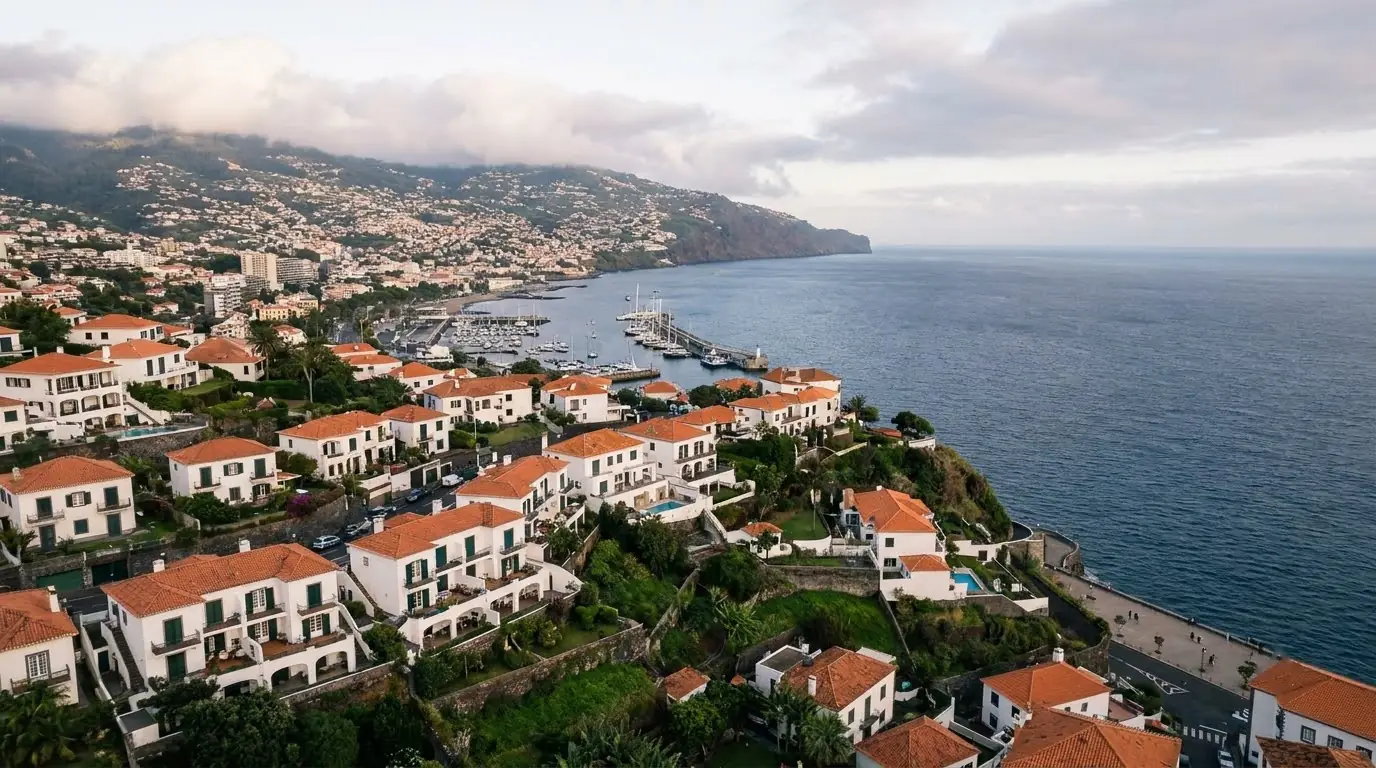
- Funchal: a compact capital with a covered market, gardens, a cable car to Monte and Madeira wine lodges.
- Year-round mildness: Funchal’s coldest month averages a 20.0°C high.
Food and wine
Madeira’s food is another reason to go: espetada, beef grilled on bay-wood skewers; espada, the black scabbard fish, often served with banana; bolo do caco, flat bread baked on a stone and served with garlic butter.
Poncha is the island’s drink of sugar-cane rum, honey and lemon, and Madeira wine, fortified and aged in the island’s warm lodges, is tasted in old cellars in Funchal.
It is also an island of short distances on the map and long ones on the road: tunnels and expressways have made the south coast fast, but the mountain roads and the north coast reward a slow pace.
The downsides of Madeira
They are real, and most of them come from expecting a different kind of island.
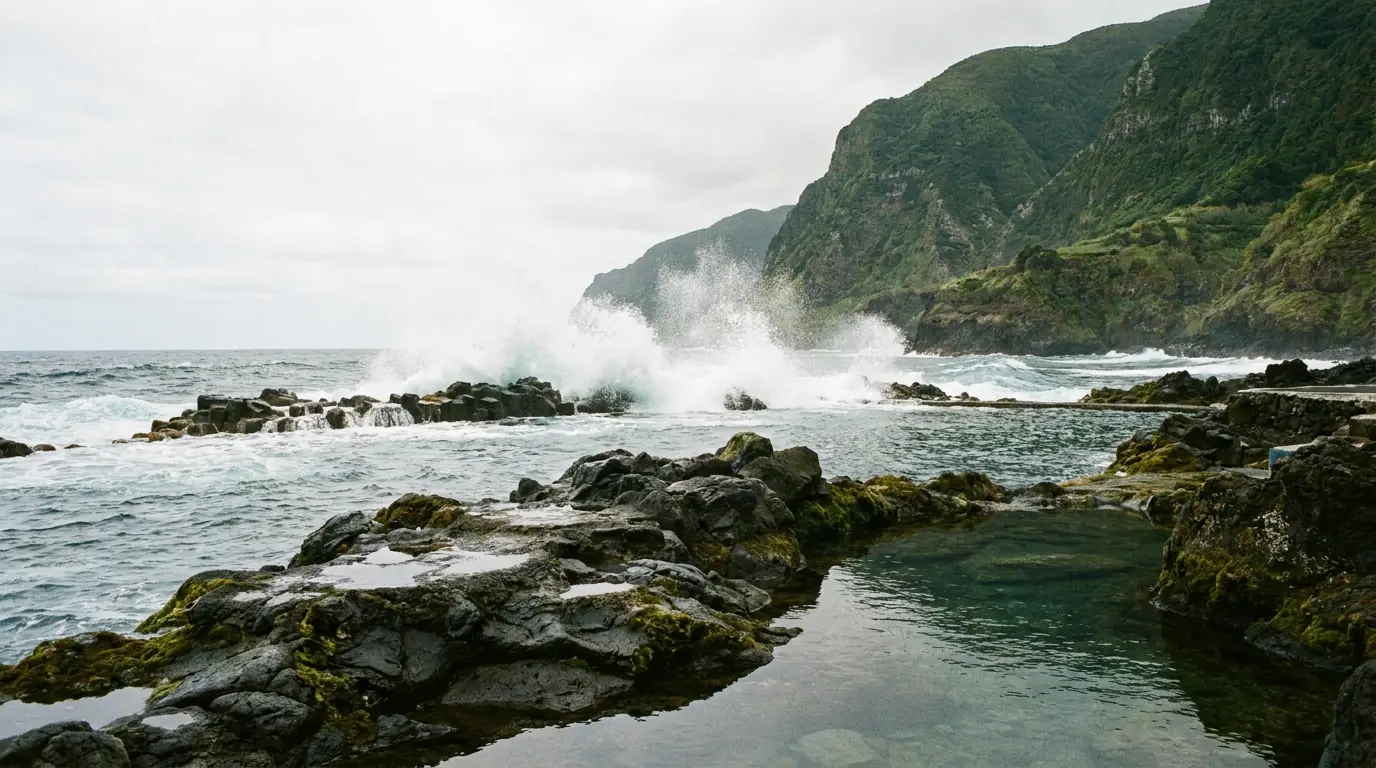
- No long sandy beaches: the swimming is in rock pools, pebble coves and a few small beaches; the sand is on Porto Santo.
- Mountain weather: the peaks are often in cloud by midday, and a walk can be lost to the weather.
- Trail fees and bookings: the classified PR trails need a paid, timed booking through SIMplifica; in 2026 the fee is €4.50 per trail, and €10.50 for PR1.
- Steep roads: driving is easy on the expressway and demanding on the mountain roads.
- Wet winters: Funchal’s wettest month, December, averages 94.8 mm, and the mountains are wetter still.
Flights and the wind
Madeira’s airport sits on the windy east coast, and on blustery days flights are sometimes delayed or diverted. It rarely costs more than a few hours, but it is a reason not to plan a tight connection on the day you fly home.
Madeira or the Canary Islands?
The answer depends on what you want from a winter-sun island.
- Madeira: greener, more mountainous and better for walking; fewer beaches and a quieter, older-style resort scene.
- The Canaries: more sandy beaches and more resort choice, with larger islands and more variety between them.
- Both have mild winters; Madeira’s walking is its clearest advantage.
The flights differ too: the Canaries have far more direct routes from northern Europe, while Madeira is often reached via Lisbon or Porto, which makes a combined Portugal trip easy.
For a walking holiday with gardens and dramatic views, choose Madeira. For a beach holiday with guaranteed sand, choose the Canaries, or pair Madeira with a few days on Porto Santo.
When Madeira is most worth it
Late spring and early autumn suit Madeira best, and it is one of the few European islands that also works in winter. These are the 1991-2020 normals for Funchal from IPMA.
- May, June and September: dry and warm, the best balance for hiking and swimming.
- July and August: the driest months in Funchal, at 1.7 mm and 1.3 mm, and the busiest.
- October to January: the rainy season in Funchal, but still mild, with a 20.0°C January high.
- Festivals: the spring Flower Festival in Funchal and the New Year’s Eve fireworks over the bay.
For every month, see the best time to visit Madeira.
How to make Madeira worth it
A car, trail bookings and a flexible plan make the difference.
- Hire a car: the trailheads and the north coast are hard to reach at useful times by bus.
- Book the trails ahead through SIMplifica, and check their status the evening before.
- Plan the peaks for the first clear morning rather than a fixed day.
- Stay at least five days, so one cloudy day does not cost the highlights.
- Base yourself in Funchal, or split a week with a few nights on the north coast.
For the day-by-day plan, see the Madeira itinerary, and for how long to stay, how many days to spend in Madeira.
Is Madeira worth it for families, couples and solo travellers?
Each kind of traveller gets a slightly different island.
- Couples: sunrise on the peaks, gardens above Funchal, dinners of espetada and poncha, and the cliff walks of the east make Madeira an easy romantic trip.
- Families: the cable car and toboggans at Monte, the rock pools at Porto Moniz and the easier levadas work well; the peaks and the long tunnel levadas suit older children.
- Solo travellers: Funchal is compact and walkable, and guided hikes make the mountains easy to reach without a car.
- Older travellers: Funchal, the gardens and the flatter levadas suit a slower pace; the peaks are optional.
Funchal in a day
Funchal deserves a day of its own: the Mercado dos Lavradores for fruit, flowers and fish, the painted doors of the Zona Velha, the cable car to Monte and the toboggan ride back down, and a glass of Madeira wine in a lodge near the cathedral at the end of the afternoon.
Who should not go to Madeira
These travellers are usually happier elsewhere:
- Beach-first travellers who want sand outside the hotel.
- Anyone unwilling to drive on steep, winding roads and unwilling to use tours instead.
- Visitors who want lively nightlife; Funchal’s evenings are relaxed.
- A two-day trip expecting the mountains and the coast; the weather alone can take one of those days.
For everything the island offers, see things to do in Madeira.
Where to stay in Madeira
If you go, which part of town you sleep in decides how much you see on foot. The map shows the same property across Booking.com and Agoda, with prices live from them.
Common questions
Is Madeira worth visiting?
Yes, Madeira is worth visiting for five days to a week, especially for walkers: levada paths through laurel forest, mountain ridges above 1,800 m and gardens, with Funchal averaging 20.0°C in January. It suits least those who want long sandy beaches or will not drive.
Is Madeira good for a beach holiday?
Madeira is not a beach island: the swimming is in natural rock pools such as Porto Moniz, pebble coves and a few small beaches. For a long sandy beach, take the ferry or a short flight to Porto Santo, the neighbouring island, or choose the Canary Islands instead.
Is Madeira worth visiting in winter?
Madeira is worth visiting in winter for mild weather and walking: Funchal averages a 20.0°C high in January, according to IPMA’s 1991-2020 normals. Winter is the rainy season, though, and the mountains are wetter and colder, so keep spare days for the hikes.
Do you need a car in Madeira?
You need a car in Madeira for anything beyond Funchal: the trailheads, the peaks and the north coast are hard to reach at useful times by bus. Without one, stay in Funchal and use organised tours for the mountains and the levadas.
Is Madeira better than the Canary Islands?
Madeira is better than the Canary Islands for walking, gardens and green mountain scenery, with levadas and ridge paths the Canaries cannot match. The Canaries are better for sandy beaches and resort choice. Both have mild winters, so choose by what you want to do rather than by the weather.
Keep planning Madeira
Written and checked by
Travel Guide Kit Editorial
An editorial desk, not an invented persona. Every opening time, ticket price and transport connection here is checked against the operator’s own website and carries the date it was read. Where a page cannot draw on direct experience, it says so.