Five days is the right length for Madeira: Funchal, the central peaks, the north-west coast and one levada walk.
Madeira needs a hire car — the island is steep, the roads run through tunnels, and the buses do not reach most trailheads at useful times.
Funchal on the south coast is mild all year, with a 20.0°C January high, but the mountains and the north coast are cooler, wetter and often in cloud.
Mountain trails and levada paths on Madeira sometimes close after landslides or fires, so check their status before setting out.
Madeira needs about five days and a hire car. Give one to Funchal, one to the central peaks, one to the north-west coast and Porto Moniz, and at least one to a levada walk. Funchal is mild all year, but the island has two climates: the mountains and the north are cooler, wetter and often in cloud.
The island has two climates
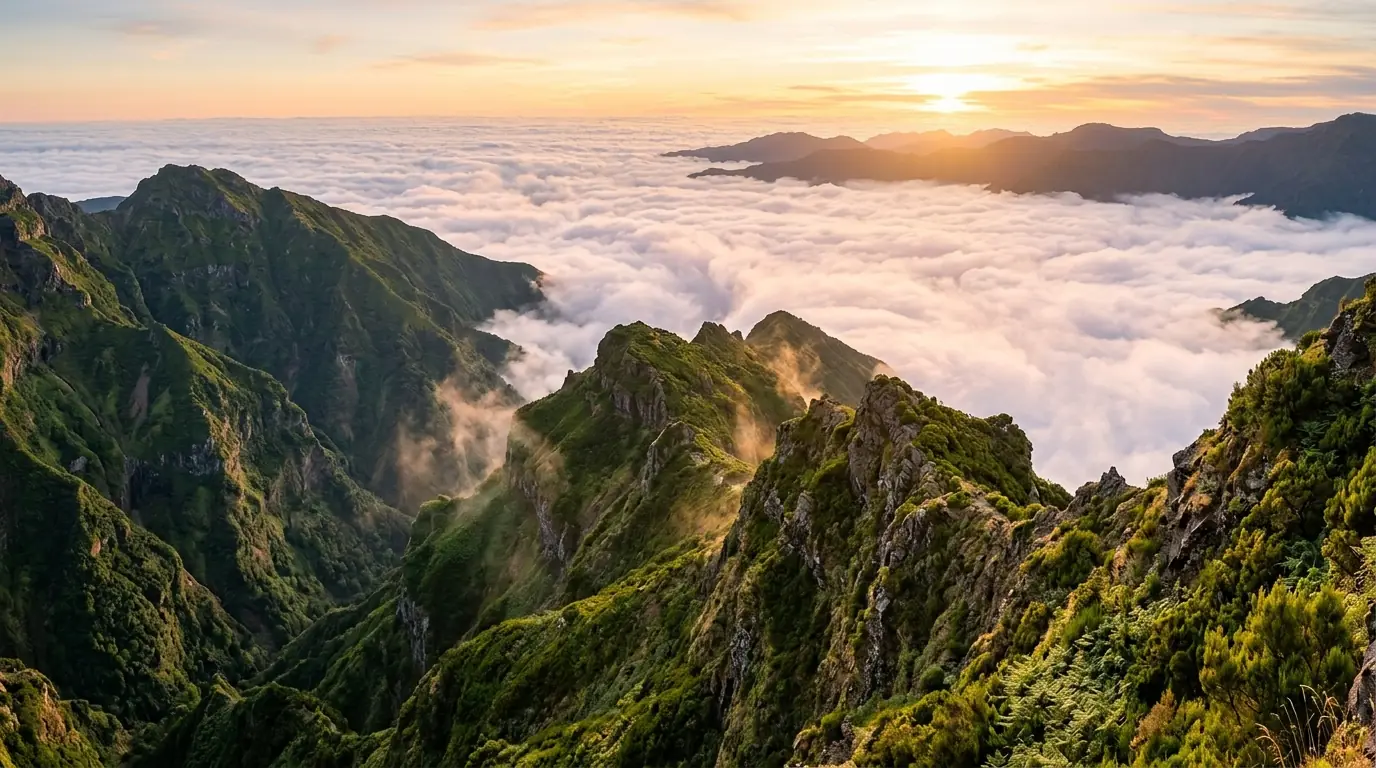
Illustration of a sunlit mountain ridge above the clouds on MadeiraAI-generated · GLabs nano_banana_pro · Generated
The single most useful thing to know about Madeira is that the weather in Funchal tells you very little about the weather in the mountains or on the north coast.
Funchal, on the sunny south coast, averages a 20.0°C high in January and 26.8°C in August (IPMA, Funchal Observatório, 1991-2020 normals).
Funchal is almost dry in summer — 1.7 mm in July and 1.3 mm in August — and wettest from October to January.
The north coast faces the prevailing weather and is greener, wetter and cloudier.
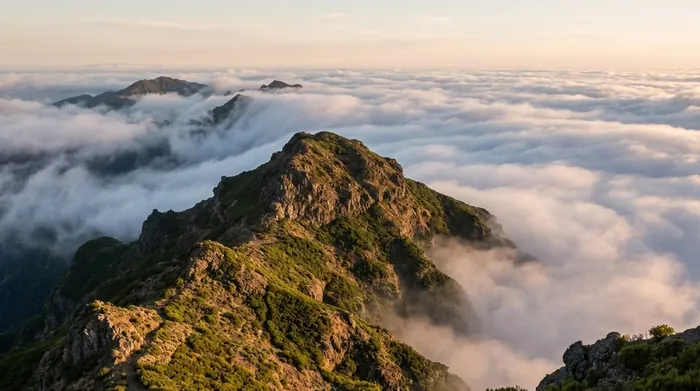
The central peaks are often above the cloud in the early morning and inside it by midday.
Pack a warm layer and a rain jacket for any day in the mountains, whatever Funchal looks like.
The practical consequence: plan the peaks for the morning, keep a flexible day in the schedule, and check the mountain forecast rather than the Funchal one.
A car decides how much of the island you see
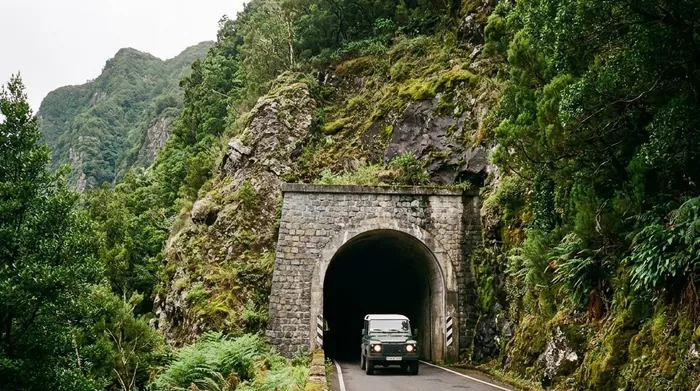
Illustration of a road tunnel in a steep green mountainside on MadeiraAI-generated · GLabs nano_banana_pro · Generated
Madeira is steep, and its roads run through a long sequence of tunnels between the valleys.
With a car, the peaks, the north coast and the trailheads are all day trips from one base.
Without one, you get Funchal, the cable car to Monte, and organised tours.
Mountain roads are narrow and steep in places; the expressway along the south coast is fast.
Funchal and Monte
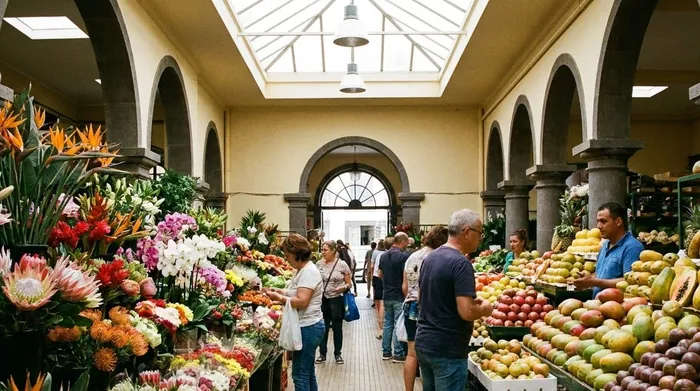
Illustration of flower and fruit stalls in Funchal's market hallAI-generated · GLabs nano_banana_pro · Generated
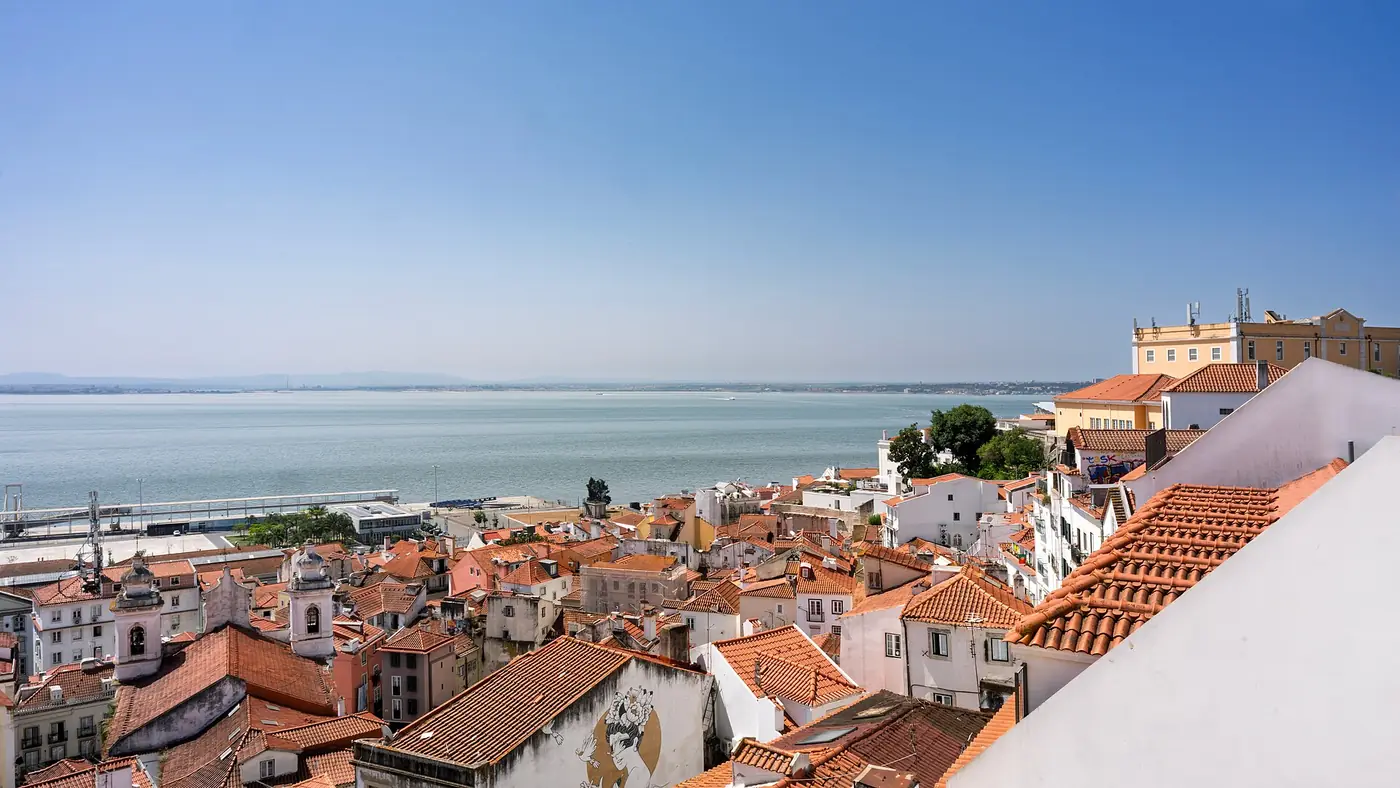
The capital is where most visitors stay, and it deserves a day of its own.
Mercado dos Lavradores — the covered market for fruit, flowers and fish.
The old town, the Zona Velha, where the doors along Rua de Santa Maria are painted by artists.
The cable car from the seafront up to Monte, with its tropical garden and church.
The Monte toboggans — wicker sledges steered by two men in straw hats down the steep road back towards Funchal.
The central peaks: go early
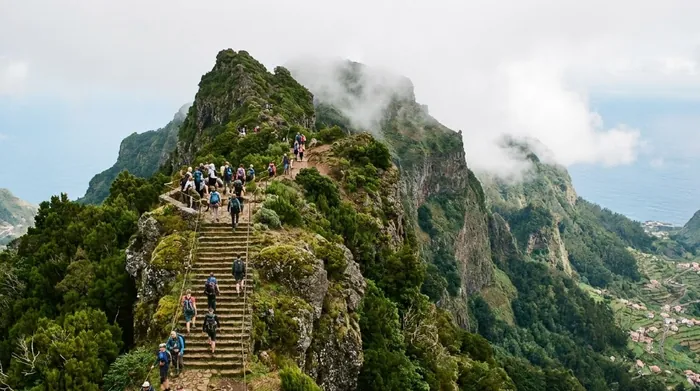
Illustration of walkers on a stepped mountain trail on MadeiraAI-generated · GLabs nano_banana_pro · Generated
The walk between Pico do Arieiro and Pico Ruivo, the island’s highest peak, is the best-known hike on Madeira, along a ridge of stairs and tunnels above the cloud.
Go at sunrise or early morning, when the peaks are most often above the cloud.
It is a demanding walk with steep steps and drops — not a stroll.
Sections of the trail close after rockfalls or fires; check the status before you go.
If the trail is closed or the peaks are in cloud, the viewpoint at Pico do Arieiro is reachable by road.
Walk a levada
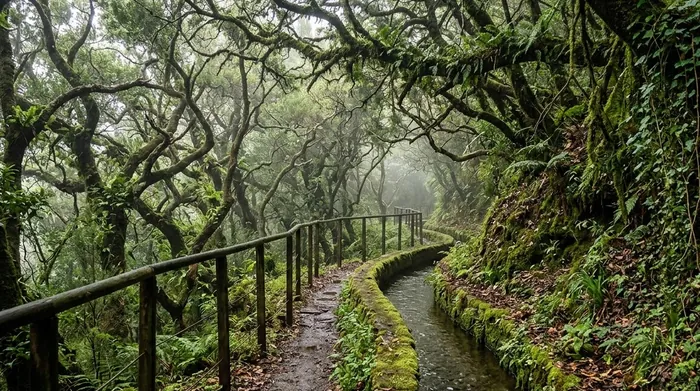
Illustration of a levada path through mossy laurel forest on MadeiraAI-generated · GLabs nano_banana_pro · Generated
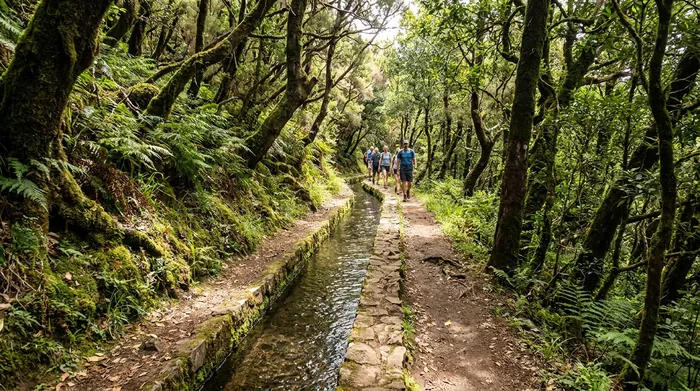
Levadas are irrigation channels cut along the mountainsides, with a narrow path beside the water. They are Madeira’s signature walks, and many are nearly level.
The 25 Fontes and Risco waterfalls walks start from Rabaçal in the west, in the laurel forest.
The Caldeirão Verde walk, from Queimadas near Santana, runs through tunnels to a waterfall.
The laurel forest the levadas pass through, the Laurisilva, is a UNESCO World Heritage site.
Bring a torch for the tunnels, and check that the path is open.
The coast: pools, cliffs and a peninsula
Madeira’s coast at a glance
Place
What it is
Where
Porto Moniz
Natural swimming pools in the volcanic rock
North-west
Seixal
A black-sand beach below green cliffs
North coast
Santana
Traditional triangular thatched houses
North coast
Cabo Girão
A sheer sea cliff with a glass-floored viewing platform
South, west of Funchal
Ponta de São Lourenço
A dry, rocky peninsula walk
Eastern tip
Madeira is not a beach island. The swimming is in rock pools, the sea and a few small beaches; for a long sandy beach, the ferry to Porto Santo is the answer.
Illustration of a levada path through laurel forest on MadeiraAI-generated · GLabs nano_banana_pro · Generated
Common questions
What is a must do in Madeira?
A levada walk, the ridge hike between Pico do Arieiro and Pico Ruivo in the early morning, the natural pools at Porto Moniz, and the cable car and toboggans at Monte above Funchal.
How many days is enough in Madeira, Portugal?
Five days covers Funchal, the peaks, the north-west coast and one levada. A week suits hikers and leaves room for the weather in the mountains.
Do you need a car in Madeira?
For anything beyond Funchal, yes. The island is steep and the roads run through tunnels; the trailheads and the north coast are hard to reach at useful times without one.
Is Madeira warm all year?
Funchal is: its January high averages 20.0°C (IPMA 1991-2020). The mountains and the north coast are cooler, wetter and often in cloud.