Quick answer
Yes, Toledo is worth at least a full day, 33 minutes from Madrid by high-speed train: a medieval hill city of churches, synagogues and El Greco above the Tagus gorge.
Yes, Toledo is worth at least 1 full day, and it is the best day trip from Madrid, just 33 minutes away by high-speed train: a hill city of churches, synagogues and El Greco paintings above the Tagus gorge. Stay a night to see it quiet. It suits least those who struggle with steep lanes or visit in the heat of a summer afternoon. So, is Toledo worth visiting? The sections below weigh the highlights against the downsides.
Who Toledo suits
Toledo is one of the richest small cities in Europe, but it can feel crowded and tiring if it is rushed.
Tour groups fill the lanes from late morning to late afternoon and July averages a 34.6°C high, so a half-day tour at noon in summer shows Toledo at its worst; a full day, started early, shows it at its best.
What Toledo does better than anywhere in Spain
Toledo packs the country’s history into one small hill, a UNESCO World Heritage site since 1986.
- The cathedral: one of the great Gothic cathedrals of Spain, with El Greco paintings in its sacristy.
- El Greco: his masterpiece, The Burial of the Count of Orgaz, hangs in the church of Santo Tomé.
- Three cultures: the synagogues of El Tránsito and Santa María la Blanca and a tenth-century mosque.
- The setting: a rocky hill almost wrapped by the Tagus, best seen from across the gorge.
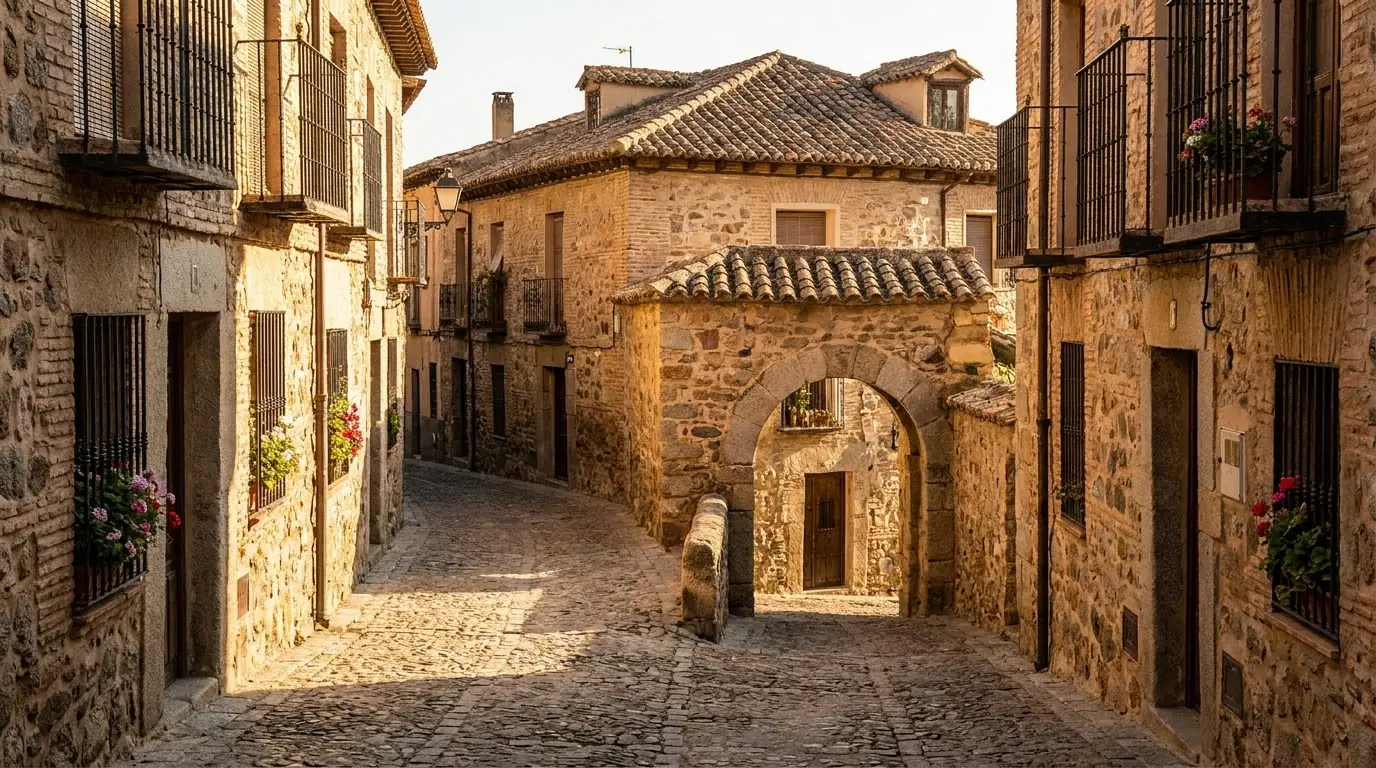
- The streets: a maze of lanes that has barely changed shape since the Middle Ages.
The cathedral in detail
Inside the cathedral, look for the Transparente, a baroque altarpiece lit through a hole cut in the Gothic vault; the sacristy, hung with paintings by El Greco, Goya and Titian; and the carved walnut choir stalls. The treasury’s silver-gilt monstrance, taller than a person, is carried through the streets at Corpus Christi.
Santo Tomé and the El Greco Museum
In the small church of Santo Tomé, El Greco’s Burial of the Count of Orgaz fills a wall of its own chapel, the heavens opening above a row of Toledo nobles painted from life. The El Greco Museum nearby recreates a house of his time and holds his view of the city and a series of apostles.
The city of three cultures
For centuries, Toledo was a city where Christians, Muslims and Jews lived side by side, and where scholars translated Arabic and Hebrew works into Latin. The buildings still show it: a mosque turned chapel, synagogues built by Mudéjar craftsmen, and Gothic churches beside them. No other Spanish city tells that story in so small a space.
San Juan de los Reyes
The Monastery of San Juan de los Reyes, built by the Catholic Monarchs at the western edge of the old town, has one of the finest Gothic cloisters in Spain, two storeys of carved stone around a garden of orange trees.
The synagogues and the mosque
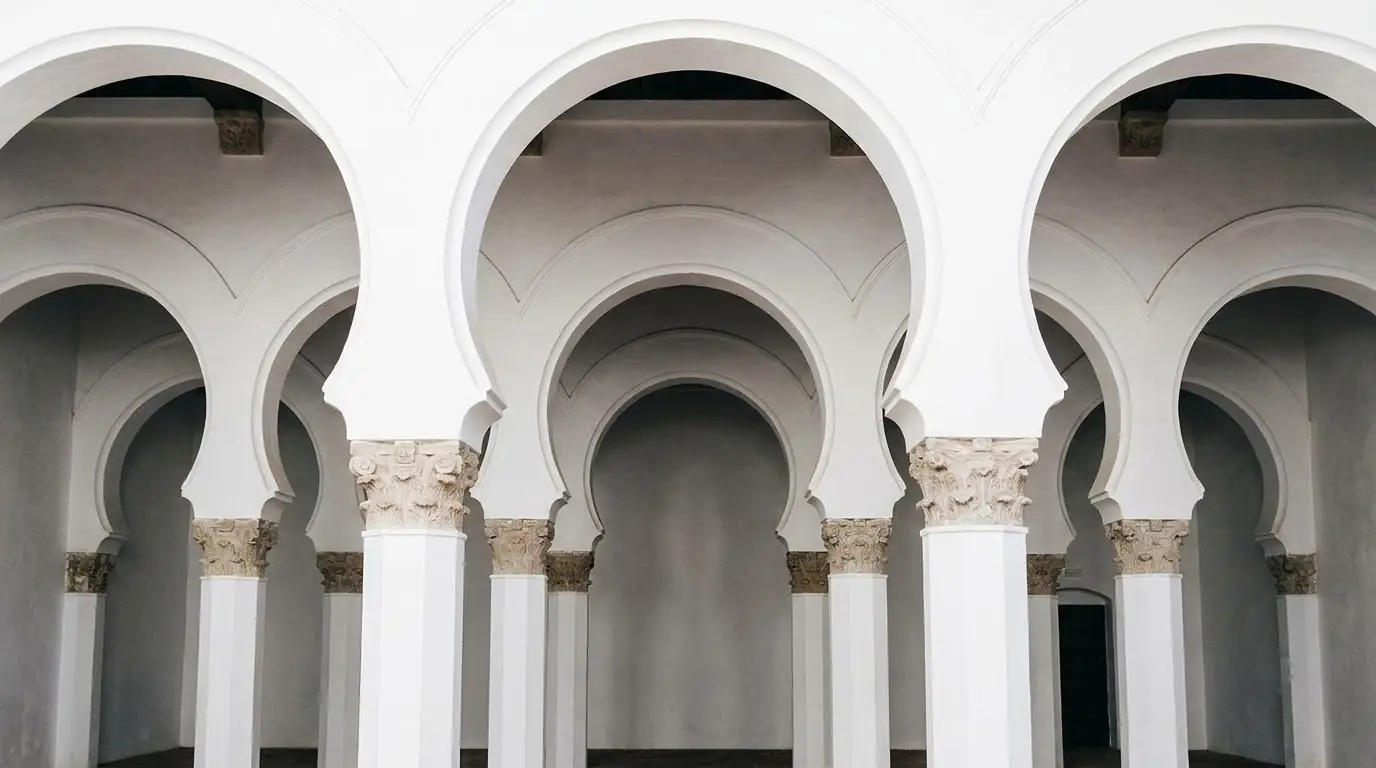
The synagogues and the mosque are where the three-cultures story is easiest to see, and they make a short walk of their own.
- El Tránsito: carved stucco and a coffered ceiling, with the Sephardic Museum inside.
- Santa María la Blanca: a former synagogue of white horseshoe arches on octagonal pillars.
- Cristo de la Luz: a small tenth-century mosque, one of the best preserved in Spain.
The bridges and the walls
The bridges frame the old town at both ends: the medieval San Martín bridge to the west, with its fortified gates, and the Alcántara bridge to the east, which leads up from the station. The Puerta de Bisagra is the main gate in the northern walls.
The Mirador del Valle is reached by taxi, the tourist bus or a walk of about an hour along the riverside path. Walk out in the late afternoon and take a taxi back after sunset.
The Alcázar and the Army Museum
The Alcázar, the square fortress on the highest point of the city, dominates every view of Toledo. Rebuilt after the Civil War, it now houses the Army Museum, with collections spanning Spain’s military history, and its terrace looks out over the rooftops.
The downsides of Toledo
Crowds, hills and heat cause the problems, not the city itself.
- Midday crowds: tour groups from Madrid arrive by late morning and leave by late afternoon.
- Steep lanes: the old town is a hill of cobbles and stairs; escalators help from the northern car park.
- Summer heat: July averages a 34.6°C high and August 34.0°C, according to AEMET‘s 1981-2010 normals.
- Souvenir shops: the main streets are lined with swords, marzipan and trinkets.
- Separate tickets: many monuments charge individually; a combined wristband covers several.
All of these fade if you arrive early or stay the night: the crowds thin after 5pm, the lanes cool, and the souvenir streets give way to quiet squares.
A combined ticket
Many of Toledo’s monuments charge separately, and a combined wristband covers several churches and synagogues for a single price. It pays off if you plan five or more visits; check which sights it includes, as the cathedral is usually separate.
Toledo on a rainy day
Toledo on a rainy day still works, because most of what matters is indoors. October is the wettest month, at 48 mm, followed by May at 44 mm, according to AEMET’s 1981-2010 normals; July and August are almost dry.
Spend a wet day in the cathedral, Santo Tomé, El Tránsito and its Sephardic Museum, and the Army Museum in the Alcázar. Save the Mirador del Valle and the bridges for the dry hours.
Toledo or Segovia?
With only one free day for a trip from Madrid, the choice is usually between these two.
- Toledo: denser, older and richer, with the cathedral, El Greco and the synagogues; 33 minutes from Atocha.
- Segovia: easier and more immediately striking, with the Roman aqueduct and the alcázar; about 30 minutes from Chamartín.
- For history and art, choose Toledo; for one dramatic image and a lighter day, choose Segovia.
- With two free days, do both, on separate days.
Both cities are easy to combine with El Escorial or Aranjuez on a longer stay, and both are best on a weekday, when the trains and the lanes are quieter. See day trips from Madrid for the full comparison of trips from the capital.
When Toledo is most worth it
Spring and autumn make the steep walks comfortable, and the light is soft.
- May: a 24.2°C high and the Corpus Christi celebrations, with streets covered in awnings for the procession.
- October: a 22.1°C high and quieter weekdays.
- Winter: cold, with an 11.5°C January high and frosty nights, but clear light and few visitors.
- Summer: only with early mornings, a long lunch and the evening for the view.
Corpus Christi
Corpus Christi, in late May or June, is Toledo’s great festival: the streets of the procession route are covered with awnings and hung with tapestries, and the cathedral’s monstrance is carried through the old town. It is the most beautiful day of the year in the city, and the busiest.
Toledo in winter
In winter Toledo is cold, with frosty nights and an average January high of 11.5°C, but the light is clear, the lanes are quiet and the monuments almost empty on weekdays. Dress warmly and enjoy the city at its most local.
Toledo month by month
Toledo month by month follows a sharp inland climate: cold winters, hot summers and comfortable seasons between them. These are AEMET’s 1981-2010 normals for Toledo.
- March and April: highs of 18.1°C and 19.9°C, good walking weather.
- June: 30.5°C, already hot by the afternoon.
- September: 29.0°C, still warm, with only 18 mm of rain.
- November: 15.6°C, cool and quiet.
- December: 11.6°C and the fewest hours of sunshine, at 126.
Over the year, Toledo averages about 2,922 hours of sunshine, so even a winter visit is usually bright.
May is the wettest of the spring months, at 44 mm, and has the most thunderstorm days of the year, so keep an indoor sight in reserve for the afternoon.
How to make Toledo worth it
Timing, and choosing a few sights well, make the difference.
- Take an early train from Atocha and start at the cathedral before the groups.
- Choose four or five sights: the cathedral, Santo Tomé, El Tránsito, Santa María la Blanca and San Juan de los Reyes.
- Use the public escalators to climb from the northern car park, and walk downhill through the day.
- Leave the Mirador del Valle for sunset, across the gorge.
- Stay a night if you can, and walk the old town after dark.
- Eat lunch away from the cathedral square, where menus are priced for passing visitors.
- Wear shoes with grip: the cobbles are polished smooth and slippery after rain.
Two days in Toledo
Two days in Toledo leaves room for everything a day trip misses: the Alcázar and its Army Museum, the El Greco Museum, the Hospital de Tavera outside the walls, a walk around the river below the gorge, and an evening on the terrace across the river, where the view of the lit city is the finest in Toledo.
A night in Toledo
A night in Toledo changes the experience.
After the last trains to Madrid, the lanes empty and the lamps come on; the cathedral and the Alcázar are lit; and the next morning you have the city to yourself for an hour before the first groups arrive. It is the single best way to make Toledo worth more than a day trip.
Getting there and around
High-speed trains from Madrid Atocha take about 33 minutes; buses from the capital run often too. From the station, a city bus or taxi climbs to the old town, or you can walk uphill in about 20 minutes. Public escalators near the Puerta de Bisagra save the steepest climb, and inside the walls everything is on foot.
Where to stay
For a night, stay inside the old town, near the cathedral or the Jewish quarter, so the evening walk is on your doorstep. Hotels outside the walls, across the river, have views of the city and parking, but need a taxi or a long walk to dinner.
Food, marzipan and swords
Toledo’s food is Castilian: carcamusas, a pork and tomato stew, partridge, Manchego cheese and La Mancha wines. Its sweet is marzipan, sold in convents and old shops. And its craft is metalwork: swords, once famous across Europe, and damascene, gold and silver thread hammered into black steel, sold in workshops around the old town.
Legends and night tours
Toledo is a city of legends, and evening walking tours tell them in the lanes where they are set. They are a good way to see the old town after dark, when it is at its most atmospheric.
For the sights in detail, see things to do in Toledo.
A one-day plan
A one-day plan fits the essentials if you start early from Madrid and save the view for the end.
- 9am: the high-speed train from Atocha, then a bus or the escalators up to the old town.
- 10am: the cathedral, with the Transparente, the sacristy and the choir.
- 12pm: Santo Tomé and the Burial of the Count of Orgaz.
- 1pm: El Tránsito and Santa María la Blanca.
- 2.30pm: a long Castilian lunch.
- 5pm: San Juan de los Reyes and the San Martín bridge.
- Sunset: the Mirador del Valle, then the train back to Madrid.
Is Toledo worth it for families, couples and older travellers?
Each kind of traveller needs a few adjustments.
- Couples: a night in the old town, sunset at the Mirador del Valle and dinner in a quiet square.
- Families: the Alcázar’s Army Museum, the bridges and the legends tours suit older children; small children tire on the hills.
- Older travellers: use taxis and the escalators, and focus on the cathedral and Santo Tomé.
- Art lovers: El Greco’s works across the city justify a full day on their own.
With a car: La Mancha
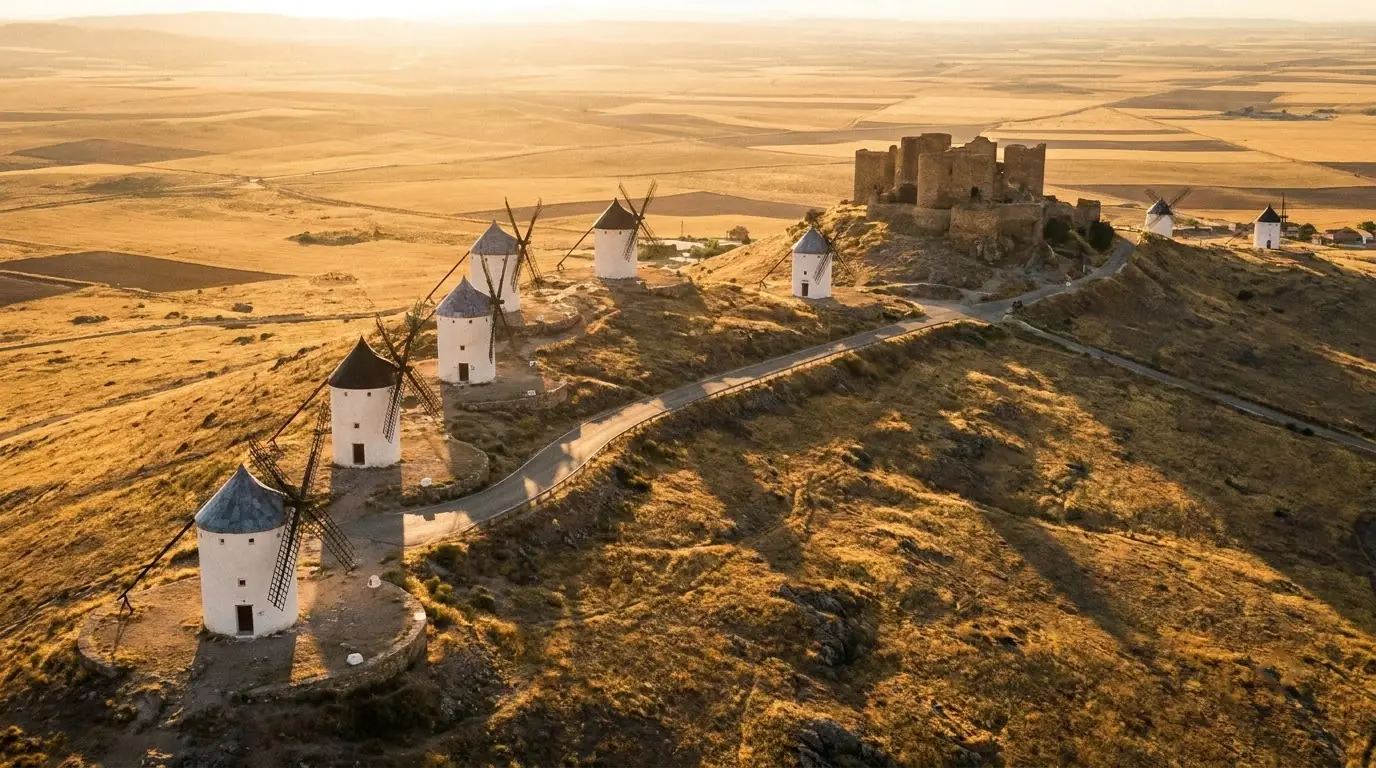
With a car, Toledo opens onto La Mancha: the windmills of Consuegra on their ridge, the plains of Don Quixote and small towns with arcaded squares. It makes a good second day, ending with sunset at the windmills.
Who should skip Toledo
The list is short:
- Visitors with only a few hours: the city needs a full day to make sense.
- Travellers who want beaches or nightlife; Toledo is quiet at night.
- Anyone who can only come on a summer afternoon and dislikes heat.
- Visitors who have already seen Córdoba and Granada and want something different from monuments.
For everyone else, Toledo is one of the most rewarding day trips in Spain, and the easiest to reach from Madrid.
Where to stay in Toledo
If you go, which part of town you sleep in decides how much you see on foot. The map shows the same property across Booking.com and Agoda, with prices live from them.
Common questions
Is Toledo worth visiting?
Yes, Toledo is worth visiting for at least a full day: a medieval hill city above the Tagus with a great Gothic cathedral, El Greco’s Burial of the Count of Orgaz, old synagogues and a mosque. It is only 33 minutes from Madrid by high-speed train, and a night there shows it at its quietest.
Is Toledo worth a day trip from Madrid?
Toledo is worth a day trip from Madrid: the high-speed train from Atocha takes about 33 minutes, and the cathedral, Santo Tomé, the synagogues and the view across the gorge fit into one day. Leave early, and stay until sunset for the Mirador del Valle.
Is Toledo or Segovia better?
Toledo is better for history and art: a denser old city with the cathedral, El Greco and the synagogues. Segovia is better for an easier day with one dramatic sight, the Roman aqueduct, and its alcázar. Both are about 30 minutes from Madrid by high-speed train.
Is Toledo too touristy?
Toledo is busy with tour groups from late morning to late afternoon, and its main streets are lined with souvenir shops. Arrive early, walk the side lanes, or stay the night, and the city becomes quiet and atmospheric, especially after the last trains to Madrid.
How long do you need in Toledo?
You need one full day in Toledo for the cathedral, Santo Tomé, the synagogues, San Juan de los Reyes and the view from the Mirador del Valle. Two days, or a night, lets you see the old town quiet and add the Alcázar, the El Greco Museum and the bridges.
Is Toledo worth visiting in summer?
Toledo is worth visiting in summer only with an early start: July averages a 34.6°C high, according to AEMET’s 1981-2010 normals, and the stone lanes hold the heat. See the cathedral and Santo Tomé in the morning, rest after lunch, and leave the Mirador del Valle for the cooler evening.
Keep planning Toledo
Written and checked by
Travel Guide Kit Editorial
An editorial desk, not an invented persona. Every opening time, ticket price and transport connection here is checked against the operator’s own website and carries the date it was read. Where a page cannot draw on direct experience, it says so.