Three days is the right length for Seville; two works outside summer if you skip the day trips.
Seville is far hotter in summer than Madrid or Barcelona — July averages a 36.0°C high — so summer days are built around the early morning and the evening.
The Real Alcázar and the cathedral stand side by side and both draw long queues: book ahead and do one first thing in the morning.
Triana, across the river, is the other half of the city, not an extra — give it an evening.
Three days is right for Seville. Give one to the Real Alcázar and the cathedral, one to Santa Cruz, Plaza de España and María Luisa park, and one to Triana across the river. The heat decides the rest: July averages a 36.0°C high, so outside spring and autumn the sightseeing belongs to the morning and the evening.
The heat decides the shape of the day
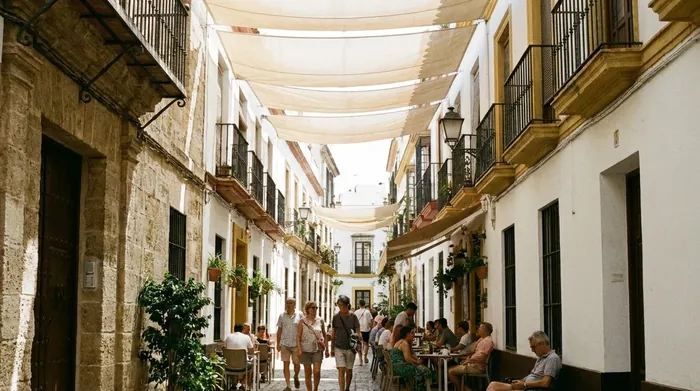
Illustration of canvas shades stretched over a narrow street in SevilleAI-generated · GLabs nano_banana_pro · Generated
Seville’s summer heat changes how a day here works more than any single sight does — July averages four degrees more than Madrid and eight more than Barcelona. These figures are the 1981-2010 climate normals for Sevilla Aeropuerto from AEMET, the Spanish state meteorological agency.
July averages a 36.0°C high and August 35.5°C, with only 2 mm and 5 mm of rain.
June and September are still hot, at 32.2°C and 31.7°C.
May is the sweet spot: a 27.2°C high with 30 mm of rain.
Winter is mild in the day — January averages 16.0°C — but December is the wettest month at 99 mm.
In July and August, do the Alcázar and the cathedral at opening time, stay indoors from about 2pm to 6pm, and go out again when the city does.
The city itself runs on this clock. Lunch is late, the streets empty in the early afternoon, and the squares fill again after dark. Fighting that rhythm is what makes a summer trip here miserable.
The Alcázar and the cathedral stand side by side
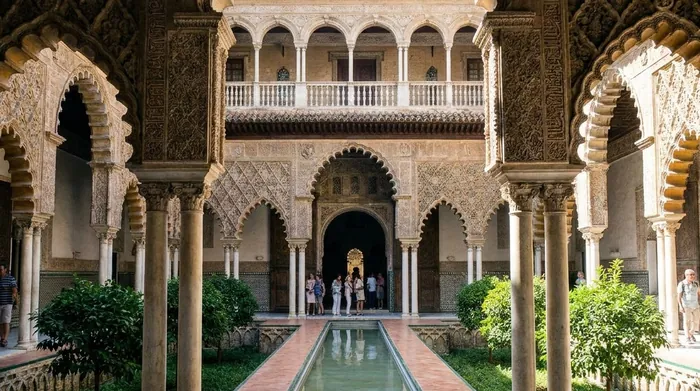
Illustration of a palace courtyard with carved arches and a pool in SevilleAI-generated · GLabs nano_banana_pro · Generated
The two biggest sights in Seville face each other across a small square, and together they take most of a day.
Real Alcázar — the royal palace, still in use by the Spanish royal family, with Mudéjar courtyards and large walled gardens. Give it at least a morning.
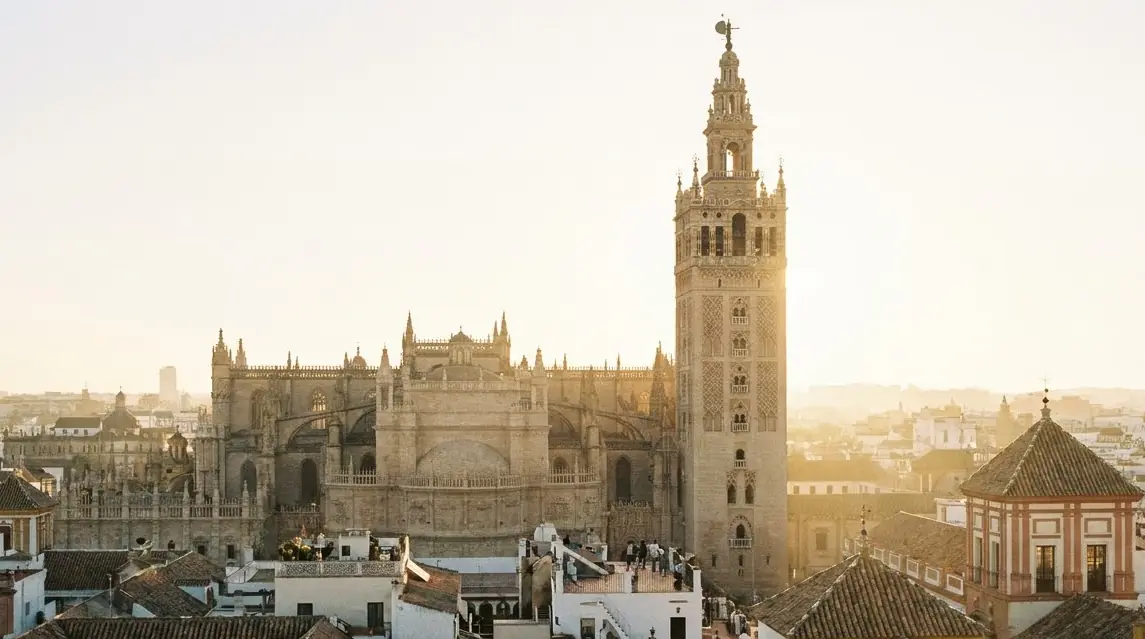
Seville Cathedral — one of the largest Gothic cathedrals in the world, built on the site of the city’s great mosque.
The Giralda — the cathedral’s bell tower, once the mosque’s minaret. The climb is by ramps rather than stairs, wide enough for a horse.
The Archivo de Indias — the plain building between the two, holding the records of Spain’s colonial empire.
Both draw long queues, and they are next to each other, which doubles the wait if you do them back to back. Book ahead where you can, and do one of them first thing in the morning.
Santa Cruz is for getting lost, early
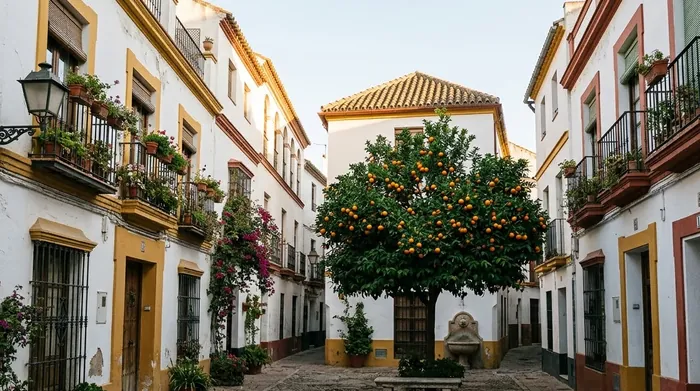
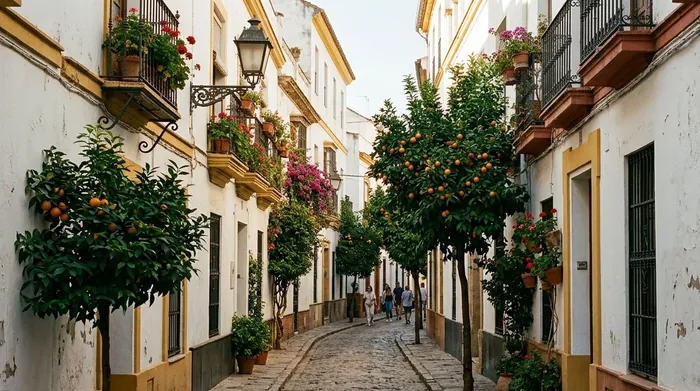
Illustration of a small square with an orange tree in Seville's old quarterAI-generated · GLabs nano_banana_pro · Generated
The old Jewish quarter behind the Alcázar is a tangle of whitewashed lanes, small squares and orange trees. It is the Seville of postcards, and it is at its best before the day-trip crowds arrive.
Walk it in the morning, before about 10am, or in the evening.
The lanes are narrow enough to stay in shade, which makes it the one district that works in the heat.
The restaurants on the squares nearest the cathedral are priced for people who will not come back. Walk a few streets further.
The Casa de Pilatos, at the northern edge, is a sixteenth-century palace with tiled courtyards and far fewer visitors than the Alcázar.
Plaza de España and María Luisa park
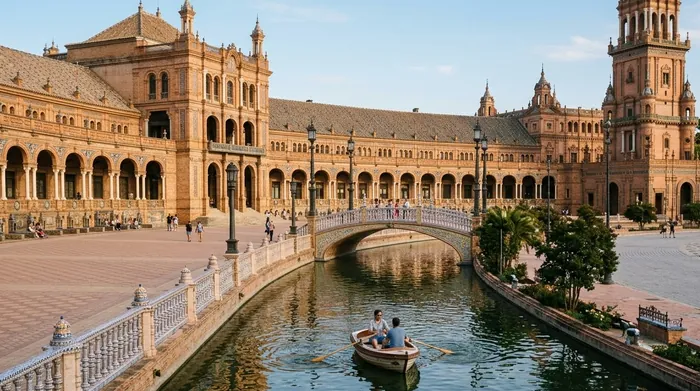
Illustration of a rowing boat on the canal of a grand plaza in SevilleAI-generated · GLabs nano_banana_pro · Generated
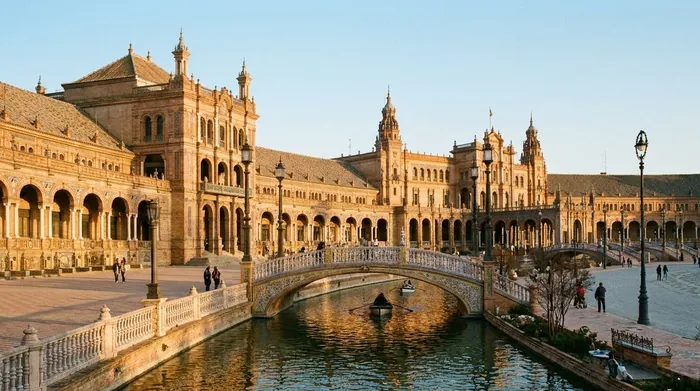
Built for the 1929 Ibero-American Exposition, the Plaza de España is a vast semicircle of brick and ceramic around a canal. It costs nothing to enter.
The tiled alcoves along the building represent the provinces of Spain.
The canal and its bridges are the photographs everyone takes; the colonnade behind them is shaded.
María Luisa park next door is the old city’s great shaded park, and the best place to be in the late afternoon.
Go in the late afternoon rather than at midday: the square is open and unshaded.
Cross the river to Triana
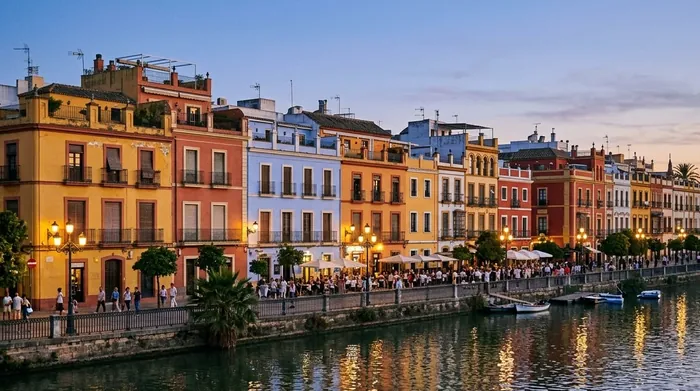
Illustration of colourful riverside houses in Triana at duskAI-generated · GLabs nano_banana_pro · Generated
Triana, on the west bank of the Guadalquivir, is the old neighbourhood of potters, sailors and flamenco, and it still feels like a separate town.
Cross the Isabel II bridge, usually called the Triana bridge, from the centre.
The Mercado de Triana sits at the end of the bridge, on the site of an old castle.
Calle Betis runs along the riverbank, facing the Torre del Oro and the old city.
The ceramics workshops and tiled shopfronts are the neighbourhood’s trade.
Come in the evening, when the riverside bars fill and the heat has broken.
Day trips from Seville
Day trips from Seville
Where
One way
What it needs
Córdoba
About 45 min by high-speed train
A full day; the Mezquita and the old quarter
Cádiz
About 1 hr 40 min by train
A full day; an old port city on the Atlantic
Jerez de la Frontera
About 1 hour by train
A half day; sherry bodegas
Córdoba is the one to choose if you only do one. In July and August, go early and come back before the afternoon — it is just as hot as Seville.
Illustration of a semicircular tiled plaza with a canal in SevilleAI-generated · GLabs nano_banana_pro · Generated
Common questions
What should I not miss in Seville?
The Real Alcázar, the cathedral and the Giralda, the lanes of Santa Cruz, the Plaza de España, and an evening in Triana across the river.
Is 3 days in Seville enough?
Yes. Three days covers the Alcázar and the cathedral, Santa Cruz and the Plaza de España, and Triana, at a pace that works in the heat. A fourth day is for Córdoba.
Is 2 days long enough in Seville?
Outside summer, yes, if you skip the day trips. In July and August, when the afternoons are lost to the heat, two days covers only the main sights.
What is Seville best known for?
The Real Alcázar, the cathedral and its Giralda tower, flamenco, and its heat — July averages a 36.0°C high (AEMET 1981-2010).