Quick answer
The Algarve needs five to seven days and a car: the Benagil cave and cliff walks of the central coast, Lagos and Sagres in the west, and the Ria Formosa lagoon around Faro.
Key facts
- Base yourself in one or two places with a car; the coast is about two hours’ drive from end to end.
The Algarve needs 5 to 7 days and a hire car: Faro averages a 29.4°C high in July, the sea caves and cliffs of the central coast are the highlight, and Lagos, Sagres and the Ria Formosa lagoon fill the rest of the week. It is Portugal’s southern coast, a strip of beaches and fishing towns below the hills, and the best months are May, June and September.
This guide covers the best things to do in the Algarve and how to fit them into one trip.
The sea caves and cliffs of the central coast
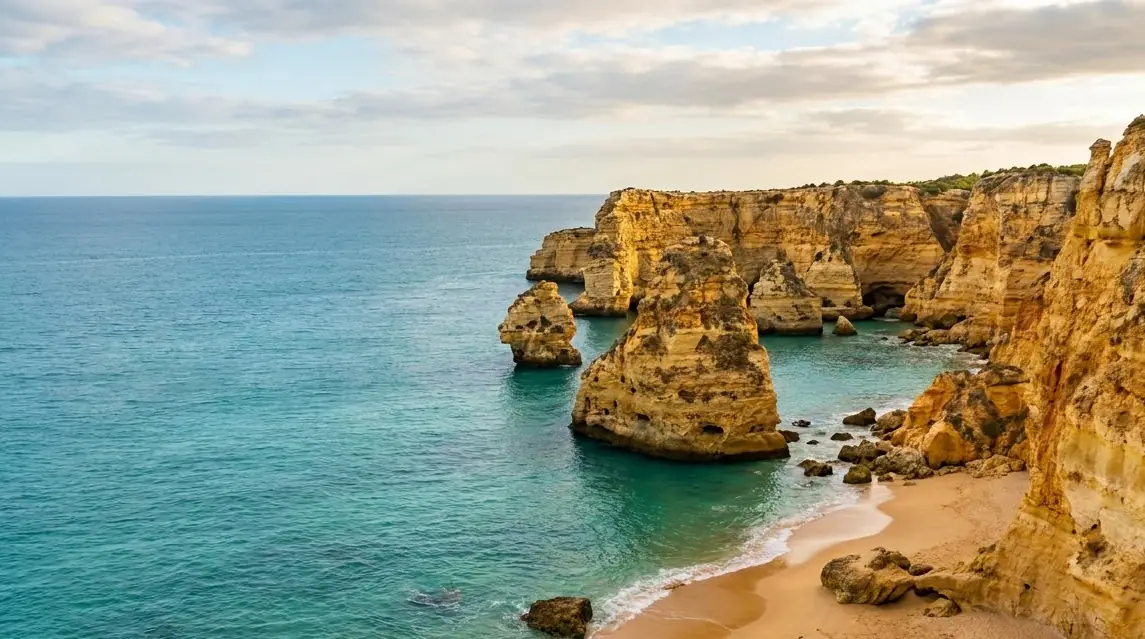
Between Armação de Pêra and Carvoeiro lies the Algarve of the postcards: golden rock, stacks and arches over clear water.
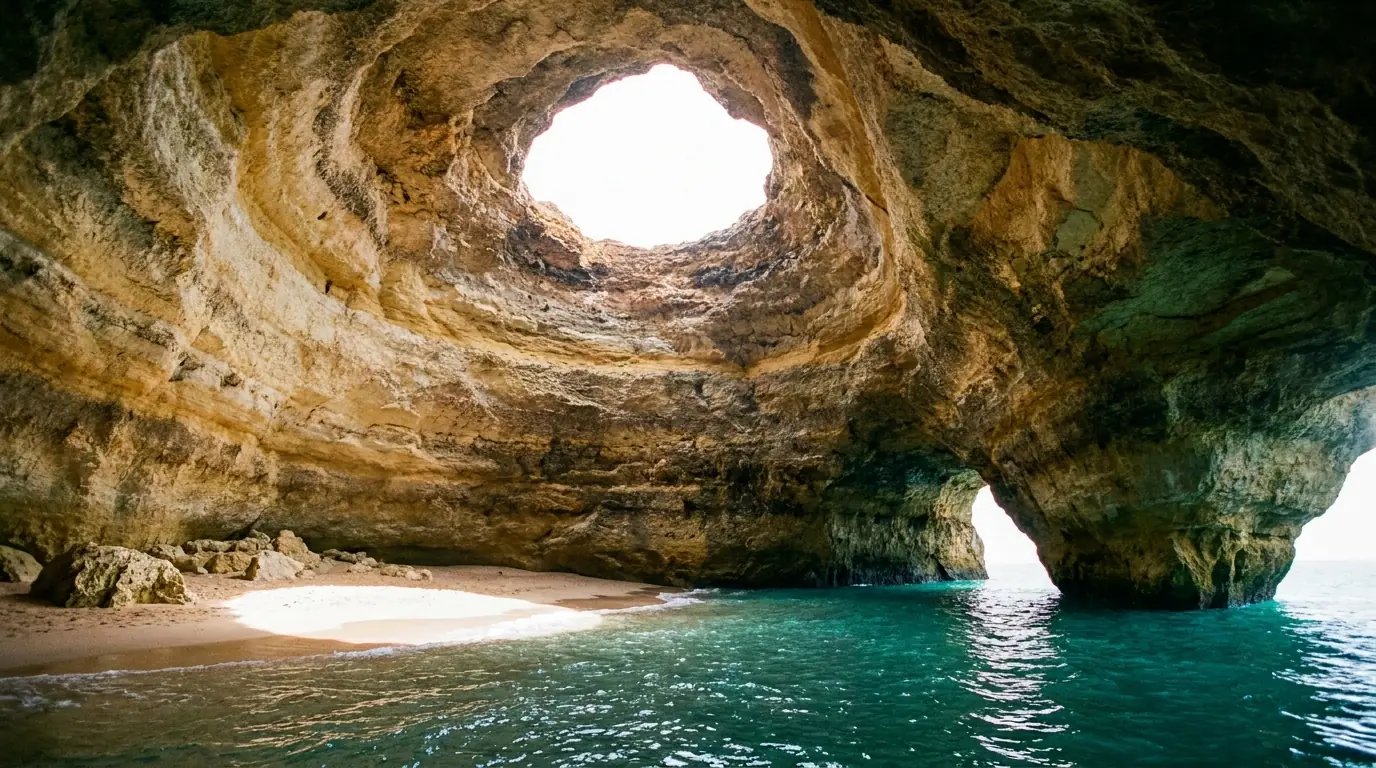
- The Benagil cave, a domed sea cave with a hole in its roof, is the most famous sight on the coast.
- Praia da Marinha, below ochre cliffs and rock arches, is one of the most photographed beaches in Portugal.
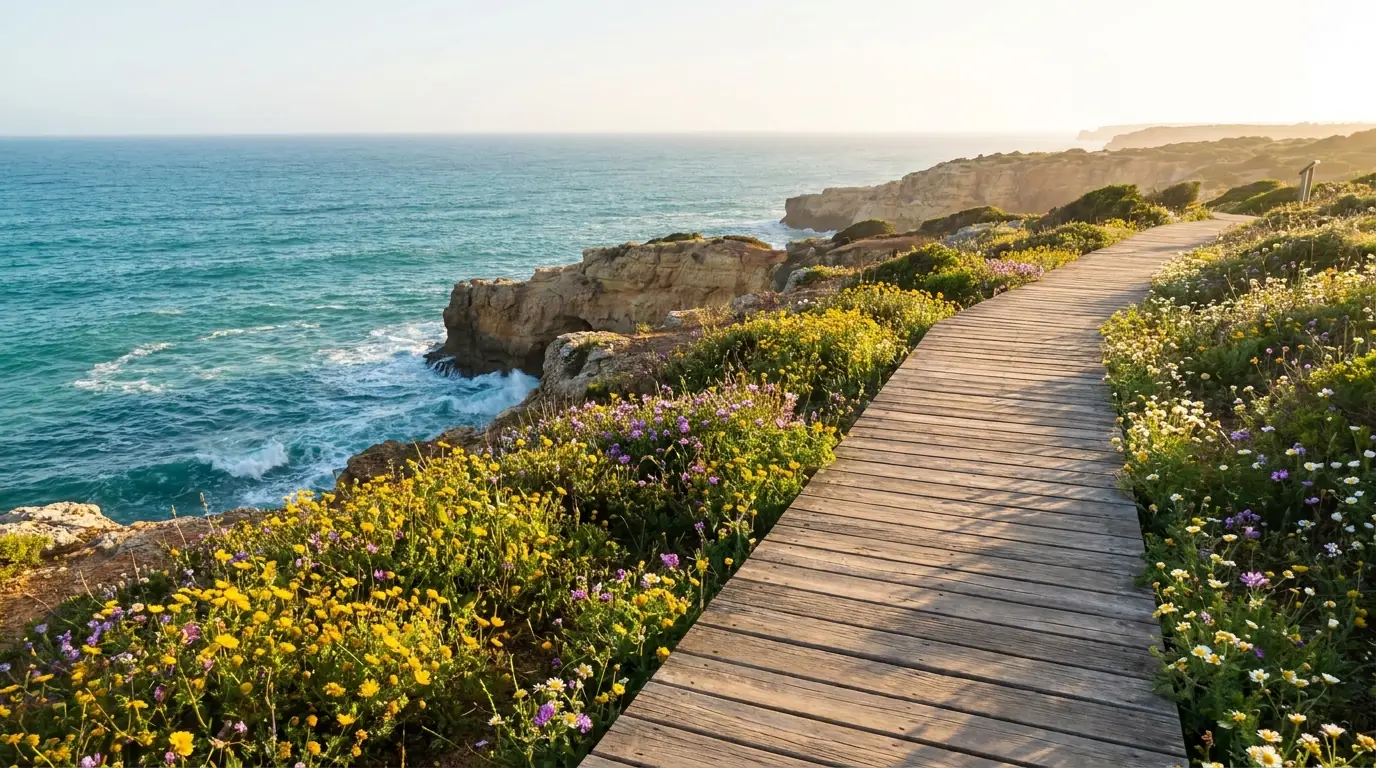
- Carvoeiro is a small resort in a cove, with a cliff-top boardwalk to the Algar Seco rock formations.
- Ferragudo, across the river from Portimão, keeps the look of a fishing village.
See the Benagil cave by boat, kayak or paddleboard from Benagil, Carvoeiro or Portimão. Rules on landing on the beach inside the cave have tightened in recent years, so check what operators currently offer before booking, and go early in the day, when the sea is usually calmer.
The Seven Hanging Valleys trail
The Seven Hanging Valleys trail follows the cliff tops for about 6 km between Praia da Marinha and Vale de Centeanes, passing above Benagil. It is the best walk on the coast, with views down into the caves. Walk it in the morning outside summer, carry water, and keep back from the cliff edges, which can crumble.
Beaches of the central coast
- Praia da Marinha: arches and stacks, with a steep path down from the car park.
- Praia do Carvalho: a small cove reached through a tunnel cut in the rock.
- Praia da Falésia: a long beach below red and white cliffs, good for walks at low tide.
- Praia dos Três Irmãos at Alvor: rock islets and arches at the end of a long sandy beach.
The small coves fill quickly in summer and their car parks are small, so arrive early or walk in along the cliff path. At high tide, some coves shrink to a strip of sand, so check the tide times before you go.
Lagos and the western Algarve
The west is wilder: rock arches, smaller coves, surf beaches and the windswept cape at the end of Europe.
- Lagos has a walled old town, a marina and lively evenings, and is the best base in the west.
- Ponta da Piedade, just south of Lagos, is a maze of rock pillars and grottoes, best seen by boat or kayak.
- Praia do Camilo and Dona Ana are coves below the cliffs, reached by long staircases.
- Sagres has a fortress on a headland and surf beaches on both sides of the point.
- Cape St Vincent, the south-western tip of mainland Europe, is famous for its lighthouse and sunsets.
West of Sagres, the coast turns north into the Costa Vicentina, part of a protected natural park with empty beaches, strong waves and the Fishermen’s Trail along the cliffs. The sea here is cooler and rougher than in the east, which suits surfers and walkers more than families.
Sagres is noticeably cooler than Faro in summer: its August average high is 25.9°C, against 29.2°C in Faro. Bring a layer for the wind at the cape at sunset, even in July.
Boat trips and wildlife
Boat trips leave from Lagos, Portimão and Albufeira, to the grottoes or out to sea to look for dolphins. Choose operators that keep their distance from the animals, and expect a choppy ride on windy days. In the east, the Ria Formosa is one of the best places in Portugal for birdwatching, with flamingos and waders in the salt pans.
A rainy or windy day in Lagos
A rainy or windy day in Lagos, when the boats stay in, is the time for the museums: the municipal museum with the Church of Santo António, the Slave Market museum, and a science centre on the voyages of discovery. Or drive inland to Silves or the market hall in Loulé.
Faro, Tavira and the eastern Algarve
The east is calmer and flatter, with long sandy islands, warmer water and towns that feel more Portuguese than resort.
- Faro, the regional capital, has a small walled old town, a cathedral with a tower view over the lagoon and the Chapel of Bones at the Carmo church.
- The Ria Formosa is a lagoon of salt marshes and sandy barrier islands, protected as a natural park and rich in birdlife.
- Ferries and water taxis from Faro and Olhão reach the islands of Culatra, Armona and Farol.
- Olhão has a busy riverside market for fish and produce.
- Tavira is the prettiest town in the east, with a Roman-style bridge, churches and the beach of Ilha de Tavira.
The eastern beaches are long and sandy rather than framed by cliffs, and the water is often a little warmer. Further east, the Guadiana river forms the border with Spain at Vila Real de Santo António.
The islands of the Ria Formosa
The islands of the Ria Formosa are the reason to visit the east. Culatra has a fishing village without cars, Farol has a lighthouse at the tip of its island, and Ilha Deserta, reached by boat from Faro, is almost empty. Near Tavira, Praia do Barril has a row of old tuna-fishing anchors laid out in the sand.
Check the last boat back before you set out, as timetables change with the season and there is little shelter on the islands. Bring water, shade and sun cream.
Estoi and the ruins of Milreu
Estoi, a village in the hills north of Faro, pairs the Roman ruins of Milreu with a pink rococo palace, now a hotel, whose gardens of tiles, statues and fountains can be visited. Together they make an easy half-day by car or bus, cooler than the coast in summer.
Inland Algarve: Silves and Monchique
A short drive from the coast, the hills are greener and quieter: hills of cork oak and eucalyptus, orange groves and old towns.
- Silves, the old Moorish capital of the region, has a red sandstone castle above the town and a Gothic cathedral.
- The Monchique hills rise to Fóia, the highest point in the Algarve, with views to the coast on clear days.
- Caldas de Monchique is a small spa village in a wooded valley.
- Loulé has a domed market hall and a Saturday market; Alte and Salir are white villages in the hills.
Inland trips are a good plan for a cloudy or windy day, or a break from the beach in the heat of the afternoon. Monchique is several degrees cooler than the coast, and in summer the hills carry a risk of wildfire, so check local warnings before walking.
How many days, and where to base yourself
The count depends on how much of the coast you want to see:
- 3 days: one base in the centre, the Benagil cave by boat and the Seven Hanging Valleys trail.
- 5 days: add Lagos and Ponta da Piedade, with a day trip to Sagres and Cape St Vincent.
- 7 days: split the stay between the west and the east, adding Faro, the Ria Formosa and Tavira.
- 10 days: add the Costa Vicentina, Silves and Monchique, at a slower pace.
For a single base, choose Lagos for the west and the cliffs, Carvoeiro or Ferragudo for the central coast, or Tavira for the quieter east. On a week-long trip, two bases, one west and one east, save long drives.
Albufeira, in the middle of the coast, is the largest resort, with a lively old town and nightlife; it suits groups and families wanting resorts more than travellers looking for quiet villages.
The Algarve with children
The Algarve with children is easy: the eastern beaches have calm, shallow water, the resorts have water parks, and boat trips to the caves are short. Choose a base with a beach within walking distance, and avoid the coves at the bottom of long staircases with small children.
Villas, resorts or town hotels
Villas, resorts or town hotels: the right kind of stay in the Algarve depends on how much you will drive.
- Town hotels and guesthouses in Lagos, Tavira and Faro, near restaurants and stations.
- Resort hotels and all-inclusives, mostly around Albufeira, Vilamoura and Portimão.
- Villas and apartments with pools in the hills behind Carvoeiro, Lagos and Albufeira, which need a car.
- Rural houses inland, around Silves and Monchique, 20 to 40 minutes’ drive from the beaches.
For a week, a villa with a pool is often better value than several hotel rooms for families and groups; check how far the nearest beach and supermarket are before booking. In winter, many resort hotels close, while Lagos, Faro and Tavira stay open all year.
With a car, a rented house can replace a hotel base; the guide to villas in the Algarve compares the areas for families, groups and couples.
Getting there and getting around
Flights land at Faro, and a car is the easiest way to get around.
- Faro airport is the gateway, a short drive from Faro town and about an hour from Lagos.
- From Lisbon, trains run to Faro in about 3 hours; book on CP.
- A regional railway runs along the coast from Lagos to Vila Real de Santo António, but many stations are inland of the towns they serve.
- Buses link the main towns; for beaches, viewpoints and the west coast, a car is far easier.
- The A22 motorway uses electronic tolls, so ask the hire company how tolls are charged.
For the regional tourist board’s events and trail information, see Visit Algarve. Coming from Lisbon, the Algarve combines well with a few days in Lisbon.
Parking and driving times
Parking is the main daily problem in summer: the old towns are narrow and beach car parks fill by mid-morning. Look for a place to stay with its own parking, and reach popular beaches early or walk in along the cliffs.
Driving between Lagos and Tavira takes about an hour and a half on the motorway, while Faro airport is under 30 minutes from Tavira. In summer, allow extra time for the last stretch into the towns and the hunt for a space.
Eating in the Algarve, and when to go
The sea sets the menu: grilled fish, clams and seafood stews, with a few dishes from the hills.
- Cataplana, a seafood stew cooked in a hinged copper pan, is the signature dish.
- Grilled sardines are a summer staple, especially in Portimão.
- Piri-piri chicken is a local speciality, famously around Guia near Albufeira.
- Medronho, a strong spirit made from strawberry-tree fruit, comes from the Monchique hills.
- Sweets of almond, fig and carob are made across the region.
For the weather, these are the 1991-2020 normals for Faro from IPMA: July averages a 29.4°C high and August 29.2°C, with almost no rain, while January averages 16.3°C and December is the wettest month, at 90 mm. Faro averages about 49 rainy days a year.
May, June and September are the sweet spot: warm, with long days and fewer people than July and August. Winter is mild and quiet, good for walking and golf, though many beach restaurants close and the sea is cold.
The Algarve in winter
The Algarve in winter is a different trip: almond trees blossom in the hills from late January, the cliff trails are cool enough to walk all day, and the carnival in Loulé brings parades in February or March. Book a place with heating, as many houses are built for summer.
The sea, and festivals through the year
The sea here is the Atlantic, cooler than the Mediterranean even in summer. It warms slowly through June and is at its warmest from August into September, which makes September the best month for swimming; the calm, shallow water of the eastern islands warms first.
Festivals move with the calendar, but summer brings sardine festivals and fish grills, especially in Portimão, and August a medieval fair below the castle in Silves. Check dates each year with the local town halls.
What to skip, or do differently
Crowds, heat and over-planning cause most of the mistakes:
- Changing hotels every night: the region is compact, so one or two bases are enough.
- The Benagil cave at midday in August: go early, or see it on a quieter month.
- Walking the cliff trails in the afternoon heat of summer: start in the morning.
- Only resort strips: Tavira, Silves and the west coast show a different Algarve.
- Visiting without a car outside the main towns: buses do not reach most beaches.
For more of the country, see our Portugal travel guide.
Where to stay in Algarve
In Algarve, Lagos is the base for a first trip, all-rounders, and Sagres for surf and the wild west. The map shows the same property across Booking.com and Agoda, with prices live from them.
Common questions
What is the Algarve best known for?
The Algarve is best known for its golden cliffs, sea caves and beaches, above all the Benagil cave and Praia da Marinha. It is also known for sunny weather most of the year, fishing towns such as Lagos and Tavira, the Ria Formosa lagoon and seafood dishes such as cataplana.
How many days do you need in the Algarve?
You need 5 to 7 days in the Algarve to see the central coast, Lagos and the west, and the Ria Formosa around Faro without rushing. Three days covers one area, such as the caves and cliffs around Benagil, while ten days adds the wild west coast and the inland hills.
What is the best part of the Algarve to stay in?
The best part of the Algarve to stay in depends on your trip: Lagos for the west, cliffs and lively evenings, the central coast around Carvoeiro for the caves, and Tavira for a quieter, more traditional town in the east. Two bases work well for a full week on the coast.
Do you need a car in the Algarve?
A car is strongly recommended in the Algarve: the coastal railway and buses link the main towns, but many beaches, viewpoints, trailheads and the west coast are hard to reach without one. Without a car, base yourself in Lagos, Faro or Tavira and use boats, trains and tours.
When is the best time to visit the Algarve?
The best time to visit the Algarve is May, June or September, when it is warm and sunny without the August crowds. July and August are hottest, with Faro averaging 29°C highs. Winter is mild, around 16°C by day, and quiet, though many beach places close.
Keep planning Algarve
Written and checked by
Travel Guide Kit Editorial
An editorial desk, not an invented persona. Every opening time, ticket price and transport connection here is checked against the operator’s own website and carries the date it was read. Where a page cannot draw on direct experience, it says so.