Quick answer
One full day is enough for Córdoba's essentials, the Mezquita, the Judería and the Roman bridge; two days adds Medina Azahara and the patios.
1 full day is enough for Córdoba’s essentials, the Mezquita, the Judería and the Roman bridge; a second day adds Medina Azahara and the patios. Córdoba is under 1 hour from Seville by train, so a day trip works too. A night lets you see the old town quiet after dark, and the Mezquita before the crowds.
The plans below show how many days in Córdoba each kind of trip needs, and what each length covers.
One day, or two with Medina Azahara
Córdoba’s old town is small and its main sights sit close together, so one day covers them; Medina Azahara, 8 km west, takes a second.
One day is enough to see Córdoba; two leave time to understand it.
Half a day in Córdoba
Half a day, between trains on a longer route, covers the Mezquita and a short walk through the Judería, if you take a taxi from the station and skip lunch in a tavern. It is better than nothing, but it misses the river, the Alcázar gardens and the evening, which is when Córdoba is at its loveliest.
Where to stay in Córdoba
Choose the area before the hotel: it sets how much of Córdoba you can reach on foot. The map shows the same property across Booking.com and Agoda, with prices live from them.
One day in Córdoba
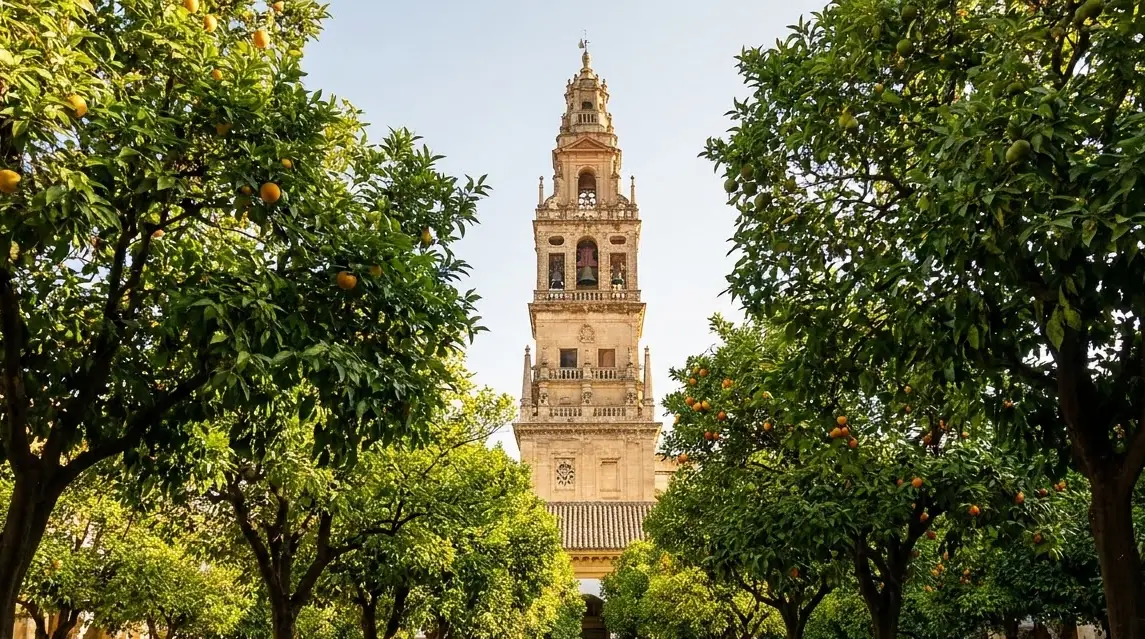
Start at the Mezquita at opening time and a single day covers the essentials.
- Morning: the Mezquita at opening time, then the bell tower if you booked it.
- Late morning: the Judería, the Synagogue and the Calleja de las Flores.
- Lunch: salmorejo and flamenquín in a tavern a few streets from the Mezquita.
- Afternoon: the Alcázar de los Reyes Cristianos and its gardens.
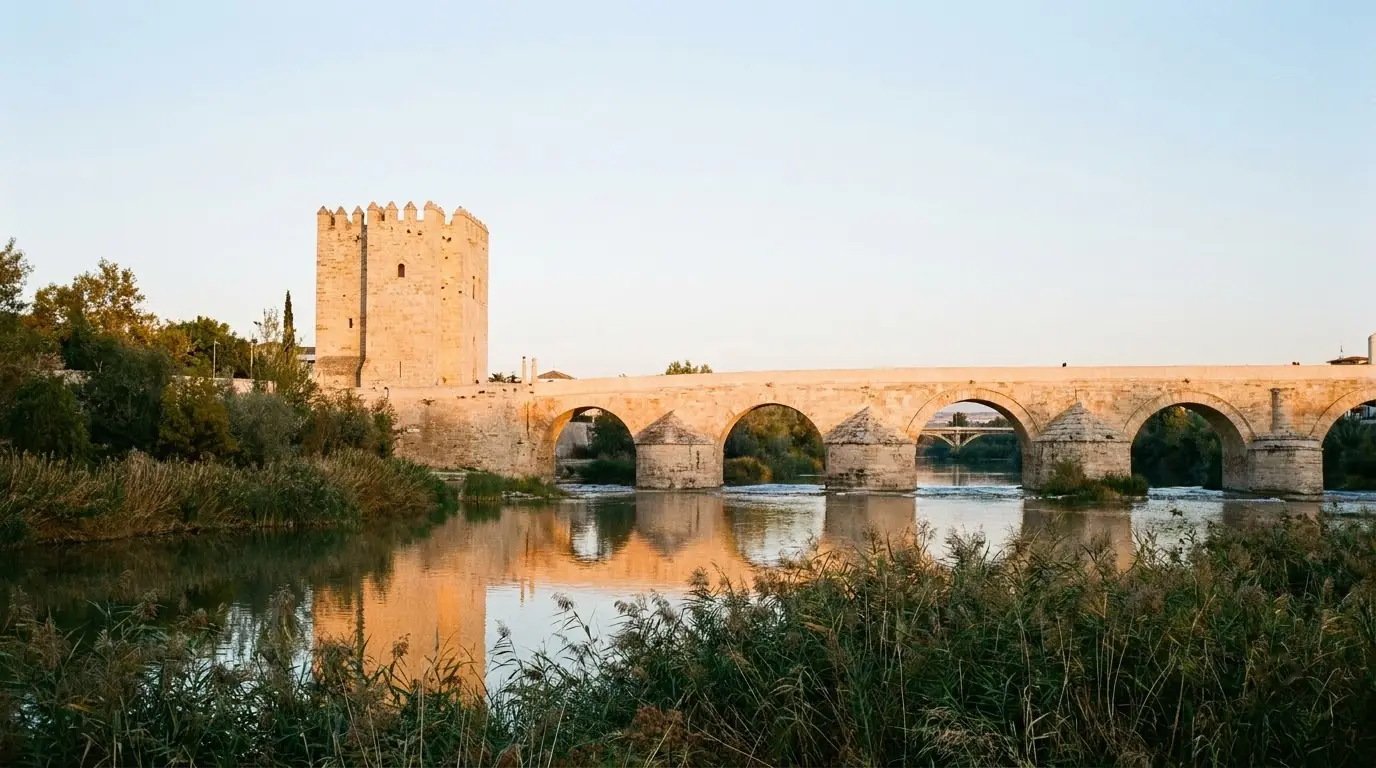
- Evening: the Roman bridge and the Calahorra tower at sunset.
In summer, swap the afternoon for a long rest and see the Alcázar in the early evening, when the gardens are cooler.
Tickets and timing for a one-day visit
Tickets and timing decide whether one day in Córdoba feels full or rushed. Buy the Mezquita ticket online or at the gate; the queue is shortest at opening time and in the last hour before closing.
Mass is held in the cathedral on some mornings, when visits may be limited, so check the official hours the day before. The bell tower is climbed by timed groups, with separate and limited tickets, so book it with the main entry. Allow at least an hour and a half inside, and dress respectfully.
A short walk through the Judería
A short walk through the Judería links the morning sights in the right order:
- Start at the Puerta de Almodóvar, one of the old city gates.
- Follow Calle Judíos to the Synagogue, one of only three medieval synagogues surviving in Spain, and the statue of Maimonides.
- Cut through to the Calleja de las Flores for the view of the bell tower.
- Finish at the Mezquita’s northern walls and the Patio de los Naranjos.
Two days in Córdoba
The second day adds the palace city outside town and the patios inside it.
Day 1: the Mezquita and the river
Day one follows the one-day plan, ending on the Roman bridge at sunset and with dinner in the Judería, quiet once the day visitors have left.
Day 2: Medina Azahara and the patios
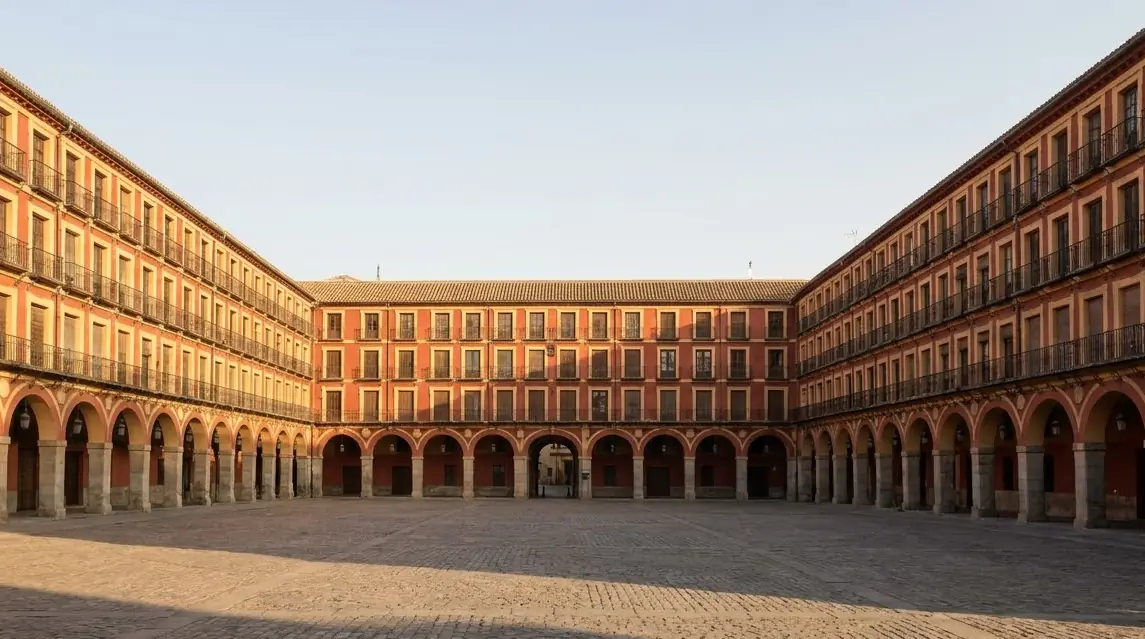
In the morning, take the tourist bus or a taxi to Medina Azahara, the ruins of a tenth-century palace city about 8 km west, a UNESCO World Heritage site. In the afternoon, visit the Palacio de Viana and its patios, walk the Santa Marina quarter and the Plaza de la Corredera, and finish with tapas in an old tavern.
Where to stay for a night
For one or two nights, stay in the Judería or the San Basilio quarter, close to the Mezquita and the Alcázar. Many small hotels there are old houses built around patios, and the lanes are quiet after dinner. The area around the station suits early departures but is a 20-minute walk from the sights.
For the sights in more depth, see things to do in Córdoba.
Visiting Medina Azahara on day two
Visiting Medina Azahara starts at the visitor centre, which explains the site with models and finds, before a shuttle climbs to the ruins. The palace city was built in the tenth century and destroyed within a century. The reconstructed Hall of Abd al-Rahman III, with its carved arches, is the highlight.
Allow half a day. In summer, take the first tourist bus or a taxi: there is little shade on the terraces, and the afternoon heat makes the site hard work.
The patios outside May
The patios are not only a May sight. The Palacio de Viana, a palace with a dozen patios, can be visited all year, and outside the festival some private patios open in small groups on guided visits. The San Basilio and Santa Marina neighbourhoods have the most famous ones.
On the way between them, the Plaza de Capuchinos, with its stone crucifix lit by lanterns at night, and the Gothic churches of the San Lorenzo quarter are worth the detour.
A second evening in Córdoba
A second evening in Córdoba can go to the sound-and-light show held inside the Mezquita on many evenings; places are limited, so check the official programme and book ahead. Afterwards, the Mezquita’s walls are lit and the riverside fills with walkers.
For dinner, the taverns around the Plaza de la Corredera and in San Basilio are more local than the restaurants beside the Mezquita. Order berenjenas con miel, fried aubergine with molasses, rabo de toro, slow-cooked oxtail, and a glass of Montilla-Moriles, the local wine.
Three days: May, and the hill towns
May’s festivals, or a car for the hill towns of the Sierra Subbética, justify a third day.
- May: the May crosses, the Patios festival and the fair follow each other; three days lets you see them without rushing.
- The Sierra Subbética: white hill towns such as Priego de Córdoba, with a baroque fountain and an old Moorish quarter.
- Almodóvar del Río: a castle on a hill above the Guadalquivir, a short drive west.
- A slow day: the Archaeological Museum, the Julio Romero de Torres museum and the riverside.
Booking a May trip
Booking a May trip to Córdoba needs more notice than any other month. The Cruces de Mayo come first, flower-covered crosses set up in squares with music and bars; the Patios festival follows; and the fair closes the month with tents, dancing and horses on the fairground by the river.
The Patios festival is on UNESCO’s list of intangible heritage, and dozens of private patios open for free. Book rooms early and expect queues at the best-known patios, so a third day is less a luxury than a buffer.
Getting around on the third day
Getting around the old town is best on foot, so a car is only useful on the third day, for the hill towns of the Sierra Subbética. Pick it up on the way out rather than driving into the old town, where the lanes are narrow and access is restricted.
Córdoba as a day trip
High-speed trains put Córdoba within a day trip of Seville, Madrid and Málaga.
- From Seville: under an hour; the easiest and most popular day trip.
- From Madrid: about 1 hour 45 minutes; a long but feasible day.
- From Málaga: about an hour by high-speed train.
- From Granada: about 1 hour 30 minutes, on fewer direct services.
Book on Renfe a few days ahead, especially at weekends. On a day trip, take the first train and head straight for the Mezquita. For Seville’s side, see day trips from Seville.
Córdoba on a route through Andalusia
On a route, Córdoba fits neatly between Seville and Granada: under an hour from the first and about 1 hour 30 minutes from the second. A typical week gives Seville three days, Córdoba one night and Granada two or three. See the southern Spain itinerary for the full plan.
From the station to the Mezquita
From the station, the Mezquita is about 20 to 25 minutes on foot, or a short bus or taxi ride. On a day trip, the taxi saves time in the morning, and the walk back through the old town fills the late afternoon before the evening train.
From Seville, trains leave from Santa Justa and run often through the day. Book ahead at weekends, and check the last convenient return before planning the sunset on the Roman bridge.
The season changes how many days you need
Summer heat cuts the useful hours of each day, so the season changes the count. These figures are the 1981-2010 normals for Córdoba airport from AEMET.
- July and August average highs of 36.9°C and 36.5°C: add a day, because the afternoons are lost to the heat.
- May averages 27.4°C, with the patios: two or three days to enjoy the festivals.
- March, April and October suit one day of full sightseeing.
- December is the wettest month, at 111 mm; keep a flexible day in winter.
Córdoba in spring, autumn and winter
Córdoba in spring is the easiest season to plan: March and April average highs of 21.3°C and 22.8°C, with orange blossom and the Holy Week processions. October is still warm, at 25.1°C, but the rain returns, with 86 mm on average.
Winter is Córdoba at its quietest, with short queues at the Mezquita and a 14.9°C January high, but cold nights. Save the Alcázar gardens for a dry afternoon.
A summer day in Córdoba
A summer day in Córdoba runs in two halves. June already averages a 32.8°C high, so sightsee early and rest from about 2pm to 6pm.
The smaller museums fill a hot afternoon indoors: the Archaeological Museum, built over the remains of a Roman theatre; the Julio Romero de Torres museum; and the Bullfighting Museum, in an old mansion in the Judería.
How not to split the days
Four splits that do not work:
- Two hours between trains: enough for a glimpse of the Mezquita, but not for Córdoba.
- The Mezquita at midday in summer: the queue and the heat both peak.
- Medina Azahara in the afternoon heat: go in the morning.
- Córdoba and Granada on the same day from Seville: two half-seen cities.
How many days with children
How many days with children depends mostly on the heat, because Córdoba itself is small and flat. The Alcázar gardens, the Roman bridge and the patios work well, and the Mezquita’s forest of arches impresses all ages.
The Calahorra tower, at the far end of the bridge, is a short museum stop about the three cultures of medieval Córdoba, with a roof view back to the Mezquita. In summer, keep the visits short and plan a pool or a long rest in the afternoon.
Common questions
How many days do you need in Córdoba?
You need one full day in Córdoba for the Mezquita, the Judería, the Alcázar gardens and the Roman bridge, and two days to add Medina Azahara, the patios and the Palacio de Viana. Three days suits May, when the patios and the fair fill the city.
Is one day in Córdoba enough?
One day in Córdoba is enough for the essentials if you arrive early: the Mezquita at opening time, the Judería, the Alcázar gardens and the Roman bridge at sunset. It leaves out Medina Azahara and the patios, which need a second day.
Is Córdoba worth a day trip from Seville?
Córdoba is worth a day trip from Seville: the high-speed train takes under an hour, and the Mezquita, the Judería and the Roman bridge fit easily into a day. Leave early to beat the tour groups, and avoid summer afternoons, which average highs near 37°C.
Is 2 days in Córdoba too much?
No, 2 days in Córdoba is not too much: the second day adds Medina Azahara, the patios, the Palacio de Viana and a quiet evening in the Judería. Córdoba rewards a slow pace more than most Spanish cities, and it is at its best after the day visitors leave.
Should you stay overnight in Córdoba?
Stay overnight in Córdoba if you can: you will see the Judería quiet and lit after dark, and reach the Mezquita at opening time before the tour groups from Seville. A night also makes room for Medina Azahara or the patios on a second morning.
Keep planning Córdoba
Written and checked by
Travel Guide Kit Editorial
An editorial desk, not an invented persona. Every opening time, ticket price and transport connection here is checked against the operator’s own website and carries the date it was read. Where a page cannot draw on direct experience, it says so.