Quick answer
A 3-day Seville itinerary gives day one to the Alcázar, the cathedral and Santa Cruz, day two to the Plaza de España and Triana, and day three to Las Setas and a flamenco night.
A 3-day Seville itinerary gives day 1 to the Real Alcázar, the cathedral and Santa Cruz, day 2 to the Plaza de España and Triana, and day 3 to Las Setas, the palaces of the north and a flamenco night; a 4th day goes to Córdoba. Start each day early, and keep the hottest hours for a long lunch and a rest, as Seville itself does from June to September.
The Seville itinerary at a glance
One area per day, starting with the sight that needs a booking.
| Length | What it covers | Best for |
|---|---|---|
| 1 day | Alcázar, cathedral, Santa Cruz, sunset in Triana | A stopover |
| 2 days | Adds the Plaza de España, María Luisa park and the river | A short break |
| 3 days | Adds Las Setas, the northern palaces and a flamenco night | A first visit |
| 4 days | Adds Córdoba by high-speed train | Andalusia in brief |
| 5 days | Adds Cádiz, Jerez or Carmona | A slower trip |
What to book before you go
- The Real Alcázar, for the first slot on day one; spring and autumn slots sell out first.
- The cathedral and the Giralda, in Holy Week, the April Fair and the summer holidays.
- A flamenco show for the third evening, especially at the small tablaos with few seats.
- The high-speed train to Córdoba for day four, at weekends.
Nothing else needs booking ahead. The Plaza de España, María Luisa park, Santa Cruz and Triana are open to anyone who walks in.
Seville is flat and compact, so the plan is about timing rather than distance: monuments in the morning, rest in the afternoon, the streets again from early evening, and dinner from about 9pm.
Where to sleep on this route
A plan built one area at a time only works if you sleep near those areas. The map shows the same property across Booking.com and Agoda, with prices live from them.
Day 1: the Alcázar, the cathedral and Santa Cruz
The three sights stand side by side at the heart of the old city.
- 9.30am: the Real Alcázar, the royal palace with Mudéjar courtyards and walled gardens, at the first slot you can book; allow two to three hours.
- 12.30pm: the cathedral and the Giralda, the bell tower you climb by ramps rather than steps; book ahead in busy months.
- 2pm: lunch in the streets north of the cathedral, then a rest.
- 6pm: Santa Cruz, the old Jewish quarter, when the lanes and small squares are cooler and quieter.
- 9pm: dinner in Santa Cruz or along the Calle Mateos Gago.
Santa Cruz rewards slow walking more than a checklist: the Plaza de Santa Cruz, the Callejón del Agua along the old Alcázar wall, and the tiny Plaza de Doña Elvira with its orange trees are all within a few minutes of each other. Get a little lost; the lanes always lead back to the cathedral.
The General Archive of the Indies, between the cathedral and the Alcázar, holds the records of Spain’s empire in the Americas and makes a short stop if the queues allow. If the Alcázar slots are full, swap days one and two.
Day 2: the Plaza de España, the river and Triana
The second day moves south and west, then across the water.
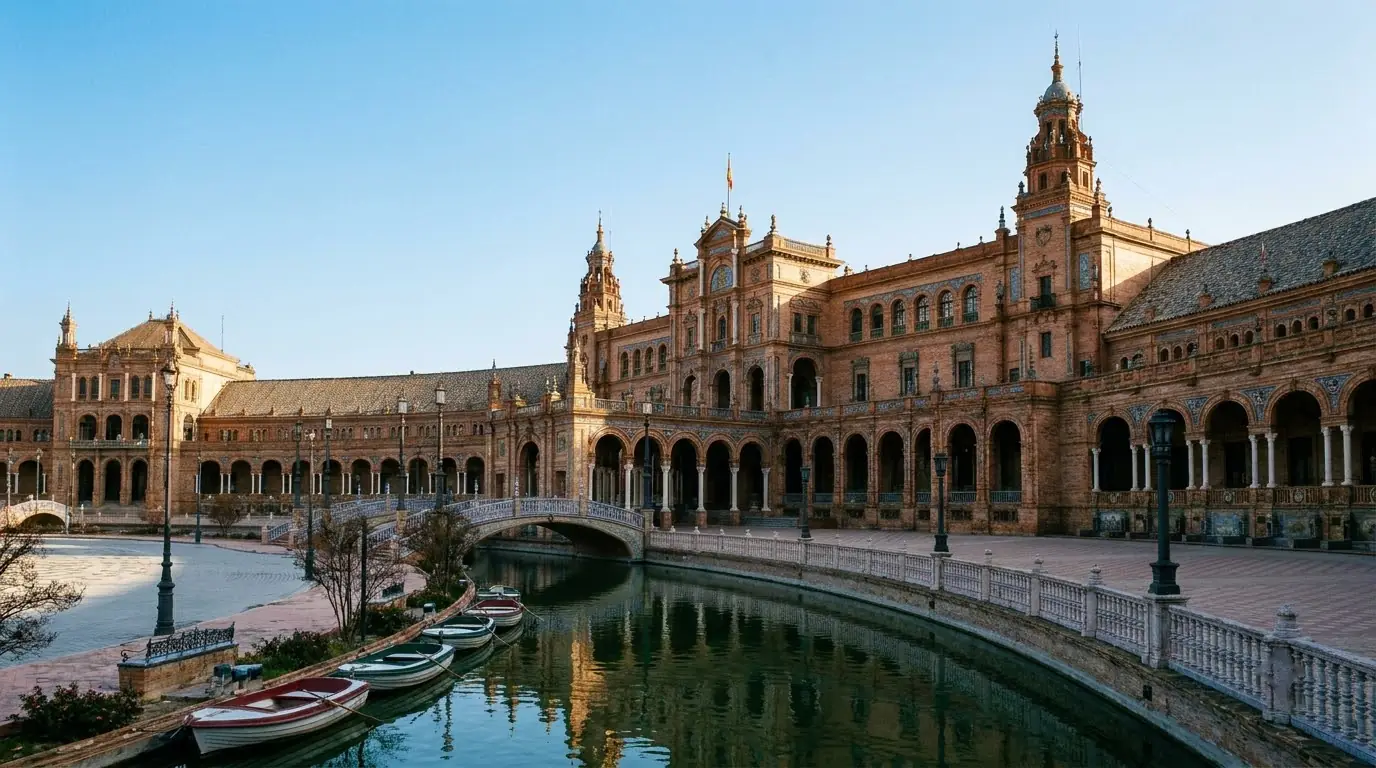
- Morning: the Plaza de España, built for the 1929 Ibero-American Exposition, with tiled alcoves for every Spanish province, then María Luisa park next door.
- Late morning: walk north along the river to the Torre del Oro, a thirteenth-century watchtower on the bank.
- Lunch: the Mercado de Triana, across the Isabel II bridge, with counters for a quick meal.
- Afternoon: rest, or the ceramics workshops and shops of Triana.
- Evening: Calle Betis along the river for the sunset view back over the old city, and dinner in Triana.
At the Plaza de España, walk the length of the semicircle to find the tiled benches of the provinces, then hire a rowing boat on the canal if the queue is short. María Luisa park behind it is the shadiest place in the city on a hot morning.
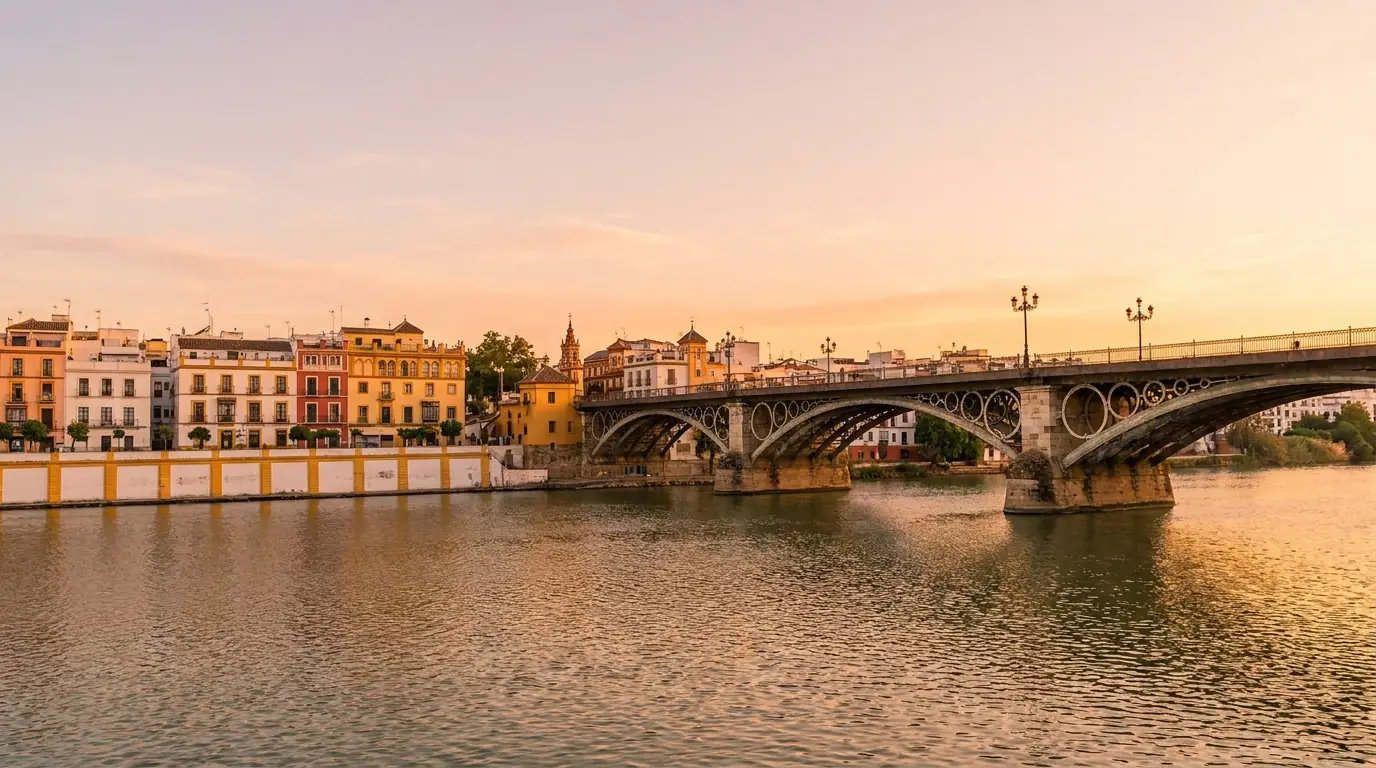
Triana is where Seville lives rather than where it is visited: its bars, market and churches belong to the neighbourhood, and the evening walk back over the bridge is one of the best moments of a Seville trip.
Day 3: Las Setas, the north and a flamenco night
The third day stays in the north of the old city and ends with flamenco.
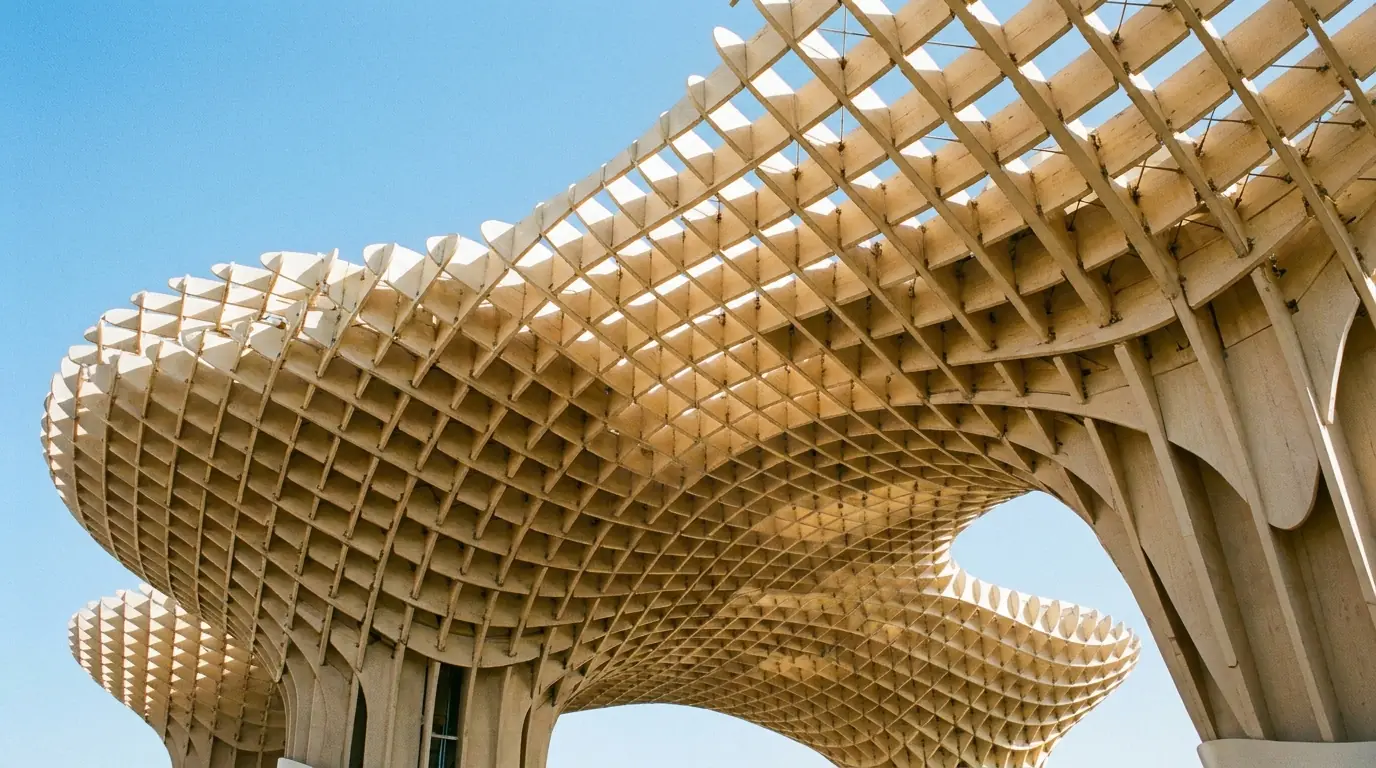
- Morning: the Metropol Parasol, the giant wooden canopy known as Las Setas, with a ticketed walkway on the roof.
- Late morning: the Palacio de las Dueñas, with Andalusian patios and gardens, or the Casa de Pilatos.
- Lunch: the bars around the Alfalfa and the Alameda de Hércules, with more locals than the cathedral squares.
- Afternoon: the Museo de Bellas Artes, in a former convent, for Murillo and Zurbarán.
- Evening: a flamenco show in a tablao in Santa Cruz or Triana, booked ahead.
The Alameda de Hércules, a long tree-lined square north of the centre, is where the evening starts for many Sevillanos, with terraces and bars that fill from about 9pm. It makes a lively stop between the museum and the flamenco show.
The Museo del Baile Flamenco in Santa Cruz explains the dance before its evening shows, and is a good first flamenco for visitors who have never seen it. Later, small bars put on looser sessions after 10pm.
Eating along the way
Each day of this plan passes a good place to eat. Near the cathedral, walk a few streets north for tapas at the bar rather than menus on the squares.
In Triana, the market counters and the bars on Calle Pureza are the local choice. Around the Alfalfa, order espinacas con garbanzos, salmorejo and a plate of jamón, two or three dishes per bar, then move on.
Day 4: Córdoba
Córdoba is under an hour by high-speed train, and a better use of the fourth day than more of the city.
- Take an early train from Santa Justa and go straight to the Mezquita, the mosque-cathedral, at opening time.
- Walk the Judería, the old Jewish quarter, and its flower-filled patios.
- Visit the gardens of the Alcázar de los Reyes Cristianos after lunch.
- Cross the Roman bridge for the view back at sunset, then take an evening train to Seville.
In May, Córdoba’s Patios festival opens private flower-filled courtyards to visitors, and the city is at its busiest. In July and August, it is as hot as Seville, so plan the Mezquita for the morning and the patios for the late afternoon.
For other trips, from Cádiz and Jerez to Ronda and the white towns, see day trips from Seville.
One day, two days or five in Seville
Each length needs a different cut of the same plan.
One day in Seville
One day in Seville is day one of the plan with a twist: the Alcázar at opening time, the cathedral, a late lunch, and then, instead of Santa Cruz, the walk across the bridge to Triana for sunset on the river. Santa Cruz can be crossed on the way to dinner.
Two days in Seville
Two days in Seville keeps days one and two, and moves Las Setas into the second evening. The northern palaces and the flamenco night are what two days gives up; book a show for the first evening if it matters.
If you arrive by high-speed train, Santa Justa is a short taxi or tram ride from the old city, so even a two-day stay loses little time in transit.
A Seville Sunday
A Sunday changes the plan slightly. Many shops close, but the bars and restaurants stay busy, and Sevillanos fill María Luisa park and the riverbank. Put the Plaza de España and Triana on the Sunday, and keep the Alcázar and the cathedral, which keep their own hours, for a weekday.
Five days in Seville
Five days in Seville adds a second trip after Córdoba: Cádiz and the sea, Jerez for sherry, or Carmona and Itálica for a shorter Roman morning. With a car, Ronda and the white towns become possible.
For the full plan of how long to stay, see how many days to spend in Seville.
How the season changes the itinerary
Heat and festivals reshape this plan more in Seville than almost anywhere in Spain. These are the 1981-2010 normals for Sevilla Aeropuerto from AEMET.
- July and August average highs of 36.0°C and 35.5°C: sights at opening time, a long rest from 2pm to 6pm, and everything else after dark.
- May averages 27.2°C and is the best month for this plan at full length.
- Holy Week and the April Fair fill the city and close streets for processions; book months ahead.
- November and December are the wettest months, at 91 mm and 99 mm; keep a museum in reserve.
- January averages a 16.0°C high, mild enough to walk all day, with short daylight hours.
If it rains
Rain is rare for most of the year, but when it comes, swap days so the indoor sights fall on the wet day: the Alcázar’s halls, the cathedral, the Museo de Bellas Artes and the Palacio de las Dueñas. Las Setas and the river walks wait for the sun.
For every month, see the best time to visit Seville.
What not to build a day around
Heat and queues are behind the common mistakes:
- The Alcázar without a booking in spring or autumn: slots for the day often sell out.
- The Alcázar and the cathedral back to back at midday in summer: both queues are outside.
- Sightseeing between 2pm and 6pm in July and August: the city empties for good reason.
- Granada as a day trip on a short stay: it is far, and the Alhambra deserves a night.
- Restaurants on the squares by the cathedral: priced for passing visitors; eat a few streets away.
- A car in the old city: the lanes are narrow, many are closed to traffic, and parking is scarce and slow.
Most of these share one fix: plan the day around the heat and the bookings, not around a list. A slow Seville day with two sights, a long lunch and a late evening beats a rushed one with five.
Base yourself near the sights so the afternoon rest is a short walk away; where to stay in Seville compares the areas, and things to do in Seville has the full list of sights.
Common questions
How many days do you need in Seville?
You need three days in Seville: one for the Alcázar, the cathedral and Santa Cruz, one for the Plaza de España and Triana, and one for Las Setas, the northern palaces and a flamenco night. Add a fourth day for Córdoba, under an hour away by high-speed train.
What is the best order to see Seville?
The best order to see Seville is the Alcázar at opening time on day one, then the cathedral and Santa Cruz, the Plaza de España and Triana on day two, and the north of the old city on day three. Morning for monuments, evening for neighbourhoods, and a rest in between in summer.
Can you see Seville in one day?
You can see the essentials of Seville in one day: the Real Alcázar at opening time, the cathedral and the Giralda, a late lunch, and sunset across the river in Triana. Book the Alcázar ahead. The Plaza de España and the northern palaces need a second day.
Is 3 days in Seville too much?
No, 3 days in Seville is not too much: it is the length at which the city can be seen at its own pace, with afternoon breaks in the heat and late evenings in Triana and Santa Cruz. With a fourth day, add Córdoba rather than more of the city.
Should you go to Córdoba from Seville?
Yes, go to Córdoba from Seville if you have four days or more. The high-speed train takes under an hour, and the Mezquita, the Judería and the Roman bridge fill a full day. Go early, because Córdoba is as hot as Seville in summer.
What should you not miss in Seville?
Do not miss the Real Alcázar, the cathedral and its Giralda tower, the lanes of Santa Cruz, the Plaza de España with María Luisa park, and an evening in Triana across the river. If you have time, add a flamenco show and a day trip by high-speed train to Córdoba and its Mezquita.
Keep planning Seville
Written and checked by
Travel Guide Kit Editorial
An editorial desk, not an invented persona. Every opening time, ticket price and transport connection here is checked against the operator’s own website and carries the date it was read. Where a page cannot draw on direct experience, it says so.