Quick answer: where to stay in Barcelona
Eixample is the default first-time choice: central, well connected, and quieter at night than the old city.
In short
- Eixample is the default first-visit base: central, well connected and quieter at night than the old city.
- El Born is the best area for walking to dinner; Gràcia is the best value for stays of four nights or more.
- Avoid booking on La Rambla itself: it is noisy at night and surrounded by tourist-priced food.
- Barcelona’s tourist tax runs from €6 to €12 per person per night since April 2026, depending on the hotel.
Stay in Eixample on a first visit to Barcelona: it is 10 to 15 minutes on foot from the old city, calmer after dark, and has a metro stop every few blocks. It also puts the Gaudí houses on your doorstep. El Born suits people who want to walk to dinner, Gràcia is the better value for stays of four nights or more, and La Rambla itself is the one street to avoid.
The areas compared
| Area | Best for | Walk to the old city | At night | Nearest metro | Book |
|---|---|---|---|---|---|
| Eixample (Dreta) | a first visit, Gaudí | 10–15 min | Quiet | Passeig de Gràcia, Diagonal | Hotels |
| Eixample (Esquerra) | a quieter grid, better value | 15–20 min | Quiet | Universitat, Urgell | Hotels |
| El Born | walking to dinner | You are in it | Medium | Jaume I | Hotels |
| Gothic Quarter | being in the middle | You are in it | Loud | Liceu, Jaume I | Hotels |
| Gràcia | four nights or more | 20 min by metro | Quiet; loud in mid-August | Fontana, Diagonal | Hotels |
| Sant Antoni and Poble-sec | food, Montjuïc | 10–20 min | Medium | Sant Antoni, Poble Sec | Hotels |
| Barceloneta | the beach | 15 min | Loud in summer | Barceloneta | Hotels |
| Poblenou | quieter beaches | Metro ride | Quiet | Poblenou, Llacuna | Hotels |
Eixample: the first-visit base
Eixample is the 19th-century extension of Barcelona north of the old city, laid out as a grid of wide streets with cut corners. It is the first-visit base because it is central without being crowded: the old city is 10 to 15 minutes’ walk away, and metro lines L2, L3, L4 and L5 all cross it.
It splits in two at Passeig de Gràcia. The Dreta, to the east, holds Casa Batlló, La Pedrera and, further out, the Sagrada Família, with most of the large hotels. The Esquerra, to the west, is more residential, quieter and usually cheaper, with good restaurants around Enric Granados and the Sant Antoni market.
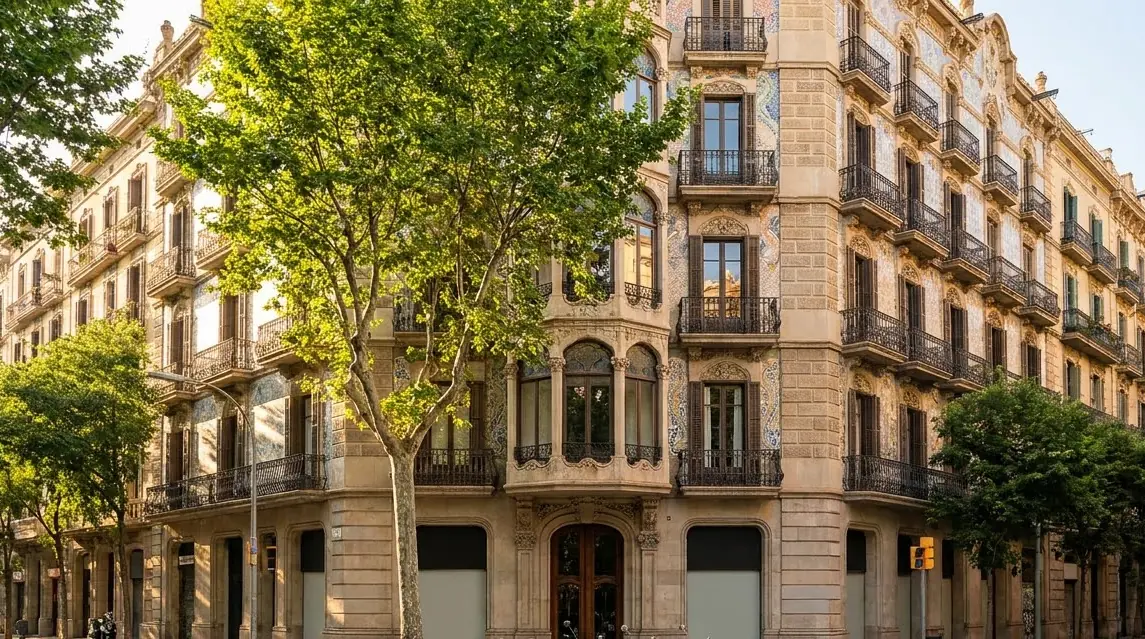
Rooms on the main avenues, such as Aragó, Balmes or Gran Via, take heavy traffic noise. Ask for a room at the back, over the internal courtyard that every Eixample block has.
The streets around the Sagrada Família, at the eastern end of the Dreta, are a base of their own: very crowded by day around the basilica, quiet residential blocks at night, and metro lines L2 and L5 at the door. They suit travellers who want the Gaudí sights and lower prices, about 30 minutes’ walk from the old city.
Gothic Quarter and El Born: the old city
The Gothic Quarter and El Born are the old city of Barcelona, two halves of the same medieval knot of lanes on either side of Via Laietana. Staying here means stepping out into the sights: the cathedral, Plaça Reial, the Picasso Museum and Santa Maria del Mar are all minutes away.
The Gothic Quarter, between La Rambla and Via Laietana, is the busier half: loud until late, with small rooms and the streets nearest La Rambla where pickpocketing is most often reported. El Born, east of Via Laietana, is calmer, with the best concentration of small restaurants and bars and the Ciutadella Park at its edge.
El Raval, west of La Rambla, is the cheapest part of the old city, with the Boqueria market and the MACBA museum at its edges. Its southern and inner streets have the city’s highest rates of reported street crime, so look closely at the exact address before booking there.
Gràcia: the village base for longer stays
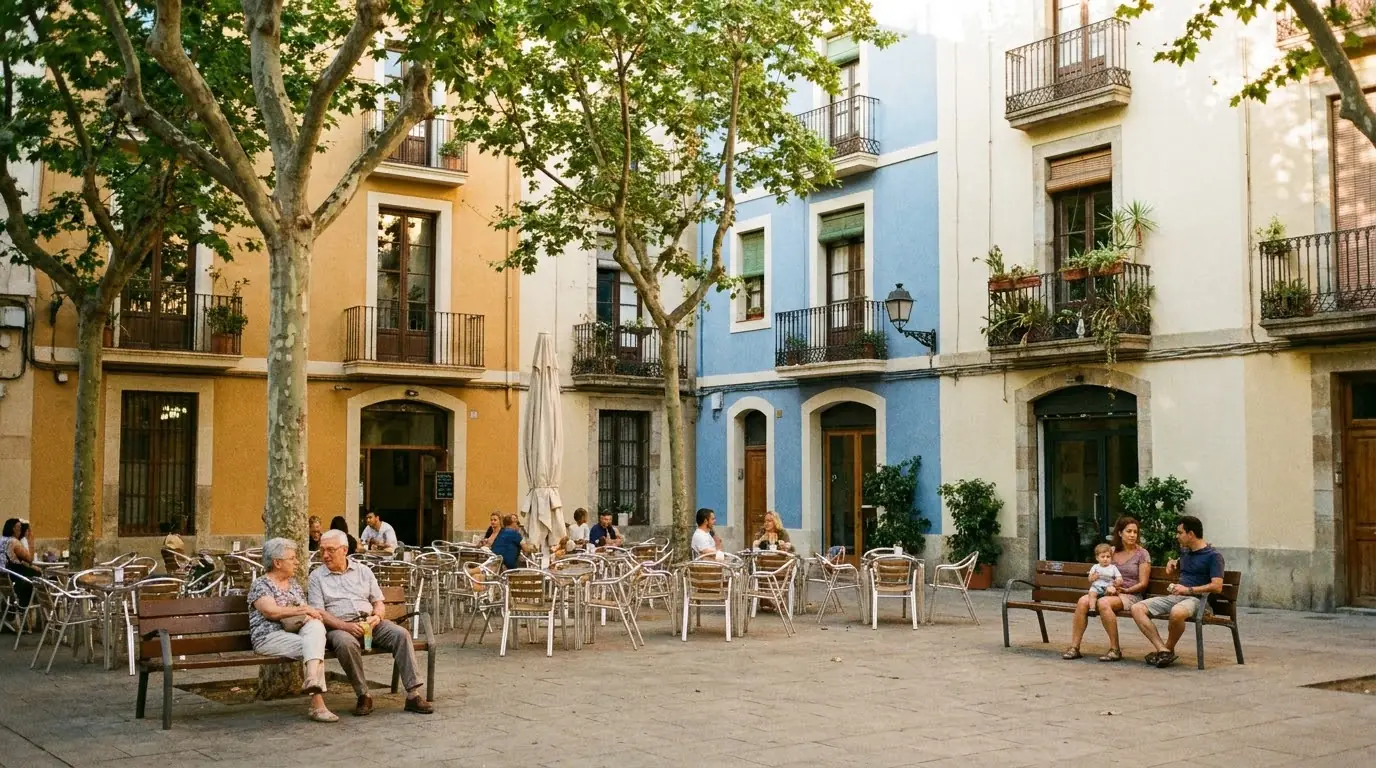
Gràcia was a separate town until the late 19th century, and it still feels like one: low buildings, small squares such as Plaça del Sol and Plaça de la Virreina, independent shops and far fewer visitors. It is the best value for stays of four nights or more, about 20 minutes by metro from the old city.
The trade is distance, and one week a year. In mid-August the Festa Major de Gràcia fills the streets with decorations, concerts and crowds until late, which is the reason to come or a reason to stay elsewhere. Fontana and Diagonal are the main metro stops.
Gràcia is also the closest base to Park Güell, which sits on the hill at its upper edge, about 20 minutes’ uphill walk from Plaça del Sol. Entry to the monumental zone is by timed ticket, so book it before you go. Above Gràcia, Sarrià and Sant Gervasi are quiet, well-off districts with few visitors and fewer hotels.
Sant Antoni and Poble-sec: food streets and Montjuïc
Sant Antoni and Poble-sec are the food districts just west of the old city. Sant Antoni is built around its restored covered market, with terraces and wine bars on the surrounding streets. Poble-sec, below Montjuïc, has Carrer de Blai, a street of pintxo bars, and the easiest walk up to the Montjuïc museums and gardens.
Both are 10 to 20 minutes on foot from La Rambla, cheaper than Eixample, and lively in the evening without the crowds of the Gothic Quarter. They suit travellers who care more about where they eat than about being next to the cathedral.
Sants and Hostafrancs, further west around Sants station, are practical rather than pretty: business hotels, the high-speed trains and the airport trains at the door, and metro lines L3 and L5 into the centre. They work for one night before an early train, less well as the base for a whole stay.
Barceloneta and Poblenou: by the beach
Barceloneta is the old fishermen’s quarter on the beach, a tight grid of narrow streets with seafood restaurants and the city’s busiest stretch of sand. It is 15 minutes’ walk from the old city. In July and August it is loud late into the night; in May, June and September it is a good base.
Poblenou, further east, is the former industrial district, now offices, lofts and newer hotels, with the Rambla del Poblenou and quieter beaches such as Bogatell. It suits families and longer stays, but the old city is a metro ride away rather than a walk.
For a beach stay, check the exact street. The beaches run for several kilometres east of Barceloneta, and a hotel described as being on the beach in Poblenou or beyond may be a long way from the nearest metro stop. The Port Olímpic area between them is mostly bars and clubs, loud on summer nights.
Getting around: the airport, Sants and the metro
Getting from Barcelona airport to the centre takes 30 to 40 minutes by the airport buses to Plaça de Catalunya, or about 30 minutes by metro line L9 Sud, which runs every 7 minutes and connects with the rest of the network at Torrassa, Collblanc or Zona Universitària. The metro needs the Airport ticket, €5.90.
- High-speed trains arrive at Sants, west of the centre; lines L3 and L5 run from there into Eixample and the old city.
- The metro covers almost every area on this page, so a base two or three stops from the sights works fine.
- Do not bring a car: hotel parking is expensive and the centre has a low-emission zone.
Seasons, festivals and the tourist tax
Book early for summer and for the big festivals: Sant Joan on the night of 23 June and La Mercè in late September. July averages a 28.0°C high and August 28.5°C, with nights near 20°C (AEMET, Barcelona Aeropuerto, 1981-2010), so air conditioning matters. September and October are the wettest months, at 81 and 91 mm.
Barcelona has one of the highest tourist taxes in Europe. Since April 2026 the Catalan tax plus the €5 city surcharge come to €12 per person per night in five-star hotels, €8.40 in four-star hotels, €9.50 in tourist flats and €7 in most other hotels, for up to 7 nights. Check whether the booking price includes it.
Hotel or holiday flat? Barcelona has said it will not renew any of its roughly 10,100 tourist-flat licences when they expire in November 2028. Until then, a legal flat shows a Catalan tourism register number in the listing, and the city runs an online tool to check it. Flats without a number are illegal and can be cancelled.
For the days around the room, see the best time to visit Barcelona and how many days to spend in Barcelona.
Every hotel in Barcelona on one map
Prices and availability come live from the booking sites
Where not to stay in Barcelona
Where not to stay in Barcelona comes down to noise, street crime and distance:
- La Rambla itself: noise until the small hours, and the worst food-to-price ratio in the city.
- The inner streets of El Raval if you are nervous about street crime: cheap, and where theft is most often reported.
- Hotels sold as Barcelona that are in L’Hospitalet, Castelldefels or beyond Poblenou: every day starts with a long ride.
- Rooms facing the main Eixample avenues for light sleepers: ask for the courtyard side instead.
- Gràcia in mid-August or Barceloneta in July and August if you want quiet nights.
To plan the days, use the Barcelona itinerary and the Barcelona guide, or read whether Barcelona is worth visiting. Heading on? Compare where to stay in Madrid and Mallorca.
Common questions
What is the best area to stay in Barcelona for first-time visitors?
Eixample is the best area for a first visit to Barcelona. It is 10 to 15 minutes on foot from the old city, has a metro stop every few blocks and is quieter at night than the Gothic Quarter. Casa Batlló and La Pedrera are on Passeig de Gràcia, in the middle of it.
Is the Gothic Quarter a good place to stay?
The Gothic Quarter is a good base if you want to step straight out into the old city, and a poor one if you sleep lightly. Its lanes are busy and loud until late, rooms are often small, and the streets nearest La Rambla are where pickpocketing is most often reported. El Born is calmer.
Is it worth staying near the beach in Barcelona?
Staying near the beach is worth it in May, June or September, when the sea is warm and the crowds thinner. Barceloneta is loud in July and August and a 15-minute walk from the old city. Poblenou, further east, has quieter beaches and newer hotels but is a metro ride from most sights.
How do you get from Barcelona airport to the city centre?
The simplest options are the airport buses to Plaça de Catalunya, which take 30 to 40 minutes, and metro line L9 Sud, which reaches the rest of the network in about 30 minutes with one change. The metro needs the dedicated Airport ticket, which costs €5.90; ordinary single tickets are not valid at the airport stations.
How much is the tourist tax in Barcelona?
Barcelona’s tourist tax combines a Catalan tax and a €5 city surcharge. From April 2026 the total per person per night is €12 in five-star hotels, €8.40 in four-star hotels, €9.50 in tourist flats and €7 in most other hotels, capped at 7 nights. It is usually charged at the hotel, not in the booking price.
Where should you not stay in Barcelona?
Avoid rooms on La Rambla itself, which is noisy until the small hours, and the northern part of El Raval if you are nervous about street crime. Be wary of hotels sold as Barcelona that are really in L’Hospitalet, Castelldefels or beyond Poblenou, where every trip to the sights starts with a long ride.
Opens a price map of Barcelona. We may earn a commission if you book, at no extra cost to you.
Where to next
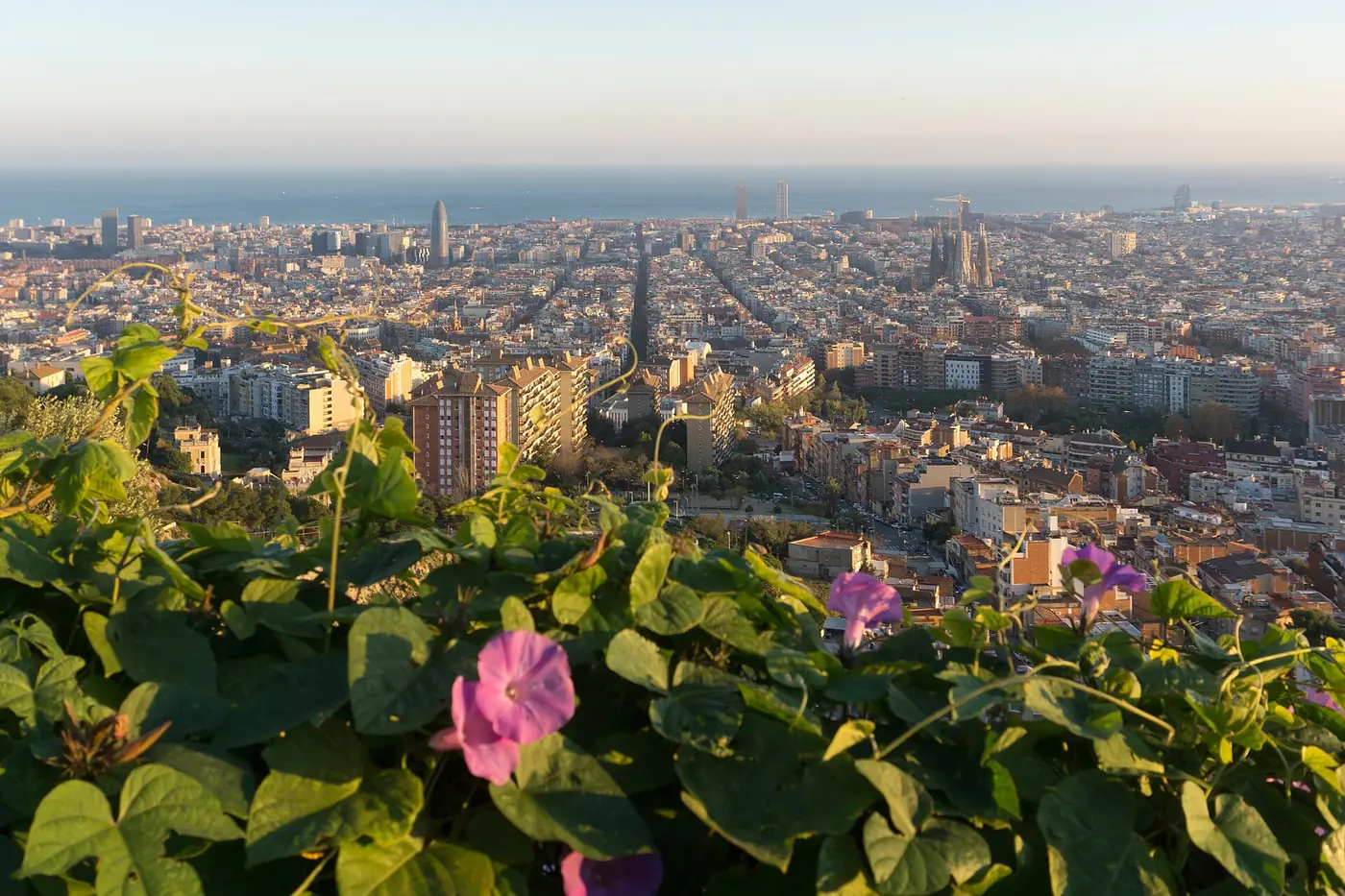
Things to Do in Barcelona
The main guide — how long to stay and what is worth the time.
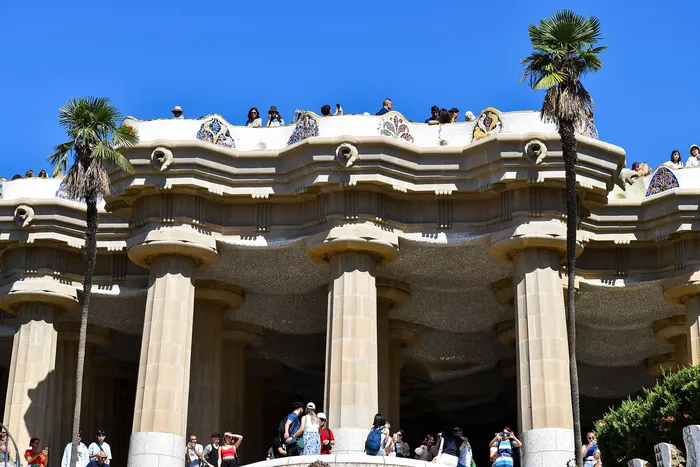
Is Barcelona Worth Visiting?
An honest answer, and who Barcelona suits least.
Barcelona Itinerary
Day-by-day plans for Barcelona, from one day to a full week.
How Many Days in Barcelona?
How long you actually need in Barcelona, and what fits in each extra day.
Keep planning Barcelona
Written and checked by
Travel Guide Kit Editorial
An editorial desk, not an invented persona. Every opening time, ticket price and transport connection here is checked against the operator’s own website and carries the date it was read. Where a page cannot draw on direct experience, it says so.