Quick answer
The Azores need five days for São Miguel's crater lakes, hot springs and whales, and ten days or more to add Pico and Faial or Terceira, with a car on each island.
Key facts
- Whale watching is one of the best in Europe, and Pico has Portugal’s highest mountain, 2,351 m.
- The weather changes fast: Ponta Delgada averages 987.5 mm of rain a year over about 122 rainy days.
The Azores need 5 days for São Miguel, the main island, and 10 days or more to add Pico and Faial or Terceira. The highlights are volcanic: crater lakes, hot springs, whale watching and Pico, Portugal’s highest mountain at 2,351 m. Rent a car on each island, and plan around the weather, which changes several times a day, often within an hour. This guide covers the best things to do in the Azores and how to fit them into one trip.
São Miguel: crater lakes and hot springs
The largest island has crater lakes, hot springs, tea plantations and the main town, Ponta Delgada, which makes it the place to start.
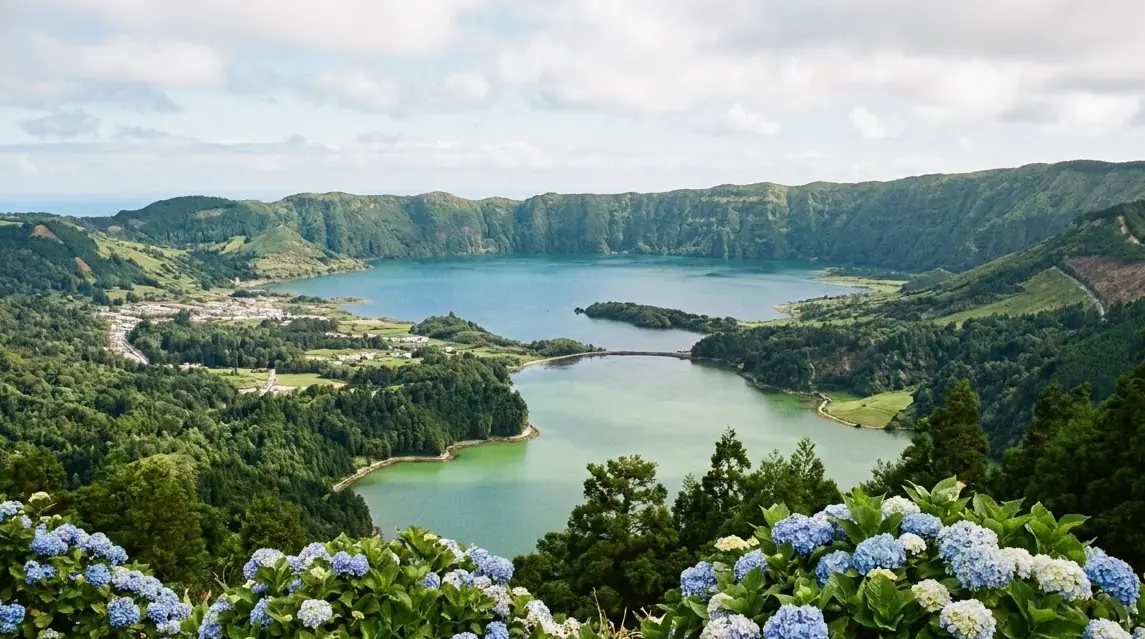
- Sete Cidades: twin lakes, one blue and one green, in a vast crater; the viewpoints on the rim are the classic sight.
- Lagoa do Fogo: a crater lake high in the mountains, with a walk down to its beach.
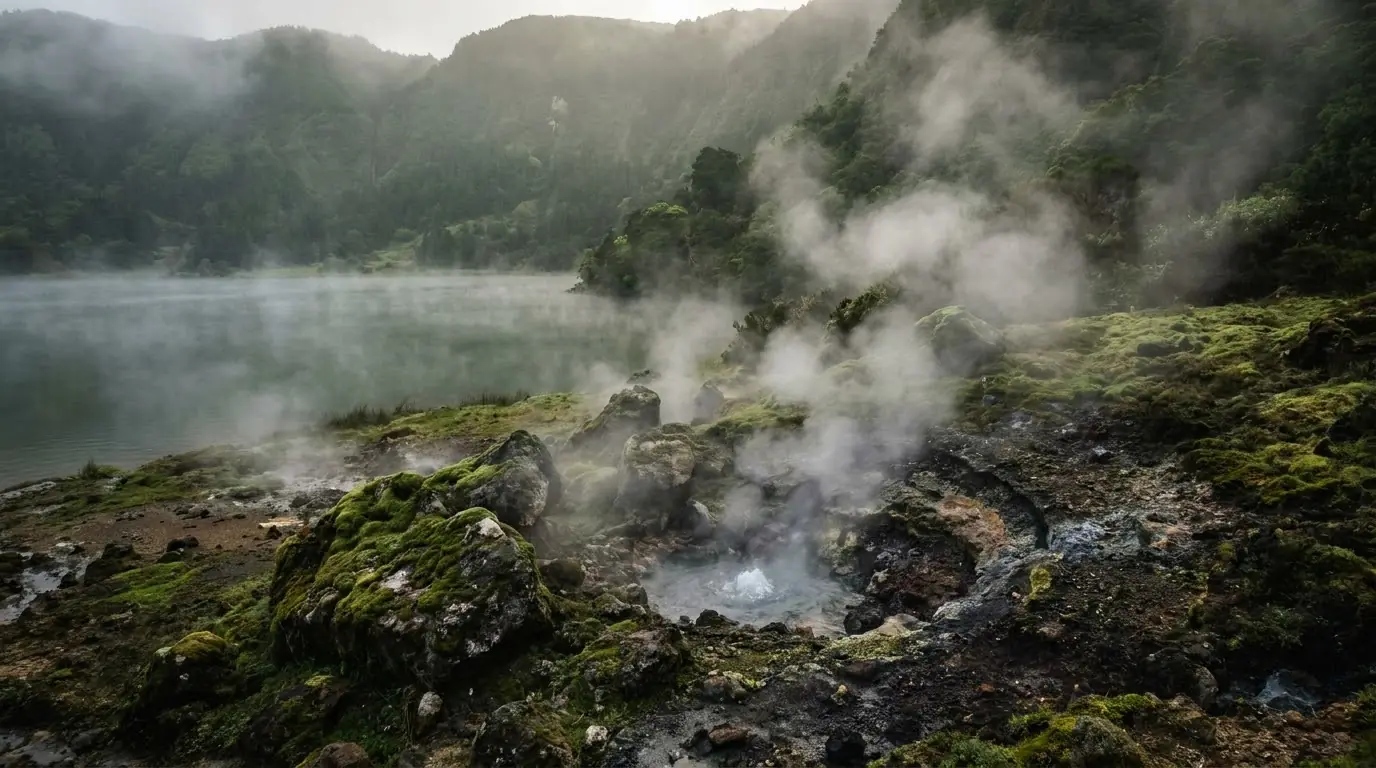
- Furnas: a valley of steaming fumaroles, hot springs and a lake, where the local stew, cozido, is cooked in the ground.
- The tea plantations on the north coast, rare in Europe, with tastings at the factories.
- Ponta Delgada: a small town of black-and-white basalt churches, the harbour and the market.
Ponta Delgada
Ponta Delgada, the largest town in the Azores, is the natural base for São Miguel: a harbour, a seafront promenade, the triple-arched city gates, churches of white plaster and black basalt, and a covered market selling local pineapples, cheese and fish. Most of the island’s lakes and hot springs are within an hour’s drive.
Walking around the lakes
The crater rims make some of the best walks in the islands. At Sete Cidades, a path follows the rim with views down to both lakes; at Lagoa do Fogo, a steep trail leads down to the shore. Check the trail status and the mountain weather before setting out, as cloud and rain arrive quickly.
The thermal pools of Furnas, warm and iron-red, are the place to end a day of walking. The viewpoints over the lakes are often in cloud by midday, so go early and keep a flexible plan.
Caldeira Velha and the hot springs
Beyond Furnas, São Miguel has several more hot springs: Caldeira Velha, a warm waterfall pool in a fern-filled ravine near Ribeira Grande, and the Ponta da Ferraria, where a hot spring flows into the sea at low tide. Bring a dark swimsuit, as the iron-rich water stains light fabric.
Whale watching and the sea
The islands sit on the migration routes of many species in the middle of the Atlantic, which makes whale watching one of the reasons to come.
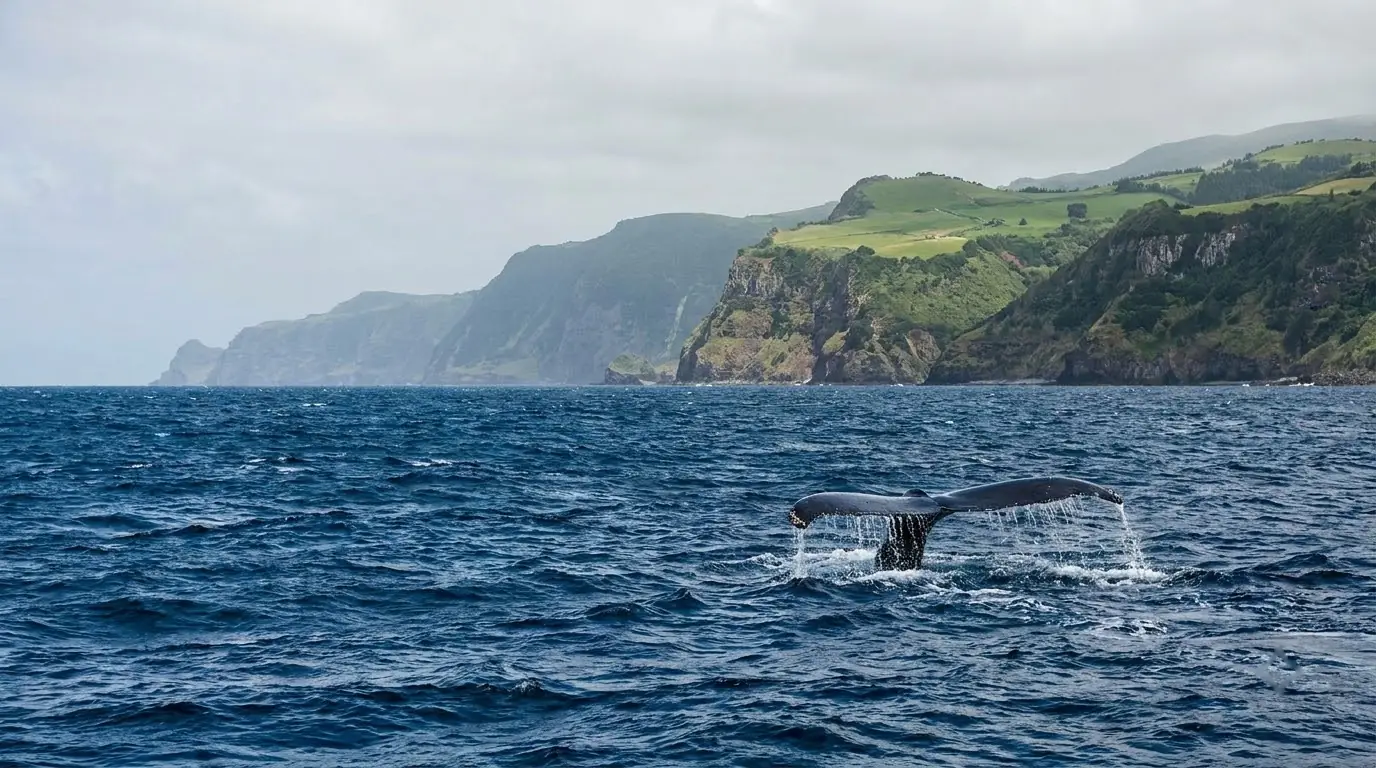
- Sperm whales live around the islands all year; migrating whales pass in spring.
- Dolphins are often seen.
- Boats leave from Ponta Delgada on São Miguel and from Pico and Faial, among other harbours.
- Swimming is in natural rock pools in the lava, and on a few sandy beaches.
Choose an operator that follows the regional code of conduct for whale watching, and expect rough seas on some days; trips are cancelled when the weather is bad.
Pico and Faial: the mountain and the marina
In the central group, these two islands face each other across a short channel and are easily combined.
- Pico: Portugal’s highest mountain, 2,351 m, climbed with a permit and a long day’s walk; and the vineyards in black lava-stone walls, a UNESCO World Heritage site.
- Faial: Horta’s marina, where transatlantic sailors paint their boats’ names on the harbour walls, and the volcanic landscape of Capelinhos.
- A short ferry links the two islands, making a combined stay simple.
Terceira and the other islands
The remaining islands of the nine each have their own character.
- Terceira: Angra do Heroísmo, a colourful historic town and a UNESCO World Heritage site, and lava caves.
- Flores and Corvo: the remote western islands, with waterfalls and dramatic cliffs.
- São Jorge: a long, steep island known for its cheese and coastal walks.
- Santa Maria and Graciosa: quieter islands with beaches and small villages.
Ten days: three islands
Ten days allows a classic three-island trip: four or five days on São Miguel, then a flight to Pico or Faial for three days, with the short ferry between them, and a final day or two on Terceira for Angra do Heroísmo before flying home.
Leave a buffer day at the end, since flights between islands can be delayed by weather.
For a first trip, São Miguel plus one group of the central islands is the realistic plan. Inter-island flights link most islands; ferries run between some of them, mainly in summer.
Five days on São Miguel
The classic first trip gives one area to each day, with a spare morning for the weather.
- Day 1: Ponta Delgada, its churches, market and seafront.
- Day 2: Sete Cidades, the crater rim walk and the viewpoints over the twin lakes.
- Day 3: Furnas, the fumaroles, the cozido lunch and the thermal pools.
- Day 4: whale watching from Ponta Delgada, then the tea plantations on the north coast.
- Day 5: Lagoa do Fogo and the hot river of Caldeira Velha, or a spare day for clouded-out viewpoints.
Food in the Azores
Azorean food is simple and local: cozido das Furnas, a stew of meats and vegetables cooked for hours in the hot volcanic ground; grilled fish and limpets; cheese from São Jorge; and pineapples grown in greenhouses on São Miguel. Pico’s wines, from the lava-walled vineyards, are worth tasting.
The Azores or Madeira?
The Azores or Madeira is a common choice for an Atlantic island trip. Madeira is warmer and drier in Funchal, with levada walks and one compact island; the Azores are greener, wetter and wilder, with crater lakes, whales and nine islands to choose from. See things to do in Madeira for the other side.
Getting around the Azores
Plan on a hire car on each island and a flight or ferry between them.
- Hire a car: buses are infrequent, and the viewpoints and trailheads are spread out.
- Book cars early in summer, when the islands run short.
- Inter-island flights are the fastest way between groups of islands.
- Ferries link Pico, Faial and São Jorge, and some routes run only in summer.
Check the official tourism site, Visit Azores, for trail status and island information before you go.
Hiking and canyoning
The islands are crossed by marked walking trails, from easy lakeside paths to long coastal routes, and canyoning in the ravines of São Miguel and Flores is a popular guided activity. Check the official trail network for closures after heavy rain.
When to go: the weather decides
The weather is mild all year but often wet and changeable. These are the 1991-2020 normals for Ponta Delgada from IPMA.
- May to September: the driest and warmest months, with an August high of 26.0°C.
- July is the driest month, at 26.0 mm; December the wettest, at 152.8 mm.
- Winter is mild, with a 17.5°C January high, but grey, windy and wet.
- The hydrangeas that line the roads bloom in early summer.
Whatever the month, pack a rain jacket and a warm layer, and plan the viewpoints for the clearest hours.
What to skip, or do differently
Trying to do too much causes most of the mistakes:
- Too many islands in one trip: each move costs half a day; two or three islands in ten days is plenty.
- A fixed day for Sete Cidades or Lagoa do Fogo: go on the first clear morning.
- Relying on buses: hire a car on each island.
- A beach holiday: the islands are for walking, whales and lakes, not long sandy beaches.
For a combined trip with the mainland, Lisbon and Porto have the most flights to Ponta Delgada; see the Portugal itinerary for the mainland part.
Where to stay in Azores
In Azores, Ponta Delgada is the base for a first trip and flights, and Furnas for hot springs and quiet. The map shows the same property across Booking.com and Agoda, with prices live from them.
Common questions
What is the best island to visit in the Azores?
São Miguel is the best island for a first visit to the Azores: it has the crater lakes of Sete Cidades and Fogo, the hot springs of Furnas, tea plantations, whale watching and the most flights. With more time, add Pico and Faial for the mountain, the vineyards and Horta’s marina.
How many days do you need in the Azores?
You need five days for São Miguel, and ten days or more to add a second group of islands, such as Pico and Faial or Terceira. Keep spare time for the weather, which can hide the crater lakes and cancel whale-watching trips for a day.
Do you need a car in the Azores?
Yes, you need a car in the Azores: buses are infrequent, and the viewpoints, lakes and trailheads are spread across each island. Hire one on each island you visit, and book early for July and August, when cars run short.
Is the Azores good for a beach holiday?
The Azores are not a beach destination: the swimming is in natural rock pools in the lava and on a few small sandy beaches, and the Atlantic is cool. The islands suit walking, whale watching, hot springs and crater lakes far more than lying on the sand.
Is the Azores better than Madeira?
The Azores are better than Madeira for crater lakes, whale watching and wild, green landscapes across several islands. Madeira is better for levada walks, a warmer and drier climate in Funchal, and a single compact island. Both are mild all year and suit walkers more than beach lovers.
Keep planning Azores
Written and checked by
Travel Guide Kit Editorial
An editorial desk, not an invented persona. Every opening time, ticket price and transport connection here is checked against the operator’s own website and carries the date it was read. Where a page cannot draw on direct experience, it says so.