Quick answer
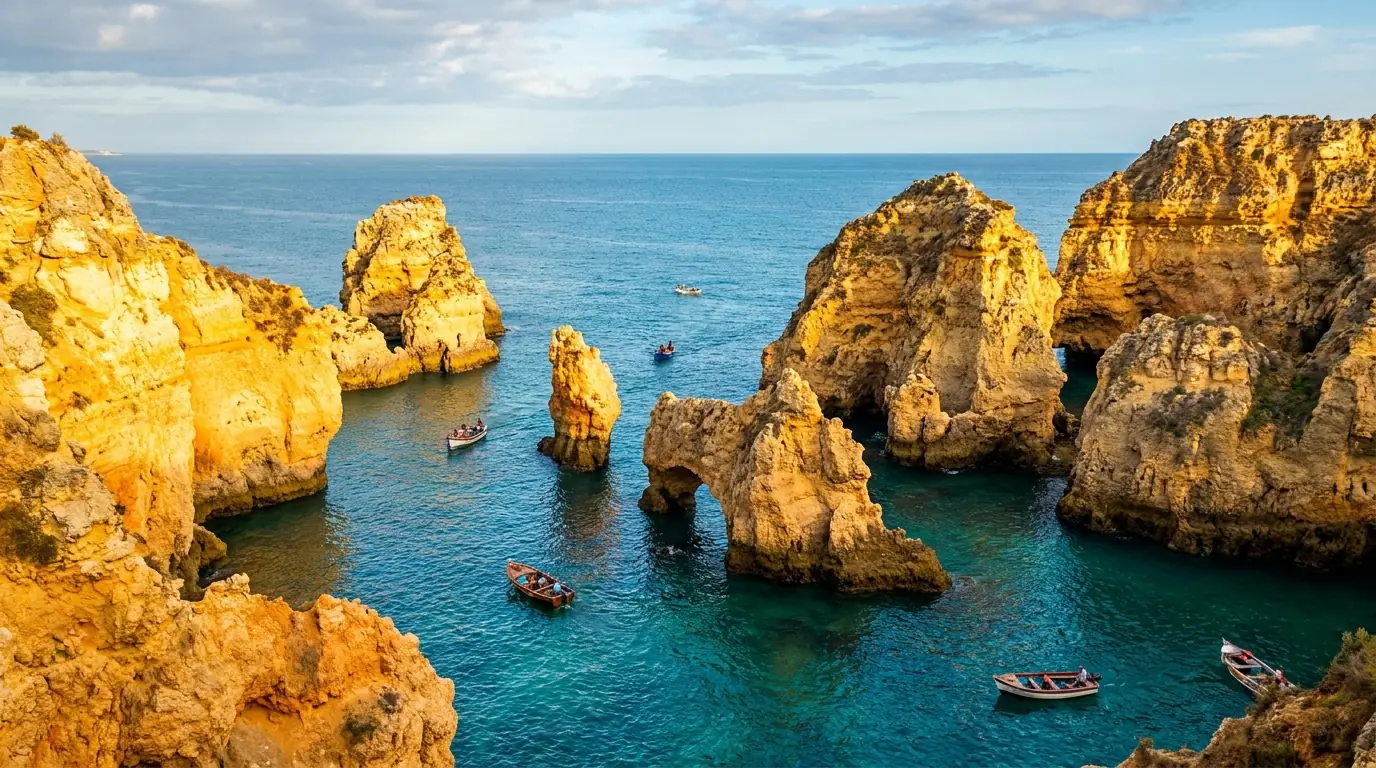
Lagos needs two to three days: Ponta da Piedade's grottoes by boat or kayak, the coves below the cliffs and the walled old town, with Sagres and Cape St Vincent as day trips.
Lagos needs 2 to 3 full days, about 1 hour’s drive west of Faro airport: Ponta da Piedade’s grottoes, the coves below the cliffs and a walled old town that was a port of Portugal’s age of discovery. It is the liveliest town in the western Algarve, with beaches in walking distance, and the best base for Sagres, Cape St Vincent and the wild west coast of Portugal.
This guide covers the best things to do in Lagos, Portugal and how to fit them into one trip.
Ponta da Piedade and the grottoes
A headland just south of Lagos, this is the town’s great sight: a maze of golden rock pillars, arches and grottoes rising from clear green water.
- Small boats leave from the riverside in Lagos and weave between the rocks and into the grottoes.
- Kayak and paddleboard tours get closer, into gaps too narrow for boats.
- From the lighthouse on top, a long staircase leads down to a landing among the rocks.
- A cliff path links Ponta da Piedade with the coves back towards town.
Go on the water in the morning, when the sea is usually calmer and the light reaches into the grottoes. Boat trips are cancelled in rough seas, so keep a spare day. Come back to the lighthouse in the evening for sunset over the cliffs.
Walking the cliffs
Walking the cliffs from the town to Ponta da Piedade takes under an hour, past the coves of Pinhão, Dona Ana and Camilo, with boardwalks in places. Continue west to Porto de Mós for a longer walk. Keep back from the edges: the soft rock crumbles, and there is little shade in summer.
From Porto de Mós to Praia da Luz
From Porto de Mós, the cliff path continues west, climbing over the headland of Atalaia before dropping down to Praia da Luz. It is a longer, quieter walk with wide views of the coast, and you can return by bus or taxi. Start early in summer, as there is almost no shade.
Kayaking and boat trips
Kayaking and boat trips are the classic way to see the grottoes. Kayak tours usually last a couple of hours and need no experience on calm days, while boat trips are shorter and suit families. Some boats also head out to sea to look for dolphins; choose operators that keep their distance from the animals.
The beaches of Lagos
They come in two kinds: small coves below the cliffs to the south, and the long, open sands of Meia Praia to the east.
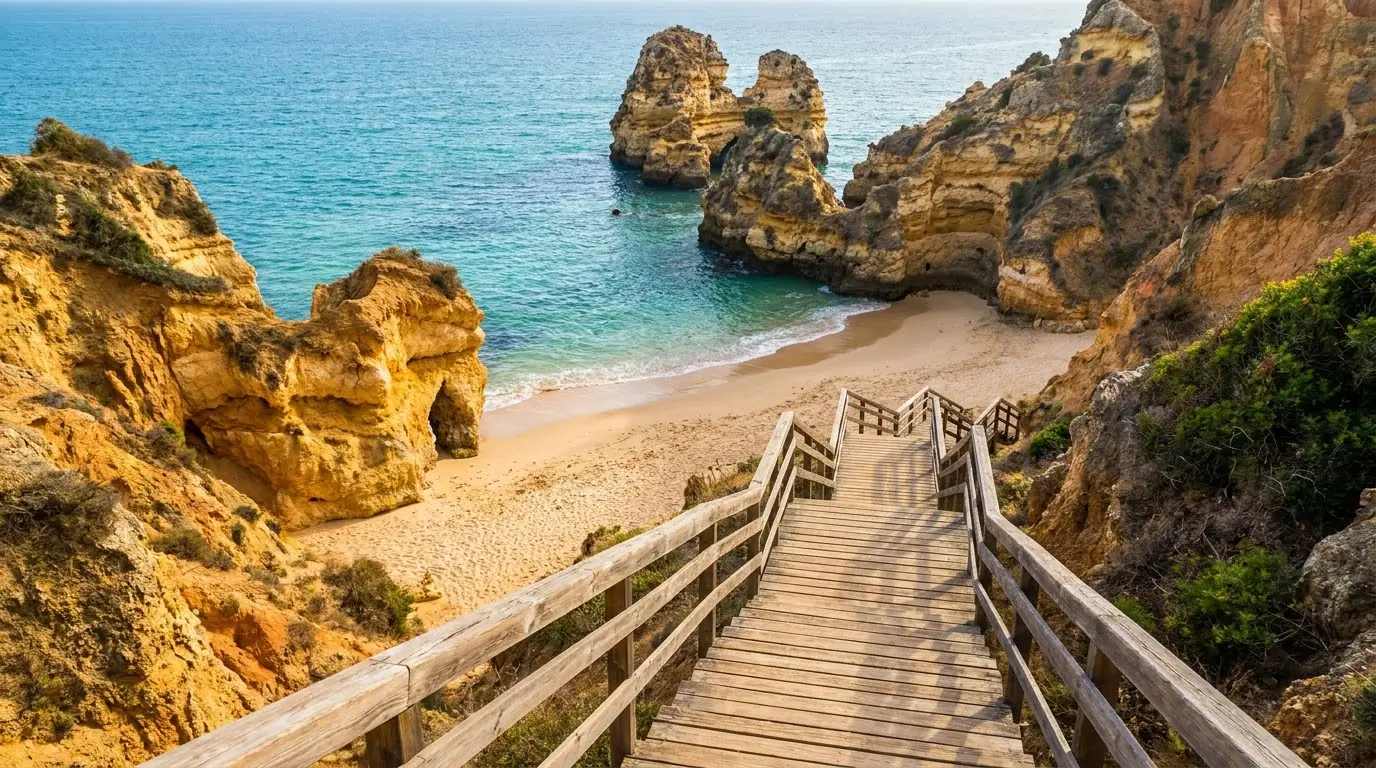
- Praia do Camilo, reached by a long wooden staircase, is a tiny cove framed by rock.
- Praia Dona Ana has golden sand, rock stacks and clear water, a short walk from town.
- Praia do Pinhão and Praia da Batata are the closest coves to the old town.
- Porto de Mós is a wider beach below high cliffs, with space even in summer.
- Meia Praia stretches for several kilometres east of the river, with room for everyone and water sports.
The coves fill quickly in summer and shrink at high tide, so arrive early and check the tide times. Meia Praia is the better choice for families and long walks, and the town beaches are an easy walk from the old town.
In summer, the main beaches have lifeguards and a flag system: green for safe bathing, yellow for caution and red for no swimming. Respect the signs below the cliffs, which warn of rockfalls, and do not sit directly under the cliff faces.
Praia da Luz and beyond
West of Lagos, the village of Praia da Luz has its own beach and a cliff walk up to an obelisk on the headland above. Further on, Burgau and Salema are small fishing villages with beaches, quieter than Lagos and on the way to Sagres.
Surfing near Lagos
Surfing near Lagos is best on the west coast, where the Atlantic swell arrives. Surf schools in Lagos run daily trips to the beaches around Sagres and the Costa Vicentina, choosing the side with the best waves that day. Meia Praia sometimes has small waves for beginners.
The old town and its history
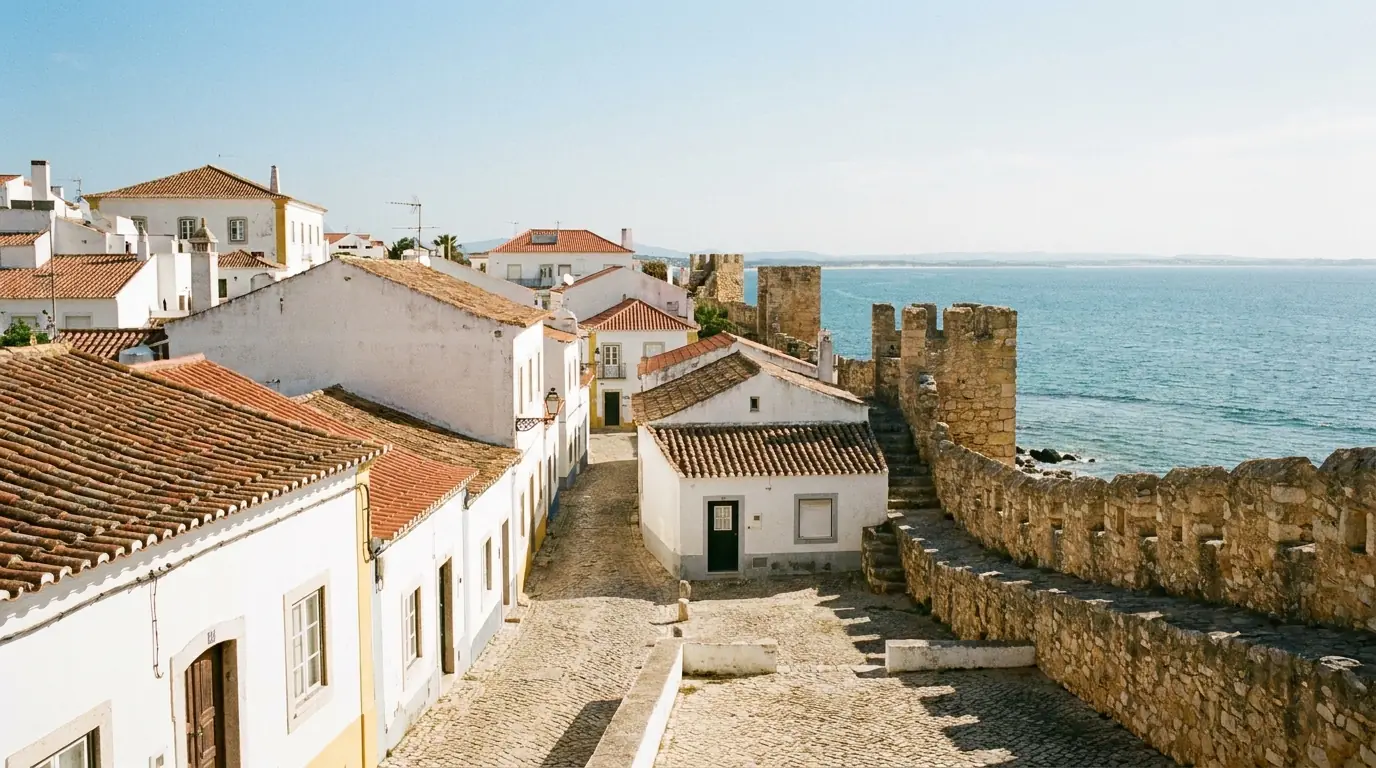
Inside its walls, the town keeps the history of a port that sent ships along the coast of Africa in the fifteenth century.
- The Church of Santo António has a gilded baroque interior, entered through the municipal museum.
- The small fort of Ponta da Bandeira guards the harbour entrance.
- The statue of Henry the Navigator stands in the square by the water.
- The Slave Market museum recalls the first slave market in Europe, held in Lagos in the fifteenth century.
- Stretches of the old walls run around the town, with gates to the riverside.
The old town is small and pedestrian, best explored without a plan, through cobbled lanes of whitewashed houses, tiled façades, cafés and shops. The riverside avenue and the marina across the footbridge are where the town comes out in the evening.
A rainy or windy day
A rainy or windy day, when the boats stay in, is the time for the museums: the municipal museum with the Church of Santo António, and the Slave Market museum. Lagos also has a science centre on the theme of the voyages of discovery.
Alternatively, drive inland to the castle at Silves or the market hall in Loulé, where the weather is often different.
The marina and the riverside
The marina and the riverside avenue face each other across the river, linked by a footbridge. The avenue, lined with palms, is where boats for the grottoes and the sea leave, and the marina has restaurants and cafés with views back to the walls of the old town.
Sunset spots
The best sunset spots are the lighthouse at Ponta da Piedade, the cliffs above Porto de Mós and, a drive away, Cape St Vincent, where crowds gather to watch the sun drop into the Atlantic. In town, the riverside and the marina catch the evening light on the walls.
Day trips from Lagos
The whole western Algarve is within reach, from the cape at the end of Europe to the sea caves of the central coast.
- Sagres and its fortress, about 30 minutes’ drive west, with surf beaches on both sides of the point.
- Cape St Vincent, the south-western tip of mainland Europe, best at sunset.
- The Benagil cave and the Seven Hanging Valleys trail, about 40 minutes east.
- The Costa Vicentina, north of Sagres, for empty beaches and the Fishermen’s Trail.
- Silves and its red castle, and the cool hills of Monchique, inland.
With a car, Sagres and the cape fit an afternoon and evening. Without one, buses run from Lagos to Sagres, and tours and boats cover the caves.
Odeceixe and the west coast
Further north on the west coast, Odeceixe has one of the most striking beaches in Portugal, where a river meets the sea below a village of white houses. Aljezur, on the way, has a ruined castle and surf beaches nearby. It makes a long but rewarding day by car.
For the rest of the region, see things to do in the Algarve.
How many days in Lagos
The answer depends on whether you use the town as a base:
- 1 day: Ponta da Piedade by boat in the morning, a cove in the afternoon and the old town in the evening.
- 2 days: add the cliff walk, Meia Praia and the museums.
- 3 days: add Sagres and Cape St Vincent for the sunset.
- 5 days: add the Benagil cave, the west coast and a day inland.
The best months are May, June and September, warm without the August crowds; for the numbers, see the best time to visit the Algarve. Lagos is busy and loud in July and August, and quiet but open all year in winter.
Lagos with children
Lagos with children works well: Meia Praia has space and gentle water on calm days, boat trips are short, and the town is compact. Inland, the Lagos Zoo is a small zoo popular with families. Avoid the long cliff staircases and the narrowest coves with small children at high tide.
A slow week in Lagos
- Day 1: the old town, the riverside and sunset at Ponta da Piedade.
- Day 2: a morning kayak to the grottoes and an afternoon at Dona Ana.
- Day 3: the cliff walk to Porto de Mós, and a long lunch.
- Day 4: Sagres and Cape St Vincent, with a surf lesson on the way.
- Day 5: the Benagil cave and the Seven Hanging Valleys trail.
- Day 6: Silves and Monchique, or Odeceixe on the west coast.
- Day 7: Meia Praia, the market and a last evening in the old town.
Lagos on a budget
Lagos on a budget is easy outside August. The cliff walks, coves and sunsets are free, the market sells picnic food, and buses link the town with Sagres and Portimão. Lunch menus of the day are cheaper than dinner, and May, June and September bring lower prices than high summer.
Accessibility
Accessibility in Lagos is mixed. The riverside avenue, the marina and Meia Praia are flat and easy, while the old town has cobbles and slopes, and most coves are reached by long staircases. Boat trips from the riverside are the easiest way to see the grottoes without the climbs.
Where to stay
Stay in or near the old town for restaurants and evenings on foot, on the cliffs towards Ponta da Piedade for views and coves, or by Meia Praia for a family beach stay. For more on areas across the coast, read where to stay in the Algarve.
Getting to and around Lagos
Faro airport is the easy way in, and the town itself is best on foot.
- From Faro airport, it is about an hour’s drive along the A22 motorway, which uses electronic tolls.
- Lagos is the western end of the Algarve railway, with trains east to Portimão, Faro and Tavira; see CP.
- From Lisbon, take the train to Tunes and change for Lagos, or take a direct bus.
- Buses run to Sagres and the villages to the west.
- In town, walk: the old town, the riverside and the nearest coves are within 20 to 30 minutes.
Parking in the old town is hard in summer; leave the car in a car park outside the walls. For events and trail information across the region, see Visit Algarve.
Eating and evenings in Lagos
The sea and the old town set the pattern, with fish restaurants, cafés and some of the busiest bars in the Algarve.
- Grilled fish and seafood, often sold by weight, are the staples.
- Cataplana, the copper-pan seafood stew, is a dish to share.
- The municipal market by the river sells fish, fruit and local produce.
- Bars in the old town stay busy late in summer, especially with younger travellers.
For a quieter dinner, head to the streets away from the main square, or to the restaurants by the marina. Many places close one day a week and reduce hours in winter.
Lagos in winter
Lagos in winter is quiet but alive, because people live here all year. The cliff walks are at their best on cool, sunny days, the old town is calm, and the coves are almost empty, although the sea is cold and some restaurants and boat trips close or run less often.
What to skip, or do differently
Timing and crowds cause most of the mistakes:
- Ponta da Piedade boats at midday in August: go early, when it is calmer.
- Only the town beaches: the cliff walk and the coves to the west are the best of Lagos.
- Driving into the old town: park outside and walk.
- Staying only one night: Lagos rewards two or three, with Sagres for a sunset.
Above all, do not plan every hour. Lagos is at its best with a slow morning on the water, a long lunch and an evening walk on the cliffs, and the weather on the sea decides which day suits the boats.
Where to stay in Lagos
In Lagos, Old town is the base for a first trip, nightlife, and Ponta da Piedade and Dona Ana for coves and views. The map shows the same property across Booking.com and Agoda, with prices live from them.
Common questions
What is Lagos, Portugal, known for?
Lagos, Portugal, is known for Ponta da Piedade, a headland of golden rock pillars, arches and grottoes, and for coves such as Camilo and Dona Ana below the cliffs. It is also known for its walled old town, its history as a port of discovery and its lively evenings.
How many days do you need in Lagos?
You need 2 to 3 days in Lagos for Ponta da Piedade by boat, the cliff walk, the coves and the old town. With a third day, add Sagres and Cape St Vincent. As a base for the western Algarve, five days lets you add the Benagil cave and the wild west coast.
Is Lagos or Albufeira better?
Lagos is better for a real town, cliffs, coves and a more relaxed atmosphere, and Albufeira for big resorts, all-inclusive hotels and nightlife. Lagos suits couples and independent travellers; Albufeira suits groups and families who want everything in one place.
Can you visit Lagos without a car?
Yes, you can visit Lagos without a car: the old town, the riverside and the nearest coves are walkable, boats leave for Ponta da Piedade from town, and trains and buses link Lagos with Faro and Sagres. A car helps for the Benagil cave and the west coast.
Is Lagos good for families?
Yes, Lagos is good for families: Meia Praia has space and gentle water on calm days, boat trips to the grottoes are short, and the old town is compact and walkable. Choose a base near Meia Praia or the marina, and avoid the long cliff staircases with very small children.
What is the best beach in Lagos?
The best beach in Lagos depends on what you want: Praia Dona Ana and Praia do Camilo are the most beautiful coves, with rock stacks and clear water, while Meia Praia is better for space, families and long walks. Arrive early at the coves in summer, before they fill.
Keep planning Lagos
Written and checked by
Travel Guide Kit Editorial
An editorial desk, not an invented persona. Every opening time, ticket price and transport connection here is checked against the operator’s own website and carries the date it was read. Where a page cannot draw on direct experience, it says so.