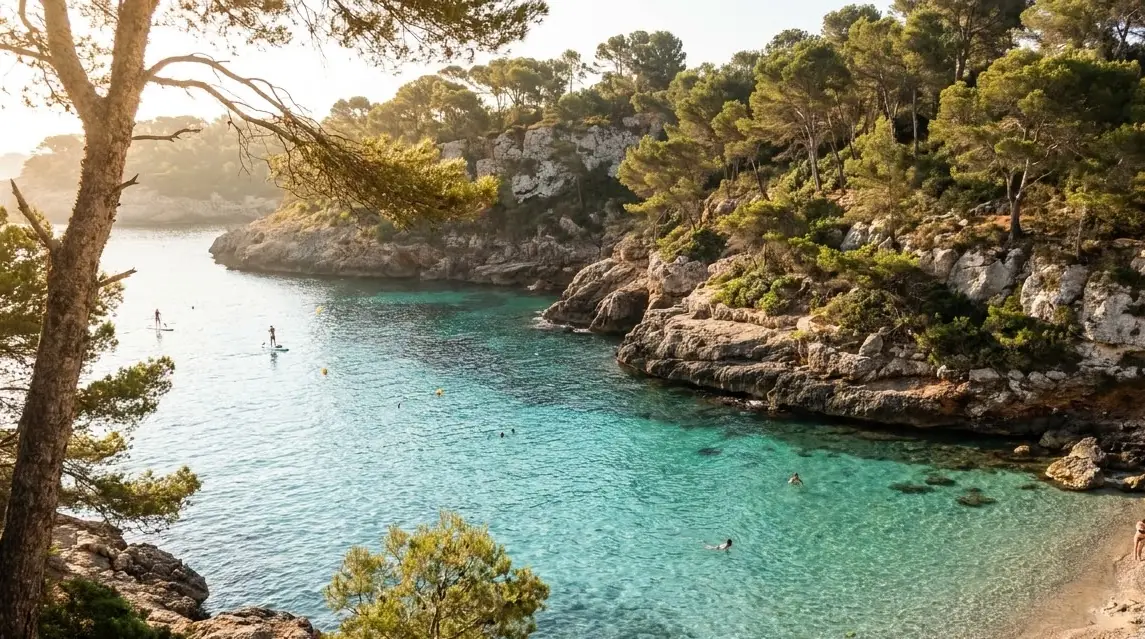
Quick answer
Late May to mid-June and all of September are the best windows in Mallorca: mean highs of 23-28°C with 12-50 mm of rain.
Go to Mallorca from late May to mid-June, or in September, when highs average 23-28°C with 12-50 mm of rain. Those weeks also bring a warm sea and prices below the July peak. Winter is the wrong call despite the mild reputation: Palma airport averages 5.1 frost days in January, and much of the coastal hotel stock closes from November to March. Below, the month-by-month figures show the best time to visit Mallorca for each kind of trip.
Late May to mid-June, or September
Both windows are warm enough to swim in, without the July and August peak.
| When | Mean high | Rain | Verdict |
|---|---|---|---|
| Late May / June | 23.7°C / 28.1°C | 32 / 12 mm | Best for walking and driving |
| July / August | 31.2°C / 31.3°C | 5 / 17 mm | Driest and hottest; peak prices |
| September | 27.9°C | 50 mm | Best for swimming; storms possible |
| October | 23.9°C | 62 mm | Wettest month; still mild |
| November to March | 15.2-19.0°C | 26-55 mm | Quiet; much of the coast closed |
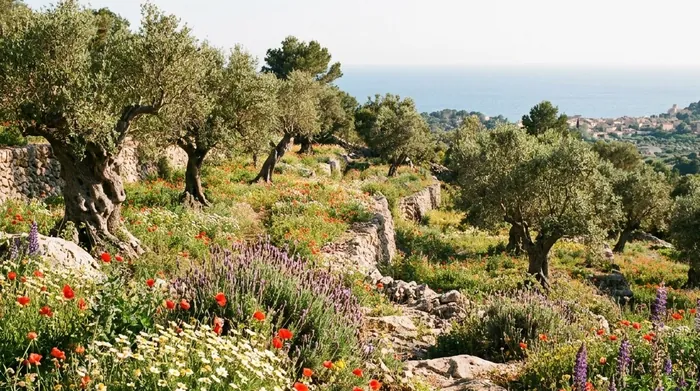
Mallorca has a short peak and two good shoulders, and the shoulders are where the island is at its best. Either side of July and August you get water warm enough to swim in, roads and trails that are not full, and hotels that have not yet moved to peak rates.
- May averages a 23.7°C high, a 11.3°C low, 32 mm of rain and 283 hours of sunshine (AEMET, Palma de Mallorca Aeropuerto, 1981-2010 normals).
- June averages a 28.1°C high with only 12 mm of rain — the second-driest month of the Mallorcan year.
- September averages a 27.9°C high, effectively the same as June, with a sea that has had all summer to warm.
- September rainfall rises to 50 mm, so it is warmer and wetter than June rather than strictly better.
- September also carries 3.9 thunderstorm days, the highest of any month on the island.
Between the two, June suits walkers and drivers and September suits swimmers. The Serra de Tramuntana trails are comfortable in June at 28°C and punishing in the same conditions once the humidity rises in September.
Mallorca month by month, with the numbers
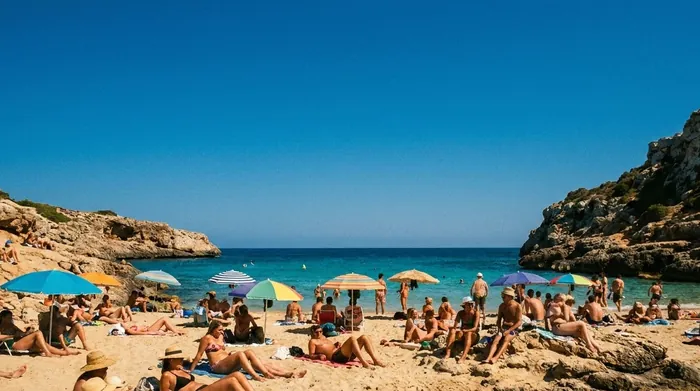
These are the 1981-2010 climate normals for Palma de Mallorca Aeropuerto published by AEMET, the Spanish state meteorological agency. The station sits in the flat south of the island; the Tramuntana mountains in the north-west are consistently cooler and wetter than these figures.
Twelve months at a glance — bars are rain, numbers are mean highs
| Month | Mean high | Mean low | Rain | Sunshine | Storm days |
|---|---|---|---|---|---|
| January | 15.2°C | 3.8°C | 37 mm | 163 h | 0.8 |
| February | 15.4°C | 4.0°C | 32 mm | 166 h | 0.8 |
| March | 17.5°C | 5.2°C | 26 mm | 202 h | 0.8 |
| April | 19.8°C | 7.4°C | 34 mm | 234 h | 1.3 |
| May | 23.7°C | 11.3°C | 32 mm | 283 h | 1.2 |
| June | 28.1°C | 15.4°C | 12 mm | 316 h | 0.8 |
| July | 31.2°C | 18.3°C | 5 mm | 342 h | 0.7 |
| August | 31.3°C | 18.9°C | 17 mm | 315 h | 1.8 |
| September | 27.9°C | 16.5°C | 50 mm | 222 h | 3.9 |
| October | 23.9°C | 13.1°C | 62 mm | 203 h | 2.9 |
| November | 19.0°C | 8.3°C | 55 mm | 162 h | 2.1 |
| December | 16.1°C | 5.4°C | 48 mm | 152 h | 1.6 |
Mallorca receives 411 mm of rain across the year and 2,756 hours of sunshine, which makes it both drier and sunnier than Barcelona on the mainland. The rain that does fall is concentrated into September, October and November.
Mallorca is not a winter-sun island
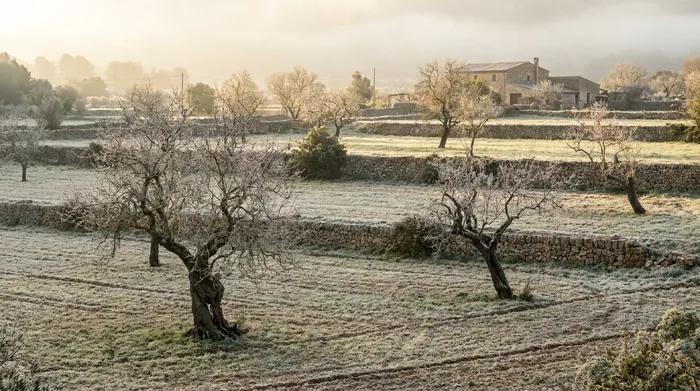
The mild-winter reputation comes from the daytime figures, and those are genuinely pleasant — a 15.2°C January high is shirtsleeve weather in the sun. The nights are a different matter, and they are the part that gets left out of the brochures.
- Palma airport averages a 3.8°C minimum in January and 4.0°C in February.
- The station records 5.1 frost days in January, 3.8 in February and 2.1 in March — 15.0 across the year.
- January and February also average 6.3 and 5.5 fog days, against 0.4 in July.
- Much of the coastal resort hotel stock closes between November and March, so the choice of where to stay narrows sharply.
- Sea temperatures are at their annual low in February and March, well after the air has started warming.
For a winter trip this means Palma itself rather than the resorts: the city stays open year-round, the cathedral and old town work in any weather, and the restaurants are not seasonal. Anyone picturing a beach holiday should look at the Canaries instead.
July is the driest month, and the most expensive one
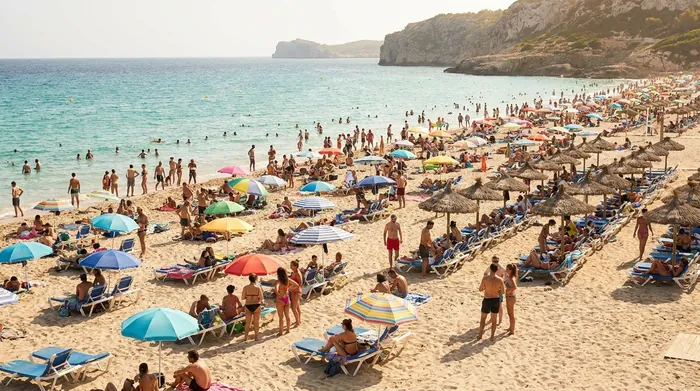
If the only thing that matters is guaranteed sun, July is unambiguously the month — it is the driest and sunniest on the island by a wide margin. The cost of that certainty is everything else about the experience.
- July averages 5 mm of rain across the whole month and 342 hours of sunshine, both annual records for the island.
- July averages 0.5 days with measurable rain — statistically, the month is almost rainless.
- July and August highs of 31.2°C and 31.3°C are the hottest of the year, roughly 3°C above Barcelona in the same months.
- Peak-season room rates on Mallorca run well above the shoulder months, and the popular calas fill early in the day.
- The Tramuntana hiking routes are unpleasant at these temperatures and are better left to spring or autumn.
The trade is this: July buys you weather certainty and costs you space, price and the mountain half of the island. June gives up very little weather — 12 mm and 316 sunshine hours — for a great deal of room.
Best time for each kind of Mallorca trip
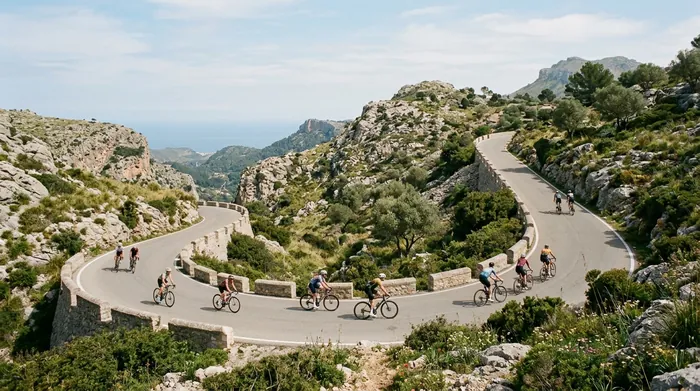
Mallorca is several different holidays on one island, and they do not share a best month. These windows follow the AEMET normals.
What the season does to what is open
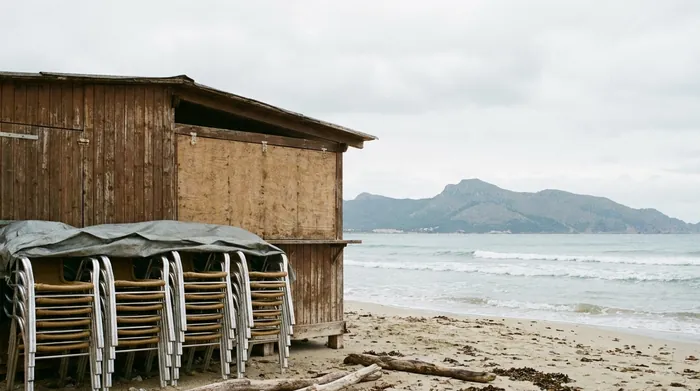
On the Spanish mainland the seasons change the price. On Mallorca they change what exists. A large share of the island’s tourism infrastructure is seasonal, which makes the shoulder dates more consequential here than in a city.
- Many coastal hotels and resort restaurants close from roughly November to March and reopen for Easter.
- Boat trips, water sports operators and some beach clubs run only through the summer season.
- Palma city stays open all year, which is why it is the only sensible winter base on the island.
- Easter week is when the coast reopens, and it prices like a summer week wherever it falls.
- Late October is the point at which the resorts begin shutting, so a late-October booking needs checking rather than assuming.
Check that the specific hotel and the specific restaurants are open for your dates before booking anything outside May to October. This is the mistake that turns a cheap shoulder-season week into a week with nowhere to eat.
When not to book
- A winter beach holiday. Palma averages 5.1 frost days in January and 3.8 in February, and much of the coastal hotel stock is closed from November to March.
- A coastal resort base between November and March without confirming what is actually open. The hotel may be trading while every restaurant within walking distance is shut for the season.
- September for a Tramuntana walking trip. It is the wettest of the warm months at 50 mm and carries 3.9 thunderstorm days, the highest count of the year, which is the wrong combination on an exposed ridge.
- July and August if the trip is about the mountains rather than the beaches. Highs of 31.2°C and 31.3°C make the Tramuntana routes genuinely hard work for no gain.
Where to stay in Mallorca
In the busy months the best-placed rooms go first, so choose the area as soon as the dates are set. The map shows the same property across Booking.com and Agoda, with prices live from them.
Common questions
What is the best month to go to Majorca?
June or September is the best month to go to Majorca. June averages a 28.1°C high with 12 mm of rain and 316 hours of sunshine; September averages 27.9°C with 50 mm and a warmer sea, according to AEMET’s 1981-2010 normals. June suits walkers and drivers, September suits swimmers.
What is the rainy season in Mallorca?
Autumn. September, October and November average 50 mm, 62 mm and 55 mm, the three wettest months of the year. July is the driest at 5 mm. The island receives 411 mm across the year, less than Barcelona on the mainland.
Is Mallorca good in winter?
Only as a city break in Palma. Daytime highs stay at 15-16°C, but Palma airport averages 5.1 frost days in January, and a large share of the coastal hotels and restaurants close from November to March. It is not a winter-sun destination in the way the Canaries are.
How many days in Mallorca is enough?
Five days is the point at which the island stops being a resort strip — enough for Palma, the Tramuntana coast road and two or three beaches without driving the same road twice. The main Mallorca guide sets out how those days divide.
When is the cheapest time to visit Mallorca?
November to February, and the saving is large. The trade-off is that the coast largely closes for those months, so the trip has to be based in Palma. The cheapest week with the resorts still operating is usually the last week of October.
Is Mallorca too hot in July and August?
It is the hottest of the Balearic months, at highs of 31.2°C and 31.3°C — roughly 3°C above Barcelona at the same time of year. For beach days that is fine. For the Tramuntana hiking routes it is hard work, and those are better in April, May or October.
Opens a price map of Mallorca. We may earn a commission if you book, at no extra cost to you.
Where to next
Things to Do in Mallorca
The main guide — how long to stay and what is worth the time.
Mallorca Itinerary
Day-by-day plans for Mallorca, from one day to a full week.
Where to Stay in Mallorca
Which part of Mallorca to sleep in, and who each area suits.
Keep planning Mallorca
Written and checked by
Travel Guide Kit Editorial
An editorial desk, not an invented persona. Every opening time, ticket price and transport connection here is checked against the operator’s own website and carries the date it was read. Where a page cannot draw on direct experience, it says so.