A five-day Mallorca itinerary covers Palma, the Serra de Tramuntana, Sóller and one coast, and it needs a hire car.
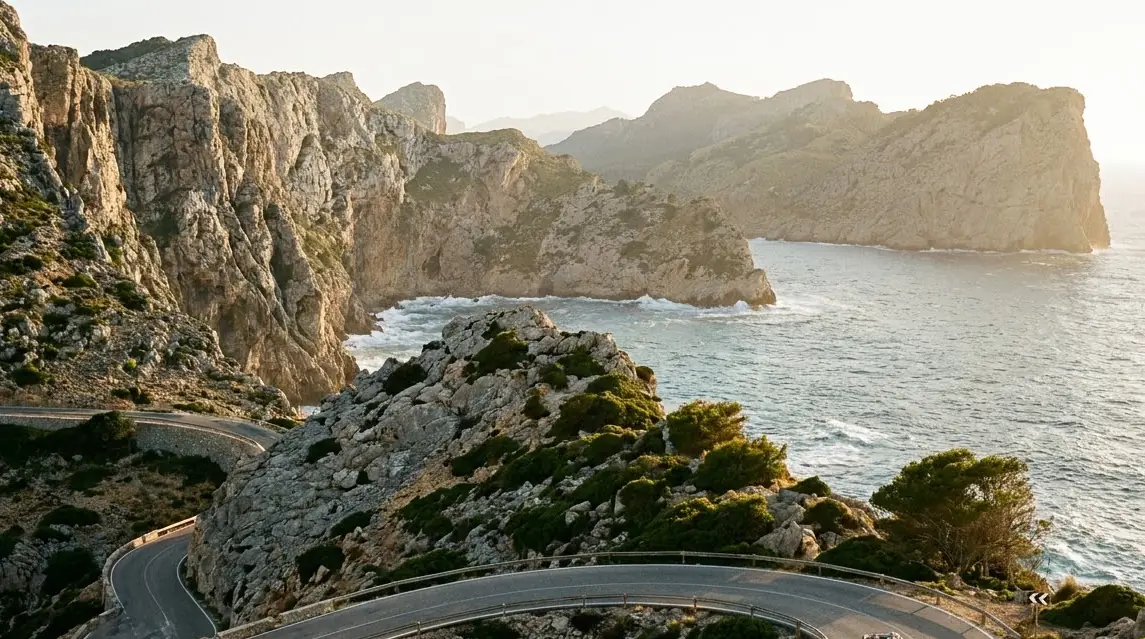
Mallorca is larger than it looks — Palma to Formentor is about 80 km of winding road — so a week-long trip works best with two bases rather than one.
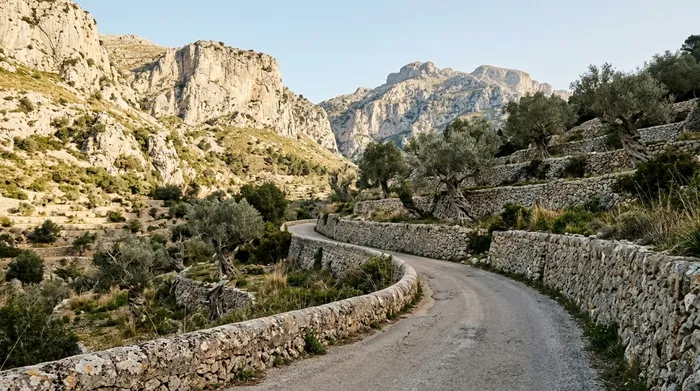
The Tramuntana mountain roads are narrow and slow: 40 km can take ninety minutes, so plan them as daylight drives.
Between November and March much of Mallorca’s coastal hotel and restaurant stock closes, so an off-season itinerary should be built around Palma.
For five days in Mallorca, spend one in Palma, two in the Serra de Tramuntana and Sóller, and two on one coast — and hire a car, because the buses do not reach the coves. For a week, split the stay between two bases. The island is bigger than it looks: Palma to Formentor is about 80 km of winding road.
Before the itinerary: the car and the base
Two decisions shape every Mallorca itinerary more than any sight on it: whether you have a car, and where you sleep.
Without a car you get Palma, the train to Sóller, and whichever beach the bus reaches. That is a city break, not an island trip.
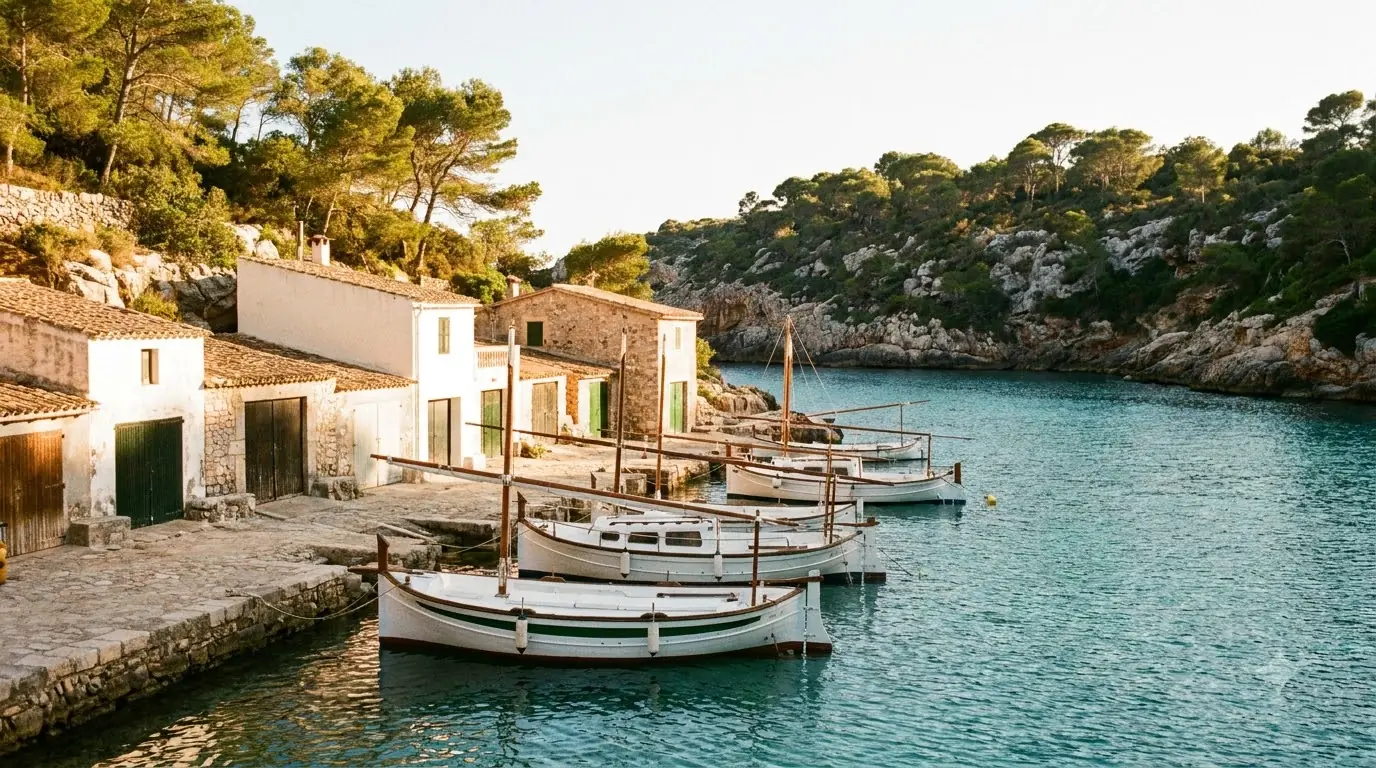
With a car you get the Serra de Tramuntana, the hill villages and the calas on the east coast.
Parking in Palma is difficult and mostly paid. If you start in the city, pick the car up on the day you leave it.
For five days, one base can work. For a week, two bases — one near the mountains, one on a coast — save hours of driving.
Picking one coast beats moving hotels twice: the north, the east and the south are genuinely different holidays.
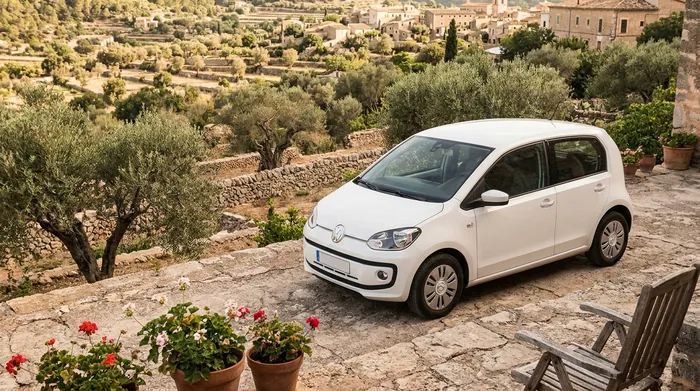
Illustration of a small car parked above an olive valley on MallorcaAI-generated · GLabs nano_banana_pro · Generated
Day 1: Palma
Most itineraries treat Palma as the airport. It is a real city with a real old quarter, and it deserves a full day before you pick up the car.
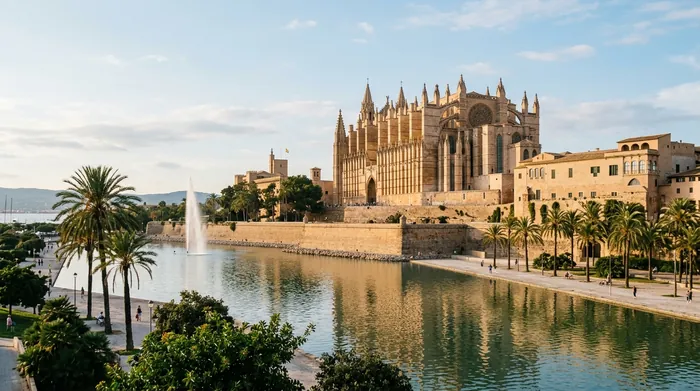
Morning: La Seu, the cathedral on the seafront, unusually tall for its footprint, with a Gaudí-altered interior.
Late morning: the old town behind it — lanes, courtyards and patios, best walked without a plan.
Lunch: in the old town, from about 2pm.
Afternoon: Bellver Castle, a circular castle on a wooded hill above the city, with the best view over the bay.
Evening: back in the old town for dinner.
Illustration of Palma's Gothic cathedral on the seafrontAI-generated · GLabs nano_banana_pro · Generated
Days 2 and 3: the Serra de Tramuntana and Sóller
The mountain range along the northwest coast is a UNESCO World Heritage landscape, and it is the part of Mallorca that looks nothing like the resort strip. The roads are narrow, steep and slow: 40 km can take ninety minutes.
Day 2 morning: Valldemossa, a stone village on a terrace above the valley — the busiest of the three, because the coaches stop here. Arrive early.
Day 2 afternoon: Deià, smaller and steeper, and the one that keeps its shape late in the day once the coaches have gone.
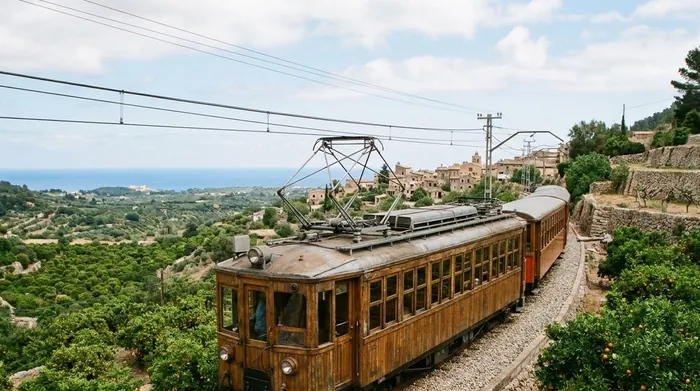
Day 3 morning: Sóller, by car or by the narrow-gauge railway from Palma, which dates from 1912 and climbs through tunnels above the valley.
Day 3 afternoon: down to Port de Sóller — a flat walk of about forty minutes, or the tram if the queue is short.
Day 3 alternative: Fornalutx, a village of stone steps above Sóller and the quietest of the group.
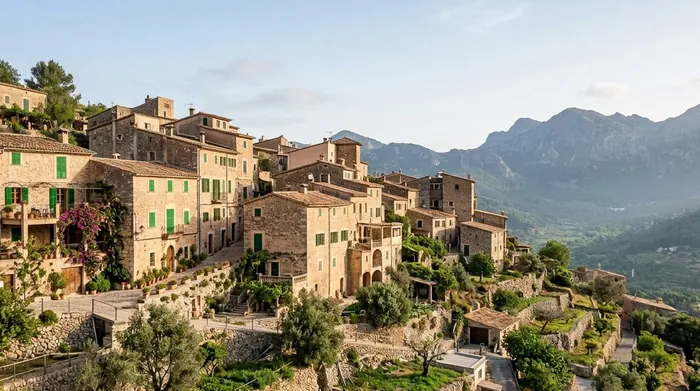
Illustration of a stone mountain village above a valley on MallorcaAI-generated · GLabs nano_banana_pro · Generated
Treat the Tramuntana as a daylight activity. The mountain road is not a route to drive tired or in the dark, so plan to be back down before dusk.
Illustration of an old wooden electric train above orange groves on MallorcaAI-generated · GLabs nano_banana_pro · Generated
Days 4 and 5: one coast
The coasts are three different islands, and two days on one of them beats a day on each.
Which coast for the last two days
Coast
What it is
Best for
North (Alcúdia, Pollença)
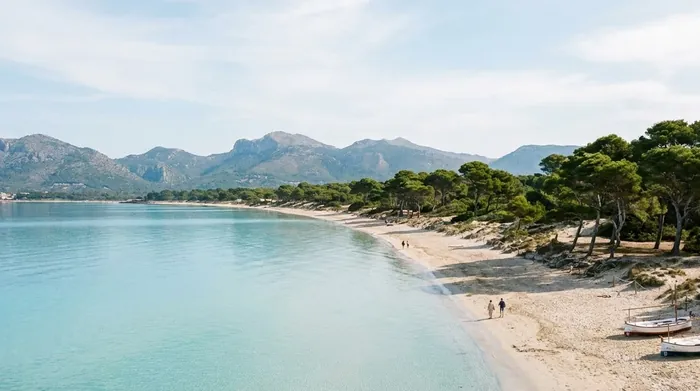
Long sand bays, shallow water
Families, and Formentor as a drive
East (the calas)
Small coves between headlands
Swimming — but only with a car
South (Palma bay)
The resort strip and the city
Nightlife, and staying near the airport
North: one day on the beaches, one on the Formentor peninsula — a full day, not an afternoon.
East: two days of coves, arriving early, as the small ones fill by late morning in summer.
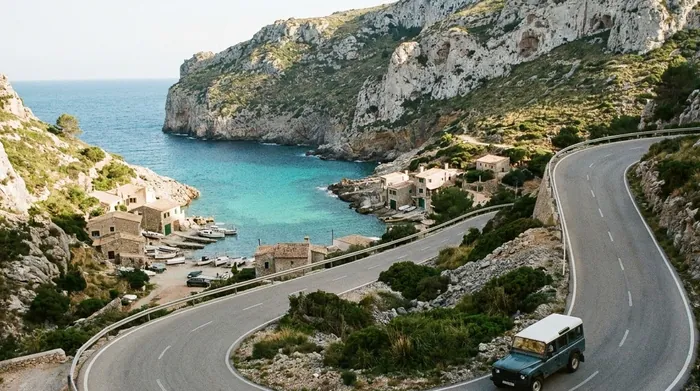
Sa Calobra, if you want the famous road: a series of hairpins including a bend that loops under itself, about an hour each way. Worth doing once, not in a hurry.
Illustration of a hairpin road descending to a cove on MallorcaAI-generated · GLabs nano_banana_pro · Generated
A week in Mallorca
Seven days is the length at which Mallorca stops being a resort holiday and becomes an island trip. The key is two bases.
Days 1-3 — base in or near Palma or Sóller: Palma, then the Tramuntana villages, then Sóller and its port.
Day 4 — Sa Calobra, as a full day from the mountain base.
Days 5-7 — move to the north or the east: beaches, Formentor or the coves, and one unplanned day.
Illustration of a long shallow sandy bay in the north of MallorcaAI-generated · GLabs nano_banana_pro · Generated
Moving once in the middle of the week saves more driving than it costs, because the island is far larger than the map suggests.
Three days in Mallorca
Three days is enough for Palma and the mountains, not for the coasts as well.
Day 1 — Palma: the cathedral, the old town and Bellver Castle.
Day 2 — the Tramuntana: Valldemossa and Deià.
Day 3 — Sóller by the 1912 railway, and down to Port de Sóller.
Without a car, this is the one itinerary that works almost entirely on the train and on foot.
How the season changes the itinerary
The same itinerary needs a different shape in different months. These are the 1981-2010 climate normals for Palma de Mallorca Aeropuerto from AEMET.
July and August average highs of 31.2°C and 31.3°C: put the Tramuntana drives in the morning and the coves in the afternoon.
September has 3.9 thunderstorm days, the most of any month — keep an exposed mountain walk for a clear morning.
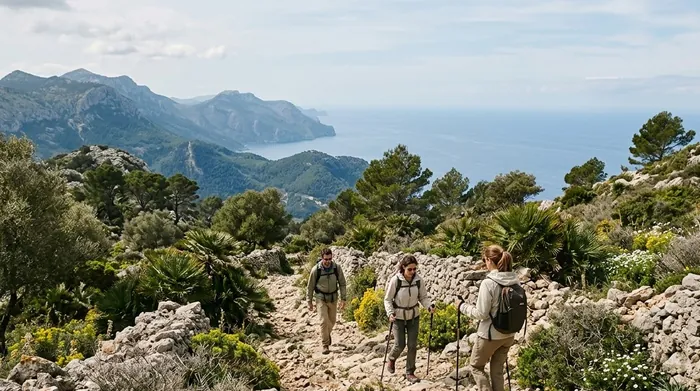
April, May and October, at highs of 19.8-23.9°C, are the months for walking in the Tramuntana.
From November to March much of the coast closes. Build the itinerary around Palma and day trips from it.
January averages 5.1 frost days at Palma airport — pack for cold nights in winter.
Illustration of walkers on a mountain path in the Serra de TramuntanaAI-generated · GLabs nano_banana_pro · Generated
What not to build a day around
01
An island itinerary without a car. You will see Palma and whichever beach the bus reaches, not the Tramuntana or the calas.
02
Formentor and Sa Calobra on the same day. Each is a full day of winding road.
03
Mountain drives after dark. The Tramuntana roads are narrow, steep and slow, and not a route to drive tired.
04
A coastal base between November and March without checking what is open. The hotel may be trading while the restaurants around it are shut for the season.
Common questions
How many days is enough in Mallorca?
Five days covers Palma, the Tramuntana, Sóller and one coast. A week lets you split the trip between two bases and add Sa Calobra or Formentor.
What not to miss on Mallorca?
La Seu cathedral in Palma, the Tramuntana villages of Deià and Valldemossa, the 1912 railway to Sóller, and one of the coves on the east coast.
Do you need a car in Mallorca?
For an island trip, yes. Without one you get Palma, the train to Sóller and whichever beach the bus reaches; the Tramuntana villages and the calas need a car.
Where should I stay for a week in Mallorca?
Two bases: three nights near Palma or Sóller for the city and the mountains, then four in the north or on the east coast for the beaches.