Quick answer
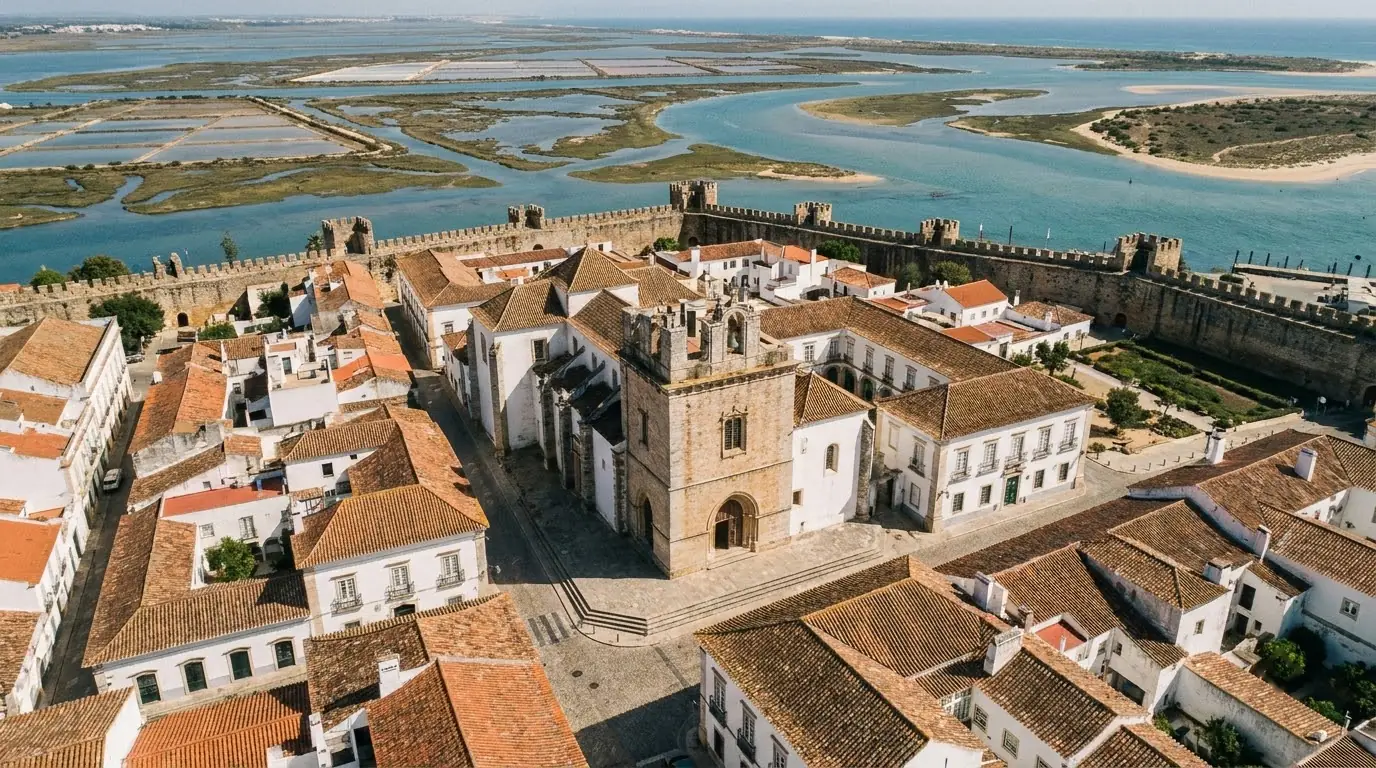
Faro needs one to two days: the walled old town, the cathedral tower over the lagoon, the Chapel of Bones and a boat to the sandy islands of the Ria Formosa.
Faro needs 1 to 2 days, 15 minutes from the airport: a small walled old town with storks on the rooftops, a cathedral tower with views over the lagoon, and boats to the sandy islands of the Ria Formosa. Faro is more than an airport stop: the regional capital rewards a night and makes a good base for the east. This guide covers the best things to do in Faro and how to fit them into one trip.
The old town: walls, cathedral and storks
Inside its walls by the lagoon, the Cidade Velha is a place of quiet cobbled lanes, whitewashed houses, a cathedral square lined with orange trees, and storks nesting on the towers.
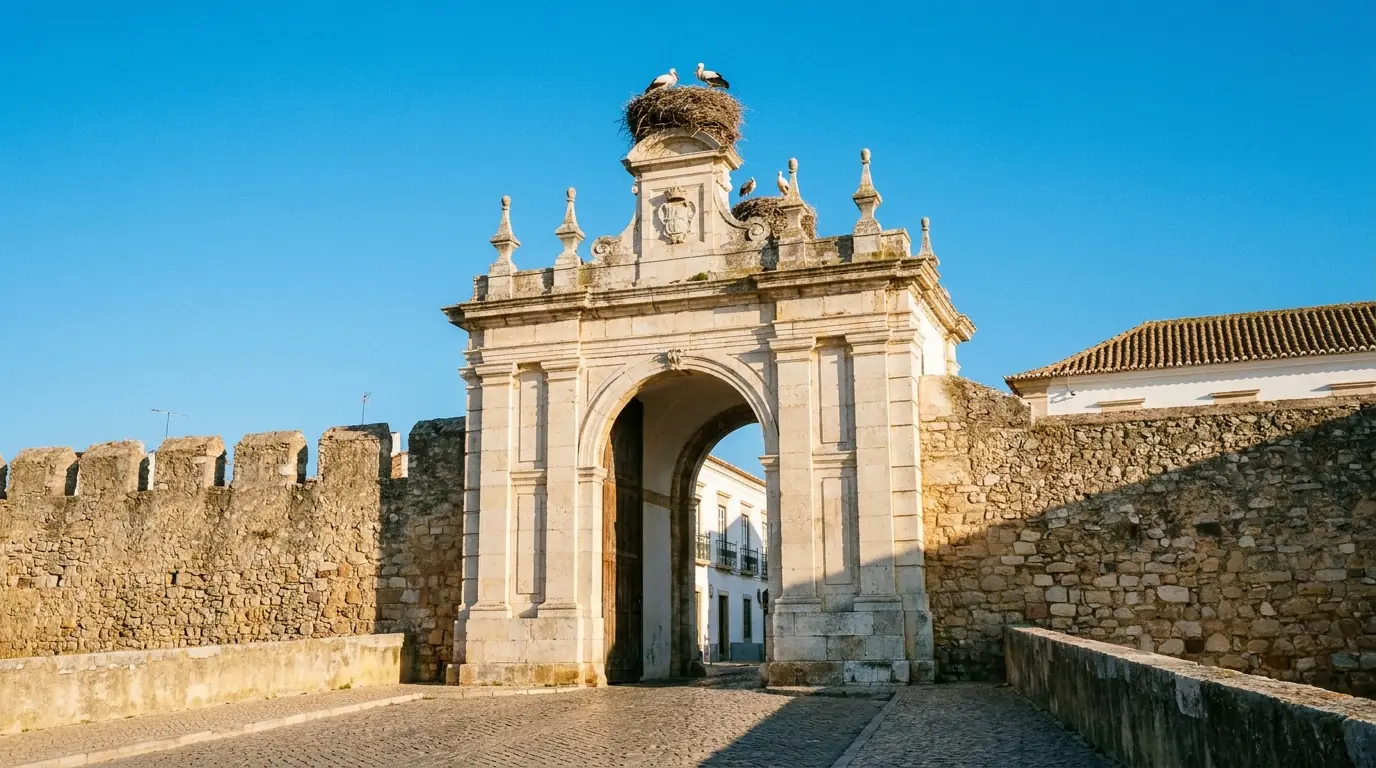
- The Arco da Vila, a grand gateway by the marina, is the main way into the old town.
- The cathedral, on the Largo da Sé, mixes Gothic, Renaissance and baroque, with gilded chapels and tiles.
- Its tower is the best viewpoint in Faro, looking out over the rooftops and the lagoon to the islands.
- The municipal museum fills a former convent with a fine Renaissance cloister.
- Storks build their nests on the bell towers and chimneys, and are easy to spot from spring.
The old town is small, and an hour or two covers it at an easy pace. Go in the late afternoon, when the light turns the walls golden and the storks return to their nests, and walk out through the gate by the water to the marina and the gardens.
The Chapel of Bones and the town beyond the walls
Behind the Carmo church is Faro’s strangest sight, and beyond the walls are the town’s busiest streets.
- The Capela dos Ossos, at the back of the baroque Igreja do Carmo, is lined with the bones and skulls of monks.
- The Carmo church itself has a gilded interior and twin towers.
- Rua de Santo António, the main pedestrian street, is lined with shops and cafés.
- The municipal market sells fish, fruit and local produce, with places to eat inside.
- The marina and the Manuel Bivar gardens link the old town with the modern centre.
The chapel is small and takes only a few minutes to see, but it is worth the short walk. Combine it with the shopping streets and a coffee in one of the squares, where the town feels most like an everyday Portuguese city.
A rainy day in Faro
A rainy day in Faro suits the indoor sights: the cathedral and its tower when the showers pass, the municipal museum in its Renaissance cloister, the Carmo church and the Chapel of Bones, and a long lunch at the market. The regional museum has displays on traditional life in the Algarve.
Faro after dark
Faro after dark is lively in a local way rather than a resort way. Students from the university keep the bars around the centre busy, and the restaurants of the old town and the streets near the marina stay open late in summer, without the crowds of the bigger resorts.
The Ria Formosa and the islands
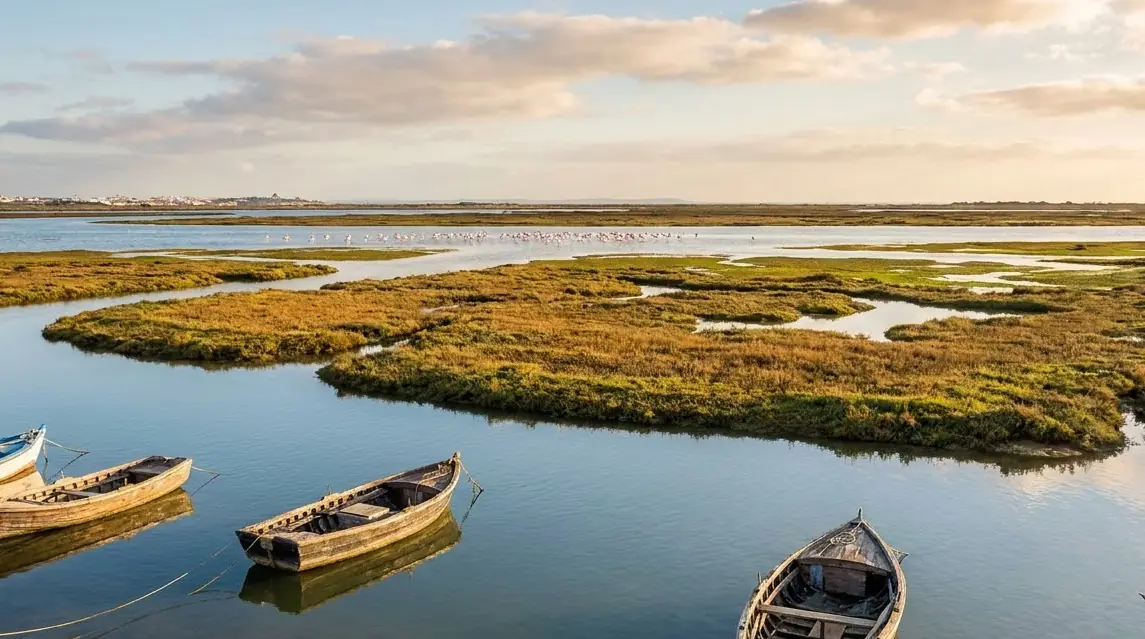
The Ria Formosa, a lagoon of salt marshes, channels and sandy barrier islands, begins at Faro’s doorstep and is protected as a natural park.
- Ilha Deserta, reached by boat from Faro, is an almost empty island of dunes and long beach.
- Culatra has a fishing village without cars, and Farol has a lighthouse at the tip of its island.
- Boat tours wind through the channels, with stops for birdwatching and swimming.
- Flamingos, spoonbills and waders feed in the salt pans and mudflats.
Boats and water taxis leave from the jetty by the old town, and ferries from Olhão serve Culatra and Armona. Check the last boat back before you set out, as timetables change with the season and the islands have little shade.
Birdwatching in the lagoon
Birdwatching in the lagoon is best from autumn to spring, when migrating and wintering birds gather in the marshes. The Ludo area near the airport has salt pans and trails, and Quinta de Marim, near Olhão, has paths through the marsh. Go early in the morning.
Praia de Faro
Praia de Faro is the city’s beach, on a long sandbar near the airport, reached by bus or car across a narrow bridge. It has a long sandy beach facing the ocean and calm lagoon water on the other side, with seafood restaurants along the strip. Planes pass low overhead on their final approach.
Day trips from Faro
The eastern Algarve and the hills inland are all within reach, and several trips work by train or bus.
- Olhão, minutes away by train, has a busy riverside market and ferries to Culatra and Armona.
- Tavira, about 40 minutes by train, is the prettiest town in the east, with an old bridge and island beaches.
- Loulé, inland, has a domed market hall and a Saturday market.
- The church of São Lourenço near Almancil is lined with blue-and-white tiles inside.
- The Roman ruins of Milreu, near Estoi, have mosaics of fish and sea creatures.
With a car, the sea caves of the central coast are about 45 minutes west, and Lagos and the west are about an hour. For more of the region, read things to do in the Algarve and things to do in Lagos.
Estoi
Estoi, a village in the hills north of Faro, pairs the Roman ruins of Milreu with a pink rococo palace, now a hotel, whose gardens of tiles, statues and fountains can be visited. Together they make an easy half-day by car or bus, cooler than the coast in summer.
How long to stay, and where
The answer depends on whether you use the city as a base:
- Half a day: the old town, the cathedral tower and the Chapel of Bones, before or after a flight.
- 1 day: add a boat into the Ria Formosa or an afternoon on Praia de Faro.
- 2 days: add a full day on the islands, or Tavira or Olhão by train.
- 3 days or more: use Faro as a base for the east, Loulé and the Roman ruins.
Stay in or near the old town and the marina, where the restaurants and the boats are, rather than out by the main roads. Faro works especially well for the first or last night of a trip, close to the airport. For bases along the coast, see where to stay in the Algarve.
One day in Faro
- Morning: the old town, the cathedral and the view from its tower.
- Late morning: the municipal museum and a walk along the walls by the lagoon.
- Lunch: clams or grilled fish near the market.
- Afternoon: a boat into the Ria Formosa, with a swim on Ilha Deserta or Farol.
- Evening: the Carmo church, then dinner in the old town as the storks settle on the towers.
Faro with children
Faro with children works well: the old town is small and flat, the storks on the towers delight young eyes, and a boat trip to the islands ends on a calm, sandy beach. The lagoon side of Praia de Faro has gentle water for paddling.
Getting to and around Faro
The Algarve’s international airport is on the edge of the city, and the centre is easiest on foot.
- From the airport, buses and taxis reach the centre in about 15 to 20 minutes.
- From Lisbon, trains run to Faro in about 3 hours; book on CP.
- The Algarve railway links Faro with Olhão, Tavira and Vila Real de Santo António to the east, and Lagos to the west.
- The old town, the marina, the station and the boat jetty are all within walking distance.
A car is useful for Milreu, the hills and the beaches of the central coast, but not needed in town, where parking is limited. For events and trail information, see Visit Algarve.
Eating in Faro, and when to go
Fish and seafood from the lagoon and the ocean fill the menus, from simple grills to the market hall.
- Clams and oysters from the Ria Formosa are local specialities.
- Cataplana, a seafood stew cooked in a copper pan, is the Algarve’s signature dish.
- Grilled fish is often sold by weight; ask for the catch of the day.
- Sweets of almond, fig and carob come from the hills inland.
For the weather, these are the 1991-2020 normals for Faro from IPMA: July averages a 29.4°C high, January 16.3°C, and the city receives 455.1 mm of rain a year, mostly between October and March. Spring and early autumn are best for the old town and the islands; see the best time to visit the Algarve.
What to skip, or do differently
The main mistake is rushing through:
- Heading straight from the airport to a resort: the old town deserves at least an afternoon.
- Expecting a beach in town: the beaches are on the islands and the sandbar.
- Missing the last boat back from the islands: check it before you leave.
- Driving into the old town: it is small, walled and best on foot.
Above all, give Faro an evening. The old town is at its best when the day visitors have gone, the storks are back on the towers and the lagoon turns pink at sunset.
Where to stay in Faro
Choose the area before the hotel: it sets how much of Faro you can reach on foot. The map shows the same property across Booking.com and Agoda, with prices live from them.
Common questions
Is Faro worth visiting?
Faro is worth visiting for a day or two: a walled old town with storks on the rooftops, a cathedral tower with views over the lagoon, the Chapel of Bones and boats to the sandy islands of the Ria Formosa. It is quieter and more local than the resort towns of the coast.
What is Faro known for?
Faro is known as the capital of the Algarve and its main airport, and for its walled old town, its cathedral, the Chapel of Bones at the Carmo church and the Ria Formosa lagoon, a natural park of salt marshes, islands and birdlife on the city’s doorstep.
How many days do you need in Faro?
You need 1 to 2 days in Faro: one for the old town, the cathedral and the Chapel of Bones, and one for a boat trip to the Ria Formosa islands. Stay longer if you use Faro as a base for Tavira, Olhão and Loulé, which are easy to reach by train or bus.
Does Faro have a beach?
Faro has no beach in the town itself. The nearest is Praia de Faro, a long sandbar near the airport reached by bus or car, with the ocean on one side and the lagoon on the other. Quieter beaches lie on the islands of the Ria Formosa, reached by boat.
What is there to do in Faro at night?
At night in Faro, people eat late in the old town and around the marina, then move on to the bars of the centre, kept busy by students from the university. It is lively but local rather than a resort scene, and quieter in winter. The old town is at its loveliest after dark.
Is Faro a good base for the Algarve?
Faro is a good base for the eastern Algarve, especially without a car: trains run to Olhão and Tavira, boats go to the islands, and the airport is close. For the cliffs and sea caves of the central and western coast, Lagos or Carvoeiro make better bases.
Keep planning Faro
Written and checked by
Travel Guide Kit Editorial
An editorial desk, not an invented persona. Every opening time, ticket price and transport connection here is checked against the operator’s own website and carries the date it was read. Where a page cannot draw on direct experience, it says so.