Quick answer
Five days is the right length for Mallorca: Palma, the Serra de Tramuntana, Sóller and one stretch of coast; a week adds the north, and three days covers Palma and the mountains only.
Key facts
- Mallorca is bigger than it looks: Palma to Formentor is about 80 km of winding road, a full day there and back.
5 days is right for Mallorca: 1 for Palma, 2 for the Serra de Tramuntana and Sóller, and 2 for one stretch of coast, with a hire car. With 7 days, add the north and split the stay between two bases; with 3, keep to Palma and the mountains. The island is larger than it looks, and its mountain roads are slow, so plan fewer places per day than the map suggests.
The plans below show how many days in Mallorca each kind of trip needs, and what each length covers.
Where to stay in Mallorca
In Mallorca, Palma old town is the base for a first visit, a city break, and Santa Catalina and Portixol for food and the seafront. The map shows the same property across Booking.com and Agoda, with prices live from them.
Five days, or a week with the north
Mallorca’s sights are spread over a large island with slow roads, which is why it takes five days, or a week with the north.
The days count only with a car. Without one, the island shrinks to Palma, the Sóller train and the beaches the bus reaches, and three days covers most of it.
Two days in Mallorca
Two days in Mallorca is a city break with one excursion: Palma on the first day, with the cathedral, the old town and dinner in Santa Catalina, and the old train to Sóller on the second, with the tram or the walk down to the port.
It suits a stopover between Barcelona and Ibiza, or a weekend flight, and needs no car.
Is 3 days in Mallorca enough?
Three days in Mallorca is enough for Palma and the mountains, but not for the coves or the north.
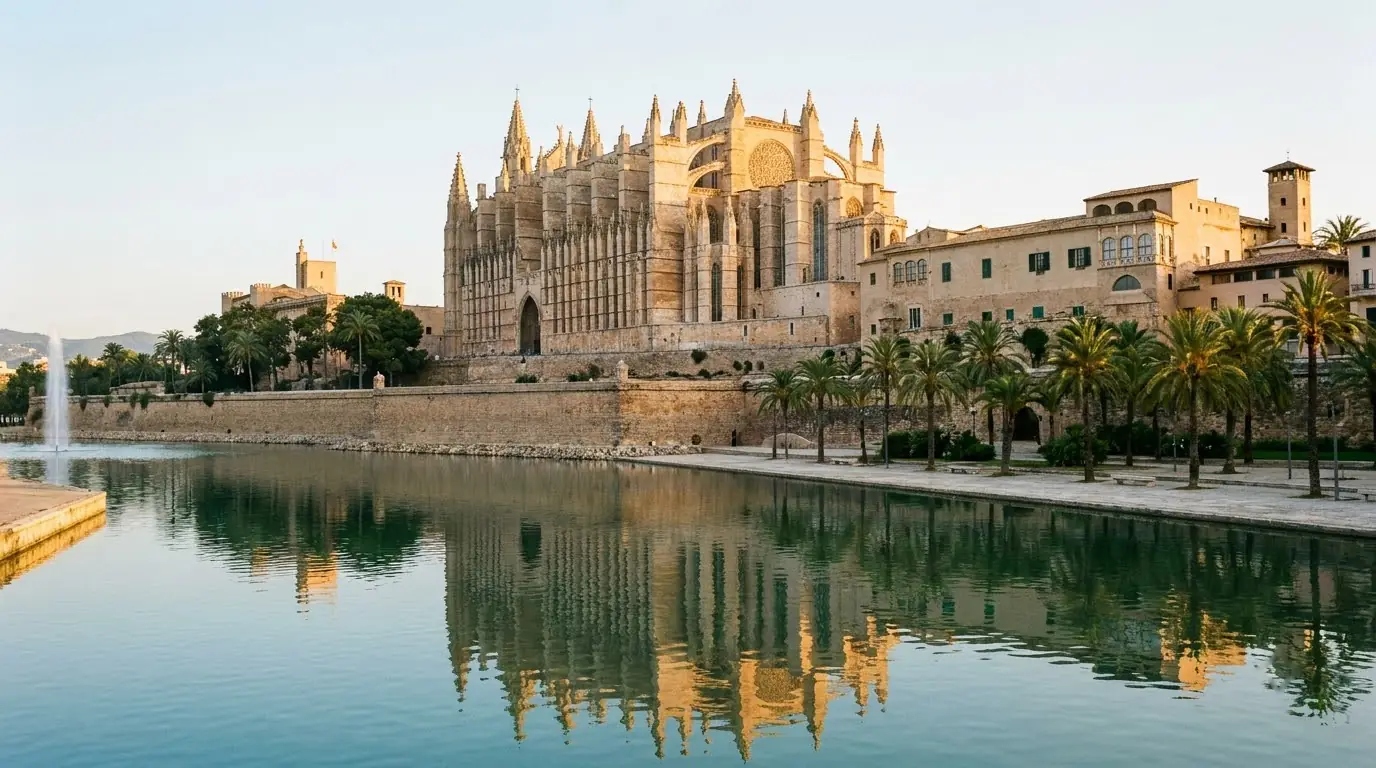
- Day 1, Palma: La Seu, the cathedral on the seafront, the old town behind it, and Bellver Castle for the view.
- Day 2, the Tramuntana: Valldemossa in the morning, before the coaches, and Deià in the afternoon.
- Day 3, Sóller: the narrow-gauge railway from Palma, opened in 1912, then down to Port de Sóller.
Three days is also the one plan that works almost entirely without a car: the Sóller train and the buses to Valldemossa cover it. It suits a long weekend or the first half of a trip that continues to Barcelona.
Four days in Mallorca
Four days adds one coast day to the three-day plan, which is where a hire car starts to pay off. Pick the east coast for small coves and clear water, or the north for long, shallow bays. Collect the car on the morning you leave Palma, because parking in the city is difficult and mostly paid.
Three days in summer
In July and August, a three-day trip changes shape: Valldemossa and Deià before 10am, before the heat and the coach tours, the Sóller train early in the day, and a beach for the afternoon. Palma’s old town is best after 7pm, when the lanes cool and the restaurants fill.
Sóller: train up, walk down
Sóller is best reached by the train and left on foot. The tram from Sóller down to Port de Sóller covers three kilometres, and in season the queue is often longer than the ride. The same stretch is a flat walk of about forty minutes, or a local bus on the same road.
Eating in Palma
Eating in Palma belongs on the city day. Try pa amb oli, bread rubbed with tomato and olive oil and topped with ham or cheese; sobrassada, the paprika sausage; tumbet, a layered vegetable dish; and an ensaïmada for breakfast. The Mercat de l’Olivar has food counters as well as stalls.
Five days: the classic Mallorca trip
The city, the mountains and one coast fit, from one base with a hire car.
- Day 1, Palma: the cathedral, the old town and Santa Catalina for dinner.
- Day 2, the Tramuntana: Valldemossa and Deià.
- Day 3, Sóller and Fornalutx: the valley of orange groves and the quietest of the mountain villages.
- Days 4 and 5, one coast: the east-coast coves around Santanyí, or the long bays of the north.
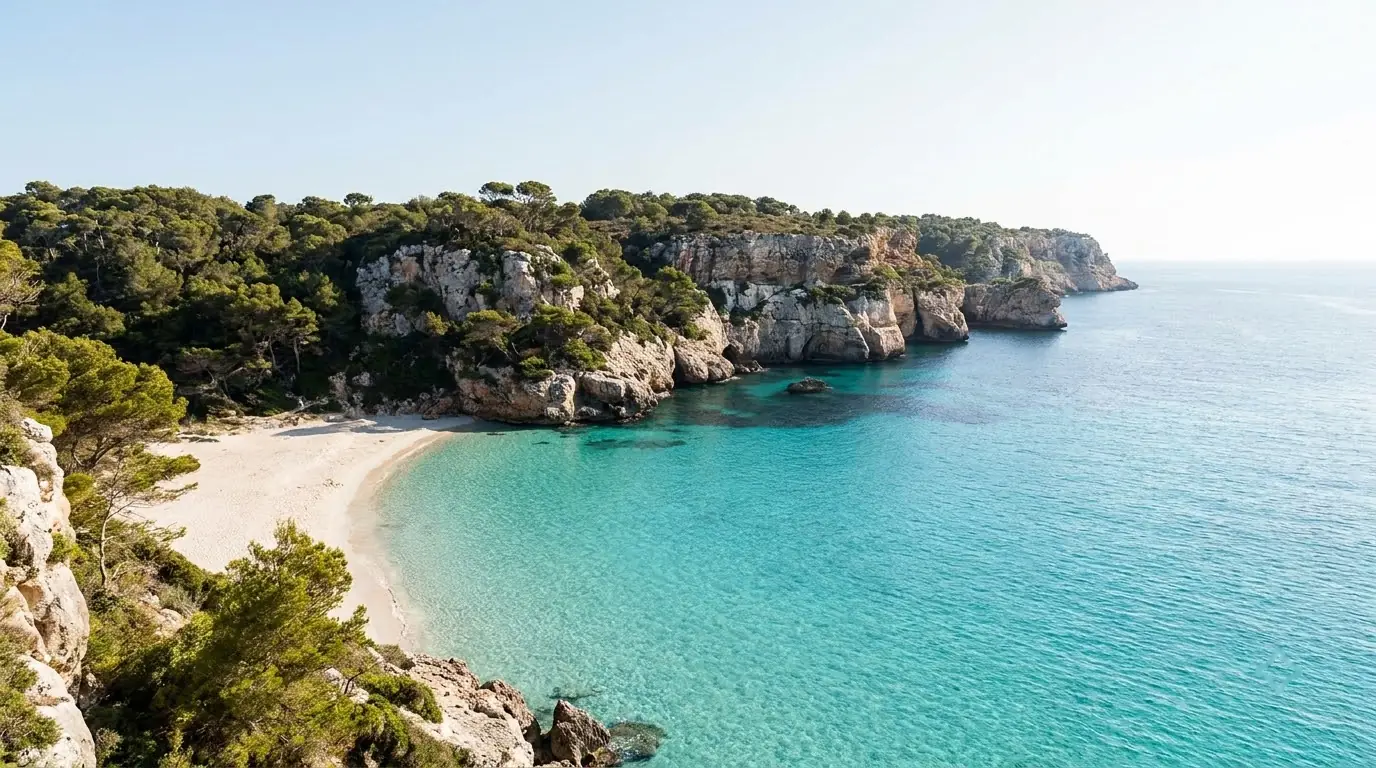
Pick one coast rather than both: the east and the north are each about an hour or more from Palma, and driving between them eats the beach time. For the full day-by-day plan, see the Mallorca itinerary.
East or north?
The east coast, from Cala d’Or down to Santanyí and the Mondragó natural park, is the island of small coves between pine-covered headlands, with clear water and limited parking that fills by late morning. The north, around Pollença and Alcúdia, has long sandy bays with shallow water, better for small children, and the Formentor peninsula as a day out.
If you want to swim and snorkel, choose the east. If you want space on the sand, walks and the drama of Formentor, choose the north. On a week, do one from each base.
Coves worth the drive on the east coast
The coves worth the drive on the east coast are an hour or more from Palma. Cala Mondragó has two sandy coves inside a natural park near Santanyí, with short walks between them; its car park fills around midday. Caló des Moro, reached on foot down a rocky path, is very crowded in summer.
Driving times that mislead
Driving times in the Tramuntana mislead: 40 km can take ninety minutes on its narrow, steep roads. Count hours rather than kilometres when deciding how many days each area needs, and plan the mountain drives for daylight.
A week in Mallorca: two bases
At seven days the island stops feeling like a resort and starts feeling like a trip, and two bases work best.
- Days 1 to 3, a base in or near Palma or Sóller: the city, the Tramuntana and the Sóller valley.
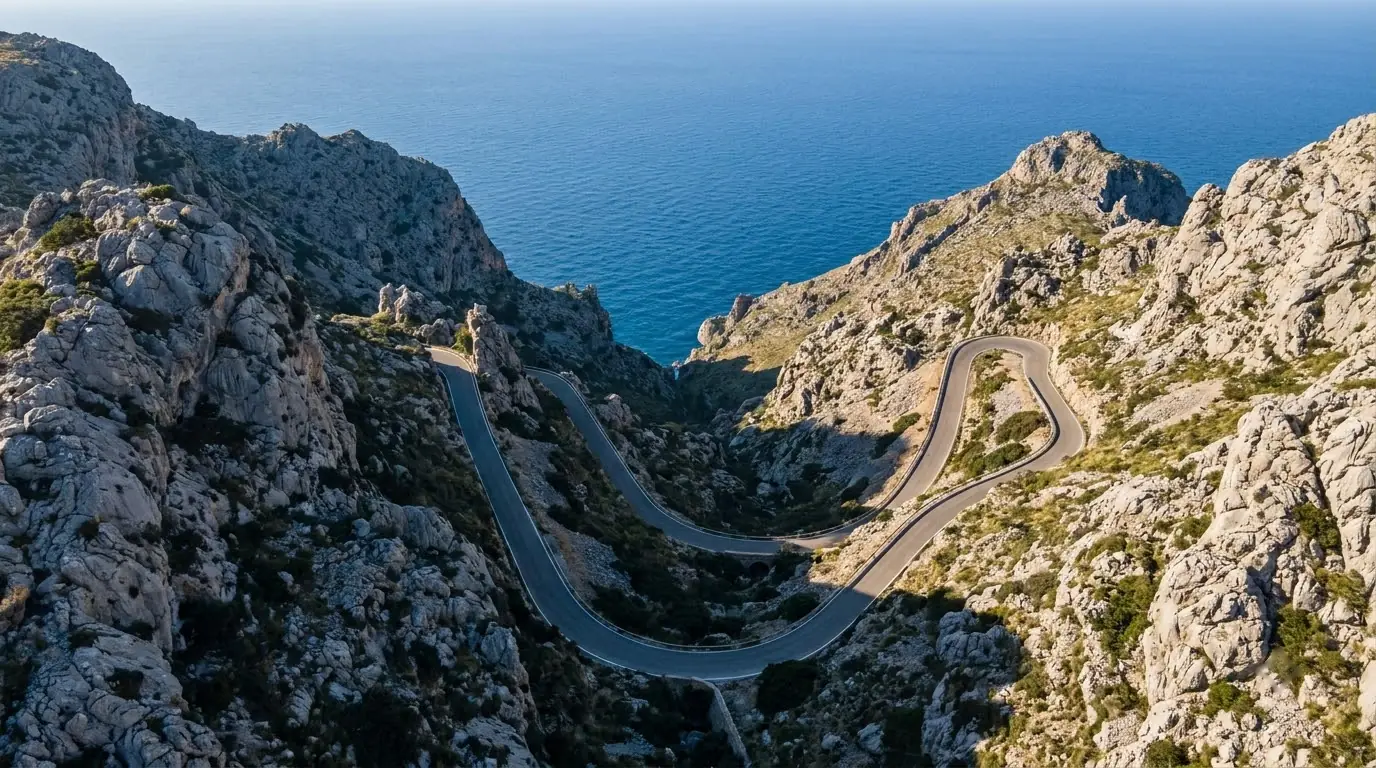
- Day 4: Sa Calobra, the famous road of hairpin bends down to a cove, about an hour each way from the mountains.
- Days 5 to 7, a base in the north or the east: Pollença, Alcúdia and Formentor, or the coves of the east coast.
In summer, the road to the Formentor lighthouse closes to private cars during the day; in 2026 the rule ran from mid-May to mid-October, from 10:00 to 22:00. Park in Port de Pollença and take the bus, or drive up early.
Where to put the two bases
For the first base, Palma suits city lovers and early flights, while Sóller or a village in the Tramuntana suits walkers and anyone who wants quiet evenings. For the second, Port de Pollença or Alcúdia covers the north, and the towns around Santanyí cover the east coast. All four make sense as two- to four-night stays.
Moving once in the middle of the week saves more driving than it costs. For where to sleep, see where to stay in Mallorca.
What fits into a Formentor day
A Formentor day fits more than the lighthouse. The Mirador Es Colomer, the first big viewpoint on the road, is open to cars and gives the best single view on the peninsula. Inland, Pollença old town has a Sunday market and the Calvari stairway, 365 steps to a small chapel.
Ten days or more: Mallorca at an easy pace
This is a holiday as well as a trip: the week above, plus beach days and places a short visit leaves out.
- Walks in the Serra de Tramuntana, a UNESCO World Heritage landscape, such as the path between Deià and Sóller.
- The inland towns of the plain, with weekly markets and few visitors.
- A boat trip along the north-west coast from Port de Sóller.
- A day doing nothing at all on a cove you liked on the first visit.
- Cap de ses Salines and the long natural beach of Es Trenc in the south.
Mallorca with children
With children, a week with a base in the north is the easiest plan: the shallow bays of Alcúdia and Pollença, a pool at the hotel, and short drives. Keep Sa Calobra and the longest mountain roads for older children, as the hairpins are hard on anyone prone to car sickness.
Ten days also suits families, who can trade sightseeing for afternoons at the pool without losing any of the island’s highlights.
Mallorca with Barcelona or Menorca
Mallorca combines easily with Barcelona, a short flight or an overnight ferry away, and with Menorca or Ibiza by ferry or a short flight. On a two-week trip, five days in Mallorca and four or five in Barcelona is a common pairing; add Menorca for quieter beaches if the dates allow.
Without a car: what changes
The places you can reach shrink to Palma, the mountains on the Sóller line and the bus routes, so you need fewer days.
- Palma’s airport bus, the A1, reaches the city centre in about 20 minutes, so arrival is easy without a car.
- The Sóller train from Palma and the tram on to the port make the mountains’ best day car-free.
- Buses run to Valldemossa and Deià, and to the main beach towns, but less often outside summer.
- The east-coast coves, Sa Calobra and most of the Tramuntana villages are hard to reach by bus.
A car-free trip therefore works best at three or four days, based in Palma, with the Sóller day, a Valldemossa morning and a beach reached by bus. For a longer stay, hire a car for the middle days only.
The season changes how many days you need
These figures are the 1981-2010 normals for Palma airport from AEMET, the Spanish state meteorological agency.
- July and August average highs of 31.2°C and 31.3°C: drive the mountains in the morning and keep the afternoon for the sea.
- September has the most thunderstorm days of the year, often in the afternoon; plan exposed walks for the morning.
- October is the wettest month, at 62 mm; keep a flexible day.
- From November to March, much of the coast closes; three or four days around Palma and the mountains is enough.
- January averages a 15.2°C high, with frost on some nights inland.
Mallorca in winter
In winter, Mallorca is a different island: Palma stays open and lively, the almond trees blossom inland in late January and February, and the mountain walks are at their best. But many coastal hotels and restaurants close, so base yourself in Palma or Sóller and keep the trip to three or four days.
For every month, see the best time to visit Mallorca.
The months to aim for
The months to aim for are late May to mid-June and September, when the full five days or a week work without the summer crowds and prices. April, May and October, at highs of 19.8°C to 23.9°C at Palma airport, are the months for walking in the Tramuntana.
January averages 5.1 frost days at Palma airport, so a winter trip needs warm layers for the evenings as well as for the mountain walks.
How not to split the days
Distance and the car cause these mistakes:
- Formentor and Sa Calobra on the same day: each is a full day of winding road.
- Daily trips from a resort near Palma to the north: about an hour each way, twice a day.
- Mountain drives after dark: the Tramuntana roads are narrow, steep and slow.
- A five-day trip without a car: you will see Palma and a beach, not the island.
- A winter trip to a coastal base without checking what is open.
Most of these mistakes come from treating Mallorca as a small island. Plan one area per day, drive the mountain roads in daylight, and give the coast its own days rather than squeezing it in after a mountain morning.
For the island’s sights in one place, see things to do in Mallorca.
- A base in the resort strip around Magaluf if you came for the mountains: you will spend the trip driving.
- Sa Calobra squeezed into half a day: the road is about an hour each way, with no shortcut back.
Common questions
How many days in Mallorca is enough?
Five days in Mallorca is enough for Palma, the Serra de Tramuntana, Sóller and one stretch of coast, with a hire car. A week adds the north, with Pollença, Alcúdia and Formentor, and works best with two bases. Three days covers Palma and the mountains only.
Is 3 days in Mallorca enough?
Three days in Mallorca is enough for Palma and the mountains: the cathedral and the old town, Valldemossa and Deià, and the historic train to Sóller. It is not enough for the coves of the east or the north, which need two more days and a car.
Is a week in Mallorca too long?
A week in Mallorca is not too long: it is the length at which the island can be seen properly, with the city, the mountains, one coast and the north. Split the stay between two bases, one near Palma or Sóller and one in the north or the east, to cut the driving.
Can you see Mallorca without a car?
You can see part of Mallorca without a car: Palma, the train to Sóller and the buses to Valldemossa and the main beach towns. The coves of the east, the north and the mountain roads need a car, so a car-free trip is best kept to three or four days.
How many days do you need in Palma?
You need one or two days in Palma: one for the cathedral, the old town and Bellver Castle, and a second for the museums, Santa Catalina and the seafront. The rest of a Mallorca trip belongs to the mountains and the coast, outside the city.
Is 5 days enough for Mallorca?
Yes, 5 days is enough for Mallorca: Palma, two days in the Serra de Tramuntana with Sóller, and two on one coast, either the east-coast coves or the long bays of the north. It suits a first visit, as long as you hire a car for the last three days.
Keep planning Mallorca
Written and checked by
Travel Guide Kit Editorial
An editorial desk, not an invented persona. Every opening time, ticket price and transport connection here is checked against the operator’s own website and carries the date it was read. Where a page cannot draw on direct experience, it says so.