Quick answer: where to stay in Mallorca
Pick one coast and stay there — Mallorca is wide enough that a northern base and a southern base are different holidays.
In short
- Palma old town is the only base that works fully without a car, with the airport bus at €5.
- Sóller, about 65 minutes from Palma by the historic train, is the base for the Tramuntana mountains.
- For beaches, stay in the north around Pollença and Alcúdia rather than the resort strips near Palma.
- Pick one coast and stay there: a northern and a south-eastern base are different holidays.
Stay in Palma old town on a first visit to Mallorca: the airport bus costs €5, and the train to Sóller takes about 65 minutes. Palma is the one base that works without a car. If beaches are the point, stay in the north around Pollença or Alcúdia; if the mountains are, stay in Sóller. Pick one coast, because a northern base and a south-eastern base are different holidays.
The areas compared
| Area | Best for | Beach | At night | Without a car | Book |
|---|---|---|---|---|---|
| Palma old town | a first visit, a city break | City beaches nearby | Lively | Yes, best on the island | Hotels |
| Santa Catalina and Portixol | food and the seafront | Short walk or bus | Lively / quiet | Yes | Hotels |
| Sóller and Port de Sóller | the mountains | Small bay at the port | Quiet | Yes, by train and tram | Hotels |
| Deià and Valldemossa | a quiet mountain stay | Rocky coves only | Very quiet | Hard | Hotels |
| Pollença and Port de Pollença | the north, calm water | Long sandy bay | Quiet | Mostly, by bus 301 | Hotels |
| Alcúdia and Port d’Alcúdia | families | Very long, shallow beach | Quiet to medium | Mostly | Hotels |
| Cala d’Or, Santanyí, Portocolom | the coves | Small coves | Quiet | No, car essential | Hotels |
| Santa Ponsa and Port d’Andratx | families, a marina | Resort beach / none | Medium | Partly, by bus | Hotels |
The nearest good beach is often what decides between two bases:
- Palma: city beaches along the bay; the island’s better sand is a bus or car ride away.
- Port de Pollença and Alcúdia: long, shallow, sandy bays on the doorstep, the best for small children.
- Port de Sóller: a small sheltered bay; the north-west coast is otherwise cliffs and rocky coves.
- Santanyí and Cala d’Or: Cala Mondragó and other small coves nearby, crowded by late morning in summer.
- Colònia de Sant Jordi: Es Trenc, a long natural sandy beach with no hotels behind it.
Palma: the base without a car
Palma is the best base in Mallorca for a first visit and the only one that fully works without a car. The old town wraps around the cathedral, La Seu, with lanes of stone houses, courtyards, restaurants and shops. The airport is a short ride east; the EMT airport bus A1 costs €5.
Santa Catalina, west of the old town, is the food district, built around its covered market, with the liveliest restaurant streets in the city. Portixol and Ciutat Jardí, east along the seafront, are quieter, with a promenade and a small beach. Palma’s own beaches are city beaches: fine for a swim, not the island in the photographs.
Rooms in the old town are mostly in converted townhouses: characterful, sometimes small, and rarely with parking, since much of the centre is closed to traffic. The bars around Sa Llotja stay busy late. If you are driving, a hotel on the edge of the old town or in Santa Catalina is easier.
Sóller and the Tramuntana villages: the mountain base
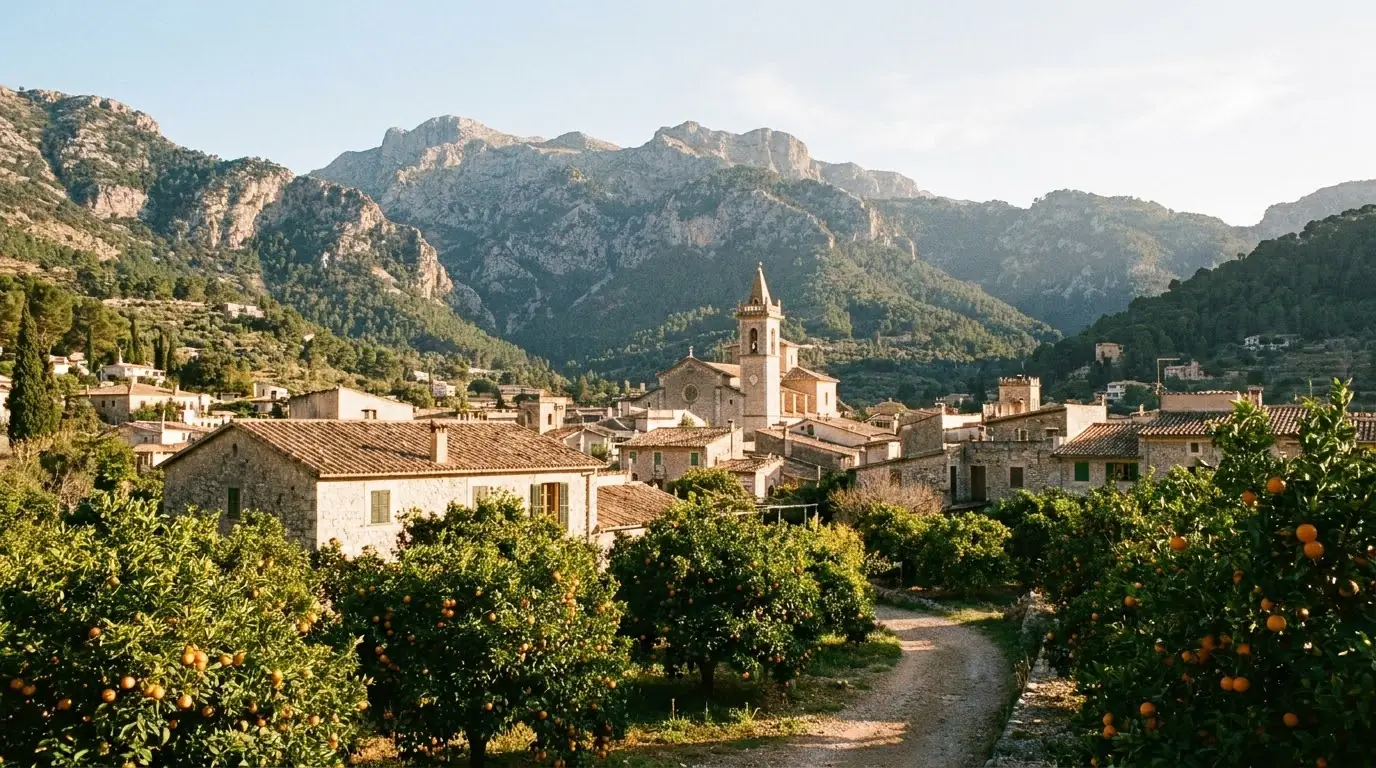
Sóller is the base for the Serra de Tramuntana, the mountain range along the north-west coast listed by UNESCO. The town sits in a valley of orange groves, and the historic train from Palma takes about 65 minutes, at €23 one way or €30 return. A tram runs on to Port de Sóller in about 30 minutes, for €10.
Port de Sóller has a small sheltered bay and the restaurants; the town has more life out of season. Deià, Valldemossa and Fornalutx are smaller and quieter still, with stone houses on the slopes, but they are hard work without a car and have only rocky coves to swim from.
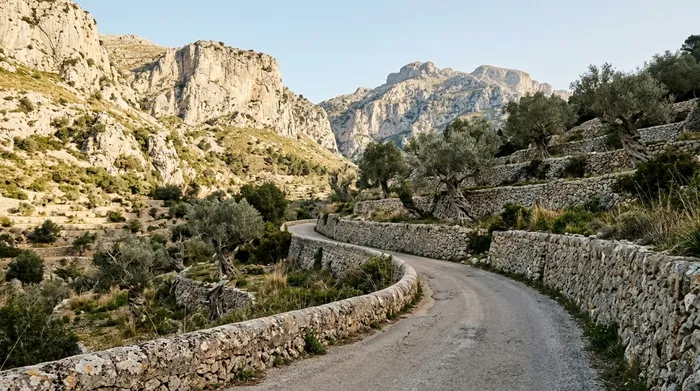
Sóller is also the natural base for walkers. The GR 221, the Dry Stone Route, crosses the Tramuntana from end to end, and several of its stages start or finish in the Sóller valley, including the climb to Deià and the old mule paths up to Fornalutx. Walking is best from February to May and in October, outside the heat.
Pollença and Alcúdia: the north and its bays
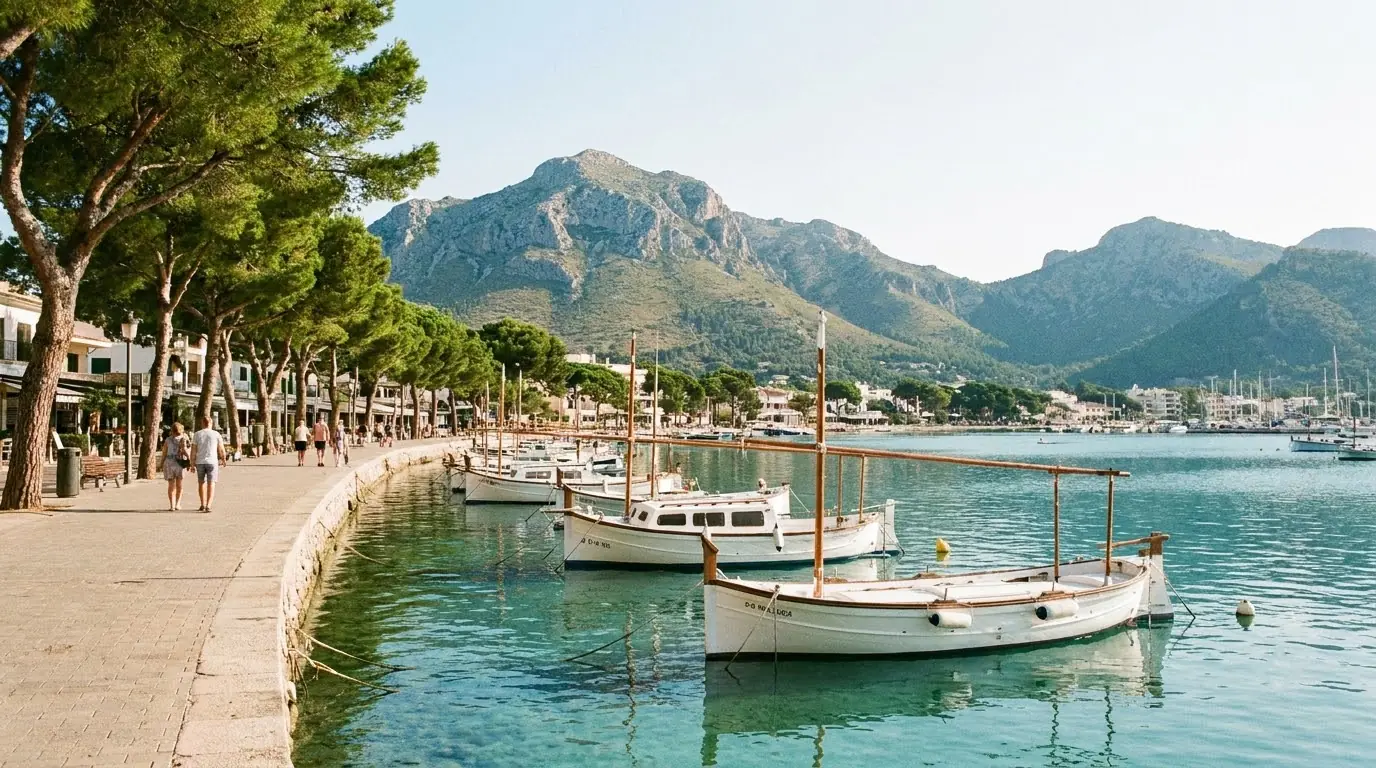
Pollença and Alcúdia are the best northern bases in Mallorca. Port de Pollença has a calm bay, a pine-shaded seafront walk and the Formentor peninsula at its end. Pollença town, about 6 km inland, is a stone town with its Calvari steps and Sunday market. TIB bus 301 links the port with Palma.
Alcúdia has a walled medieval town and, beside it, one of the longest shallow sandy beaches on the island, which makes Port d’Alcúdia the family choice. The resort development behind the beach is real, but the old town keeps its own life in the evening.
Formentor itself is the reason many people pick Pollença, and it needs planning. In summer the road beyond Formentor beach is closed to private cars for most of the day, and a TIB shuttle bus runs out from Port de Pollença instead; check the current dates before you drive.
Can Picafort, south-east along the same bay as Alcúdia, is a quieter resort with a long beach.
The east and south-east: coves, caves and Cala Ratjada
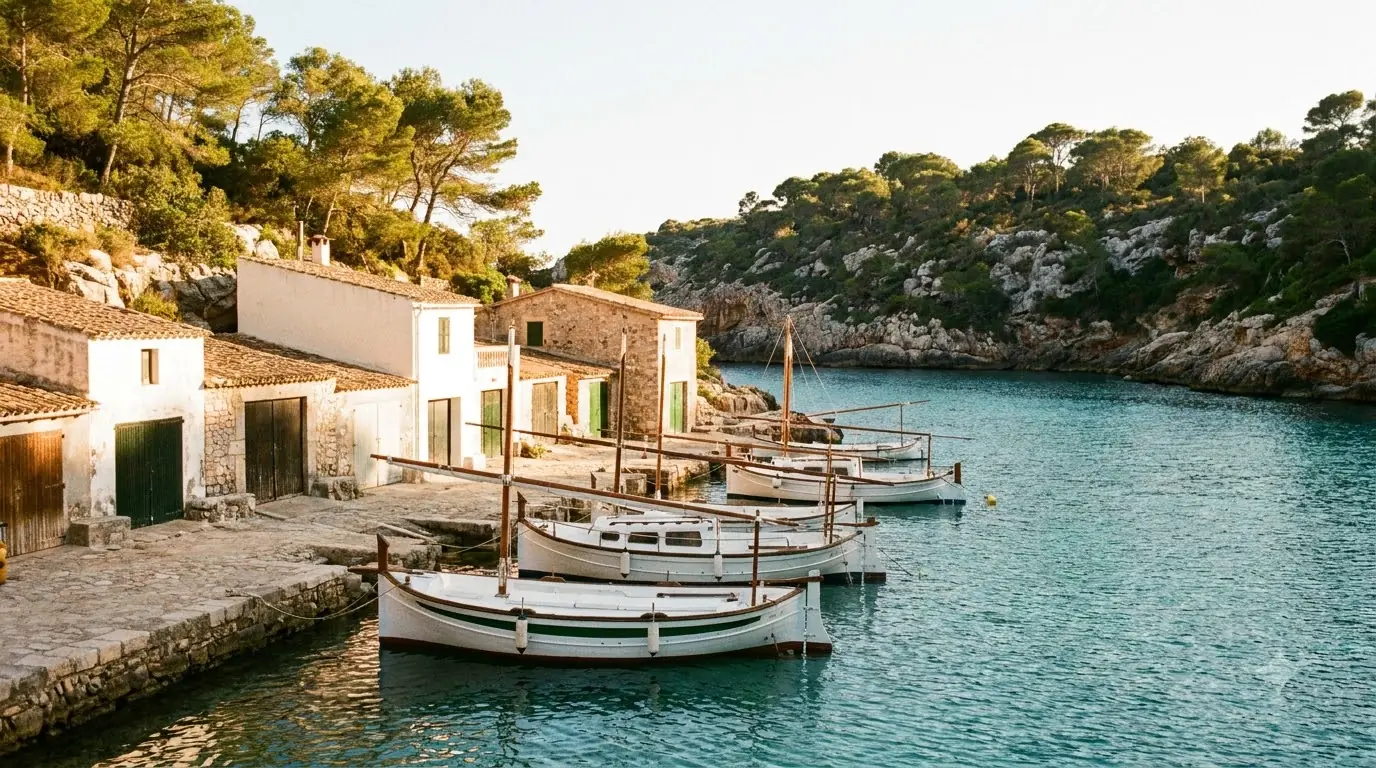
The east and south-east coasts are where Mallorca’s small coves are: inlets of turquoise water between pine and rock. Cala d’Or is purpose-built around a string of them; Santanyí is a stone inland town with a market and good restaurants; Portocolom is a working fishing harbour that has stayed low-key.
These bases are genuinely dependent on a car. Buses along this coast are thin and stop early, and the best coves have small car parks that fill by mid-morning in July and August. The long sandy beach of Es Trenc, in the south, is the exception to the coves, reached by car from Colònia de Sant Jordi or Ses Salines.
Further north on the east coast the picture changes. Cala Millor and Sa Coma are large beach resorts with long sandy bays and big hotels; Cala Ratjada, at the north-east tip, is livelier, with a harbour and coves within walking distance. Both suit a beach week better than touring the island.
Porto Cristo, between them, is the base for the Caves of Drach: a guided visit of about an hour through the caverns, ending with a short live concert on an underground lake. Adult tickets cost €18.50 online. Book ahead in summer, when the timed visits sell out.
The west and the bay of Palma: resorts and how to choose
The west and the bay of Palma hold most of Mallorca’s resort hotels, and they vary more than their reputation suggests. Santa Ponsa and Peguera are family resorts with sandy beaches, close to the airport. Port d’Andratx, at the western end, is a smart marina with restaurants, linked to Palma by TIB bus 101.
Magaluf, Palmanova and the eastern end of Playa de Palma at S’Arenal are another matter: purpose-built strips known for summer nightlife. They suit a party trip and nothing else, and they have little to do with the island most visitors picture.
Getting around: car, bus and train
Getting around Mallorca depends almost entirely on the base you choose. From Palma, Sóller and Port de Pollença you can manage with buses and the train; from the east coast and the mountain villages you cannot.
- Hire a car for the east, the south-east coves and the mountain villages; book early for July and August.
- Without a car, stay in Palma, Sóller or Port de Pollença: the TIB buses and the Sóller train cover the main routes.
- Palma airport is a short ride east of the city; the EMT A1 bus to the centre costs €5 and carries airport trips only.
- Distances look small but roads are slow: Palma to Cap de Formentor is about 80 km, much of it on mountain bends.
Seasons, prices and the ecotax
Seasons decide the price more than the area. July and August average highs of 31.2°C and 31.3°C at Palma airport (AEMET, 1981-2010), and the coast fills; October is the wettest month at 62 mm. Many beach hotels close between November and March, while Palma and Sóller stay open all year, when highs are about 15°C.
Mallorca adds a sustainable tourism tax from May to October of €1 to €4 per person per night depending on the accommodation, plus 10% VAT; from November to April it is a quarter of that, and guests under 16 are exempt. For timing, see the best time to visit Mallorca.
Every hotel in Mallorca on one map
Prices and availability come live from the booking sites
Where not to stay in Mallorca
Where not to stay in Mallorca comes down to car access, noise and moving too often:
- Magaluf, Palmanova and the party end of S’Arenal unless you specifically want that kind of trip.
- Anywhere on the east or south-east coast without a car: the coves are beautiful and the buses thin enough to strand you.
- Two bases on a trip of five nights or fewer: each move costs half a day, and the island is small enough to day-trip.
- A beach resort between November and March: many hotels close and the resorts empty; stay in Palma or Sóller instead.
- Deià or Valldemossa without a car if you want beaches: they have rocky coves, and the sandy bays are far away.
To plan the days, use the Mallorca itinerary and the Mallorca guide. Combining the island with the mainland? Compare where to stay in Barcelona, Madrid or Málaga.
Common questions
Where is the best place to stay in Mallorca for first-time visitors?
Palma old town is the best base for a first visit to Mallorca, especially without a car. The cathedral, the restaurants and the airport bus are all close, and buses and the Sóller train reach much of the island. Choose Sóller instead if the mountains are the reason you came, or Port de Pollença for calm beaches.
Is it better to stay in Palma or the north of Mallorca?
Stay in Palma if you want a city, restaurants and a trip without a car. Choose the north, around Pollença and Alcúdia, for long sandy bays, calm shallow water and the Formentor peninsula. Many visitors split a week between the two, but on a stay of five nights or fewer one base saves half a day of moving.
Do you need a car in Mallorca?
You do not need a car if you stay in Palma, Sóller or Port de Pollença and are happy with buses and the Sóller train. You do need one for the east and south-east coves, for small mountain villages and for most beaches away from the main resorts, where buses are infrequent or stop running in the evening.
Which part of Mallorca is best for families?
The bays of Alcúdia and Pollença in the north are the best family bases in Mallorca. Both have long, shallow, sandy beaches, calm water and plenty of apartments, with a walled old town at Alcúdia for an evening walk. Santa Ponsa, south-west of Palma, is the closest family resort to the airport.
Where should you avoid staying in Mallorca?
Avoid Magaluf and the party end of S’Arenal unless nightlife is the point, because they are purpose-built resort strips with loud summer nights. Avoid the east coast without a car, where buses are thin. On a trip of five nights or fewer, avoid booking two bases, because each move costs half a day.
How much is the tourist tax in Mallorca?
Mallorca’s sustainable tourism tax runs from €1 to €4 per person per night between May and October, depending on the type of accommodation, plus 10% VAT. Five-star and four-star superior hotels pay the most. From November to April the rate is a quarter of that, and guests under 16 pay nothing.
Opens a price map of Mallorca. We may earn a commission if you book, at no extra cost to you.
Where to next
Things to Do in Mallorca
The main guide — how long to stay and what is worth the time.
Mallorca Itinerary
Day-by-day plans for Mallorca, from one day to a full week.
Best Time to Visit Mallorca
When to go to Mallorca, month by month.
Keep planning Mallorca
Written and checked by
Travel Guide Kit Editorial
An editorial desk, not an invented persona. Every opening time, ticket price and transport connection here is checked against the operator’s own website and carries the date it was read. Where a page cannot draw on direct experience, it says so.