Quick answer
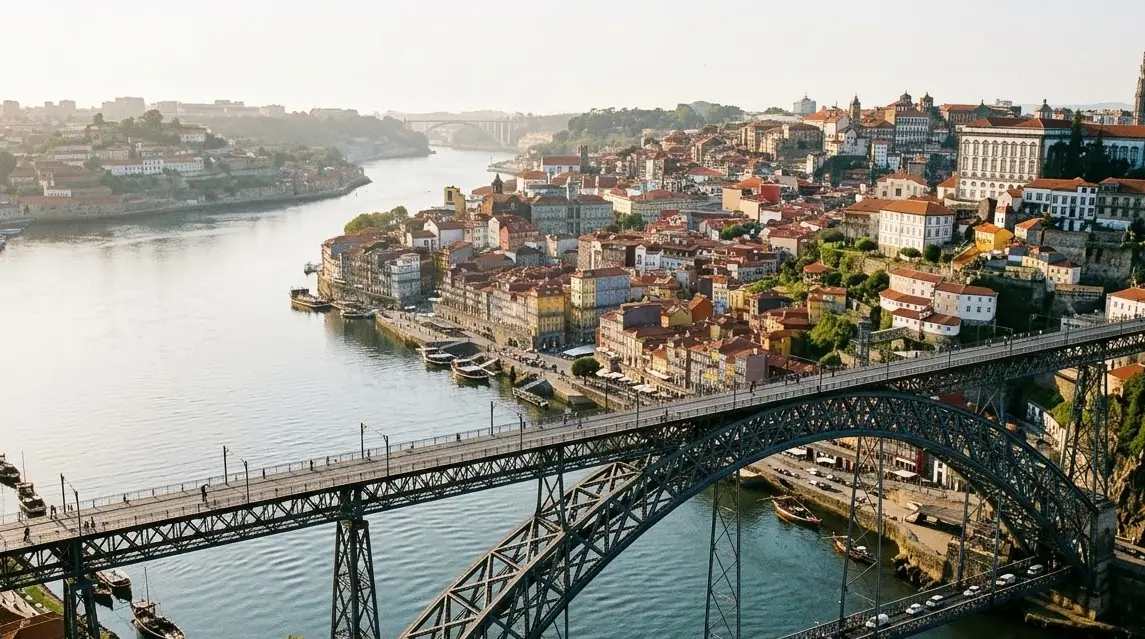
Three days in Porto is enough for the city on both banks of the Douro — the old city, Gaia’s port lodges and the river mouth at Foz.
In short
- If the Douro valley matters more than a third city day, spend two days in Porto and the third on the train to Peso da Régua, about two hours each way.
- Porto is walkable but steep: start each day at the top of the old city and walk down to the river.
- Between October and March every month in Porto averages more than 95 mm of rain, so keep the port lodges as the indoor half-day.
3 days in Porto covers the city on both banks of the Douro, or 2 city days and a third on the train to Peso da Régua, about two hours each way. Choose three city days in the wet months or on a first visit; choose the Douro between June and September, when the train along the river is at its best. Both plans are below, each starting at the top of the old city. Whether Porto needs two, three or four days is covered in how many days in Porto.
Where to sleep on this route
A plan built one area at a time only works if you sleep near those areas. The map shows the same property across Booking.com and Agoda, with prices live from them.
The choice: three city days, or two plus the Douro
The third day is the decision: stay in the city, or take the train up the river. Whether that is the right trade depends on the season and on how much the wine country matters to you.
Choosing the plan by season
From June to September, highs run from 22.7°C to 24.8°C in IPMA’s 1991-2020 normals for Porto airport, and they are the driest months, so Plan B works at full length. Summer stays mild: August averages only 3.5 days above 30°C.
From October to March, Plan A is the safer choice; November is the wettest month, at 165.9 mm. Late September and early October bring the Douro grape harvest, when the terraces are busiest and most colourful, while in winter some quintas close or open by appointment only.
Plan A: three days in the city
Each day stays on one side of the river, always starting high and walking down.
- Day 1 — The old city: São Bento station and its tiled hall, the cathedral terrace, the Clérigos Tower, and down through the lanes to the Ribeira.
- Day 2 — Gaia: cross the upper deck of the Dom Luís I bridge on foot, one or two port lodges in the afternoon, sunset at Jardim do Morro, back along the lower deck.
- Day 3 — Foz do Douro, where the river meets the Atlantic, in the morning; a slow afternoon in whichever part of the old city you liked most.

Get to Foz on the historic Tram 1, which runs along the river from Infante, near the Ribeira, to Passeio Alegre; a single ride costs €5. Walk the seafront to the Felgueiras lighthouse, then take the bus back, or carry on to the fish grills of Matosinhos for lunch.
If day three needs more structure, add Serralves, the contemporary art museum and park west of the centre, or a short river cruise under the bridges. For each day hour by hour, use the Porto itinerary.
Serralves and Casa da Música on day three
Both sit near the Avenida da Boavista, so they pair easily as a modern third day. Serralves is the contemporary art museum designed by Álvaro Siza, set in a large park with an Art Deco villa and gardens worth the ticket on their own.
Casa da Música is the angular white concert hall by Rem Koolhaas; take a guided tour of the building or book a concert for the evening.
Guimarães or Braga instead of Foz
Each is about an hour to an hour and a quarter away on the local train from São Bento, so either can replace Foz on day three.
- Guimarães is often called the birthplace of Portugal: its castle, the Palace of the Dukes of Braganza and the medieval centre are walkable from the station.
- Braga has the oldest cathedral in Portugal and the baroque stairway of Bom Jesus do Monte, with a funicular alongside it.
Return trains are less frequent in the evening and at weekends, so check the last one before you set out.
Plan B: two days in the city and one in the Douro valley
This plan trades Foz and a slow day for the wine country. The city days get fuller, and the Douro day starts early.
- Day 1 — The old city in the morning; across the bridge to Gaia and a port lodge in the afternoon; sunset at Jardim do Morro.
- Day 2 — The rest of the old city: the tiled façades of Capela das Almas and Igreja do Carmo, the Clérigos Tower, and the Ribeira at dusk.
- Day 3 — The train to Peso da Régua, about two hours. Sit on the right leaving Porto: the line runs beside the water for the last stretch.
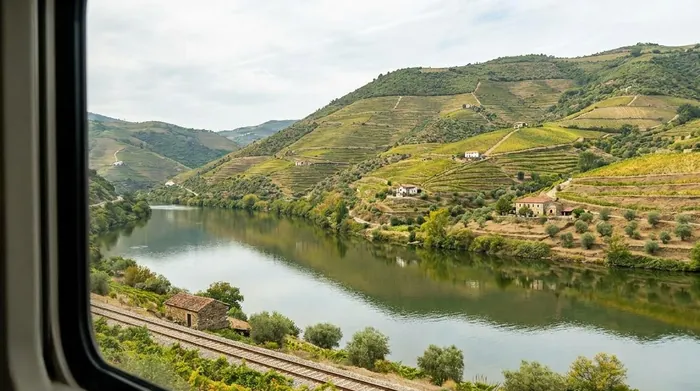
- Pinhão is the alternative: about 2.5 hours, smaller and deeper into the terraces.
- Plan to be back for a late dinner rather than for lunch.
- The Douro day works best between June and September, when the weather is reliable.
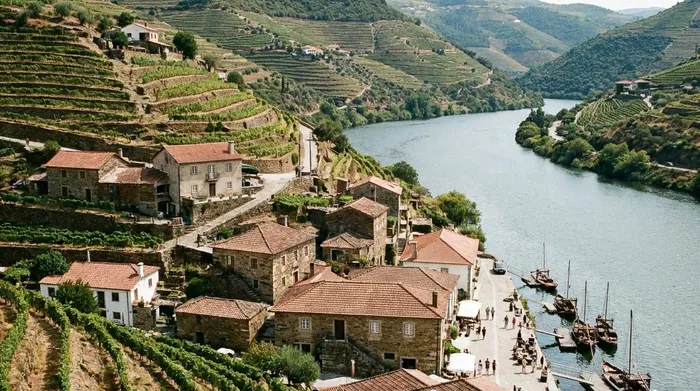
In the valley, the river cruises from Régua and Pinhão and the wine estates, the quintas, are the two ways to use the day; book a quinta tasting before you leave Porto rather than turning up. A guided tour from Porto is the alternative if you would rather not manage trains and transfers.
Régua or Pinhão for the Douro day
Peso da Régua is the larger riverside town, with more trains, river cruises and the Douro Museum. Pinhão is a small village half an hour further upriver, surrounded by quintas, with a station decorated in blue-and-white tiles.
The Alto Douro wine region has been a UNESCO World Heritage landscape since 2001. In summer, CP runs a historic steam train upstream of Régua on selected days; it sells out, so book it well ahead if it is the reason for the trip.
What to book before the three days start
Porto needs very little booking. What does need it depends on the plan.
- Port lodge tours at the big names, in season — the popular slots go in advance. Smaller houses take walk-ins more readily.
- Train tickets up the Douro — only for Plan B.
- Accommodation in Baixa or Aliados, on the flat top of the hill, so you walk down to the sights and are not climbing home at night.
- Nothing else is essential. The bridge, the station hall and the viewpoints are free.
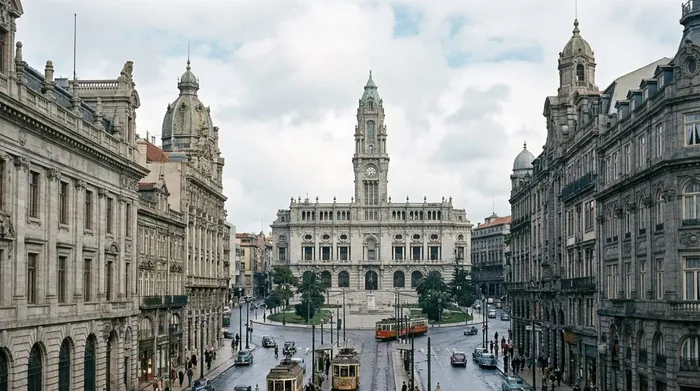
Arriving, and the tourist tax
Arriving by air, take Metro line E, the violet line, from the airport to Trindade in about 30 minutes. Buy a rechargeable Andante card and load a Z4 ticket, because the airport is four fare zones from the centre. The metro runs from about 06:00 to 01:00; later arrivals need a taxi.
Trains from Lisbon arrive at Campanhã, east of the centre, where an urban train or the metro continues to São Bento or Trindade.
Porto charges a municipal tourist tax per person per night for up to seven nights, with children aged 12 and under exempt; it is often not included in the price shown when you book. For the night of 23 to 24 June, São João, rooms fill weeks ahead.
If it rains
If it rains, and in Porto it often does, the three days need a plan B: the city gets 1,146.9 mm a year in the IPMA 1991-2020 normals.
- Move Gaia to the wettest day: the port lodges are indoors.
- The São Bento station hall is indoors and free.
- The granite streets of the old city are slippery in the rain — wear shoes with grip.
- In Plan B, swap the Douro day with a city day if the forecast is bad: the view from the train is the point.
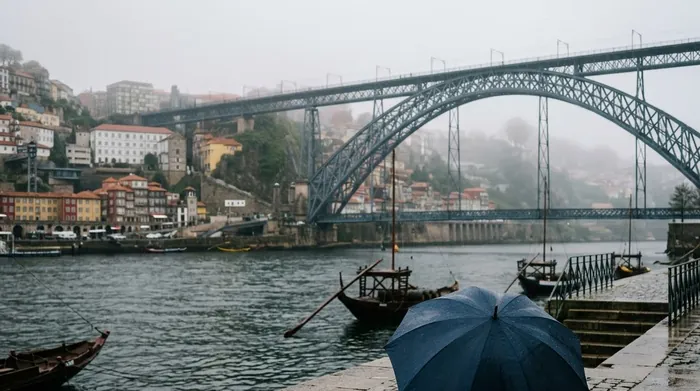
Other wet-weather options are close together: the Mercado do Bolhão, the restored central market reopened in 2022; the Majestic café on Rua de Santa Catarina; Serralves; and Livraria Lello, where the queue is shorter on a grey weekday morning.
Is Porto walkable in three days?
The old city, the bridge and Gaia are within walking distance of each other; the difficulty is the gradient, not the distance.
- Walk down, ride up: the metro runs across the upper deck of the bridge.
- The walk from the Ribeira up to the cathedral is a climb, not a stroll.
- Foz is the only part to reach by bus or tram rather than on foot.
- Three days covers everything above at walking pace; there is no need to rush.
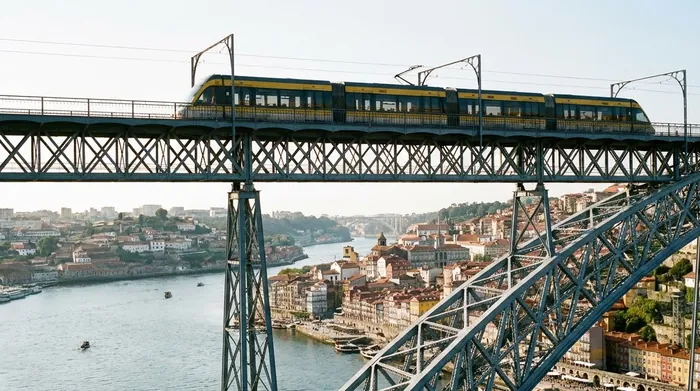
For the rides, buy a rechargeable Andante card at a metro station; it covers the metro, the city buses and the Guindais funicular, and saves the climb back from the Ribeira. Tram 1 and the Gaia cable car are paid separately.
Where to sleep for a walkable three days
The base decides how much of the walking is uphill. Baixa and Aliados sit on the flat top, about 15 minutes downhill from the Ribeira. Miragaia, a few minutes west along the river, is a calmer riverside base with flatter walks along the quay and Tram 1 passing the door.
Gaia has the better view back across the river and usually lower prices, but every evening in Porto ends with a crossing and a climb. The lowest streets of the Ribeira are the prettiest base and the steepest one.
Eating well over three days
Eating out in Porto is cheap by western European standards. Weekday set lunches in neighbourhood restaurants are the best value in the city.
- Day 1, the old city: a francesinha, the heavy meat-and-cheese sandwich, for lunch; one is enough for the trip.
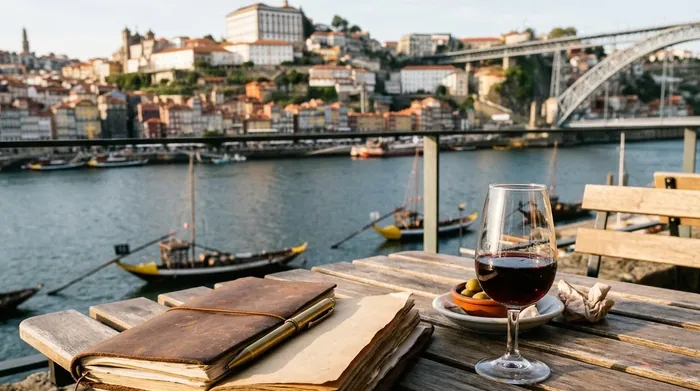
- Day 2, Gaia: a tasting at the end of the port lodge tour, and a glass of white port and tonic on a terrace.
- Day 3, Foz or Matosinhos: grilled fish at the street of grill restaurants in Matosinhos.
- Any day: the counters at the Mercado do Bolhão for a quick lunch, and a pastel de nata with coffee.
For more to swap in, see things to do in Porto.
Two more dishes to look for
Tripas à moda do Porto, a tripe and bean stew, is the dish that gave the people of Porto their nickname. For coffee, the Majestic on Rua de Santa Catarina is the city’s best-known old café, worth one visit for the room.
At the end of the day in Gaia, a glass of white or tawny port on a terrace along the waterfront replaces a second lodge tour.
What not to squeeze in
These are the mistakes that cost the most time in three days:
- Plan B in winter. The Douro day depends on the view from the train, and every month from October to March averages more than 95 mm of rain.
- Three port lodges in one afternoon. Two is plenty; the third is a waste.
- Crossing the bridge back and forth each day. Put Gaia on its own afternoon.
- A base at the bottom of the Ribeira if stairs are a problem. Everything except the river is uphill from there.
Day trips that do not fit three days
These look close on the map but do not fit three days:
- Santiago de Compostela: it is in Spain, several hours each way, and deserves a night.
- The Paiva Walkways and the Peneda-Gerês National Park: both need a car or a tour, and the walkways have limited daily places.
- Coimbra: about an hour by fast train, but better as a stop on the way south to Lisbon than as a return trip.
If a lighter outing appeals, Aveiro, with its canals and the striped houses of Costa Nova, is about 30 minutes on the Alfa Pendular from Campanhã.
Common questions
Is 3 days too much in Porto?
No, 3 days is not too much in Porto; it is enough for the city on both banks without rushing. One day for the old city, one for Gaia and the port lodges, and one for Foz or a slow day. With a fourth day, take the train up the Douro valley rather than adding more of the city.
What should I do in Porto in 3 days?
In 3 days in Porto, walk the old city from São Bento down to the Ribeira, tour the port lodges in Gaia with sunset at the Jardim do Morro, and ride Tram 1 to Foz on the third day. From June to September, a day up the Douro valley by train is the alternative to Foz.
Is Porto a walkable city?
Porto is a walkable city, but a steep one. The old city, the bridge and Gaia are close together; start each day high and walk down, and use the metro across the bridge or the Guindais funicular for the climb back. Foz is the only part to reach by tram or bus.
Is Porto prettier than Lisbon?
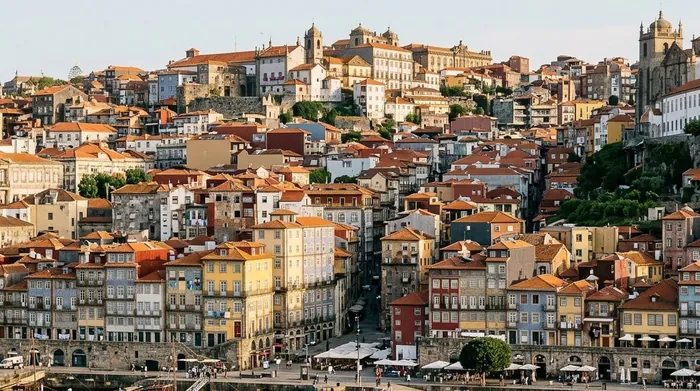
Porto is more compact, and the view of the old city from the Gaia bank is one of the most complete city views in Portugal. Lisbon has more viewpoints, more neighbourhoods and more variety. Neither is simply prettier; a week in Portugal leaves time for both, about three hours apart by train.
Opens a price map of Porto. We may earn a commission if you book, at no extra cost to you.
Where to next
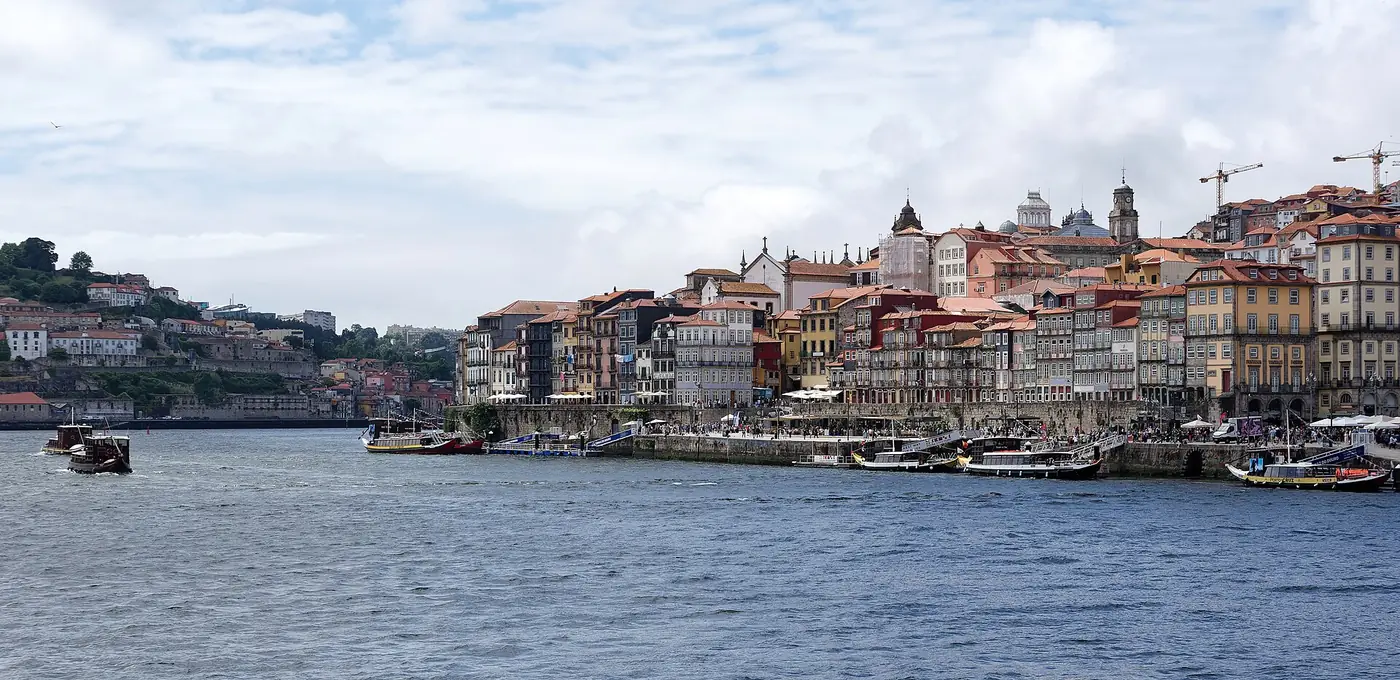
Things to Do in Porto
The main guide: the best things to do on both banks.
Porto Itinerary
Day-by-day plans for Porto, from one day to a full week.
Best Time to Visit Porto
When to go to Porto, month by month.
Is Porto Worth Visiting?
Who Porto suits, and who it suits least.
Keep planning Porto
Written and checked by
Travel Guide Kit Editorial
An editorial desk, not an invented persona. Every opening time, ticket price and transport connection here is checked against the operator’s own website and carries the date it was read. Where a page cannot draw on direct experience, it says so.