Quick answer
Seville is worth visiting for three days, especially for travellers who want monuments and street life in a compact old city.
Yes, Seville is worth 3 days, but not in July or August, when mean highs of 36.0°C and 35.5°C make the afternoons unusable. Its old city is one of the most complete in Spain: the Alcázar, the cathedral, Santa Cruz and Triana are all within walking distance. It suits least those who want a beach, and for that Málaga on the coast is the closer match. So, is Seville worth visiting? The sections below weigh the highlights against the downsides.
Worth it for you? Both sides
Seville is one of the best cities in Spain for some trips and a hard one for others, mostly depending on the month.
The problems in the right column mostly disappear with a spring date, a booked Alcázar slot and an evening in Triana.
What Seville does better than anywhere else in Spain
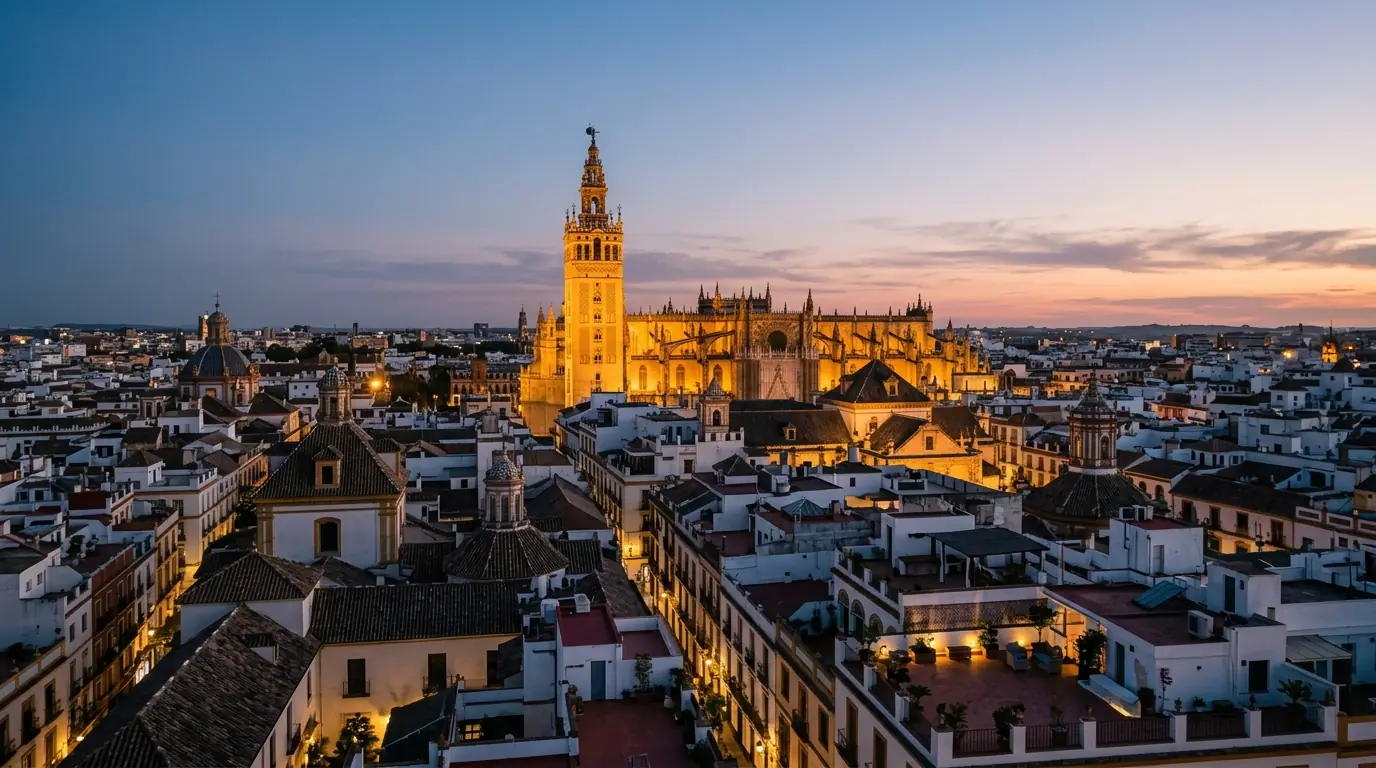
Seville puts its great monuments and its street life in one compact, walkable old city.
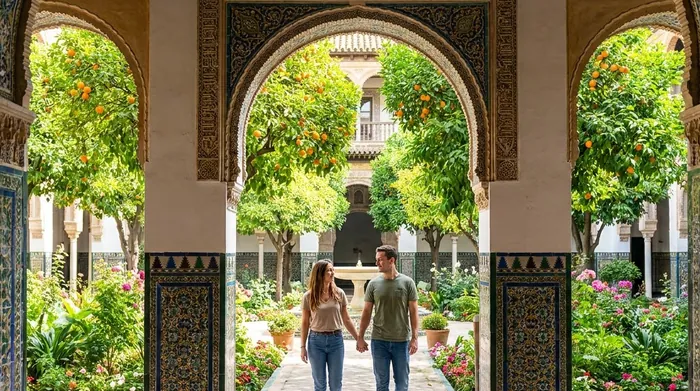
- The Real Alcázar, a royal palace still in use, with Mudéjar courtyards and walled gardens.
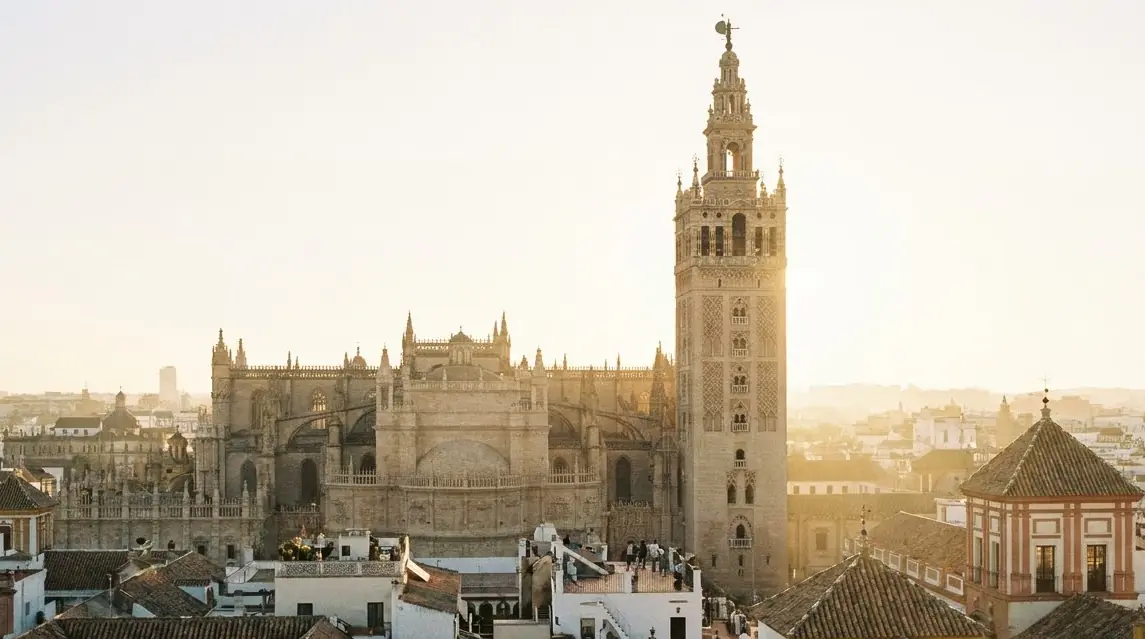
- One of the largest Gothic cathedrals in the world, with the Giralda tower you climb by ramps.
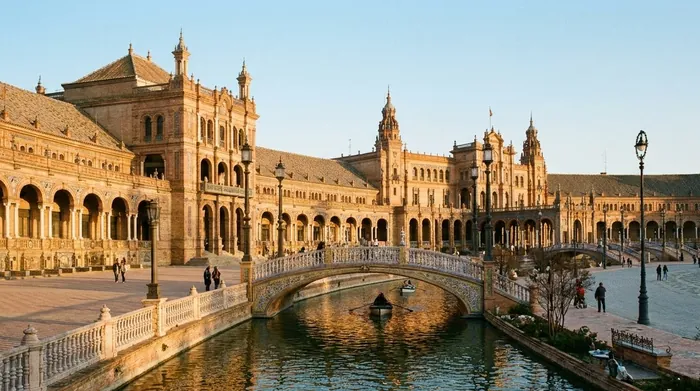
- The Plaza de España, built for the 1929 exposition, free to enter.
- Everything within walking distance: the old city, the river and Triana form one walkable whole.
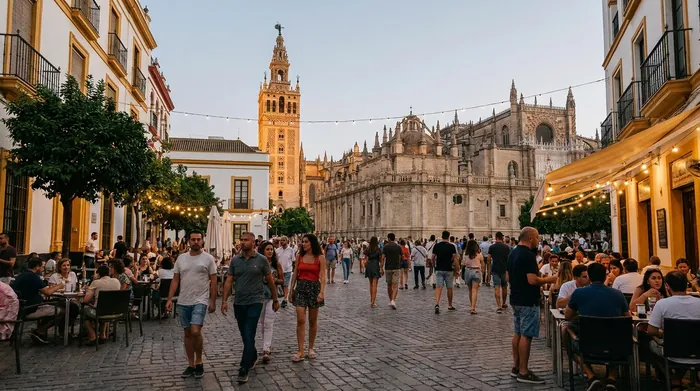
- The evenings — in spring the squares and the riverside fill until late.
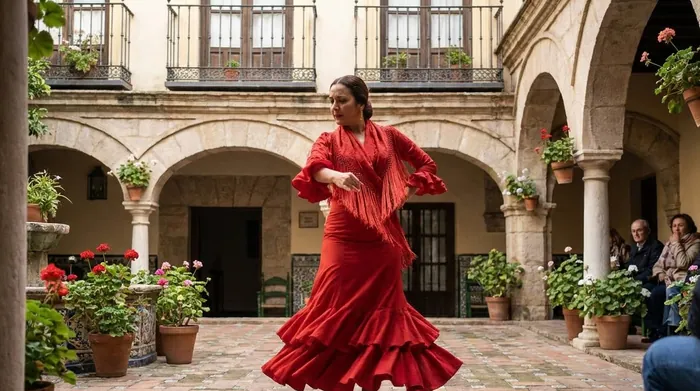
The rest of the case is atmosphere. Orange trees line the streets, the tapas bars fill from early evening, and flamenco is a living art here rather than a show for visitors: the tablaos of Santa Cruz and Triana run nightly, and small bars put on later, looser sessions.
Seville also eats well and cheaply by standing at the bar: espinacas con garbanzos, salmorejo, pringá and a plate of jamón, two or three dishes per bar, then on to the next. The streets around the Alfalfa and the Alameda de Hércules have more local bars than the squares by the cathedral.
Day trips from Seville
Day trips from Seville add a fourth day to the case, because the city sits within reach of Andalusia’s other great sights.
- Córdoba: the Mezquita, the mosque-cathedral, under an hour away by high-speed train; the easiest and best of them.
- Cádiz: an old port city almost surrounded by the sea, by regional train, with a beach at the end of the old town.
- Jerez de la Frontera: sherry bodegas and the riding school, on the same line as Cádiz.
- Granada: possible as a long day, but the Alhambra deserves a night there and a timed ticket booked well ahead.
Half-day trips: Itálica and Carmona
Half-day trips take less planning than Córdoba or Cádiz. Itálica, at Santiponce just outside the city, was a Roman city and the birthplace of the emperors Trajan and Hadrian; its amphitheatre and mosaic floors are the highlights. The M-170 bus from Plaza de Armas takes about 30 minutes.
Carmona is a hilltop town with Moorish gates, a parador in its castle and a Roman necropolis; buses take about 40 to 50 minutes. Both suit a morning, with the afternoon back in Seville for the heat.
With a car or a tour, the hills of Aracena, with a show cave and the region’s cured ham, and the wetlands of Doñana, best for birdwatching in spring and autumn, add a nature day.
The downsides of Seville
The downsides of Seville are concentrated in a few months and a few streets, and almost all of them can be planned around.
- The summer heat: July averages 36.0°C and August 35.5°C (AEMET 1981-2010).
- The queues at the Alcázar and the cathedral, which stand side by side.
- Spring prices: Holy Week and the spring fair are the busiest and most expensive weeks of the year.
- No sea: Seville is inland, on the Guadalquivir.
- The restaurants beside the cathedral, priced for people who will not come back.
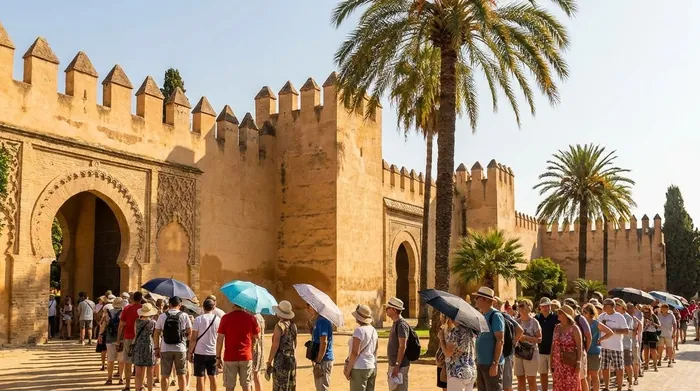
The heat is the one that cannot be avoided, only managed. In July and August the city runs on a different timetable: sights at opening time, a long rest indoors through the afternoon, and dinner after 9pm, when the squares fill again. Trips that try to sightsee through the afternoon are the ones that end badly.
Getting in and getting around
Getting in is simple, and getting around the old city is done on foot. From the airport, the EA bus stops at Santa Justa station, San Bernardo, Prado de San Sebastián and Plaza de Armas, and runs from early morning until just after midnight.
High-speed trains from Madrid arrive at Santa Justa, east of the centre, a short taxi or bus ride from the old city. The short tram line runs from San Bernardo through Prado de San Sebastián and Puerta de Jerez to Plaza Nueva.
A car is a burden inside the old city: the lanes are narrow, many are closed to traffic, and hotels in Santa Cruz and Centro rarely have parking. Keep a car for Ronda and the white towns.
Seville on a rainy day
Seville on a rainy day is rare for most of the year, but November and December are the wettest months, at 91 mm and 99 mm. When rain comes, swap the days so the indoor sights fall on the wet one.
- The halls of the Real Alcázar.
- The cathedral, one of the largest Gothic cathedrals in the world.
- The Museo de Bellas Artes, the city’s fine art museum.
- The Palacio de las Dueñas, from the third day of the plan below.
Leave the Metropol Parasol, the river walks and the Plaza de España for the sun.
Seville compared with Madrid, Barcelona and Málaga
Seville is smaller than Madrid and Barcelona and grander than Málaga, and it is the hottest of the four in summer.
| Seville | Madrid | Barcelona | Málaga | |
|---|---|---|---|---|
| Days needed | 3 | 3 | 3-4 | 2-3 |
| Strongest for | Monuments, atmosphere | Art, evenings | Architecture, sea | Beach, sun |
| July mean high | 36.0°C | 32.1°C | 28.0°C | 30.5°C |
| Best month | May | September | June | June or September |
July highs are AEMET 1981-2010 climate normals.
High-speed trains link Seville with Madrid in about two and a half hours and with Córdoba in under an hour, and Málaga is about two hours away, so it slots easily into a route. Compare with whether Madrid is worth visiting and whether Málaga is worth visiting.
When Seville is most worth it
Spring, from March to May, and late October into November are the best periods, when the days are warm and the evenings long without the summer heat.
- March to May: the best weather of the year and the orange blossom, but Holy Week and the April Fair are the busiest and most expensive weeks; check their dates before booking.
- June and September: hot by afternoon, but workable with an early start and a rest indoors.
- July and August: mean highs of 36.0°C and 35.5°C; worth it only on the local clock.
- December to February: mild, with a 16.0°C January high, quiet monuments and the lowest hotel prices.
For every month in detail, see the best time to visit Seville.
Holy Week and the April Fair
Holy Week and the April Fair are the two weeks when Seville is most itself and hardest to plan. Both move with Easter, and the Fair usually starts about two weeks after it. Hotels fill and prices rise most in these weeks, so book months ahead.
During Holy Week, processions close streets in Santa Cruz, Centro and Arenal for hours, and a room on a procession route can be hard to reach at night. Ask the hotel how to get in during the processions before you pay.
The quieter months have their own advantage. Many hotels lower their prices in July and August, when the heat keeps visitors away, and again in the cooler, wetter months from November to February.
How to make Seville worth it
Timing, bookings and where you sleep make the difference.
- Travel between March and May if the dates are flexible.
- Book the Alcázar ahead and go at opening time.
- In summer, rest in the afternoon and go out after 8pm.
- Give Triana an evening rather than a quick walk across the bridge.
- Check the Holy Week and spring fair dates before booking a spring trip.

Stay inside the old city or in Triana so the late evenings end with a short walk; where to stay in Seville compares the areas. For the shape of the days, use how many days to spend in Seville.
A simple three-day plan:
- Day one: the Real Alcázar at opening time, the cathedral and the Giralda after lunch, and the evening in Santa Cruz.
- Day two: the Plaza de España and María Luisa park in the morning, a rest, then the river and the Torre del Oro at sunset.
- Day three: the Metropol Parasol and the Palacio de las Dueñas, then Triana for the evening and a flamenco show.
What to book, and what not to
What to book before the trip is a short list, and it decides how the first morning goes.
- The Real Alcázar, for the first slot of the day; spring and autumn slots sell out first.
- The cathedral and the Giralda, in Holy Week, the April Fair and the summer holidays.
- A flamenco show, especially at the small tablaos with few seats.
- The high-speed train to Córdoba, if a fourth day goes there at a weekend.
Nothing else needs booking ahead. The Plaza de España, María Luisa park, Santa Cruz and Triana are open to anyone who walks in.
Where to stay, area by area
Where to stay matters in Seville because the evenings run late and summer afternoons are spent indoors.
- Santa Cruz or Arenal: the first-visit base, by the Alcázar, the cathedral and the river.
- Centro and Alfalfa: walking to dinner, with noise above the tapas bars.
- Triana: a local feel, for a second visit or a stay of four nights or more.
- Alameda de Hércules: nightlife, with bars open until about 2am.
- Macarena: the quietest corner of the old city, 20 to 25 minutes’ walk from the cathedral.
In summer, choose the room first
In summer, the room matters more than the neighbourhood. Confirm air conditioning in the room itself, not just in the building, and ask for a lower floor: top-floor rooms in old buildings take the full heat of the roof.
Rooms around an interior patio stay cooler and quieter than those facing the street, and a small pool or a roof terrace is worth more in Seville than almost anywhere else in Spain.
Is Seville worth it for families, couples and solo travellers?
Each kind of traveller gets a slightly different Seville.
- Couples: the Alcázar gardens, a flamenco show and an evening walk along the river make Seville one of the most romantic cities in Spain.
- Families: the Plaza de España, rowing boats on its canal and María Luisa park work well; avoid the summer months with small children.
- Solo travellers: tapas at the bar counter is normal, and the old city is compact and easy to walk.
- Older travellers: Seville is flat, which makes it easier on the legs than Lisbon or Porto; plan around the heat.
Is one day in Seville worth it?
One day in Seville is worth it as a stopover, provided it runs on the city’s clock: the Alcázar at opening time, the cathedral, a late lunch, then the walk across the bridge to Triana for sunset on the river. Santa Cruz can be crossed on the way to dinner.
What one day gives up is the Plaza de España, the northern palaces and the flamenco night. A Sunday changes the plan slightly: many shops close, but the bars stay busy, and Sevillanos fill María Luisa park and the riverbank.
Who should not go
- Travellers who can only go in July or August and want to walk the city by day. Mean highs pass 35°C.
- Beach-first trips. Seville is inland; Málaga is the coastal city.
- A one-day visit that tries to add Córdoba. Each needs a full day.
- Anyone unwilling to rest in the afternoon in summer. The city itself stops.
Where to stay in Seville
If you go, which part of town you sleep in decides how much you see on foot. The map shows the same property across Booking.com and Agoda, with prices live from them.
Common questions
How many days in Seville is enough?
Three days in Seville is enough for the city: one for the Alcázar and the cathedral, one for Santa Cruz, the Plaza de España and María Luisa park, and one for Triana and the river. Add a fourth day for Córdoba, under an hour away by high-speed train, and its Mezquita.
Is Seville or Madrid nicer?
Seville is smaller and more atmospheric, with its monuments in one walkable old city; Madrid has the stronger museums, a bigger-city feel and later nights. In summer Madrid is cooler, with a 32.1°C July high against 36.0°C in Seville. A first trip can do both, linked by a fast train.
Which is better, Barcelona or Seville?
Barcelona is better for architecture and the sea, Seville for monuments and street life. Seville is far hotter in summer, with a 36.0°C mean high in July against 28.0°C in Barcelona, according to AEMET’s 1981-2010 normals. In spring, Seville is the stronger choice.
Is Seville worth visiting in summer?
Seville is worth visiting in summer only if you live by the local clock: out early and late, indoors through the afternoon. July averages a 36.0°C high and August 35.5°C. Book rooms with air conditioning, and plan the Alcázar and the cathedral for opening time.
Opens a price map of Seville. We may earn a commission if you book, at no extra cost to you.
Where to next
Things to Do in Seville
The main guide — how long to stay and what is worth the time.
Best Time to Visit Seville
When to go to Seville, month by month.
Where to Stay in Seville
Which part of Seville to sleep in, and who each area suits.
How Many Days in Seville?
How long you actually need in Seville, and what fits in each extra day.
Keep planning Seville
Written and checked by
Travel Guide Kit Editorial
An editorial desk, not an invented persona. Every opening time, ticket price and transport connection here is checked against the operator’s own website and carries the date it was read. Where a page cannot draw on direct experience, it says so.