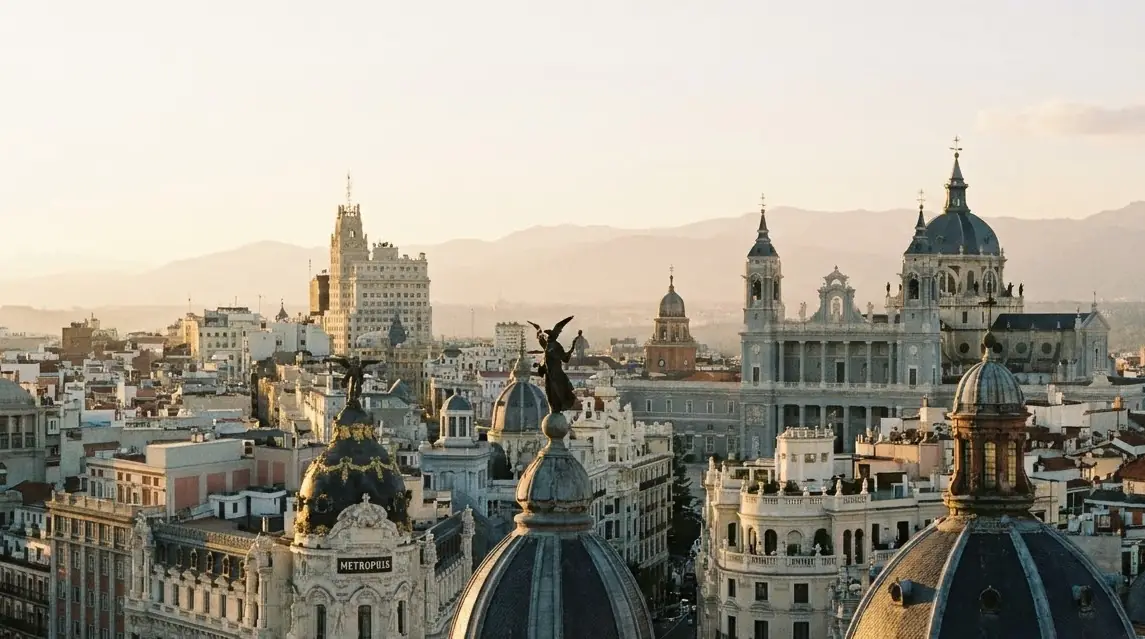
Quick answer
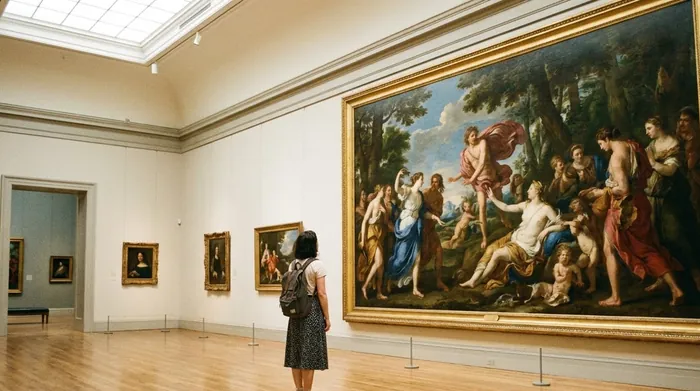
Madrid is worth visiting for three days, especially for travellers who care about art — the Prado, the Reina Sofía and the Thyssen sit within a fifteen-minute walk of each other.
In short
- Madrid suits beach-first travellers least: it sits on the central plateau, far from the coast.
- Madrid is hardest work in July and August, when mean highs reach 32.1°C and 31.3°C, and at its best in September.
- Compared with Barcelona, Madrid has the stronger museums and later nights; Barcelona has the Gaudí buildings and the sea.
Yes, Madrid is worth 3 days, and the Prado, the Reina Sofía and the Thyssen sit within a 15-minute walk of each other. The Prado alone justifies the trip. It suits least those who want a beach or a single iconic landmark, since it sits on the central plateau, and it is hardest work in July and August, when mean highs pass 31°C. So, is Madrid worth visiting? The sections below weigh the highlights against the downsides.
Madrid for your kind of trip
Madrid competes for days with Barcelona and Seville, so whether it earns them depends on what the trip is for.
Painting, late evenings and a base for Toledo sit on the left; the beach, early nights and a single famous landmark sit on the right. A trip that matches the left column will find Madrid one of the most rewarding capitals in Europe; a trip that matches the right column is usually better spent on the coast or in Andalusia, with Madrid as a stop of a night or two between trains.
What Madrid does better than anywhere else in Spain
Madrid’s case rests on two things other Spanish cities cannot match: its museums and its clock.
- Three great museums on one boulevard. The Prado holds Velázquez, Goya, El Greco and Bosch; the Reina Sofía holds Guernica; the Thyssen fills the gaps between them.
- Free museum hours. The Reina Sofía is free Monday and Wednesday to Saturday from 7pm to 9pm, and Sunday from 12.30pm to 2.30pm (checked with the museum, August 2026).
- The evening. Dinner from about 9.30pm and squares still full at midnight — Madrid runs later than almost any other European capital.
- Free green space. Retiro Park and its Crystal Palace, and the Templo de Debod at sunset, cost nothing.
- Day trips. Toledo is 33 minutes by high-speed train and Segovia 30 minutes.
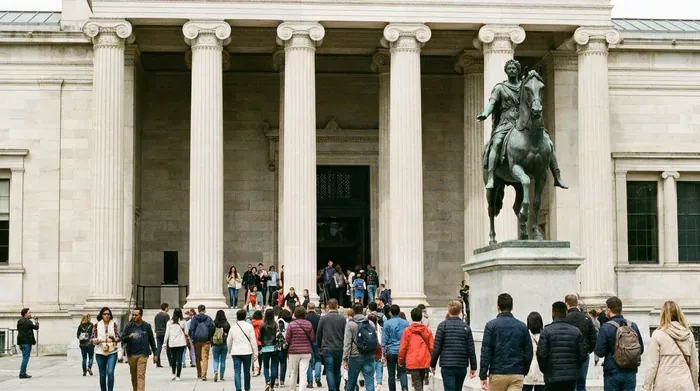
The museums are also easy to plan. The Prado opens its doors free for the last two hours of most days, and the queue moves quickly if you join it before the free window starts; check the current times on the museum’s site before you go.
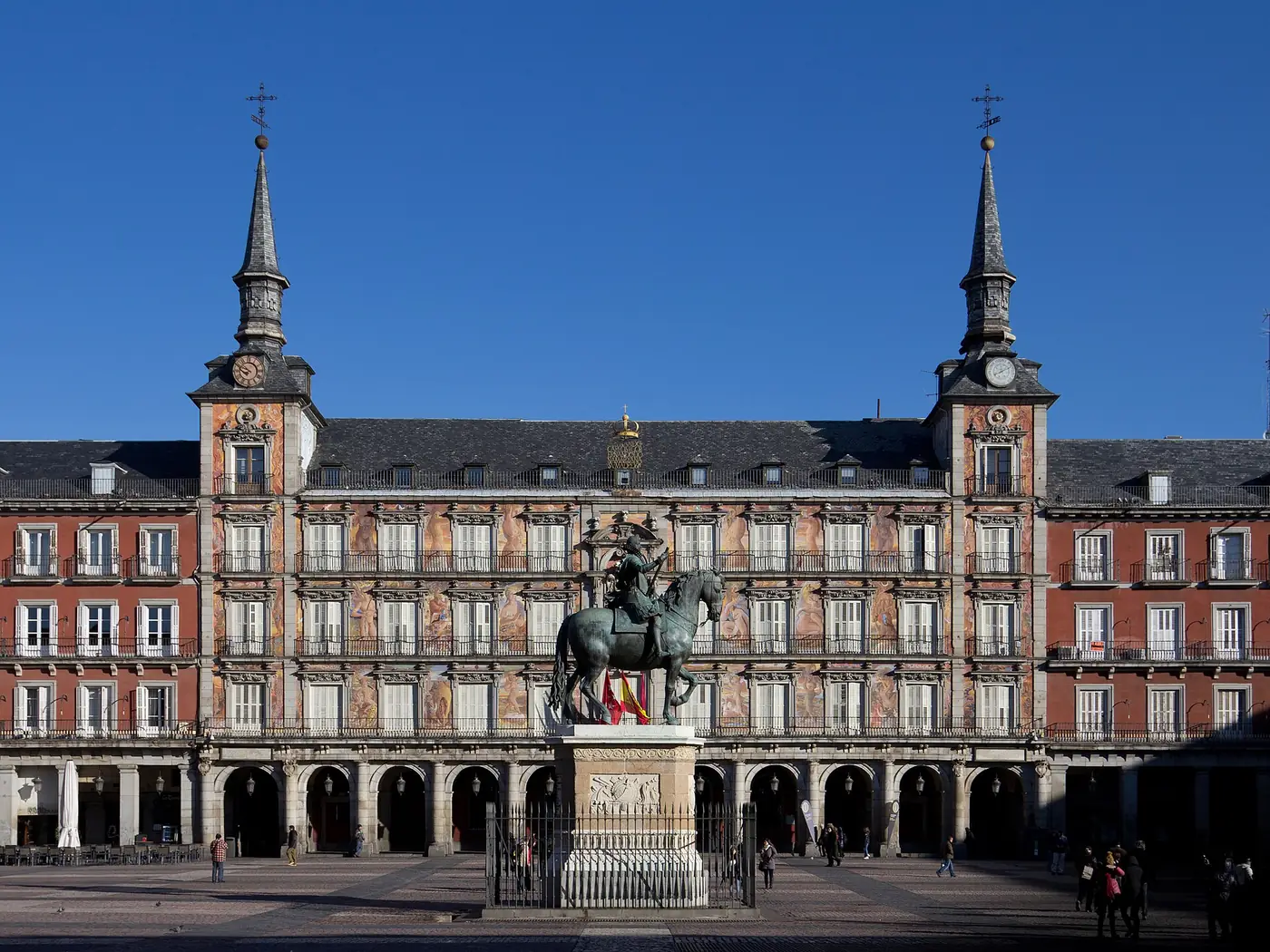
Then there is the food. Madrid has some of the best tapas bars in Spain without a coast: patatas bravas, croquetas, a bocadillo de calamares near the Plaza Mayor, and chocolate con churros at any hour. A crawl along the bars of Calle Cava Baja in La Latina is the best-value evening in the city.
How a museum day works
A museum day in Madrid works best with one collection and a long lunch. The Prado needs a full morning; the Thyssen-Bornemisza, the smallest of the three, takes about ninety minutes and has free slots on Monday at midday and Saturday night. Free windows change, so check each museum’s page on the day.
Most museums close by 8pm, which is why sightseeing goes before dinner in Madrid, not after.
The palace and the old centre
The palace and the old centre fill a morning, and the historic core can be crossed on foot in twenty minutes. The Palacio Real is the largest royal palace in western Europe by floor area and is still used for state occasions; the changing of the guard takes place on set days.
The Almudena Cathedral next door is unusually modern inside for a cathedral of its scale. Plaza Mayor is worth walking through, but the restaurants under its arches are priced for people who will not come back.
What disappoints people about Madrid
Madrid’s disappointments usually come from comparing it with Barcelona on Barcelona’s terms.
- No single icon. There is no Madrid equivalent of the Sagrada Família; the city is a collection rather than a monument.
- No sea. Madrid sits on the central plateau, far from the coast.
- Summer heat. July averages a 32.1°C high, and the open squares have little shade.
- The clock, for early eaters. Arriving for dinner at 7pm means an empty room.
- Mercado de San Miguel. It appears on every list and is the most expensive, most crowded place to eat in the centre.
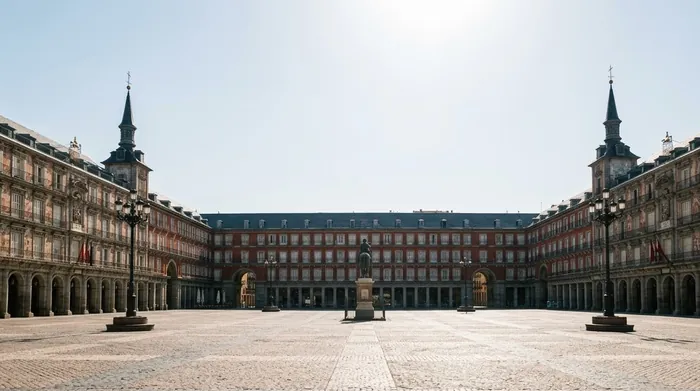
These are mostly about expectations. Madrid is a city of neighbourhoods rather than landmarks: Malasaña for bars and vintage shops, Chueca for terraces, La Latina for tapas, Lavapiés for a mix of cultures, the Barrio de las Letras for old literary streets. Give a day to wandering them.
Where to eat instead of the market
The Mercado de San Fernando in Lavapiés costs about a third as much. At lunch, the weekday menú del día is the best-value food in the city, and the tapas bars bridge the afternoon gap before a late dinner.
Madrid compared with Barcelona, Seville and Lisbon
The question is rarely whether Madrid is worth it in isolation, but whether it deserves days that could go elsewhere.
| Madrid | Barcelona | Seville | Lisbon | |
|---|---|---|---|---|
| Days needed | 3 | 3-4 | 2-3 | 3-4 |
| Strongest for | Art, evenings | Architecture, sea | Old quarter, atmosphere | Viewpoints, walking |
| July mean high | 32.1°C | 28.0°C | 36.0°C | 28.2°C |
| Best month | September | June | May | June or September |
July highs are AEMET 1981-2010 normals for Spain and IPMA 1991-2020 for Lisbon; the two reference periods differ, so the Lisbon figure is not strictly like-for-like with the Spanish ones. On a first trip to Spain, Madrid and Barcelona together, linked by high-speed train, make a balanced pairing.
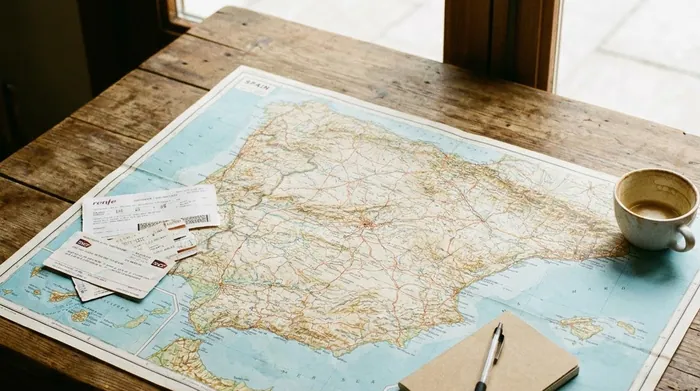
The high-speed train from Madrid to Barcelona takes about two and a half hours, and to Seville about the same, so Madrid works well as the hinge of a first trip. Compare with whether Barcelona is worth visiting and whether Seville is worth visiting.
Madrid on a first route through Spain
The main high-speed lines radiate from Madrid to Barcelona, Seville, Valencia and Málaga, which makes it the natural middle of a first route. One way to split the days:
- 7 days: Madrid 3, Barcelona 4.
- 10 days: Madrid 3 plus Toledo, Barcelona 3, Seville 3.
- 14 days: Madrid 4 plus Toledo and Segovia, Barcelona 4, Seville 4.
On a first trip, give Barcelona a day more than Madrid, for the beach, the Gaudí buildings and its day trips. Cut Seville in July and August, when its heat is the most extreme of the three.
When Madrid is not worth it
Madrid is open all year, but its inland climate swings further than the coast’s. These are the 1981-2010 climate normals for the Retiro station from AEMET.
- July and August average highs of 32.1°C and 31.3°C, and part of the city closes in August while its residents are away.
- October is the wettest month at 60 mm, and May has the most rainy days at 7.3.
- December and January average highs of about 10°C — cold, but dry and bright, and the museums are at their quietest.
- September is when Madrid is most worth it: a 26.4°C high, 22 mm of rain and warm evenings.
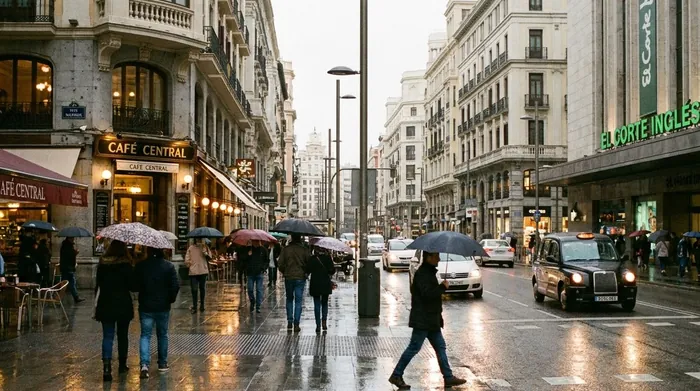
Two festivals shift the picture. San Isidro in mid-May fills the Pradera and the old centre with street parties and traditional dress. Pride (MADO) fills Chueca from late June into early July; esMADRID calls it the largest in Europe, and hotel prices rise to match. See the best time to visit Madrid for every month.
Madrid in winter
Madrid in winter is colder than its Spanish image suggests. The Retiro station records about 15.7 frost days and 3.6 snow days a year in AEMET’s 1981-2010 normals, and the light goes early, so plan the Templo de Debod for a late-afternoon sunset. In exchange, the museums are at their quietest.
How to make Madrid worth it
How the days are planned matters more than which sights you choose.
- Live on the Madrid clock: museums in the morning, lunch from 2pm, dinner from 9.30pm.
- One big museum per day, not three.
- Use the Reina Sofía’s free window for Guernica.
- Give Toledo a full day if you have four.
- Eat in La Latina or Lavapiés rather than at the Mercado de San Miguel.
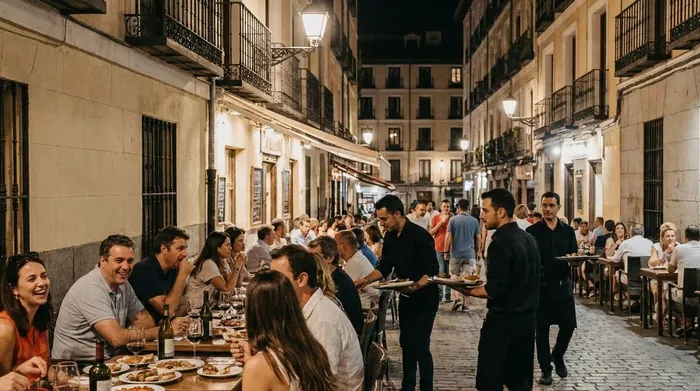
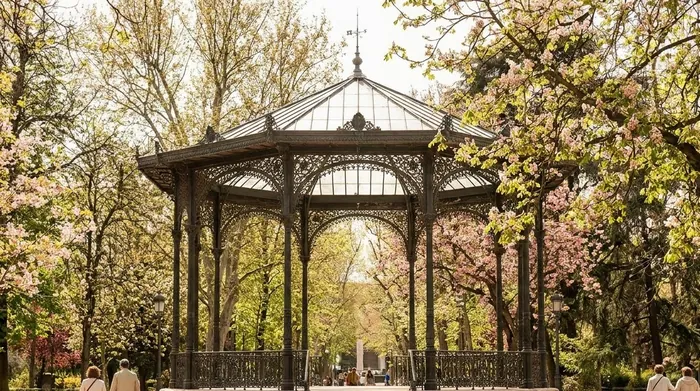
Choose a central base so the late evenings end with a short walk home. Sol, the Barrio de las Letras and La Latina are closest to the museums and the tapas streets; where to stay in Madrid compares the areas.
Getting in from the airport
Metro line 8 runs from terminals 1 to 3 to Nuevos Ministerios in about 12 minutes, where you change for the centre. The Airport Express bus 203 reaches Atocha in about 30 minutes and runs all night from Cibeles.
Madrid charged no tourist tax as of October 2026, so the room price shown when you book is the full price.
A Sunday in Madrid
Sunday has its own shape here, and it is worth giving one day of the trip to it. The Rastro, the open-air market, fills the streets around Ribera de Curtidores on Sunday mornings until mid-afternoon, and La Latina is at its best afterwards.
- The Reina Sofía’s free window moves to 12.30pm to 2.30pm.
- Retiro Park is at its busiest: good for atmosphere, less so for quiet.
- Some independent restaurants close on Sunday evening, so plan dinner ahead.
Day trips that make a fourth day worth it
Day trips are a large part of what makes Madrid worth a fourth or fifth day, and none of them needs a car.
- Toledo: 33 minutes by high-speed train from Atocha; a full day.
- Segovia: about 30 minutes from Chamartín; a full day.
- El Escorial: about an hour on the Cercanías; a half day.
- Aranjuez: about 45 minutes; royal gardens, best in spring.
- Alcalá de Henares: about 37 minutes on the C2; Cervantes’ birthplace.
High-speed trains need a seat ticket, so book a few days ahead for weekends; the Cercanías local trains need no booking.
Is Madrid worth it for families, couples and solo travellers?
Each kind of traveller gets a slightly different Madrid.
- Couples: the Templo de Debod at sunset, a rowing boat on the Retiro lake and late dinners in the Barrio de las Letras make an easy romantic city break.
- Families: Retiro Park, the zoo and aquarium in the Casa de Campo, and the cable car across it work well; plan museums for the morning and keep to the Spanish evening clock.
- Solo travellers: the tapas bar is built for eating alone at the counter, and the metro is simple and runs late.
- Art lovers: Madrid is the strongest city in Spain for painting, and worth an extra day for the Thyssen and the Sorolla Museum.
Is Madrid worth it for older travellers?
Madrid is worth it for older travellers who choose the base carefully. Central Madrid is flat enough to walk, though some streets in Lavapiés are steep. The hotels along the Paseo del Prado are larger and calmer, with the museums a few minutes away and the Retiro behind them.
Salamanca, north of the Retiro, is the quietest central district, about 20 minutes on foot from Sol.
Families do well in the same areas, or in the Barrio de las Letras, the old literary quarter that runs downhill from Sol to the Paseo del Prado. Calle de las Huertas and Plaza de Santa Ana are lively at night, so ask for a room on a quieter lane.
Who should not go
- Beach-first travellers. Madrid is inland, far from the coast.
- Anyone who wants early dinners and quiet evenings. The city eats from about 9.30pm and stays out late.
- A July or August trip built around walking. Mean highs pass 31°C, and the open squares have little shade.
- A one-day stop on a trip that wants to see Spain’s best-known landmarks. Madrid’s strengths take time: museums, neighbourhoods and evenings.
If you only have one day
If you only have one day, Madrid can still show its three sides, the old city, the art and the evening, provided the day runs in this order:
- 9.30am: Plaza Mayor before the crowds, then the Palacio Real.
- 12pm: down into La Latina and Calle Cava Baja.
- 2pm: lunch, the main meal of the day.
- 4pm: the Prado for the rest of the afternoon.
- Sunset: the Templo de Debod, which faces west.
- 9.30pm: dinner, when the restaurants fill.
Where to stay in Madrid
If you go, which part of town you sleep in decides how much you see on foot. The map shows the same property across Booking.com and Agoda, with prices live from them.
Common questions
Is it better to visit Madrid or Barcelona?
Barcelona is better for architecture and the sea, Madrid for art museums and late nights. A first trip can take in both, three days each, linked by a high-speed train of about two and a half hours. In summer Madrid is hotter, with a 32.1°C July high against 28.0°C in Barcelona.
How many days is enough in Madrid?
Three days is enough in Madrid, at one great museum per day: the Prado, the Reina Sofía and the Thyssen. Add a fourth day for Toledo, 33 minutes away by high-speed train, or Segovia, about 30 minutes. Keep the evenings free for tapas in La Latina and the Barrio de las Letras.
Which is better, Seville or Madrid?
Seville is better for atmosphere and its old quarter, Madrid for museums and evenings. Seville is much hotter in summer: a 36.0°C mean high in July against 32.1°C in Madrid, according to AEMET’s 1981-2010 normals. On a first trip, the two are about two and a half hours apart by high-speed train.
Which is better, Lisbon or Madrid?
Lisbon is better for viewpoints and walking by the river, Madrid for art and nightlife. Lisbon is milder in summer, with a 28.2°C July high against 32.1°C in Madrid, and it has the sea within forty minutes. Madrid has the stronger museums and the easier day trips by fast train.
Opens a price map of Madrid. We may earn a commission if you book, at no extra cost to you.
Where to next
Things to Do in Madrid
The main sights, from the Prado to sunset at the Templo de Debod.
Madrid Itinerary
Day-by-day plans for Madrid, from one day to a full week.
Madrid in 3 Days
A three-day plan for Madrid that does not sprint.
How Many Days in Madrid?
How long you actually need in Madrid, and what fits in each extra day.
Keep planning Madrid
Written and checked by
Travel Guide Kit Editorial
An editorial desk, not an invented persona. Every opening time, ticket price and transport connection here is checked against the operator’s own website and carries the date it was read. Where a page cannot draw on direct experience, it says so.