Quick answer: where to stay in Porto
Baixa or Aliados is the default first-time base: flat, central, metro underneath, and everything downhill from it.
In short
- Baixa and Aliados are the default first-visit base: flat, central, and served by Metro line D at Aliados and São Bento.
- Vila Nova de Gaia, across the Douro, has the better view of Porto, the port lodges and usually lower prices.
- The lowest streets of the Ribeira are the prettiest and the steepest base: everything except the river is uphill.
- Porto adds a tourist tax of €3 per person per night, for up to 7 nights, paid at the hotel.
Stay in Baixa or around Aliados on a first visit to Porto: the old town is about 15 minutes downhill, and the airport metro reaches Trindade, a few blocks north, in about 30 minutes. Cedofeita, west of the centre, is the quieter second-visit choice. Gaia across the river has the view and the port lodges. Foz and Matosinhos, on the Atlantic, suit beach days more than sightseeing.
The areas compared
| Area | Best for | Walk to the Ribeira | At night | Nearest metro or tram | Book |
|---|---|---|---|---|---|
| Baixa, Aliados and Bolhão | a first visit | about 15 min, downhill | Medium; loud near Galerias de Paris | Aliados, São Bento, Bolhão, Trindade | Hotels |
| Ribeira and Sé | the river and the old town | You are in it | Medium to loud | São Bento, 10 min uphill | Hotels |
| Miragaia | a quiet riverside base | about 10 min, flat | Quiet | Tram 1 along the river | Hotels |
| Cedofeita and Clérigos | a second visit | about 20 min | Quiet | Carolina Michaëlis, Lapa | Hotels |
| Vila Nova de Gaia | the view and the port lodges | Across the bridge | Quiet | Jardim do Morro, General Torres | Hotels |
| Foz do Douro | the sea | Tram or bus | Quiet | Tram 1, bus 500 | Hotels |
| Matosinhos | beach and grilled fish | Metro ride | Quiet | Metro line A | Hotels |
Baixa, Aliados and Bolhão: the first-visit base
Baixa, the downtown around Avenida dos Aliados, is where most first visits should start. The avenue runs up to the City Hall on the flat top of the hill, and the old town, the cathedral and the river all lie below it. You walk down to the sights and take the metro home.
The transport is the reason. Metro line D stops at Aliados and at São Bento, the azulejo-lined station where urban trains from Campanhã arrive. Trindade, a few minutes north, is where the metro lines meet, including line E from the airport. Bolhão, on the east side, has its own station and the restored Mercado do Bolhão.
- Best for: a first visit of two to four days, and anyone arriving by air or train.
- Watch for: the bar streets around Galerias de Paris and Rua Cândido dos Reis, loud until late at weekends.
- Watch for: rooms on the main avenue facing traffic; a side street is quieter for the same walk.
Ribeira, Sé and Miragaia: the old town on the river
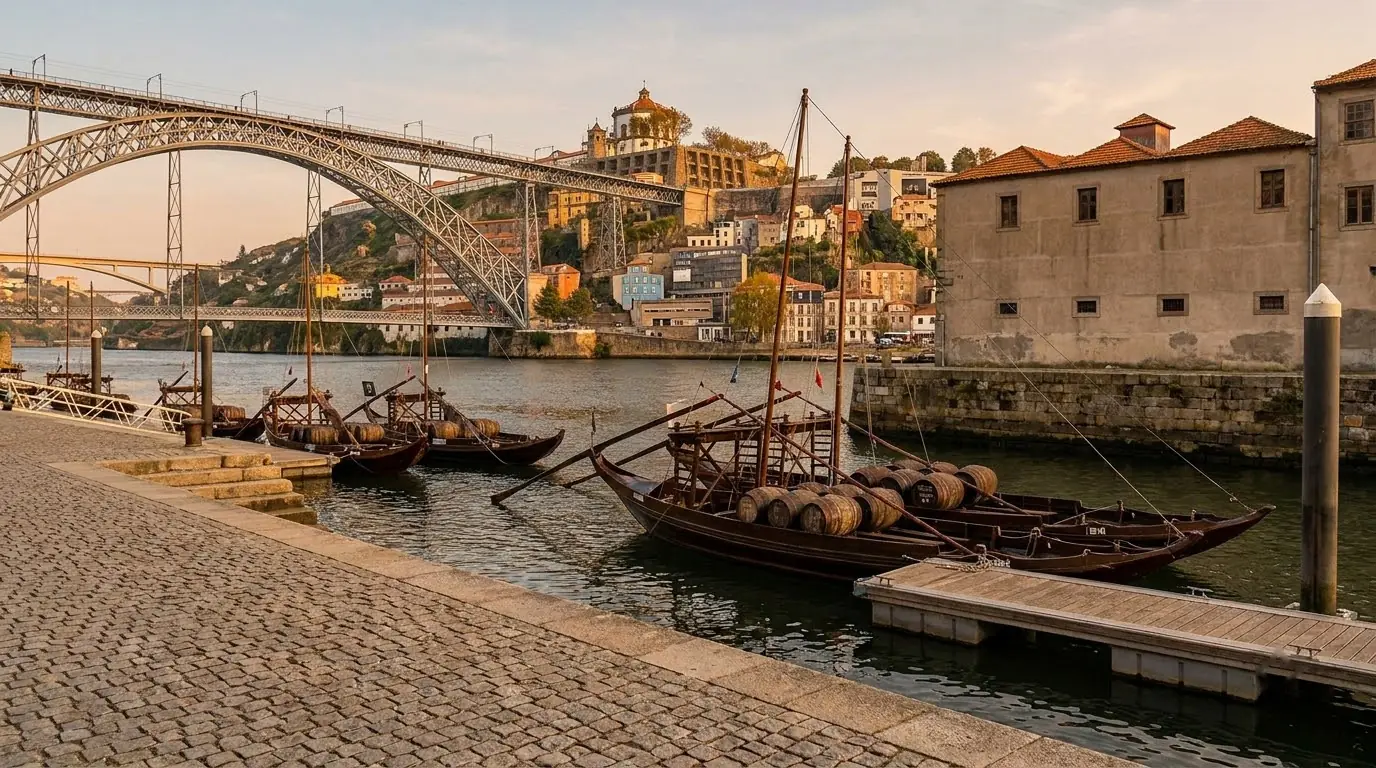
The Ribeira is the riverfront at the foot of the old town, under the Dom Luís I bridge, and it is the view on every postcard. The Sé cathedral sits on the rock above it, and the lanes between the two are the core of the UNESCO-listed historic centre. Staying here puts you inside the picture.
The cost is gradient. Every street out of the Ribeira climbs, and some are stairs rather than streets; the Guindais funicular, beside the bridge, lifts you to Batalha. The waterfront restaurants stay busy into the night, so rooms facing the square are not quiet.
Miragaia, a few minutes west along the river, is the calmer version: the same river, flatter walks along the quay, and Tram 1 passing the door. It has fewer restaurants, which is part of why it is quieter.
Cedofeita, Clérigos and Miguel Bombarda: the second-visit base
Cedofeita is the residential district west of the Clérigos tower, and it is the better base once you have already seen the Ribeira. Rua de Cedofeita is a pedestrian shopping street; Rua de Miguel Bombarda, a block away, holds most of the city’s independent galleries. The streets are flatter and the restaurants serve more locals than visitors.
Around the Clérigos tower and Livraria Lello the picture changes: this is the busiest corner of central Porto by day, with queues for both. Stay a few streets west of it and you keep the walk to the sights without the crowd under your window. Carolina Michaëlis and Lapa are the nearest metro stops.
Vila Nova de Gaia: the view and the port lodges
Vila Nova de Gaia is a separate city on the south bank of the Douro, and it looks straight back at Porto, which is the better view of the two. The riverside, Cais de Gaia, is lined with the port wine lodges, most open for tastings. Rooms here usually cost less than the same standard across the river.
Getting across is the daily routine. The Dom Luís I bridge has two decks: the lower one links Cais de Gaia with the Ribeira, and the upper one carries Metro line D and pedestrians to Jardim do Morro. A cable car runs from Jardim do Morro down to the waterfront. Check which deck your hotel is near before you book.
Foz do Douro and Matosinhos: Porto by the sea
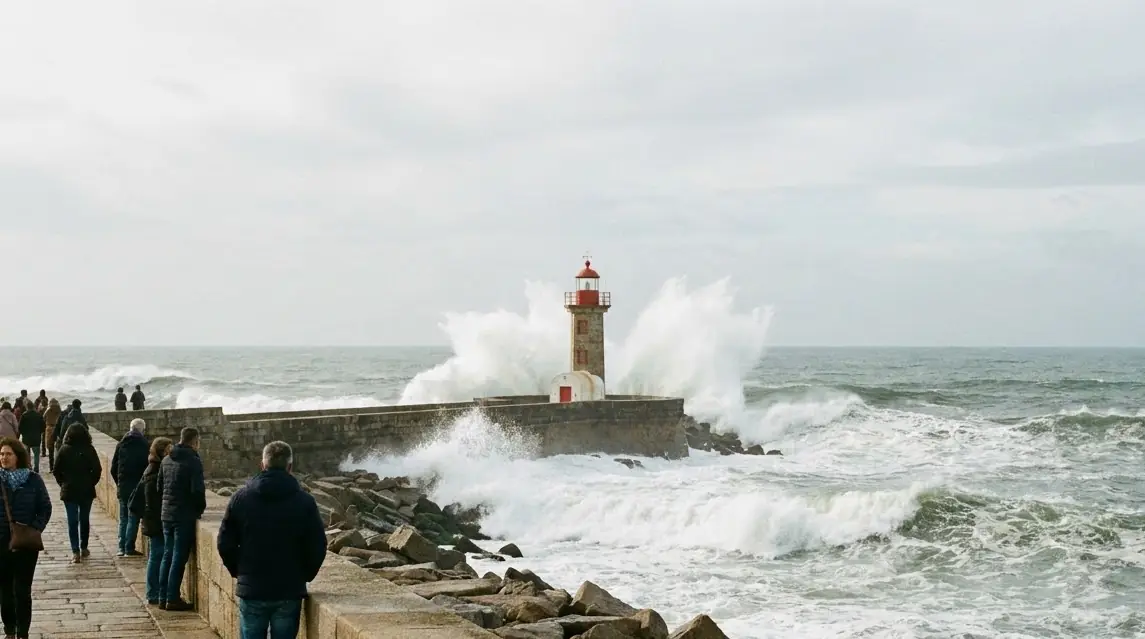
Foz do Douro is where the river meets the Atlantic, about 5 km downstream from the centre, and it is Porto’s seaside. It has a long promenade, small beaches between the rocks, the Felgueiras lighthouse on its breakwater and the quietest nights in the city. It suits a longer stay or a second visit.
The historic Tram 1 runs along the river between Infante, near the Ribeira, and Passeio Alegre in Foz; a single ride costs €5. Bus 500 covers the same shore from the centre and continues to Matosinhos.
Matosinhos, north of Foz, is a separate town with a wide sandy beach and a street of grill restaurants known for fresh fish. Metro line A links it with the centre, so it works as a beach base with Porto as the day trip.
Getting around: the airport, the stations and the hills
Getting into Porto from the airport is simplest by Metro line E, the violet line, which runs from Aeroporto to Trindade in about 30 minutes. Buy a rechargeable Andante card and load a Z4 ticket; the airport is four fare zones from the centre. Trains run from about 06:00 to 01:00.
- Trains from Lisbon arrive at Campanhã, east of the centre; an urban train or the metro takes you on to São Bento or Trindade.
- Porto is steep. Count the climb as well as the distance when a listing says a hotel is ten minutes from the river.
- A car is a cost, not a help, in the centre: streets are narrow and hotel parking is usually paid.
When to book early, and what the stay costs on top
Book early for the night of 23 to 24 June, São João, the city’s biggest festival, when rooms across the centre and Gaia fill weeks ahead. Summer weekends come next. Winter is cheaper and wetter: November, December and January each average 151 to 166 mm of rain at Porto airport (IPMA, 1991-2020).
Porto’s municipal tourist tax is €3 per person per night, charged for up to 7 consecutive nights, so the most one guest pays is €21. Children aged 12 and under are exempt. Hotels and holiday flats collect it during the stay, and it is often not included in the price shown when you book.
For the trip around the room, see how many days to spend in Porto and the best time to visit Porto, month by month.
Every hotel in Porto on one map
Prices and availability come live from the booking sites
Where not to stay in Porto
Where not to stay in Porto comes down to hills and noise. These bases look good on a map and disappoint in practice:
- The lowest streets of the Ribeira if stairs are a problem: every walk except the riverside one starts uphill.
- Anywhere sold as near the port cellars without checking the river bank: Gaia and Porto are different cities, and the bridge is the only walkable link.
- The area around Campanhã station for a short city break: handy for the Lisbon train, a metro ride from everything else.
- The blocks around Galerias de Paris and the bars north of Aliados if you sleep lightly on Friday and Saturday nights.
- Boavista for a first visit: a business district around Casa da Música, a long walk from the river and quiet in the evening.
If Porto is one stop of a longer trip, compare the bases in where to stay in Lisbon, and plan the days with the three-day Porto plan or the Porto itinerary. Still deciding? Read whether Porto is worth visiting and the Porto guide.
Common questions
Which area of Porto is best for first-time visitors?
Baixa, around Avenida dos Aliados, is the best area for a first visit. It sits on the flat ground above the old town, Metro line D stops at Aliados and São Bento, and the airport line ends at Trindade a few blocks north. The Ribeira and the bridge are about 15 minutes downhill on foot.
Is it better to stay in Porto or Vila Nova de Gaia?
Stay in Porto if you want to walk to restaurants, markets and most sights. Choose Vila Nova de Gaia for the view back across the Douro, the port lodges on your doorstep and usually lower prices. The trade-off is the Dom Luís I bridge: every evening out in Porto ends with a crossing and a climb.
Where should you not stay in Porto?
Avoid the lowest streets of the Ribeira if stairs are a problem, because everything except the river is uphill from there. Avoid the area around Campanhã station for a short city break, since it is a metro ride from the centre. Light sleepers should skip the blocks around Galerias de Paris and Aliados on weekend nights.
How do you get from Porto airport to the city centre?
Take Metro line E, the violet line, from Aeroporto to Trindade in about 30 minutes. You need a rechargeable Andante card and a Z4 ticket, because the airport sits four fare zones from the centre. The metro runs from about 06:00 to 01:00, so arrivals after that need a taxi or an app ride.
Is Foz do Douro a good area to stay in Porto?
Foz do Douro suits travellers who put the sea ahead of the old town. It sits about 5 km downstream where the Douro meets the Atlantic, with a long promenade, small beaches and quiet nights. The historic Tram 1 and bus 500 both run along the river to the centre, so every evening in Porto ends with a ride back.
Opens a price map of Porto. We may earn a commission if you book, at no extra cost to you.
Where to next
Things to Do in Porto
The main guide — how long to stay and what is worth the time.
Porto in 3 Days
A three-day plan for Porto that does not sprint.
Porto Itinerary
Day-by-day plans for Porto, from one day to a full week.
Best Time to Visit Porto
When to go to Porto, month by month.
Keep planning Porto
Written and checked by
Travel Guide Kit Editorial
An editorial desk, not an invented persona. Every opening time, ticket price and transport connection here is checked against the operator’s own website and carries the date it was read. Where a page cannot draw on direct experience, it says so.