
Quick answer
Lisbon is worth visiting for three days, or four with Sintra, especially for travellers who like walking, viewpoints and a city that feels lived-in rather than staged.
In short
- Lisbon suits people with limited mobility least: the city is built on hills, and the patterned stone pavements are slippery when wet.
- Lisbon is least worth it in November, the wettest month of the year at 133.9 mm, and hardest work in August, which averages 27.4 days above 25°C.
- Compared with Porto, Lisbon is larger, with more to fill three days and more day trips within an hour, including Sintra.
Yes, Lisbon is worth 3 days, or 4 with Sintra, and it rewards people who like to walk: its best parts, the viewpoints, the old quarters and the river, are free. It suits least those who cannot manage hills, since the patterned pavements are slippery when wet. It is least worth it in November, the wettest month at 133.9 mm, and hardest work in August, with 27.4 days above 25°C. So, is Lisbon worth visiting? The sections below weigh the highlights against the downsides.
Worth it, or think twice
Lisbon is an excellent city for some trips and a frustrating one for others, and the hills, the month and the length of the stay decide which.

Read the table as a filter, not a score. A trip that ticks most of the left column will feel like one of the best city breaks in Europe; a trip that ticks two or three on the right can still work, but it needs a different plan: fewer hills, more taxis, and Sintra or Cascais on their own day.
What Lisbon does better than anywhere else in Iberia
Lisbon’s strengths are not the headline monuments. They are the things you do between them.
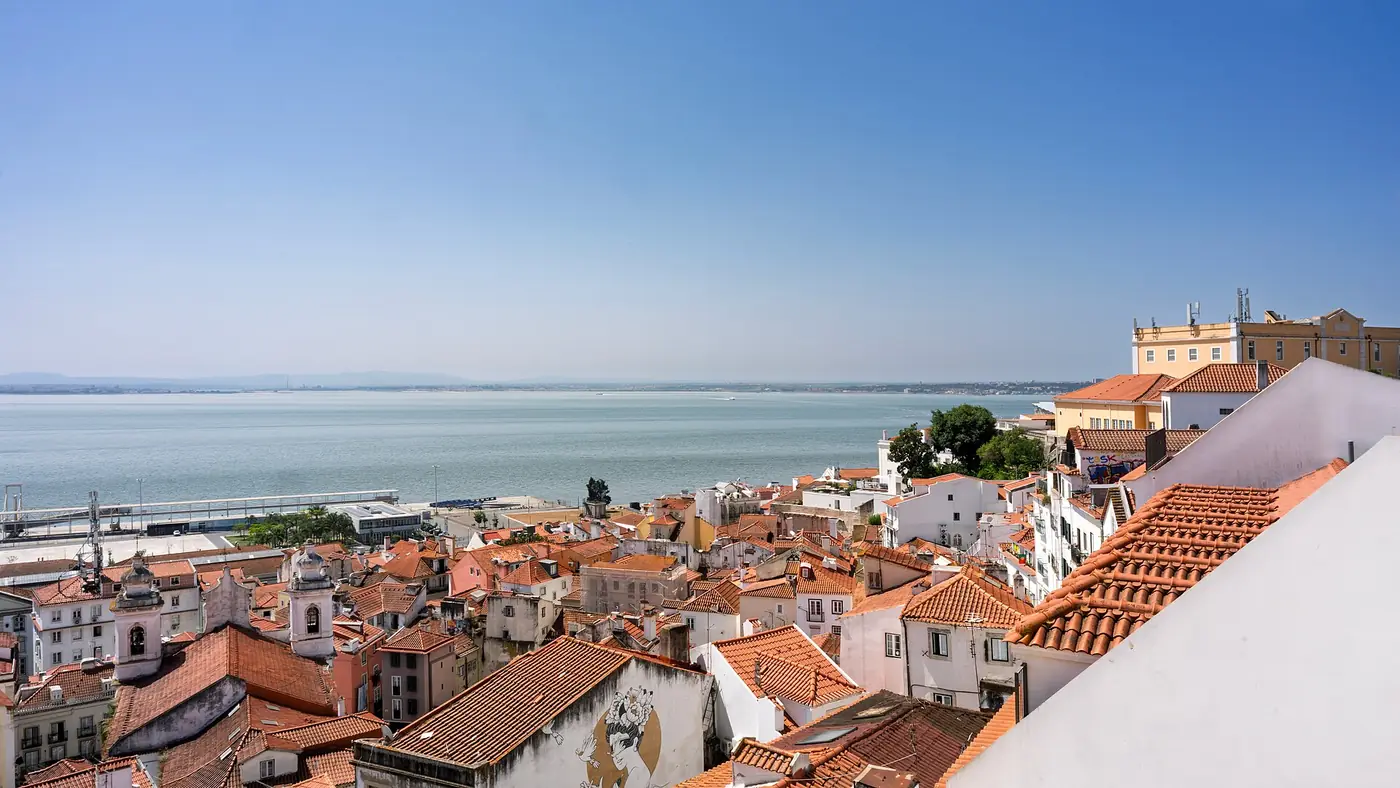
- The viewpoints are free. Portas do Sol, Santa Luzia, Senhora do Monte and São Pedro de Alcântara are public terraces, and collectively they are what visitors remember.
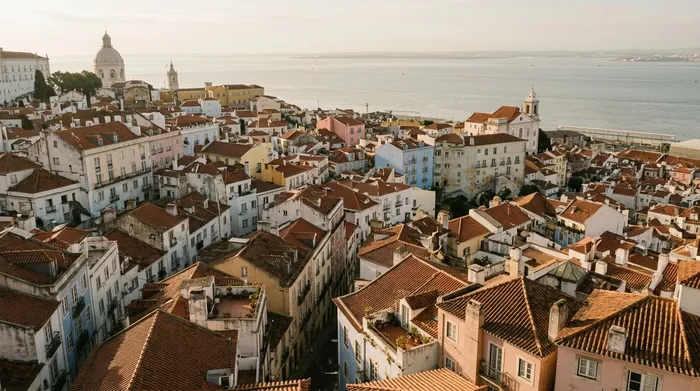
- The old quarters are lived in. Alfama is a neighbourhood with washing on the balconies, not a museum district.
- The river is part of the city. Baixa opens onto the Tagus, and Belém runs along it.
- Sintra is forty minutes away by train, which puts one of the best day trips in Portugal within reach of a three-day trip.
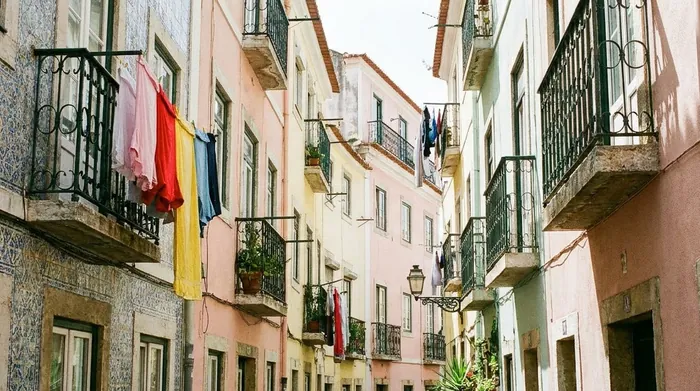
Lisbon is also one of the better-value capitals in western Europe for eating out. A plate of grilled fish or a bifana in a neighbourhood tasca costs a fraction of a similar lunch in Paris or London, and a pastel de nata with a coffee is a daily habit rather than a treat.
Then there is fado, the city’s own music. In the small houses of Alfama and the Bairro Alto it is sung close enough to the tables that dinner stops while it plays. It is one of the few things in Lisbon worth booking ahead.
Day trips beyond Sintra
Cascais, Évora and the other trips beyond Sintra are part of why Lisbon rewards a fourth day. All four below run by train or bus from Lisbon and need no car.
- Cascais and Cabo da Roca: about 40 minutes by train from Cais do Sodré to Cascais, then a bus to the cape.
- Setúbal and Arrábida: about an hour on the Fertagus train from Roma-Areeiro, for beaches and seafood.
- Évora: about 1 hour 30 minutes by intercity train, for the Roman temple and the Alentejo.
- Óbidos: about an hour by bus from Campo Grande, for a walled medieval town.
Match the trip to the season: the coast in summer, Sintra, Évora and Tomar in spring and autumn, and Évora or Óbidos on dry winter days, when Sintra’s hill is often in cloud. Check train times on CP the day before.
What disappoints people about Lisbon
Treating Lisbon like a flat city with a checklist causes the predictable disappointments.
- The hills. Lisbon is spread across seven of them, and the walk between two points is often steeper than the map suggests.
- Tram 28. In season the queue at Martim Moniz is often forty minutes, the carriage is packed, and pickpocketing concentrates on it.
- The famous queues. The takeaway line at Pastéis de Belém and the queue for the Torre de Belém are often longer than the visit.
- The rain. November averages 133.9 mm and October 110.6 mm, and the polished stone pavements are slippery when wet.
- The heat on the climbs. August averages 27.4 days above 25°C, and the steepest streets are in the oldest quarters.
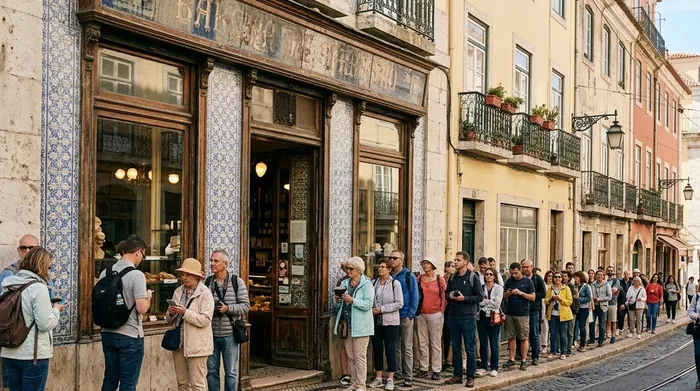
The crowds deserve a line of their own. Alfama and Belém fill up on days when cruise ships are in port, and parts of the old quarters now have more short-term rentals than residents. The fix is timing: the same lanes are quiet before 10am and after the day visitors leave.
Getting in from the airport
Arrival is one of the easy parts. Aeroporto station is the end of the red metro line, open from about 06:30 to 01:00, and the red line reaches Saldanha directly.
For Baixa, Chiado or Avenida da Liberdade, change to the green line at Alameda or the blue line at São Sebastião. With heavy bags and a room on a steep lane, a taxi from the nearest station saves the last climb.
Lisbon or Porto?
Both cities are worth visiting, and they suit different trips. The full comparison is in Lisbon vs Porto.
| Lisbon | Porto | |
|---|---|---|
| Days needed | 3, or 4 with Sintra | 3, or 4 with the Douro valley |
| Best day trip | Sintra, 40 min by train | Douro valley, 2 hours by train |
| Terrain | Seven hills | One steep slope to the river |
| Rain per year | 793.5 mm | 1,146.9 mm |
| Best months | June and September | June to September |
Rainfall figures are the 1991-2020 IPMA climate normals. A week in Portugal is enough for both: three days in Porto and four in Lisbon.
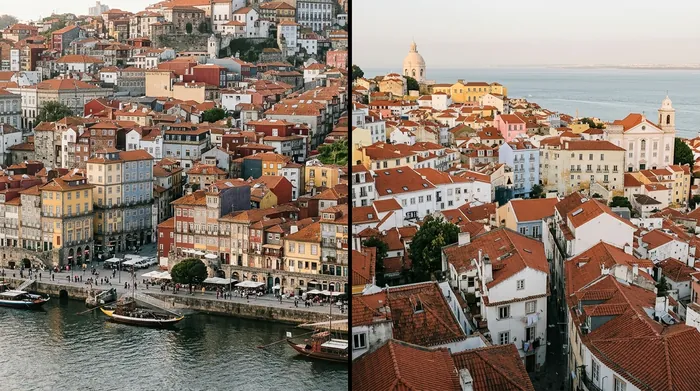
The difference is less about quality than about rhythm. Porto has one dramatic centre around the river and fits comfortably into three days; Lisbon is spread across several neighbourhoods and day trips, and gets better with a fourth day. For a first trip with only a long weekend, Porto is easier. For a week, Lisbon is the better base.
The two cities are about three hours apart by train, so a week split between them loses little time on the move. Read whether Porto is worth visiting for the other side.
For the full comparison, from weather to food and day trips, read Lisbon vs Porto.
When Lisbon is not worth it
The month matters more than the city being open all year suggests. These are the 1991-2020 climate normals for Lisboa / Instituto Geofísico from IPMA.
- November is the wettest month of the Lisbon year at 133.9 mm — the hills and the stone pavements make rain matter more here than in a flat city.
- August is the hardest month for walking, with 27.4 days above 25°C and 10.2 above 30°C.
- June and September are when Lisbon is most worth it: highs of about 26°C, little rain, and long evenings on the viewpoints.
- December to February are mild, with highs of 15-16°C, but wet — worth it for a quiet, cheap city break rather than for the viewpoints.

June has its own reason to go or to avoid: the Santos Populares, the city’s saints’ festivals, fill Alfama with grills, music and crowds through the month, peaking on the night of 12 June. It is the liveliest time of the year and the hardest to find a quiet room in the old quarters.
For the full month-by-month picture, see the best time to visit Lisbon.
If it rains, or if it is hot
If it rains, move Belém to the wet day: the Jerónimos cloister is covered and the monuments are close together. October and November are the wettest months, at 110.6 mm and 133.9 mm, so a short autumn trip should keep one indoor day in reserve.
If it is hot, start Alfama by 9am and keep the early afternoon for a long lunch. Summer nights are warm too: August averages a 28.8°C high and about 7 nights above 20°C, so air conditioning matters more than a top-floor view.
Short winter days change the plan in a smaller way: move the sunset viewpoint earlier, as the light goes in the late afternoon.
How to make Lisbon worth it
How the days are planned, rather than where you go, avoids the disappointments above.
- Walk every hill from the top down, and use the funiculars and trams for the climbs.
- Give Belém its own morning, and walk past the takeaway queue at Pastéis de Belém to the tables inside.
- Board Tram 28 at Campo de Ourique, or walk the same streets through Alfama.
- Give Sintra a full day, or leave it out.
- Travel in June or September if the dates are flexible.
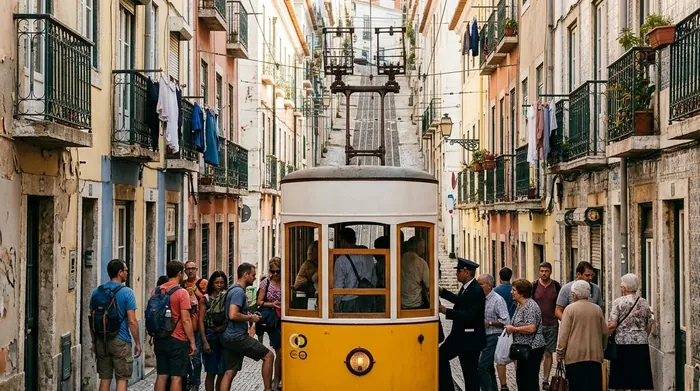

For getting around, buy a rechargeable Navegante card at a metro station and load it with credit; it works on the metro, the buses, the trams and the funiculars, and it is far cheaper than paying on board. The Lisboa Card is a different product, worth it only on a day of paid museums.
Pick the base before the sights: where you sleep decides how many hills you climb each evening. Where to stay in Lisbon compares the areas street by street.
What to book, and what not to
The booking list is short, which helps on a short trip.
- Sintra palace tickets, which use timed entry, if a day goes there.
- A fado house, for the evening you want one.
- Dinner at a specific restaurant on a Friday or Saturday.
- Rooms early for June, when the Santos Populares fill Alfama, Graça and Mouraria, and for August.
Nothing else has to be booked weeks ahead. The viewpoints are free public terraces, and the old quarters are open to anyone who walks in.
Choosing a base
Hills and noise matter more than distance when you pick a base.
- Baixa and Chiado: the first-visit base, central to everything.
- Alfama and Graça: the old city and the views, quiet except in June.
- Príncipe Real, Santos or the quieter edge of Graça: couples and slow travellers.
- Bairro Alto or Cais do Sodré: going out, accepting the noise late at weekends.
- Avenida da Liberdade or Parque das Nações: families, for lifts, space and flat streets.
Check the building as well as the area. Many central guesthouses and holiday flats are in four- and five-storey houses with no lift, and because cobbled streets and trams carry sound, a room at the back is quieter than one over the street.
Eating on the local clock
Lunch runs from about 12:30 to 15:00, and dinner starts from around 20:00. The restaurants with picture menus on Rua Augusta are priced for passing visitors; the tascas a few streets away are not.
For choice, there is the Time Out Market at Cais do Sodré; for a quick lunch, a bifana; and for the end of the evening, a glass of ginjinha around Rossio.
Is Lisbon worth it for families, couples and solo travellers?
Families, couples and solo travellers each get a slightly different Lisbon.
- Couples: the viewpoints at sunset, fado dinners and slow meals make Lisbon one of the easiest romantic city breaks in Europe.
- Families: the Oceanário, the riverside in Belém and the beaches at Cascais work well; pushchairs on the hills and the stone pavements do not, so bring a carrier for small children.
- Solo travellers: the city is walkable, sociable and easy to navigate by public transport, and eating alone at a tasca counter is normal.
- Older travellers: worth it with a base in Baixa or along the river, and with taxis for the climbs.
Who should not go
- Travellers with limited mobility who need step-free routes. Much of the old city is reached only by steep lanes and stairs, and the stone pavements are slippery when wet.
- Anyone wanting a beach city. Lisbon is on a river; the beaches are forty minutes away by train at Cascais or across the river.
- A one-day visit that tries to include Sintra. You will see neither properly.
- A November trip built around the viewpoints. It is the wettest month of the year.
Where to stay in Lisbon
If you go, which part of town you sleep in decides how much you see on foot. The map shows the same property across Booking.com and Agoda, with prices live from them.
Common questions
Is Lisbon worth visiting?
Yes, Lisbon is worth visiting for three days, or four with Sintra, especially for travellers who like to walk. Its best parts, the viewpoints, Alfama and the river, are free, and Sintra is forty minutes away by train. It suits least those who cannot manage hills, because much of the old city is steep and the stone pavements are slippery when wet.
How many days do you need in Lisbon?
You need three days in Lisbon for the city and a fourth for Sintra. That gives one day to Alfama and the castle, one to Baixa, Chiado and the Bairro Alto, and one to Belém, with Sintra as a full day of its own. The how-many-days guide sets out what fits into each length of stay.
Is Lisbon better than Porto?
Neither Lisbon nor Porto is better; they suit different trips. Lisbon is larger, with more neighbourhoods and more day trips nearby, including Sintra. Porto is more compact, wetter and easier to cover in three days. With a week in Portugal, do both: three days in Porto and four in Lisbon, about three hours apart by train.
What should you not do in Lisbon?
Do not queue for Tram 28 at Martim Moniz in season, walk the hills upwards when you could walk them down, or try to fit Sintra into an afternoon. Avoid the restaurants on Rua Augusta, priced for passing visitors, and plan the viewpoints for clear evenings rather than a wet November day.
Opens a price map of Lisbon. We may earn a commission if you book, at no extra cost to you.
Where to next
Things to Do in Lisbon
The main guide: the best things to do, hill by hill.
Lisbon in 3 Days
A three-day plan for Lisbon that does not sprint.
Lisbon Itinerary
Day-by-day plans for Lisbon, from one day to a full week.
How Many Days in Lisbon?
How long you actually need in Lisbon, and what fits in each extra day.
Keep planning Lisbon
Written and checked by
Travel Guide Kit Editorial
An editorial desk, not an invented persona. Every opening time, ticket price and transport connection here is checked against the operator’s own website and carries the date it was read. Where a page cannot draw on direct experience, it says so.