Quick answer
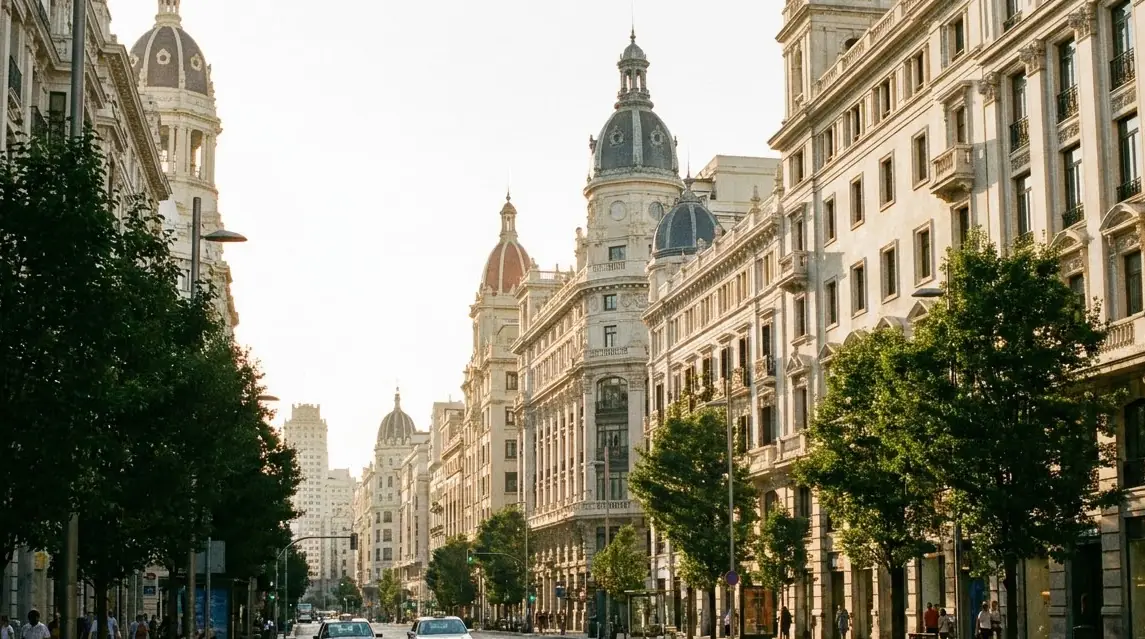
Three days in Madrid is enough for the city itself — old Madrid, the three great museums and Retiro Park — at one big museum per day.
In short
- If Toledo matters more than a third city day, spend two days in Madrid and the third in Toledo, 33 minutes by high-speed train from Atocha.
- Plan the Reina Sofía around its free window: Monday and Wednesday to Saturday from 7pm to 9pm, and Sunday from 12.30pm to 2.30pm (checked with the museum, August 2026).
- Madrid eats late — lunch from about 2pm, dinner from about 9pm — so a three-day trip holds more than the same three days in most cities.
3 days in Madrid covers the city, or 2 city days and a third in Toledo, 33 minutes by high-speed train from Atocha. Choose three city days if the museums are the point of the trip, one big museum per day; choose Toledo if you will not be back in Spain soon. Both plans are set out in full below, built around the late Madrid clock. If you are still deciding how many days to give the city, see how many days in Madrid.
Where to sleep on this route
A plan built one area at a time only works if you sleep near those areas. The map shows the same property across Booking.com and Agoda, with prices live from them.
The choice: three city days, or two plus Toledo
Three days in the city suits a museum trip. It short-changes anyone who will not be back, because Toledo is one of the best day trips in Spain and only half an hour away.
If Segovia is the third day
Segovia makes the third day easier and more immediately photogenic than Toledo. The old town and its Roman aqueduct have been a UNESCO World Heritage site since 1985.
- The aqueduct crosses the main square on two tiers of granite arches built without mortar.
- The cathedral, one of the last Gothic cathedrals built in Spain, sits at the top of the old town.
- The alcázar stands at the far end of the ridge, about 30 minutes’ walk from the aqueduct.
- Cochinillo, roast suckling pig, is the local dish for a long lunch.
The high-speed station is outside the town, and a local bus links it with the aqueduct.
Plan A: three days in the city
One big museum per day is the rule that keeps three city days enjoyable. The old centre, Retiro and the evenings fill the rest.
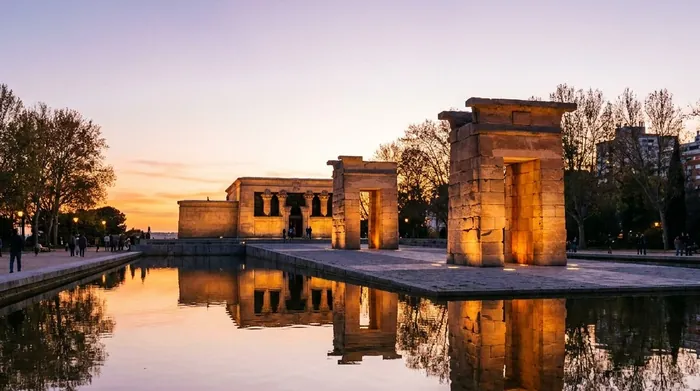
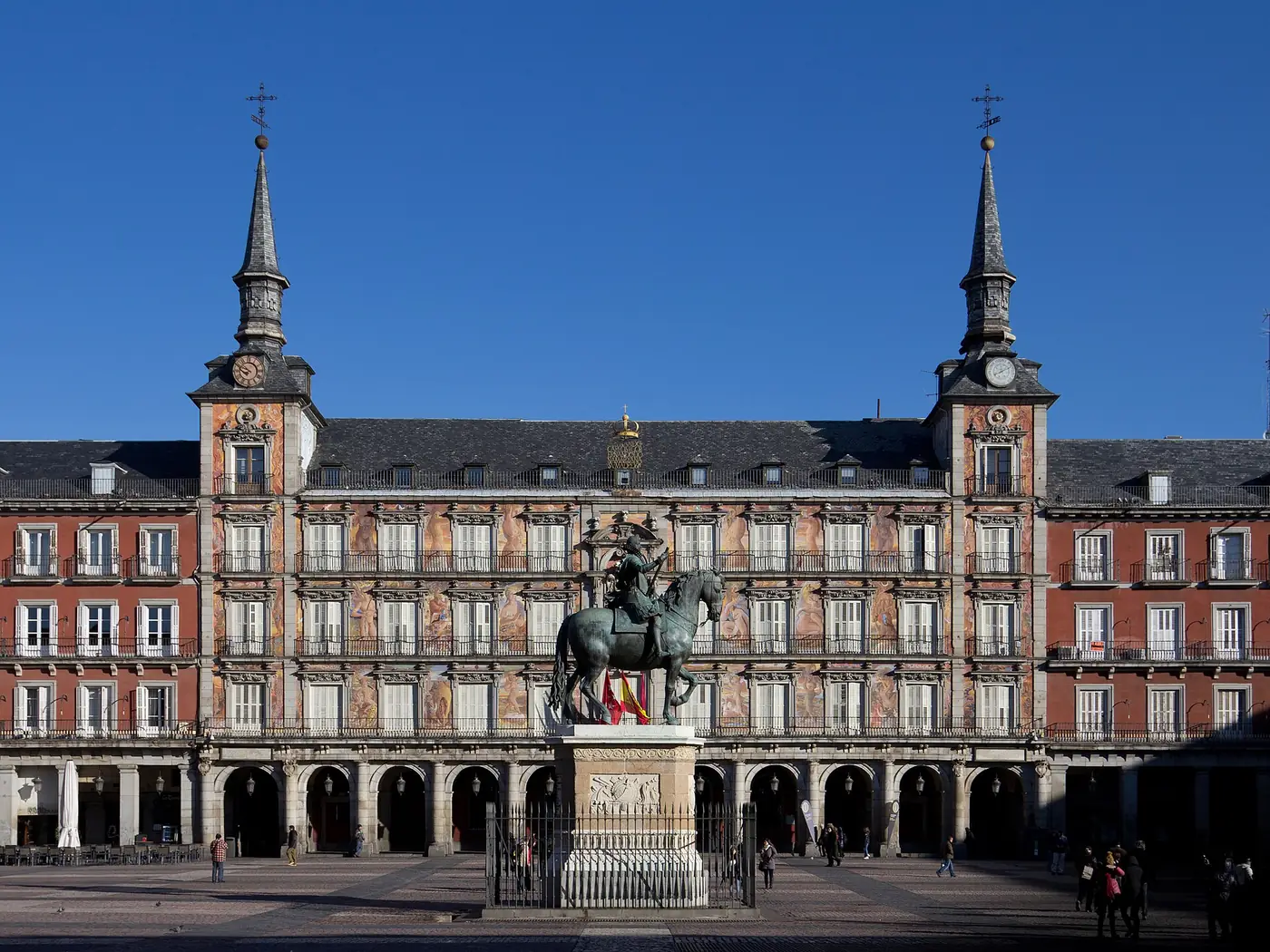
- Day 1 — Old Madrid: Plaza Mayor, the Palacio Real and the Almudena Cathedral; lunch in La Latina; sunset at the Templo de Debod.
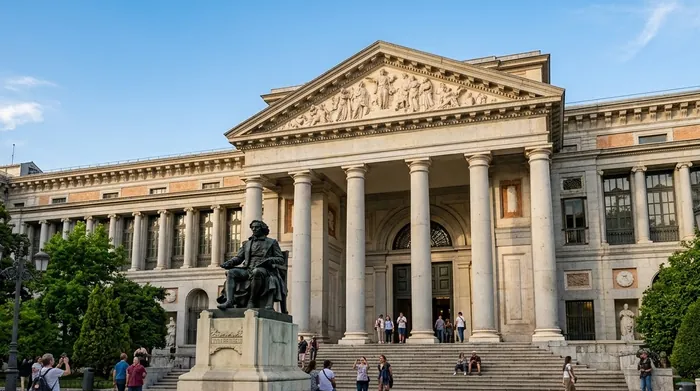
- Day 2 — The Prado for the morning; lunch; Retiro Park and the Crystal Palace in the afternoon.
- Day 3 — The Thyssen-Bornemisza in the morning, about ninety minutes; a long lunch; the Reina Sofía for Guernica in its free evening window.
If one of your three days is a Sunday, put old Madrid on it: La Latina is at its best on Sunday afternoon after the Rastro market, and the Reina Sofía’s free window moves to 12.30pm to 2.30pm.
The Prado also opens free for the last two hours of most days. On a tight budget, use that window on day 2 and move Retiro to the morning; the queue moves quickly if you join it before the free period starts. For each day hour by hour, see the Madrid itinerary.
Day 1 in more detail
Start at the Palacio Real, the largest royal palace in western Europe by floor area and still used for state occasions; the changing of the guard happens on set days. The Almudena Cathedral next door is unusually modern inside.
The Templo de Debod is an Egyptian temple given to Spain in the 1960s and rebuilt on a rise west of the centre. It faces west, which is why it is the sunset spot; arrive twenty minutes early to get space.
Plan B: two days in the city and one in Toledo
This plan trades one museum and a slow day for Toledo. The city days get fuller, and the choice between the Reina Sofía and the Thyssen becomes the hard one.
- Day 1 — Old Madrid in the morning; the Prado from early afternoon; sunset at the Templo de Debod.
- Day 2 — Retiro in the morning; lunch; the Reina Sofía or the Thyssen in the afternoon; the Reina Sofía’s free window if it falls on this day.
- Day 3 — Toledo. The AVE from Atocha takes 33 minutes; give the walled old city and the cathedral the whole day, and come back for a late dinner.
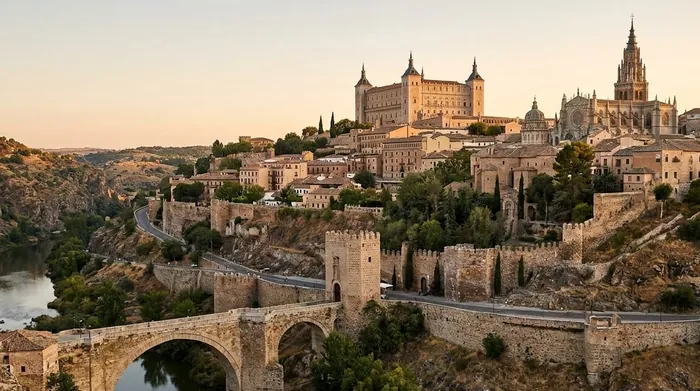
- The Toledo cathedral alone takes about two hours — it is not a stop on the way to something else.
- Toledo is a hill city: the walking is steep and on stone, so the same shoes rule applies as in Lisbon.
- Segovia is the alternative: 30 minutes by AVE from Chamartín, easier, and more immediately photogenic. Pick one, not both.
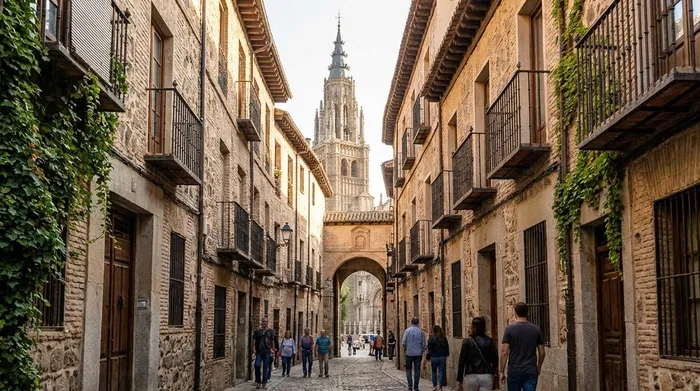
In Toledo, start at the cathedral when it opens, then walk the lanes to the Santo Tomé church for El Greco’s Burial of the Count of Orgaz and down to the old Jewish quarter and its synagogues.
The view back over the city from the road on the far side of the Tagus gorge is worth a taxi or the tourist bus late in the day.
Getting around Toledo
Toledo’s station sits below the old city. Walk up over the Alcántara bridge, or take a bus or taxi to the top, then walk downhill through the day. The historic centre has been a UNESCO World Heritage site since 1986.
In the old Jewish quarter, the Synagogue of El Tránsito and the Santa María la Blanca synagogue are close together. In July Toledo averages a 34.6°C high in AEMET’s 1981-2010 normals, hotter than Madrid, so arrive early and rest at lunch.
What to book before the three days start
Madrid needs little advance booking outside the busiest weeks, but three things decide how smoothly the plan runs.
- High-speed train tickets to Toledo or Segovia — only for Plan B.
- Accommodation in the centre, so no day starts with a long metro ride: the old centre can be crossed on foot in twenty minutes.
- Dinner reservations only for a specific restaurant on a Friday or Saturday — and for 9pm or later, not 7pm.
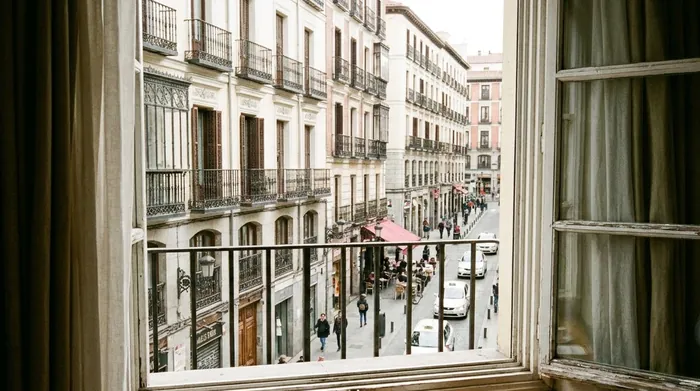
Museum tickets are worth booking online in the busiest weeks, Easter and the long weekends, to skip the ticket line; the same goes for the Palacio Real, where the queue can stretch along the square by late morning.
Arriving, and where to stay for three days
Arriving at Barajas, Metro line 8 reaches Nuevos Ministerios in about 12 minutes from terminals 1 to 3, where you change for the centre. The Airport Express bus 203 reaches Atocha in about 30 minutes and runs all night. Madrid charged no tourist tax as of October 2026.
- Plan A: a side street in Centro between Plaza Mayor and Ópera, or the Barrio de las Letras for the museums.
- Plan B with Toledo: the Paseo del Prado, with Atocha station at its southern end.
- Plan B with Segovia: anywhere central, as the trains leave from Chamartín in the north.
- Avoid a street-facing room on Gran Vía, which carries traffic all night.
If it is hot, or if it rains
Three days is short enough that one bad afternoon matters. These swaps are based on the 1981-2010 climate normals for the Retiro station from AEMET.
- Heat — July and August average highs of 32.1°C and 31.3°C. Keep the afternoons for the museums and do Retiro and the old centre in the morning.
- Heat in Plan B — Toledo is a hill city on stone; in July and August, start early and plan the afternoon in the cathedral and the museums.
- Rain — May has the most rainy days of the year (7.3) and October the most rain (60 mm). Madrid is easy to rearrange: swap any outdoor half-day for a museum.
- Cold — December and January average highs of about 10°C, but they are dry and bright, and the museums are at their quietest.
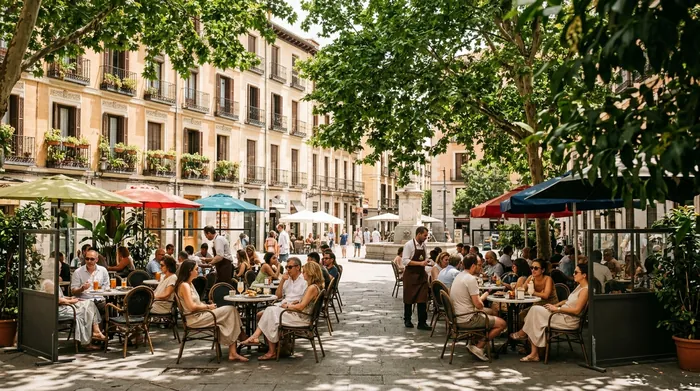
The best months for three days
September and the first half of June suit three days best. September averages a 26.4°C high, 22 mm of rain and only 3.3 rainy days, so all three days work outdoors as well as in.
Two festival dates change prices: San Isidro in mid-May and Pride (MADO) in Chueca, from late June into early July. Book rooms early for either, and expect the old centre and Chueca to be loud late into the night.
The top three things to do in Madrid in three days
If the three days had to be reduced to three things, these are the ones that make Madrid different from every other city on a Spain trip.
- The Prado — Velázquez, Goya, El Greco and Bosch in the largest of the three great museums.
- Guernica at the Reina Sofía — in a room of its own, ideally in the free evening window.
- A Madrid evening — tapas from about 8pm, dinner from about 9.30pm, and the squares still full at midnight.
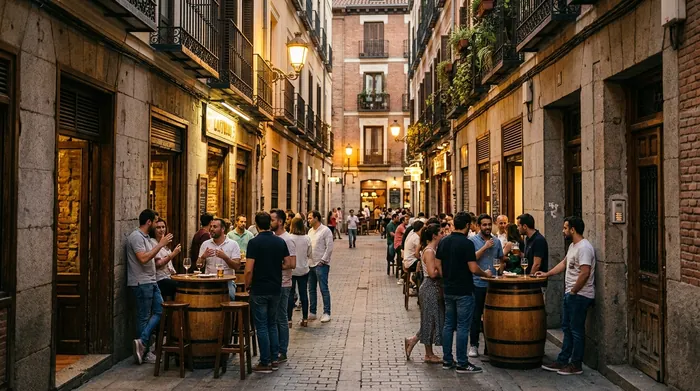
Eating well over three days
In Madrid that means eating late and moving between bars. Lunch is the main meal, and the weekday menú del día is the best-value meal in the city.
- Day 1, old Madrid: a bocadillo de calamares near the Plaza Mayor, then tapas along Calle Cava Baja in La Latina in the evening.
- Day 2, the Prado and Retiro: a menú del día in the Barrio de las Letras, and vermouth on a terrace before dinner.
- Day 3: chocolate con churros for breakfast, and a last dinner in Malasaña or Chueca after the Reina Sofía.
- Skip the Mercado de San Miguel for meals: it is the most expensive and crowded place to eat in the centre.
For more to swap in, see things to do in Madrid.
Eating on the Madrid clock
The late clock is what makes three days feel longer. Lunch runs roughly from 2pm to 4pm and is the main meal; tapas bars bridge the gap; dinner fills from about 9.30pm. A restaurant with tables free at 8pm on a Friday is telling you something.
For a cheaper market lunch than San Miguel, the Mercado de San Fernando in Lavapiés costs about a third as much. Museums mostly close by 8pm, so the evening is for squares, terraces and walking rather than another collection.
What not to squeeze in
These are the mistakes that cost the most time:
- Toledo and Segovia on the same trip of three days. Each needs a full day; doing both leaves one day for Madrid.
- Toledo as a half-day trip. The train is quick, but the old city and the cathedral need the whole day.
- Booking dinner for 7pm. The city eats from about 9.30pm, and an early table puts you in an empty room among other visitors.
- Two big museums in one day. The Prado alone takes a full morning; pair it with Retiro, not with another collection.
If you have a fourth day
With a fourth day, take Toledo or Segovia, whichever the three days left out, and keep each on its own day. Shorter trips also leave from Atocha or Chamartín on the Cercanías local trains, which need no booking:
- El Escorial, the monastery and palace of Philip II: about an hour, a half day.
- Aranjuez, the royal palace and gardens beside the Tagus: about 45 minutes, best in spring.
- Alcalá de Henares, the birthplace of Cervantes: about 37 minutes on the C2.
Common questions
Is 3 days enough to visit Madrid?
Yes, 3 days is enough to visit Madrid itself: old Madrid, the Prado, the Reina Sofía, the Thyssen and Retiro Park, at one big museum per day. It is not enough for the city and Toledo at a relaxed pace; for that, take two city days and a third in Toledo, or stay four days.
Should I do Toledo on a 3-day Madrid trip?
Do Toledo on a 3-day Madrid trip if you will not be back in Spain soon: it is 33 minutes by high-speed train from Atocha and one of the best day trips in the country. If the museums are the point of the trip, keep all three days in the city.
Is Seville or Madrid better?
Seville and Madrid suit different trips. Madrid is the city for art museums and late nights; Seville is smaller, with the Alcázar, the cathedral and the old quarter, and far hotter in summer: mean highs of 36.0°C in July against 32.1°C in Madrid, according to AEMET’s 1981-2010 normals.
What is the best month to go to Madrid?
September is the best month to go to Madrid: a 26.4°C mean high and 22 mm of rain, according to AEMET’s 1981-2010 normals for Retiro, with warm evenings and the city back from holiday. The first half of June is the next best; July and August are hot, with highs above 31°C.
What are the top 3 things to do in Madrid?
The top 3 things to do in Madrid are the Prado, for Velázquez, Goya and El Greco; Guernica at the Reina Sofía, ideally in its free evening window; and a late Madrid evening of tapas and dinner from about 9.30pm in La Latina or the old centre.
Opens a price map of Madrid. We may earn a commission if you book, at no extra cost to you.
Where to next
Things to Do in Madrid
The main sights, from the Prado to sunset at the Templo de Debod.
Is Madrid Worth Visiting?
Who Madrid suits, and who it suits least.
Madrid Itinerary
Day-by-day plans for Madrid, from one day to a full week.
How Many Days in Madrid?
How long you actually need in Madrid, and what fits in each extra day.
Keep planning Madrid
Written and checked by
Travel Guide Kit Editorial
An editorial desk, not an invented persona. Every opening time, ticket price and transport connection here is checked against the operator’s own website and carries the date it was read. Where a page cannot draw on direct experience, it says so.