Trips, planned properly
Travel Guide Kit

Spain · Community of Madrid

Madrid Itinerary

By Quyen Lam · Checked September 2026

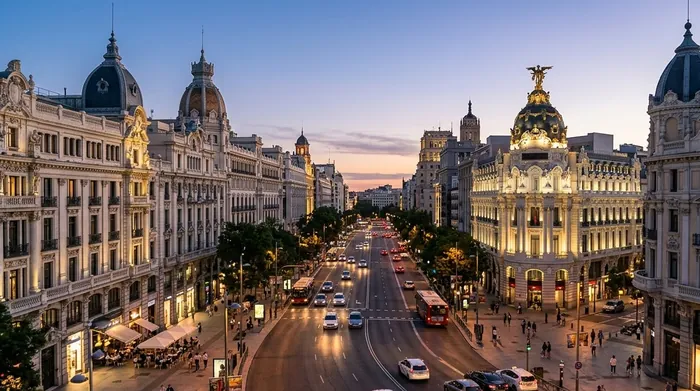
Illustration of ornate Madrid facades and a dome in morning light
AI-generated · GLabs nano_banana_pro · Generated
In short

For one day in Madrid, do old Madrid in the morning, the Prado after lunch and sunset at the Templo de Debod. For two, add Retiro and a second museum. Build every day around the Madrid clock — museums early, lunch from 2pm, dinner from 9.30pm. Three days has its own guide; four and five add Toledo and Segovia.

One day in Madrid

One day is a stopover, but Madrid is compact enough to show you its three sides — the old city, the art and the evening — if the day is built in the right order.
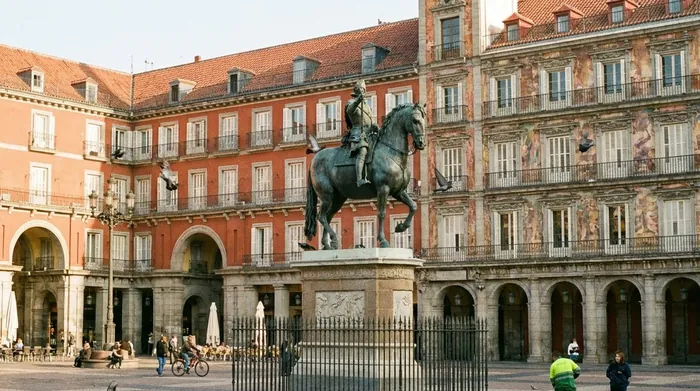
  1. 9.30am — Plaza Mayor before the crowds, then the Palacio Real and the Almudena Cathedral next door.
  2. 12pm — Walk down into La Latina; Calle Cava Baja is the tapas street.
  3. 2pm — Lunch, the main meal of the day. A weekday menú del día is the best value in the city.
  4. 4pm — The Prado. Give it the rest of the afternoon: Velázquez, Goya, El Greco and Bosch.
  5. Sunset — The Templo de Debod, which faces west over the Parque del Oeste. Arrive twenty minutes early for space.
  6. 9.30pm — Dinner, when the city’s restaurants actually fill up.
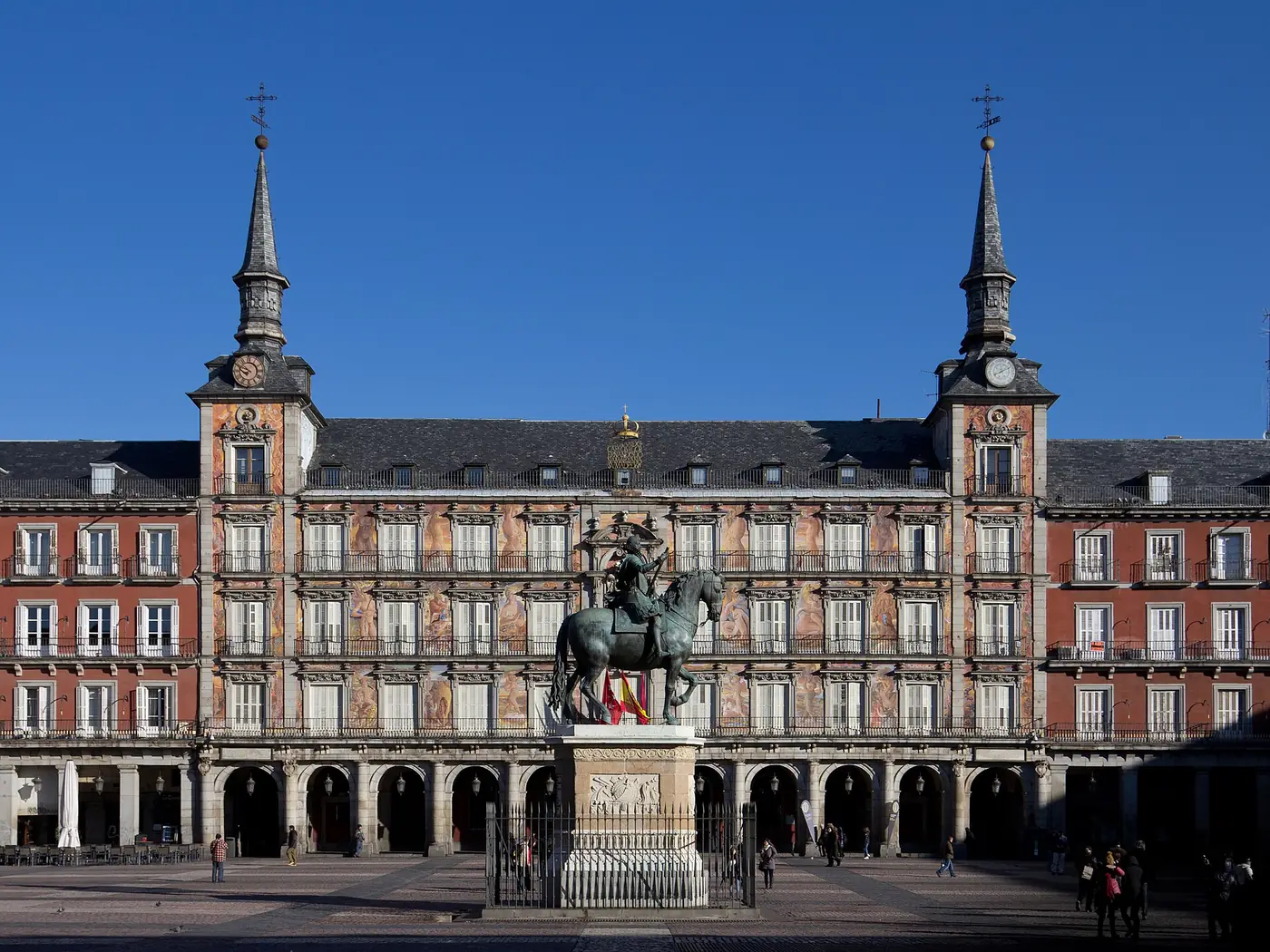
Illustration of an equestrian statue in an arcaded square in Madrid
Illustration of an equestrian statue in an arcaded square in MadridAI-generated · GLabs nano_banana_pro · Generated

Two days in Madrid

Two days keeps the one-day plan intact and adds the parts it had to leave out: Retiro Park and a second collection.
  1. Day 1 — as the one-day plan above: old Madrid, La Latina, the Prado and Debod.
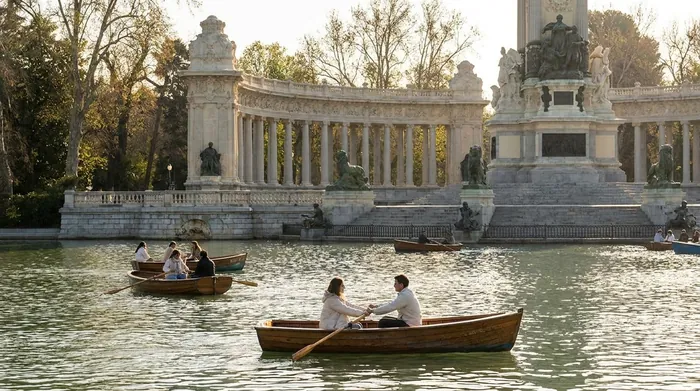
  2. Day 2 morning — Retiro Park and the Crystal Palace at its centre, which is free to enter.
  3. Day 2 lunch — near Retiro, from about 2pm.
  4. Day 2 afternoon — the Thyssen-Bornemisza, about ninety minutes, or the Reina Sofía for Guernica.
  5. Day 2 evening — the Reina Sofía’s free window if it falls on this day: Monday and Wednesday to Saturday from 7pm to 9pm (checked with the museum, August 2026).
Illustration of rowing boats before a colonnade in a Madrid park
Illustration of rowing boats before a colonnade in a Madrid parkAI-generated · GLabs nano_banana_pro · Generated

Three days in Madrid

Three days is the length most visitors should aim for, and it has its own guide with two complete plans: three city days at one great museum per day, or two city days and a day in Toledo. The short version: old Madrid on day one, the Prado and Retiro on day two, the Thyssen and the Reina Sofía on day three.
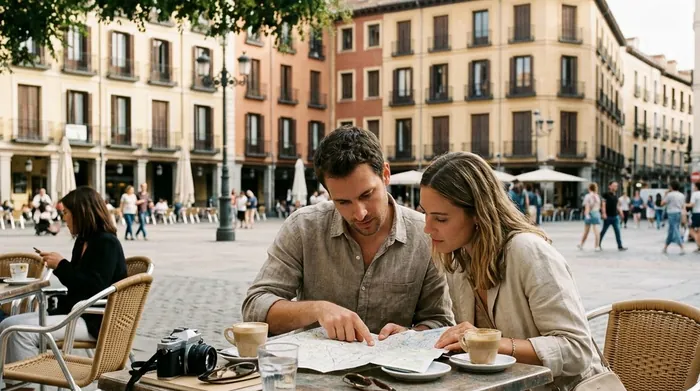
Illustration of a couple planning with a map at a café in Madrid
Illustration of a couple planning with a map at a café in MadridAI-generated · GLabs nano_banana_pro · Generated

A Madrid Sunday

Sunday changes the shape of a Madrid day more than any other, and it is worth building one day of the itinerary around it.
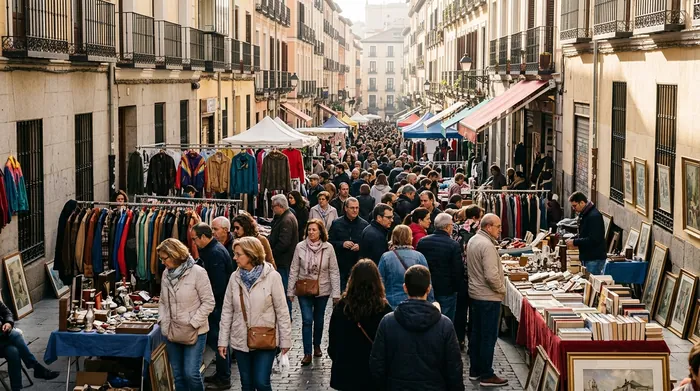
  1. Morning: the Rastro, the open-air market in the streets south of La Latina.
  2. Afternoon: La Latina, which is at its best on Sunday afternoon after the market.
  3. The Reina Sofía’s free window moves to 12.30pm to 2.30pm on Sundays.
  4. Retiro Park is at its busiest on Sunday — good for atmosphere, less so for quiet.
  5. Plan dinner carefully: some independent restaurants close on Sunday evening.
Illustration of a crowded Sunday street market on a sloping Madrid street
Illustration of a crowded Sunday street market on a sloping Madrid streetAI-generated · GLabs nano_banana_pro · Generated

Four and five days: Toledo and Segovia

Past three days, the best additions to a Madrid itinerary are outside the city. Both classic day trips are about half an hour away by high-speed train.

Adding days to a Madrid itinerary
DayWhereHow
Day 4Toledo33 min by AVE from Atocha; a full day
Day 5Segovia30 min by AVE from Chamartín; a full day
Or day 5El Escorial1 hour by cercanías; a half day

Toledo first. It is the denser and older of the two, and the cathedral alone takes about two hours. Segovia is the easier second trip, known for its Roman aqueduct and its alcázar.
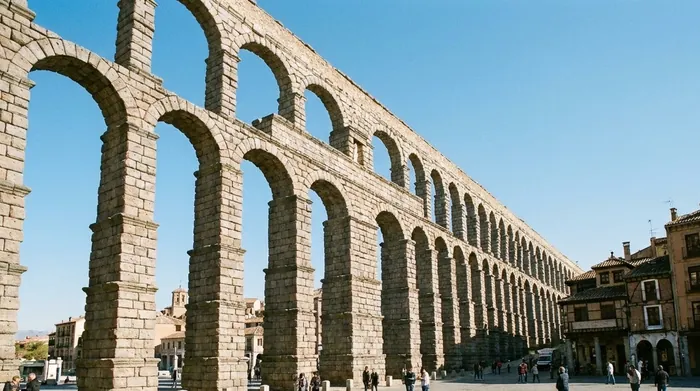
Illustration of a Roman aqueduct crossing a square in Segovia
Illustration of a Roman aqueduct crossing a square in SegoviaAI-generated · GLabs nano_banana_pro · Generated

Two themed routes through Madrid

Not every itinerary has to be built day by day. These two routes work as half-days inside any length of trip.
  1. The art route (a morning): the Prado, the Thyssen-Bornemisza and the Reina Sofía sit along the same boulevard, within a fifteen-minute walk of each other. Do one fully rather than three partly.
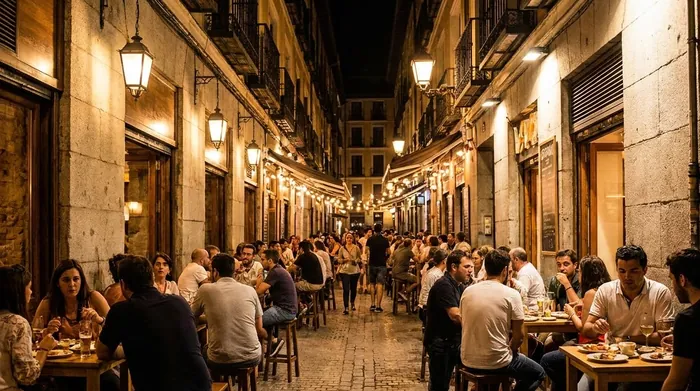
  2. The evening route (from about 8pm): tapas in La Latina, a walk up through Plaza Mayor, and dinner from about 9.30pm. Madrid’s squares are still full at midnight.
Illustration of a street of tapas bars in Madrid at night
Illustration of a street of tapas bars in Madrid at nightAI-generated · GLabs nano_banana_pro · Generated

How the season changes the itinerary

The same itinerary needs different hours in different months. These are the 1981-2010 climate normals for Madrid Retiro from AEMET, the Spanish state meteorological agency.
  1. July and August average highs of 32.1°C and 31.3°C: move the Prado to the afternoon and the walking to the morning and evening.
  2. May averages 7.3 rainy days and October 60 mm of rain — keep a museum ready as the switch for a wet afternoon.
  3. September is the month the full itinerary works best: a 26.4°C high and only 3.3 rainy days.
  4. In December and January, highs are about 10°C and the light goes early, so put Debod’s sunset in the late afternoon.
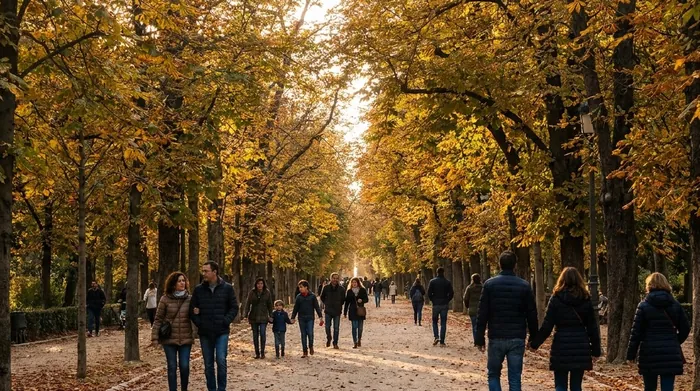
Illustration of a park path under autumn trees in Madrid
Illustration of a park path under autumn trees in MadridAI-generated · GLabs nano_banana_pro · Generated

What not to build a day around

Common questions

How many days do you really need in Madrid?

Three days for the city, and a fourth for Toledo. One day works as a stopover if it is built in the right order: old Madrid, the Prado, and sunset at the Templo de Debod.

What are the top 3 things to do in Madrid?

The Prado, Guernica at the Reina Sofía, and a late Madrid evening of tapas and dinner from about 9.30pm in La Latina or the old centre.

Is Seville or Madrid better?

Madrid is the city for art museums and late nights; Seville is smaller and far hotter in summer — mean highs of 36°C in July against 32°C in Madrid (AEMET 1981-2010 normals). Most Spain trips include both.

Can you see Madrid in one day?

You can see its three sides — old Madrid, the Prado and a Madrid evening — in one day, starting at Plaza Mayor by 9.30am and ending with dinner after 9.30pm. Retiro and the other two museums need a second day.
Where to next