
Quick answer
June and September are the two best months in Lisbon: mean highs of 26.1°C and 26.6°C, with only 14.1 mm and 38.6 mm of rain.
In short
- November is the wettest month of the Lisbon year at 133.9 mm — wetter than January, and the single worst month to book if rain matters.
- July is effectively rainless in Lisbon, averaging 2.6 mm across the entire month, which is three-tenths of one percent of the annual 793.5 mm.
Go to Lisbon in June or September, when highs average 26.1°C and 26.6°C with only 14.1 mm and 38.6 mm of rain. September also brings 19.5 days above 25°C, so the sea is warm and the evenings long. Avoid November, the wettest month of the Lisbon year at 133.9 mm and wetter than any winter month. July is effectively rainless, at 2.6 mm across the month. Below, the month-by-month figures show the best time to visit Lisbon for each kind of trip.
June, then September
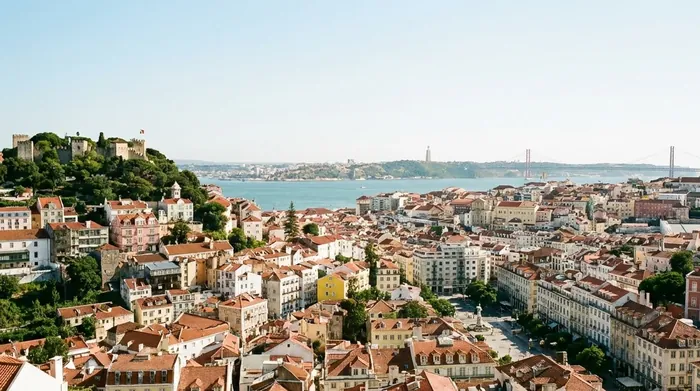
Lisbon has two good windows rather than one, and they sit either side of the summer peak. June gets you the dry weather before the August crowds; September gets you the same warmth after them, with a sea that has had all summer to warm up.
| When | Mean high | Rain | Verdict |
|---|---|---|---|
| June | 26.1°C | 14.1 mm | Best: warm, dry, before the crowds |
| September | 26.6°C | 38.6 mm | Best: warmest sea, busy early on |
| May / October | 23.1°C / 22.8°C | 57.8 / 110.6 mm | Good for walking; October turns wet |
| July / August | 28.2°C / 28.8°C | 2.6 / 5.4 mm | Dry and busy; hard on the hills |
| November | 18.1°C | 133.9 mm | Avoid if rain matters |
- June averages a 26.1°C high, a 16.8°C low and just 14.1 mm of rain (IPMA, Lisboa / Instituto Geofísico, 1991-2020 normals).
- September averages a 26.6°C high — marginally warmer than June — with 38.6 mm of rain.
- September delivers 19.5 days above 25°C, against June’s 16.9.
- Neither month is uncomfortably hot: June averages 0.6 days above 35°C and September 0.5.
- The Santo António street parties fall in mid-June, which fills the Alfama and Graça districts for several nights.
If the choice is purely about weather, September edges it. If it is about price and quiet, June is the better bet, because September is when the rest of Europe has worked out that Lisbon is still warm.
Lisbon month by month, with the numbers
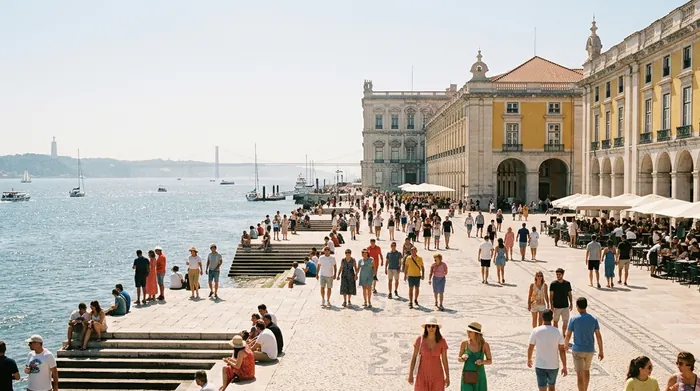
The figures below are the 1991-2020 climate normals for Lisboa / Instituto Geofísico, published by IPMA, the Portuguese meteorological institute. “Warm days” counts days where the maximum reached 25°C; “hot days” counts days that reached 30°C.
Twelve months at a glance — bars are rain, numbers are mean highs
| Month | Mean high | Mean low | Rain | Warm days | Hot days |
|---|---|---|---|---|---|
| January | 15.1°C | 8.6°C | 103.8 mm | 0.0 | 0.0 |
| February | 16.4°C | 9.1°C | 77.8 mm | 0.0 | 0.0 |
| March | 18.9°C | 11.0°C | 68.7 mm | 1.4 | 0.0 |
| April | 20.4°C | 12.3°C | 71.8 mm | 3.7 | 0.1 |
| May | 23.1°C | 14.4°C | 57.8 mm | 9.1 | 2.1 |
| June | 26.1°C | 16.8°C | 14.1 mm | 16.9 | 5.7 |
| July | 28.2°C | 18.2°C | 2.6 mm | 25.2 | 8.5 |
| August | 28.8°C | 18.8°C | 5.4 mm | 27.4 | 10.2 |
| September | 26.6°C | 17.6°C | 38.6 mm | 19.5 | 5.7 |
| October | 22.8°C | 15.3°C | 110.6 mm | 7.3 | 0.9 |
| November | 18.1°C | 11.8°C | 133.9 mm | 0.1 | 0.0 |
| December | 15.4°C | 9.4°C | 108.5 mm | 0.0 | 0.0 |
The rain column decides a Lisbon trip. Four months — October, November, December and January — carry more than 100 mm each and together account for over half the annual total of 793.5 mm.
The wet season is autumn, not winter

Lisbon is sold as a year-round city break, and the mild winter temperatures support that. The rainfall does not. The wettest month is November, and the second wettest is October — both wetter than January.
- November averages 133.9 mm, the wettest month of the Lisbon year.
- October averages 110.6 mm, the second wettest, and more than January’s 103.8 mm.
- Rainfall multiplies almost threefold between September (38.6 mm) and October (110.6 mm) — the sharpest month-to-month change in the Lisbon year.
- July averages 2.6 mm and August 5.4 mm, so the summer is effectively rainless.
- The four wettest months together carry more than half of the 793.5 mm annual total.
The practical consequence is that a late-October or November trip needs an indoor plan, and Lisbon is a good city for one — but book it knowing that, rather than discovering it.
Summer in Lisbon is a hill problem, not a heat problem

On paper, a 28.8°C August high looks mild, well below Seville and Córdoba. What the number does not capture is that Lisbon is built on hills, and the walking is relentlessly up and down. The heat is felt on the climbs, not on the thermometer.
- August averages 27.4 days above 25°C — almost the whole month.
- August also averages 10.2 days above 30°C and 1.8 above 35°C.
- August nights stay at or above 20°C on 6.8 days, so the flat does not cool down overnight unless it has air conditioning.
- The highest temperature ever recorded at this station is 43.3°C, on 4 August 2018.
- Miradouro-to-miradouro walking routes climb and descend repeatedly, which is what turns a 28°C day into a hard one.
Two adjustments make August workable: start walking before 10am, and use the trams and funiculars for the climbs rather than treating them as a novelty to be photographed and then walked past.
Best time for each kind of Lisbon trip

The best month depends on what the trip is for. These windows follow the IPMA normals rather than a general ranking.
What the calendar does to prices and crowds

Prices and crowds follow a different calendar from the weather:
- July and August are peak for both rooms and flights, and the historic-centre districts are at their densest.
- Mid-June fills the Alfama and Graça for the Santo António nights even though it is otherwise a shoulder month.
- September holds close to August prices in the first fortnight, then drops noticeably in the last week.
- The cheapest stretch is mid-January to the end of February, which is also the coldest and among the wettest.
- Easter week moves between late March and late April and prices like a summer week wherever it lands.
The single cheapest good-weather week of the Lisbon year is usually the last week of September, after the prices drop but before the October rain arrives.
When not to book
- November, which is the wettest month of the Lisbon year at 133.9 mm. It is sold as cheap shoulder season, and the price is genuinely low, but it rains more then than in any other month.
- A beach-led trip booked for October because the sea is still warm. October averages 110.6 mm — nearly three times September’s 38.6 mm — and that jump is the sharpest in the Lisbon year.
- The Santo António nights in mid-June if you want a quiet stay in Alfama or Graça. Those are exactly the districts the street parties run through, and they run late.
- August accommodation without checking for air conditioning. Nights stay at or above 20°C on 6.8 days of the month, and much of the old housing stock has no cooling at all.
Where to stay in Lisbon
In the busy months the best-placed rooms go first, so choose the area as soon as the dates are set. The map shows the same property across Booking.com and Agoda, with prices live from them.
Common questions
What is the best month to go to Lisbon, Portugal?
June or September. June averages a 26.1°C high with 14.1 mm of rain; September averages 26.6°C with 38.6 mm and 19.5 days above 25°C (IPMA 1991-2020 normals). June is cheaper and quieter, September is marginally warmer with a warmer sea.
What is the rainy season in Lisbon?
October to January, and it peaks in November rather than in midwinter. November averages 133.9 mm, October 110.6 mm, December 108.5 mm and January 103.8 mm. Those four months carry more than half of the 793.5 mm Lisbon receives across the year.
Is Lisbon too hot in summer?
The temperatures are moderate for Iberia — an August mean high of 28.8°C — but Lisbon is built on hills, so the heat is felt on the climbs. August averages 27.4 days above 25°C and 6.8 nights that stay above 20°C, which matters most when the accommodation has no air conditioning.
How many days do you need in Lisbon?
You need three full days in Lisbon for the city centre, Belém and one day trip, most often Sintra. Two days is enough only if you skip the day trip entirely, and four lets you add Cascais or a slower day. The Lisbon itinerary sets out what fits into each day.
Is 3 days in Lisbon too long?
No. Three days is the point at which Lisbon stops being a checklist. The city centre takes a day and a half, Belém takes half a day, and Sintra needs a full day of its own rather than a rushed afternoon.
Is September a good time to visit Lisbon?
Yes, and it is one of the two best months. September averages a 26.6°C high, 38.6 mm of rain and 19.5 days above 25°C. The rainfall jumps to 110.6 mm in October, so the value sits in September rather than in autumn generally.
Opens a price map of Lisbon. We may earn a commission if you book, at no extra cost to you.
Where to next
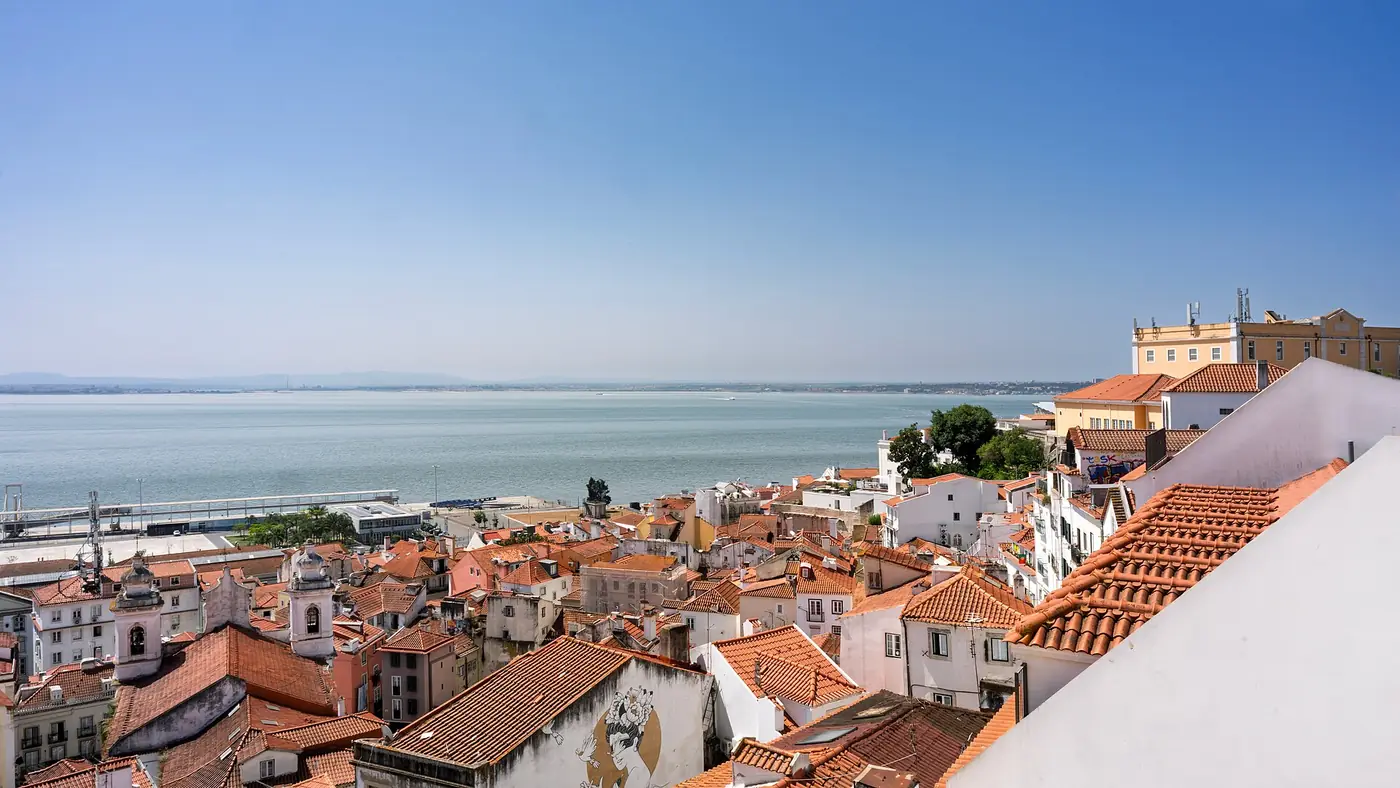
Things to Do in Lisbon
The main guide: the best things to do, hill by hill.

Is Lisbon Worth Visiting?
Who Lisbon suits, and who it suits least.
Lisbon in 3 Days
A three-day plan for Lisbon that does not sprint.
Lisbon Itinerary
Day-by-day plans for Lisbon, from one day to a full week.
Keep planning Lisbon
Written and checked by
Travel Guide Kit Editorial
An editorial desk, not an invented persona. Every opening time, ticket price and transport connection here is checked against the operator’s own website and carries the date it was read. Where a page cannot draw on direct experience, it says so.