
Quick answer
Three days in Lisbon is enough for the city itself — Alfama, Belém, and Baixa with Chiado and Bairro Alto — but not for the city and Sintra together at a comfortable pace.
In short
- If Sintra matters more than a third city day, spend two days in Lisbon and the third in Sintra, and give Belém half a day.
- Sintra needs a full day with timed tickets booked ahead; it is about forty minutes by train from Rossio station.
- Lisbon is walkable but steep: plan each day to start at the top of a hill and walk down.
3 days in Lisbon covers the city, or 2 city days plus a third in Sintra, about 40 minutes by train from Rossio, but not both at a comfortable pace. Choose three city days on a first visit or in the heat of summer; choose Sintra if the palaces are the reason you came. Both plans are set out in full below, each built to start at the top of a hill and walk down. Still deciding between three days and four? How many days in Lisbon sets out what each extra day adds.
Where to sleep on this route
A plan built one area at a time only works if you sleep near those areas. The map shows the same property across Booking.com and Agoda, with prices live from them.
The choice: three city days, or two plus Sintra
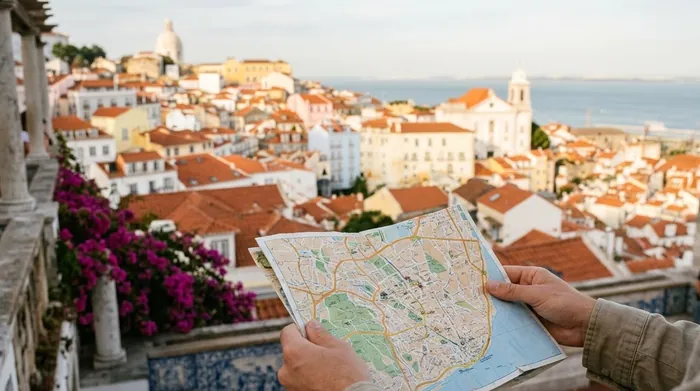
The real decision behind three days in Lisbon is whether the third day goes to Sintra. It is a good trade on some trips and a poor one on others.
If you have a fourth day
With a fourth day the choice disappears: keep the three city days of Plan A and give Sintra the fourth. The longer versions are in the Lisbon itinerary.
Plan A: three days in the city
This is the plan for a first visit. Each day covers one or two hills, always starting high and walking down.
- Day 1 — The castle, then down through Alfama via the Portas do Sol and Santa Luzia viewpoints. Rest in the afternoon. Sunset at Senhora do Monte.
- Day 2 — Belém in the morning: the Jerónimos cloister, a sit-down pastel de nata, the waterfront and the tower from outside. Back to the centre for a slow afternoon.
- Day 3 — Funicular up to São Pedro de Alcântara, Príncipe Real, lunch in Chiado, down into Baixa and the river. Bairro Alto in the evening.
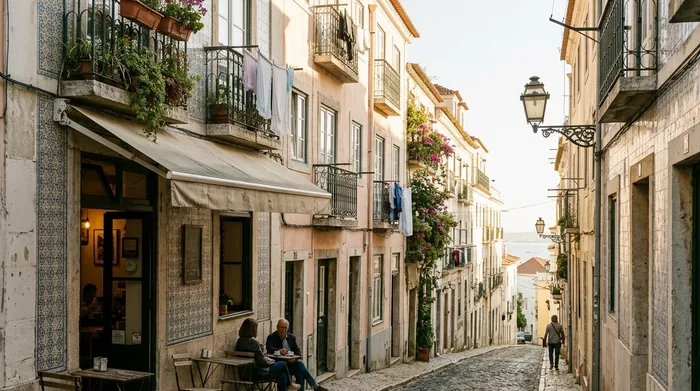
Plan A leaves room for the things that make Lisbon feel like Lisbon rather than a checklist: a fado dinner in Alfama on the first evening, an hour on a viewpoint with nothing to do, a long lunch in a tasca.
If you want the sea, take the train to Cascais on the evening of day two; it runs along the river from Cais do Sodré in about forty minutes.
For each day hour by hour, use the Lisbon itinerary.
Arriving on day one
The metro is the quickest way in: Aeroporto station is the end of the red line, open from about 06:30 to 01:00. For Baixa or Chiado, change to the green line at Alameda or the blue line at São Sebastião. Very early or very late flights need a taxi.
If you land after midday, swap days 1 and 3. Baixa and Chiado suit an afternoon and an evening in Bairro Alto, while the castle and Alfama need a morning.
Evenings in Plan A
The evenings are deliberately light: a fado dinner in Alfama on day 1, the sea at Cascais or a slow dinner on day 2, and Bairro Alto, which comes alive late, on day 3. Book the fado house before the trip, because the best small ones fill up.
Plan B: two days in the city and one in Sintra
This is the plan when the palaces matter more than a third city day. The city days get denser, and Belém shrinks to half a day.
- Day 1 — The castle and Alfama in the morning; Baixa and the riverfront after lunch; sunset at Senhora do Monte.
- Day 2 — Belém early, back by lunch; Chiado and a funicular up to São Pedro de Alcântara in the afternoon; Bairro Alto in the evening.
- Day 3 — Sintra. An early train from Rossio, two palaces and the walk between them, back to Lisbon for dinner.
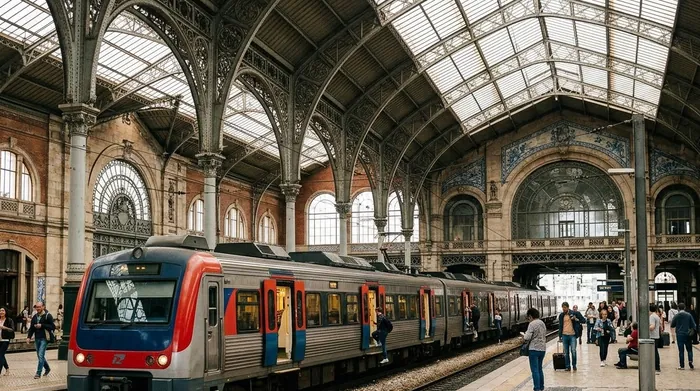
- Book the Sintra palace tickets for timed entry before the trip, especially between June and September.
- Aim for two palaces, not three. The shuttle bus between them is slow.
- Leave Cabo da Roca and Cascais for another trip. Adding them to the Sintra day turns it into a day on buses.

Plan B works best with Sintra on the middle day of a longer stay or on a weekday, when the palaces are quieter, and with the two city days kept apart from it so the denser sightseeing does not run into the travel.
Choosing the two Sintra palaces
Pena Palace tickets are sold for a set date and time on the Parques de Sintra site, and the Moorish Castle sits on the ridge next to it. Quinta da Regaleira, with its initiation well, is in the town and needs no shuttle.
Wear shoes with grip: the paths between the palaces are steep, and the hill is often cooler and damper than Lisbon.
What to book before the three days start
Little in Lisbon has to be booked ahead, but what does decides which plan is possible.
- Sintra palace tickets, for timed entry — only for Plan B.
- Accommodation in the centre: Baixa, Chiado or the edge of Alfama keep every day walkable.
- Nothing else has to be booked weeks ahead. The viewpoints are free public terraces.
- Dinner reservations only for a specific restaurant on a Friday or Saturday.
Where to stay for three days
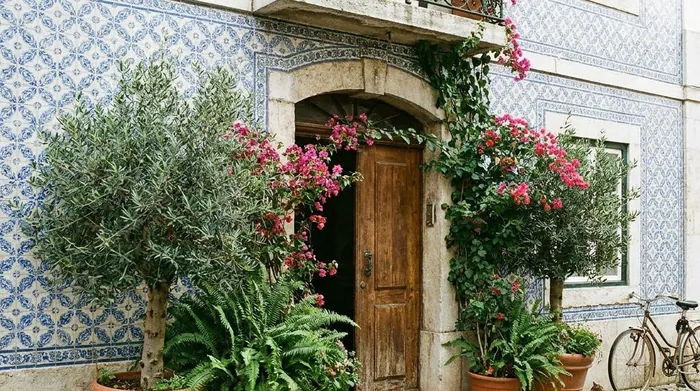
The base sets how much walking each plan needs. Baixa and Chiado are the default: the Baixa-Chiado station serves two metro lines, Rossio has the Sintra trains and Cais do Sodré the trains to Belém and Cascais. Alfama is the most atmospheric base and the hardest with a suitcase.
The tourist tax
Lisbon adds €4 per person per night for guests aged 13 and over, capped at 7 nights. On a three-night stay that is €12 per guest, collected by the hotel or holiday flat and often shown apart from the room price when you book.
If it rains, or if it is hot
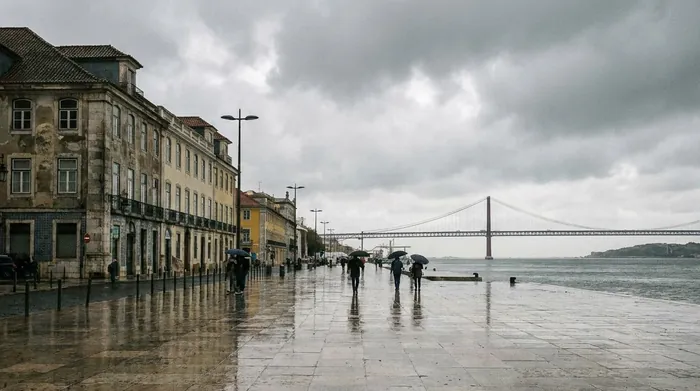
On a three-day trip one bad afternoon matters. These swaps keep the plan intact, based on the 1991-2020 climate normals from IPMA.
- Rain — October and November are the wettest months, at 110.6 mm and 133.9 mm. Move Belém to the rainy day: the Jerónimos cloister is covered and the monuments are close together.
- Rain in Plan B — swap Sintra with a city day; the palaces are largely indoors, but the walk between them is not.
- Heat — August averages 27.4 days above 25°C. Start Alfama by 9am and keep the early afternoon for a long lunch.
- Short winter days — move the sunset viewpoint earlier, as the light goes in the late afternoon.
The best months for three days
June and September bring highs of 26.1°C and 26.6°C and only 14.1 mm and 38.6 mm of rain (IPMA, 1991-2020). In mid-June the Santo António street parties fill Alfama and Graça for several nights, which is a reason to come or a reason to sleep elsewhere.
Rainy-day museums
The Calouste Gulbenkian Museum and the National Tile Museum fill a wet morning and afternoon between them, a second indoor option beyond Belém, and the Oceanário in Parque das Nações is the most reliable choice with children.
Is Lisbon walkable in three days?
Lisbon is walkable in three days, but not in the flat sense. The centre is compact enough to walk between every district in the plans above, and steep enough that direction matters more than distance.
- Walk down, ride up: the funiculars and the Santa Justa lift exist precisely because the climbs are unpleasant.
- Belém is the only part to reach by train or tram — it is 6 km west of the centre.
- The trams are working transport, not rides. Use them for the climbs rather than queueing for them as an attraction.
- Comfortable shoes with grip matter: the patterned stone pavements are polished smooth and slippery when wet.

For the rides, buy a rechargeable Navegante card at any metro station and load it with credit. It works on the metro, buses, trams, funiculars and the Santa Justa lift, and costs far less than paying the driver on board. The Lisboa Card pays off only on a day of several paid museums.
Three days with children or limited mobility
Children and limited mobility call for more rides and fewer stairs. Baixa, the riverfront and Avenida da Liberdade are flat, while Alfama, Graça and Bairro Alto are linked by stairways. Many guesthouses and holiday flats in old buildings have no lift, so ask before you book.
Tram 28 on a three-day trip
Tram 28 fits day 3 of Plan A if you want to ride it. Board at Campo de Ourique, the far end of the line, where the queue is a fraction of the one at Martim Moniz. Tram 12 covers a shorter loop through the same old streets and is usually near-empty.
Eating well over three days
Meals take less planning than the sights, and the best are usually the simplest. Lunch runs from about 12:30 to 15:00; dinner starts from around 20:00.
- Day 1, Alfama: grilled sardines or fish at a small tasca near the river, and a fado house in the evening if you have booked one.
- Day 2, Belém: a pastel de nata at the sit-down rooms of Pastéis de Belém, then lunch back in the centre.
- Day 3, Chiado and Baixa: a bifana for a quick lunch, the Time Out Market at Cais do Sodré if you want choice, and a glass of ginjinha around Rossio.
- Avoid the restaurants with picture menus on Rua Augusta: they are priced for passing visitors.
For the full list of sights to swap in, see things to do in Lisbon.
Sardines, salt cod and the bakeries
Sardines are a June dish in Lisbon, when the Santos Populares fill Alfama with grills. The rest of the year, bacalhau, salt cod in its many forms, is the everyday classic on tasca menus. A pastel de nata is worth trying at any good bakery, not only at the original one in Belém.
What not to squeeze in
These mistakes cost the most time on a three-day trip:
- Adding Cabo da Roca and Cascais to the Sintra day. It turns a palace day into a day on buses, and you see all three places in a hurry.
- Sintra without timed tickets in summer. The main palaces use timed entry, and turning up without a slot can mean not getting in.
- Belém at the end of a day in the old city. It is 6 km west and deserves a fresh morning.
- A three-night base near the airport to save money. It is twenty minutes from anything you came to see, and on a three-day trip that is an hour a day lost.
- A second day trip, such as Évora or Óbidos. Each needs a day of its own, and three days in Lisbon are already full.
Common questions
Is 3 days enough to explore Lisbon?
Yes, 3 days is enough to explore Lisbon itself: Alfama and the castle, Belém, and Baixa with Chiado and Bairro Alto. It is not enough for the city and Sintra together at a relaxed pace; that needs four days. Choose three city days on a first visit, or two plus Sintra if the palaces are the reason you came.
Should I do Sintra on a 3-day Lisbon trip?
Do Sintra on a 3-day Lisbon trip only if the palaces are the reason you came. It means two denser city days and only half a day in Belém. Sintra needs a full day and timed palace tickets booked ahead. On a first visit, three city days is usually the better trip.
Which city is nicer, Lisbon or Porto?
Lisbon and Porto suit different trips. Lisbon is larger, with more to see and more day trips within an hour, including Sintra and Cascais. Porto is smaller, more compact and easier in three days. A week in Portugal leaves time for both, about three hours apart by train.
Is Lisbon a walkable city?
Lisbon is a walkable city, but a steep one. Walk each hill from the top down and use the funiculars, trams and the Santa Justa lift for the climbs. Belém, 6 km west of the centre, is the only part to reach by train or tram. Wear shoes with grip: the stone pavements are slippery when wet.
What is the number one attraction in Lisbon?
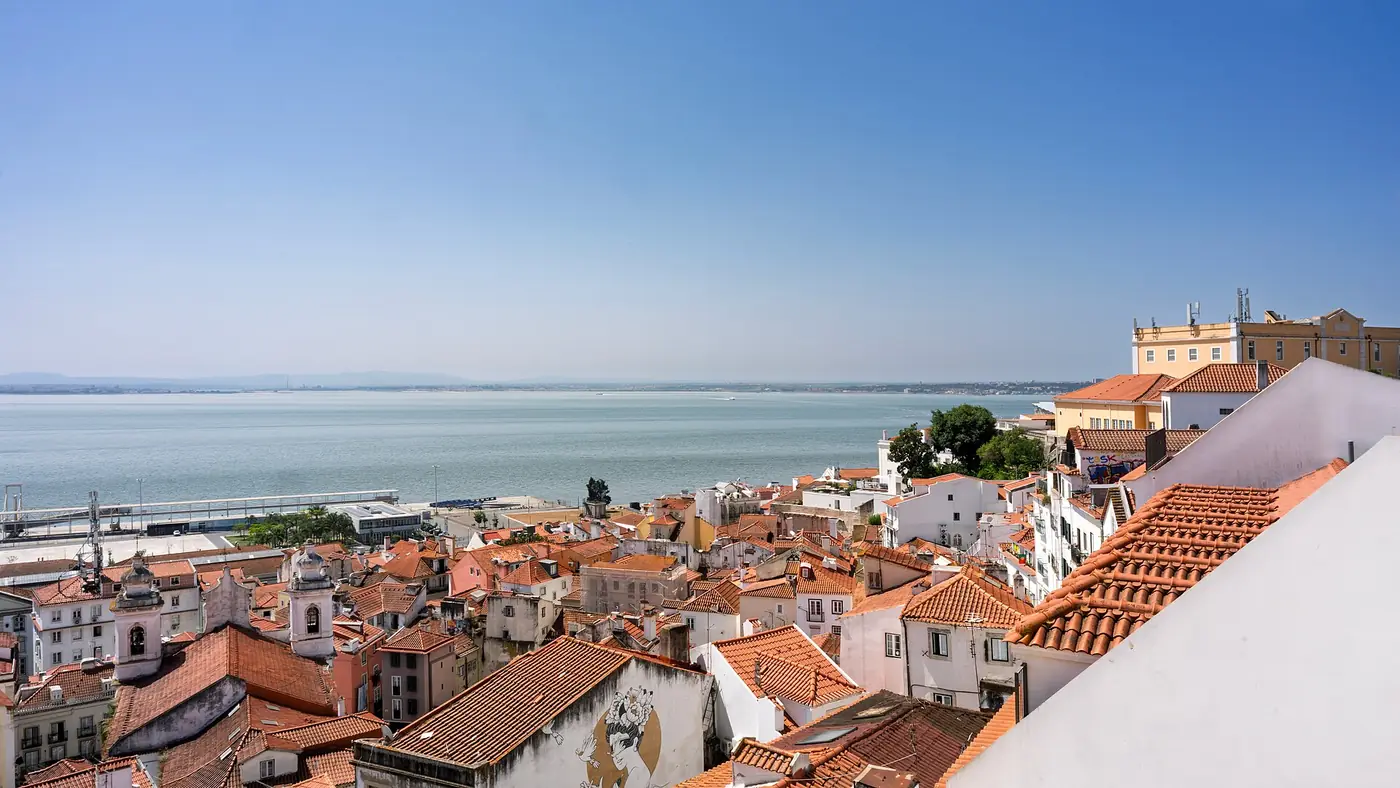
The number one attraction in Lisbon is the Alfama quarter below the castle, with the Portas do Sol viewpoint over its rooftops. In Belém, the Jerónimos Monastery cloister is the single most impressive building. Beyond the city, Sintra’s palaces are the top day trip.
Opens a price map of Lisbon. We may earn a commission if you book, at no extra cost to you.
Where to next
Things to Do in Lisbon
The main guide: the best things to do, hill by hill.

Is Lisbon Worth Visiting?
Who Lisbon suits, and who it suits least.
Lisbon Itinerary
Day-by-day plans for Lisbon, from one day to a full week.
How Many Days in Lisbon?
How long you actually need in Lisbon, and what fits in each extra day.
Keep planning Lisbon
Written and checked by
Travel Guide Kit Editorial
An editorial desk, not an invented persona. Every opening time, ticket price and transport connection here is checked against the operator’s own website and carries the date it was read. Where a page cannot draw on direct experience, it says so.